 Blaine Siding
 Siding Replacement on Sandy Point's Open Water Frontage
Sandy Point sits out on a low, sandy spit reaching into open water west of Blaine, and that geography changes what a siding replacement needs to accomplish here compared to a job a few miles inland. Homes on the spit face wind and spray coming off open water with very little natural windbreak — no ridge, no tree line, no neighboring hillside to take the first hit. That exposure adds up differently over twenty or thirty years, and it's a big part of why so many Sandy Point homes are reaching the point where a full siding replacement, not another round of patch repairs, is the right call.
This page is specifically about replacing siding on a Sandy Point home — what the local exposure demands from the new system, what a correct tear-off and re-side actually involves out here, and how our process accounts for the access and scheduling realities of working on the spit. We install James Hardie fiber cement exclusively, and on a property this exposed, that standard matters more than it does on a typical inland lot.
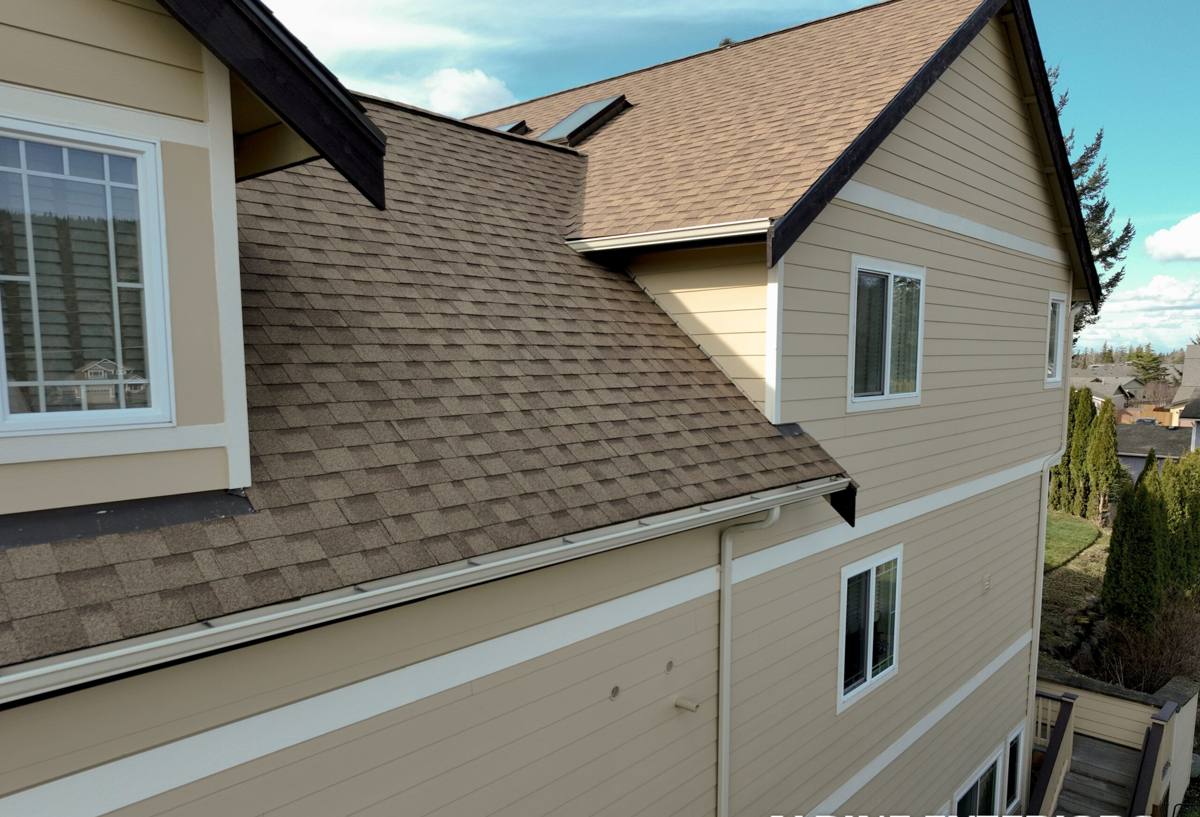
What Sandy Point's Exposure Does to Siding Over Time
Salt Air With Nothing Between the House and the Water
Salt-laden air is a factor anywhere close to Puget Sound or the Strait, but Sandy Point homes get it with less buffering than most Whatcom County properties — the spit puts many houses within a short distance of open water on more than one side. Salt air accelerates corrosion on fasteners, flashing, and lower-grade trim hardware, and it works faster the closer and more directly a home faces the water. Material and hardware specs that hold up fine on a sheltered inland lot can wear out noticeably sooner here.
Driving Rain With No Windbreak
Because the spit has so little to slow the wind down, rain off the water tends to arrive at Sandy Point homes sideways rather than straight down. That wind-driven rain gets forced into siding joints, window flashing, and the transitions where trim and rooflines meet the wall. It's this detail — not the siding material's rating on paper — that usually decides whether a re-side holds up for decades or starts letting water in behind the cladding within a few wet seasons.
A Moss Season That Runs Long
Mild, damp coastal conditions keep moss and mildew active on shaded and north-facing walls for most of the year, and the mix of open exposure and low-lying, often tree-sheltered lots on Sandy Point means moss pressure can vary sharply from one side of a house to the other. Any siding material that's porous, or that holds moisture against the substrate instead of shedding it, becomes a growth surface faster in conditions like these.
Why So Many Sandy Point Homes Are Due for Replacement
A lot of the housing stock on Sandy Point started out as smaller beach cottages, many built decades ago for seasonal use rather than as year-round, fully weatherized homes. Plenty have since been updated, expanded, or converted to full-time residences, but the original siding and detailing underneath later remodels wasn't always built for the kind of sustained, direct water exposure this spit sees. Combine that older baseline with several decades of salt air and wind-driven rain, and it's no surprise that full siding replacement — rather than another patch — is the point a lot of these homes have reached.
Signs a Sandy Point Home Needs Full Replacement, Not Another Repair
Repair makes sense when damage is isolated and the substrate underneath is still sound. On a property with this much sustained exposure, though, a few warning signs usually mean the smarter move is a full re-side rather than chasing the same problem around the house:
- Soft, spongy, or visibly bowed siding panels, especially on water-facing or wind-exposed walls
- Paint or finish failing repeatedly in the same spots within a year or two of repainting
- Persistent moss or dark staining that comes back quickly after cleaning
- Rust streaking from fasteners, trim hardware, or flashing
- Gaps, warping, or separation at panel joints and corner trim
- Musty odors or soft drywall on interior walls that back up to exterior siding
- Original siding with no documented replacement, especially on an older cottage-era home
None of these alone guarantees a full replacement is necessary, but on a Sandy Point property, two or more of them together are worth a straightforward professional look before another wet season adds to the damage.
What a Correct Replacement Involves Out Here
Checking the Sheathing, Not Just the Siding
On older Sandy Point homes especially, what's underneath the existing siding matters as much as what goes back on top of it. Decades of wind-driven moisture can compromise sheathing in ways that aren't visible until the old siding comes off. Covering damaged sheathing with a new, better siding system just hides a problem that keeps getting worse behind the wall — we check it at tear-off and address anything we find before installing anything new.
Weather Barrier and Flashing Detail
Given how much siding failure on this stretch of coastline traces back to water getting behind the cladding rather than through it, the house wrap, window flashing, and every wall penetration get careful attention on a Sandy Point job. This step is easy to rush and almost impossible to inspect once the new siding is up, so it's treated as non-negotiable — especially on the walls facing the most open water.
Fasteners and Hardware Built for Salt Exposure
With corrosion moving faster this close to open water, fastener choice and trim hardware matter more here than on a typical inland job. We spec hardware for the exposure the specific wall actually sees rather than defaulting to whatever's cheapest.
Installing to James Hardie's Published Spec
James Hardie's product warranty depends on installation following their published specifications — correct fastener spacing, clearances above grade and rooflines, and proper field-cutting and sealing. We treat that spec as the baseline for every job, not an upgrade.
What Affects the Cost of a Sandy Point Siding Replacement
| Factor | Why it moves the estimate |
|---|---|
| Exposure and orientation | Walls facing open water directly need more attention to flashing and hardware than sheltered sides of the same house |
| Age and condition of sheathing | Older cottage-era homes more often need sheathing repair once old siding comes off, which isn't known until tear-off |
| Trim and detail complexity | Homes with more window trim, corner detail, or multiple rooflines take more labor per square foot |
| Access on the spit | Narrow lots and limited staging space can affect how efficiently material and equipment move on and off site |
| Product line and finish | Which James Hardie line and ColorPlus color fits the home affects material cost within the estimate |
How the Process Works on a Sandy Point Job
Inspection and Estimate
We start by walking the property, checking current siding condition, looking for early signs of trapped moisture, and assessing how exposure differs across the home's walls given its specific position on the spit. That assessment — not a flat per-square-foot guess — drives the estimate.
Scheduling Around a Waterfront Community
Many Sandy Point properties are used seasonally or shared among family, and lots here tend to sit close together with limited staging room. We plan material delivery and crew scheduling with that in mind so the job moves efficiently without disrupting neighbors more than necessary.
Tear-Off and Substrate Check
Old siding comes off, the sheathing underneath gets inspected, and any rot or soft spots get addressed before new material goes up.
Weather Barrier, Flashing, and Installation
Weather barrier and flashing go in with the attention that level of exposure requires, and the new siding is installed to James Hardie's spec from the first panel to the last.
Final Walkthrough
We walk the finished job with the homeowner, cover maintenance expectations specific to a waterfront property, and confirm the work matches what was estimated before calling it complete.
Why Hiring a Crew That Already Works Sandy Point Matters
Sandy Point isn't a stop between bigger jobs elsewhere for us — it's a community we work regularly, which means we've seen firsthand how exposure varies from the most open, water-facing lots to the more sheltered ones set back or screened by trees. That familiarity shapes real decisions on-site: which walls need the most flashing attention, which fastener spec makes sense for a given lot's exposure, and how to sequence a job around a close-set beach community without unnecessary disruption. It also means that if a warranty or maintenance question comes up years down the line, it's a call to a crew still working in the same community, not one that's moved on somewhere else entirely.
If your Sandy Point home is due for a siding replacement, we're glad to come take a look and walk through what we find, with no pressure attached. Reach out using the form below to schedule a free estimate.