 Blaine Siding
 Why Everson Siding Wears Differently Than You'd Expect
Everson sits inland from Blaine, but it doesn't escape the weather pattern that defines this corner of Whatcom County. Marine air off the Salish Sea pushes east through the lowlands, carrying salt-laden moisture that settles on exterior surfaces long before rain ever falls. Add driving rain that comes in sideways during winter storms, a moss season that can run eight or nine months out of the year, and long stretches of overcast, damp weather between rain events, and you have a climate that is quietly punishing to the wrong siding material.
Homes here don't usually fail because of one dramatic storm. They fail slowly, from siding that absorbs moisture it was never designed to shed, seams that trap water instead of draining it, and paint film that can't keep pace with the freeze-thaw and wet-dry cycling typical of a Whatcom County winter. By the time damage is visible from the ground, it's often been developing behind the surface for a year or more.
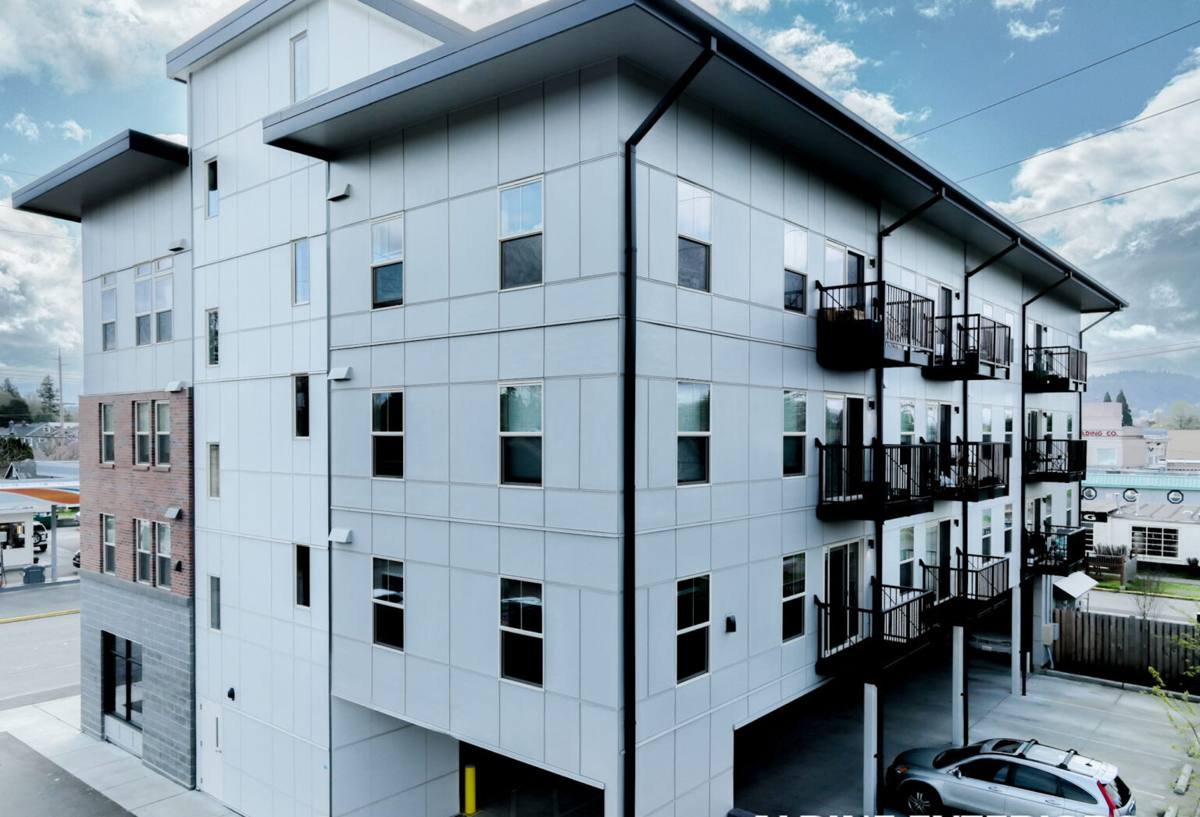
Signs an Everson Home Needs Siding Replacement, Not Another Repair
Patching is sometimes the right call. But on older wood, engineered wood, or lower-grade vinyl siding, repairs often just delay a bigger job while moisture keeps working underneath. Here's what tells us a home is past the point of spot-fixing:
- Soft or spongy spots when you press on the siding, especially near the bottom courses and around window and door trim
- Paint that's bubbling, peeling, or needs repainting more often than every 5-7 years
- Persistent moss or algae growth that returns within weeks of cleaning
- Visible warping, buckling, or panels that have pulled away from the wall
- Rising energy bills that point to a compromised weather barrier behind the siding
- Rot at butt joints, corners, or anywhere two pieces of siding meet
- Siding that's original to a home built more than 20-25 years ago, particularly if it's an engineered wood product from the 1990s or early 2000s
If you're seeing two or more of these, a full replacement is usually more cost-effective over a 10-year horizon than continuing to chase repairs on a system that's already compromised.
What Correct Siding Replacement Actually Involves
Full Tear-Off and Substrate Inspection
We don't install over existing siding. Everson homes with hidden moisture problems need that problem found and fixed, not sealed behind a new layer. Tear-off lets us inspect the sheathing, framing, and existing house wrap for rot or damage before anything new goes up.
A Weather-Resistive Barrier That Actually Drains
In a climate that sees this much sustained moisture, the barrier behind the siding matters as much as the siding itself. A properly lapped, correctly taped weather-resistive barrier with a drainage plane behind the cladding gives incidental moisture a path out instead of a place to sit.
Flashing Done Right, Every Time
Windows, doors, decks, and roof-to-wall intersections are where most siding failures actually start. Flashing has to be integrated with the barrier system, not just caulked over the top, and it has to shed water down and away from the framing at every transition.
Fastening and Clearances to Manufacturer Spec
Fiber cement siding has specific nailing patterns, fastener types, and minimum clearances from grade, decks, and roof lines. Skipping these details is the single most common cause of premature siding failure we see on homes that were "replaced" by a crew cutting corners.
Why James Hardie Is What Goes on Every Home We Side
We install James Hardie fiber cement siding exclusively. That's a deliberate standard, not a lack of options. Whatcom County's combination of salt-influenced marine air, sustained rain, and near-constant moss pressure is exactly the environment fiber cement was engineered to handle.
Hardie's HZ5 product line is formulated for the wetter, harsher climate zones on the West Coast, with an engineered core that resists moisture absorption far better than wood or engineered wood substrates. It's non-combustible, which matters increasingly for insurance and wildfire-adjacent building codes in Washington. The ColorPlus factory finish is baked on under controlled conditions, which gives it far better UV and moisture resistance than field-applied paint, and it comes with a real, transferable limited warranty backing both the substrate and the finish.
None of that means Hardie is maintenance-free. It still needs proper caulking maintenance at joints and trim, and like any siding, it depends entirely on correct installation. But when it's installed to spec, it holds up to this climate in a way that consistently outperforms the alternatives homeowners in this area are usually choosing between.
How Fiber Cement Compares for a Climate Like This
| Material | How It Handles Sustained Moisture | Moss/Algae Resistance | Typical Repaint Cycle | Lifespan Under Local Conditions |
|---|---|---|---|---|
| James Hardie fiber cement | Engineered to resist moisture absorption; won't rot or swell | Strong, with factory finish resisting growth better than raw substrates | 15+ years with ColorPlus finish | 30-50 years when installed to spec |
| Vinyl siding | Doesn't absorb moisture but seams and panels can trap water behind them; warps in temperature swings | Moderate; growth on the surface is common in shaded, damp areas | Never repainted (color is molded in, but fades and can't be refreshed) | 20-30 years, often less with UV fading |
| Engineered wood (LP-type products) | Vulnerable to edge swelling and moisture wicking at cut ends and seams | Weak once the factory coating is compromised | 7-10 years | 15-25 years, heavily dependent on maintenance |
| Cedar or primed spruce | Absorbs moisture readily; needs consistent sealing to perform | Weak; natural wood is a food source for moss and algae | 3-7 years | 15-25 years with diligent upkeep |
What Drives Siding Replacement Cost in Everson
Every home is different, but the same handful of factors move the number up or down on most Everson projects:
| Factor | Why It Matters |
|---|---|
| Total square footage and home shape | More wall area and more corners, dormers, and cutouts mean more material and labor time |
| Condition of the sheathing underneath | Rot discovered during tear-off requires repair before new siding goes on, which affects both cost and timeline |
| Story height and access | Two-story sections and steep or obstructed lots require more setup, staging, and safety equipment |
| Trim and detail package | Window and door trim, corner boards, and fascia detailing add labor beyond the flat wall area |
| Existing siding removal | Multiple layers of old siding or heavy moss buildup add tear-off time |
We give exact numbers only after walking the property, but broadly, homeowners should budget for fiber cement as a mid-to-upper range investment relative to vinyl or engineered wood, with the return coming in the form of a 30-50 year service life instead of repeat replacement cycles every 15-20 years.
Our Process, Start to Finish
1. On-Site Assessment
We walk the exterior with you, check for soft spots and moisture damage, and talk through what we're seeing before recommending a full replacement versus targeted repair.
2. Written Estimate and Product Selection
You'll get a clear scope of work, an itemized estimate, and time to choose from Hardie's ColorPlus color and texture options for your home's style.
3. Tear-Off and Substrate Repair
Old siding comes off, sheathing and framing get inspected, and any rot or damage gets repaired before the new barrier and siding go up.
4. Barrier, Flashing, and Installation
Weather-resistive barrier, flashing at every penetration and transition, and Hardie panels installed to manufacturer fastening and clearance specs.
5. Final Walkthrough
We go over the finished job with you, confirm caulking and trim details are clean, and make sure you know what routine maintenance, if any, the new siding needs going forward.
Why Hiring a Crew That Already Works in Whatcom County Matters
Siding installation guidance from a manufacturer is written for a national market. It doesn't account for the specific moisture load a home near Blaine or Everson deals with every winter, or how aggressively moss establishes itself on north-facing walls under the tree cover common in this part of Whatcom County. A crew that works this area regularly builds in the extra attention to flashing, drainage, and clearances that this climate actually demands, rather than installing to the bare minimum spec and hoping the weather cooperates.
Local experience also means knowing which parts of an Everson property tend to hold moisture longest, where ventilation is worth extra attention, and how to sequence a tear-off around the wetter months so your home isn't exposed longer than necessary.
If your siding is showing its age or you're just planning ahead, we're happy to take a look and give you a straightforward, no-pressure estimate. There's no obligation, and you'll walk away with a clear picture of what your home actually needs. Fill out the form below to get started.