 Blaine Siding
 Sandy Point's Siding Problem Is Bigger Than a Few Cracked Boards
Sandy Point sits about as close to the water as a Whatcom County neighborhood gets, and that proximity shows up on siding faster than almost anywhere else we work. Salt-laden air moves through this community constantly, wind-driven rain hits west and south-facing walls at an angle that pushes moisture into seams and laps, and the shaded, damp stretches of the season give moss and algae months to establish themselves on anything that stays wet. When we get a call for siding repair in Sandy Point, it's rarely just cosmetic. It's usually a sign that water has been finding its way past the surface for a while.
That's the context every repair estimate here has to start from. A patch that would hold up fine on a dry inland lot in Blaine can fail within a season or two on a Sandy Point exterior if it doesn't account for salt exposure and sustained moisture. We approach every job here with that in mind.
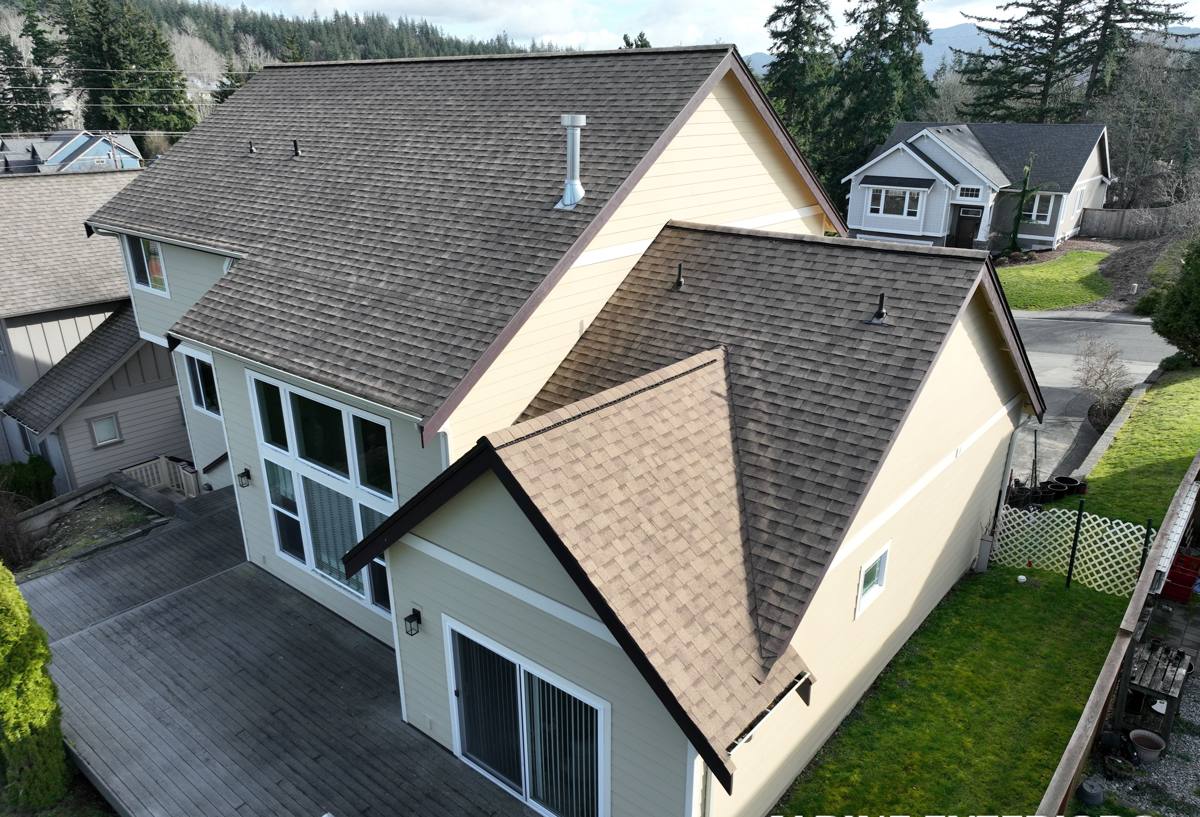
What Salt Air and Driving Rain Actually Do to Siding
Salt Air
Airborne salt is corrosive to fasteners, flashing, and any exposed metal trim, and it accelerates the breakdown of paint films and coatings that aren't built for coastal exposure. On wood and engineered wood siding, salt residue also holds moisture against the surface longer than plain rainwater would, which keeps the material wet enough, long enough, for rot and fungal growth to take hold.
Driving Rain
Wind off the water doesn't let rain fall straight down — it drives it sideways into siding, which means water gets forced into laps, seams, and any gap around trim, windows, or penetrations that isn't properly flashed and caulked. Over time this shows up as swelling, soft spots, staining below joints, and in worse cases, damage to the sheathing and framing behind the siding that you can't see until a board is pulled off.
The Long Moss Season
Whatcom County's wet, mild winters and shoulder seasons give moss and algae an extended window to grow, especially on north- and shade-facing walls and anywhere siding stays damp between rains. Moss holds moisture against the surface, and its root structure can work into seams, texture, and any compromised coating, which speeds up the very deterioration that let it take hold in the first place.
Signs a Sandy Point Home Needs Siding Repair Now
- Soft, spongy, or crumbling spots when you press on the siding, especially near the bottom courses
- Visible swelling, warping, or buckling boards, particularly on the water-facing or wind-exposed sides
- Peeling or bubbling paint that keeps coming back in the same spots
- Persistent moss or algae growth that returns quickly after cleaning
- Staining or dark streaking below seams, trim, or window and door openings
- Gaps or separation at seams, corners, or where siding meets trim and flashing
- A musty smell near exterior walls, or visible moisture inside on the corresponding interior wall
Any one of these is worth a look. Two or more together, especially on a home within easy reach of the water, usually means the damage extends further than what's visible from the outside.
Why It's Not Just a Cosmetic Job Here
On a Sandy Point property, we don't treat siding repair as swapping a damaged board for a matching one and calling it done. Before any patch goes on, we check what's behind it. If water has been getting past the surface for any length of time, there's a real chance it's reached the house wrap, sheathing, or framing, and a repair that only addresses the visible board leaves that underlying problem to keep spreading, unseen, until it resurfaces somewhere else on the wall.
What a Correct Repair Actually Involves
- Inspection past the surface. We pull back or remove the damaged section far enough to see the condition of the underlying wrap and sheathing, not just the face of the siding.
- Root cause identification. Failing flashing, a caulk joint that opened up, a missed detail at a penetration — we find what let water in before we close anything back up, because replacing the board without fixing the entry point just buys time.
- Removal of compromised material. Rot, soft sheathing, and any moisture-damaged framing get addressed, not painted over or covered.
- Correct flashing and water management. Proper laps, drainage planes, and sealed penetrations matter more here than in drier parts of the county, given how much wind-driven rain this location sees.
- Matching, climate-appropriate material. We repair with siding built for coastal exposure, not a general-purpose product patched in and hoped for the best.
- Finish and detailing. Caulk, paint or factory finish, and trim work are completed to match the surrounding wall so the repair blends in rather than standing out as an obvious patch.
Repair or Replace: How We Help You Decide
| Factor | Repair Usually Makes Sense | Replacement Worth Considering |
|---|---|---|
| Extent of damage | Isolated to one wall or a few boards | Recurring across multiple walls or elevations |
| Underlying structure | Sheathing and framing test sound | Rot or moisture damage found behind siding |
| Age of existing siding | Relatively recent, otherwise in good condition | Original material is old, brittle, or a product prone to moisture issues |
| Coating condition | Paint/finish holding up on unaffected areas | Widespread peeling, chalking, or coating failure |
| Match availability | Existing product or close match still available | Discontinued profile or color, or product no longer performing at this location |
We'll always tell you honestly which side of this table your home falls on. A well-targeted repair on sound structure can add years of life at a fraction of replacement cost. But if we find damage has spread behind the siding, or the underlying material simply isn't suited to what Sandy Point's exposure demands, we'll say so rather than patch something that's going to fail again in another season.
Why We Repair With James Hardie Fiber Cement
When a repair calls for new material — whether it's a few boards or a full wall — we use James Hardie fiber cement, and only James Hardie. It's the one product we install across every job we take on, and there's a reason for that standard, especially in a location like this one.
Fiber cement doesn't absorb and swell with moisture the way wood-based products can, and it doesn't feed the fungal growth that keeps rot cycles going once they start. James Hardie's HZ5 product line is specifically engineered for climates with sustained moisture exposure, which describes Sandy Point about as well as anywhere in Whatcom County. It's also non-combustible, holds its factory-applied ColorPlus finish far longer than field-applied paint on other substrates, and carries a strong transferable warranty — meaningful in a market where homes near the water tend to change hands.
We don't install vinyl, LP SmartSide, Cemplank, Allura, primed spruce, or cedar, and we won't repair a home with one of those products by matching in more of the same if the underlying issue is the material itself. If your existing siding is a different product entirely, we'll talk through whether a like-for-like patch makes sense or whether transitioning that section — or eventually the whole exterior — to Hardie is the better long-term call for a property in this location.
What Correct Installation Requires
Fiber cement performs the way it's supposed to only when it's installed to Hardie's specifications — correct fastening, proper clearances, sealed cut edges, and flashing details that match the product's drainage requirements. A rushed or improvised installation undercuts the material's real advantages, which is exactly the kind of shortcut we don't take, particularly on a repair where getting the water management detail right the first time is the entire point.
Why Local Experience in Sandy Point Matters
Blaine and Whatcom County have their share of exterior contractors, but not all of them have spent real time on homes this close to the water. Sandy Point's combination of salt exposure, wind-driven rain angle, and extended moss season creates failure patterns that differ from what you'll see on a typical inland Blaine lot. A crew that already knows those patterns can diagnose the real cause of a problem faster, and repair it in a way that accounts for the exposure instead of assuming standard details will hold.
That familiarity also means fewer surprises during the work itself — knowing which walls in this neighborhood tend to take the worst of the weather, what moisture levels to expect behind siding at this proximity to the water, and how to sequence a repair so the house isn't left exposed during a stretch of driving rain.
Maintaining Your Siding Between Repairs
- Rinse salt residue and grime off exterior walls periodically, especially after windy weather off the water
- Keep gutters and downspouts clear so water isn't overflowing onto siding below
- Trim back vegetation and anything shading walls to cut down on moss-friendly damp conditions
- Recaulk seams and trim joints as soon as gaps appear, rather than waiting for a full season
- Have flashing and caulk checked annually at windows, doors, and any wall penetrations
- Address soft spots or staining as soon as they're noticed instead of waiting for them to spread
If you're seeing any of the warning signs above on a Sandy Point home, or you just want an honest read on whether a section of siding needs a patch, a rebuild, or is still fine for now, we're glad to come take a look. Estimates are free and there's no pressure — just a straight answer about what your home actually needs.