 Blaine Siding
 Blaine Harbor's Siding Takes a Different Kind of Beating
Houses along Blaine Harbor sit right where the weather comes off the water. Wind-driven rain off Semiahmoo Bay and the Strait of Georgia doesn't just fall on siding — it hits it sideways, working into every seam, joint, and nail hole that isn't sealed correctly. Add Whatcom County's salt air and a moss season that can run eight or nine months out of the year, and you have a siding environment that's noticeably harder on a home's exterior than siding fifteen miles inland in Ferndale or Lynden.
That combination is why siding problems in Blaine Harbor tend to show up in specific, predictable places: north- and west-facing walls that stay damp longest, the bottom courses closest to grade where splashback and moss collect, and trim joints around windows and doors where wind-driven rain finds its way behind the cladding. A repair strategy built for a drier climate doesn't hold up here — the fix has to account for how much moisture this neighborhood actually sees.
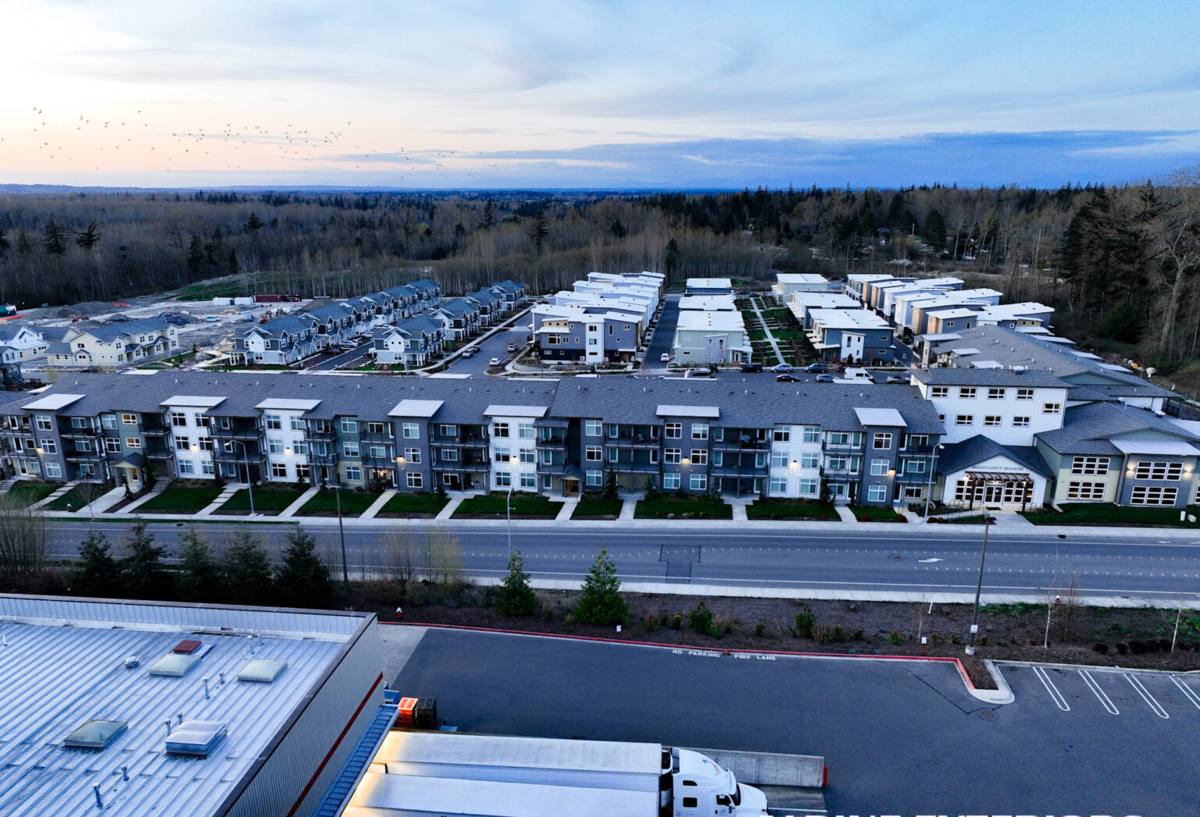
Signs Your Siding Needs Repair — Not Just a Paint Job
Cosmetic problems and structural problems can look similar from the ground. Some of what looks like normal weathering is actually a sign that moisture has already gotten past the siding and into the wall assembly. Before any repair work, we look for these indicators:
- Soft or spongy spots when pressed — usually a sign the substrate behind the siding is wet or rotting
- Persistent black or green streaking that comes back within weeks of cleaning, especially on north-facing walls
- Cracked, split, or bowed siding panels or boards, particularly near corners and butt joints
- Peeling or bubbling paint that keeps recurring in the same spot year after year
- Visible gaps at trim, window, and door flashing where daylight or drafts are noticeable from inside
- Fastener stains — rust-colored streaks below nail heads, common in salt-air environments
- A musty smell or discoloration on interior walls that back up to an exterior wall showing siding damage
Any one of these on its own might be minor. Two or three in the same area usually means water has been getting behind the siding for a while, and the repair needs to address what's underneath, not just what's visible.
What a Correct Siding Repair Actually Involves
Diagnosis Before Demolition
The first step isn't pulling boards — it's figuring out why the damage happened. A cracked panel from an impact is a different repair than the same crack caused by trapped moisture expanding behind it. We check the sheathing and house wrap behind any damaged section before deciding how much needs to come off, because replacing siding over a wet or compromised substrate just buries the problem.
Matching Material and Finish
A repair that doesn't match the surrounding siding in profile, reveal, and color sticks out for years. This is one of the biggest advantages of working only in James Hardie fiber cement — the HZ5 product line and ColorPlus finish system are manufactured to consistent specifications, so a repaired section can be matched far more reliably than trying to patch in mismatched vinyl panels or refinished wood.
Flashing and Water Management
Most siding failures in a coastal, high-rainfall area trace back to flashing — the metal and membrane details around windows, doors, and butt joints that direct water back out instead of into the wall. A repair that replaces damaged siding but doesn't correct the flashing underneath will fail again in the same spot, usually within a season or two of hard weather.
Why We Only Repair With James Hardie Fiber Cement
We install and repair exclusively with James Hardie products. That's a deliberate standard, not a limitation, and it matters most during repair work — where matching materials and predictable performance make the difference between a fix that lasts and one that needs redoing.
| Factor | James Hardie Fiber Cement | Vinyl / LP SmartSide / Cedar |
|---|---|---|
| Repair matching | Consistent factory profiles and ColorPlus finish make patched sections blend in | Color fading and discontinued profiles often make exact matches difficult |
| Moisture behavior | Non-combustible fiber cement resists swelling and doesn't feed rot | Wood-based products can absorb moisture at cut edges and swell; vinyl can warp |
| Salt-air durability | Engineered HZ5 formulation for wet, marine-influenced climates | Performance varies; some products aren't climate-rated for the Pacific Northwest coast |
| Warranty on repaired sections | Manufacturer warranty carries through when installed to spec | Warranty terms vary widely and can be voided by improper past repairs |
We're upfront that this means we won't patch existing vinyl, LP SmartSide, Cemplank, Allura, or cedar siding with more of the same material. In some cases the right answer for a homeowner with one of those products is a localized repair by someone who specializes in it. When Hardie siding is already on the home, or when a homeowner decides a repair is the right moment to convert a damaged section — or the whole elevation — to Hardie, that's where we come in.
Common Repair Scenarios We See in Blaine Harbor
Moss and Algae Staining at Grade
The lowest courses of siding, closest to landscaping and ground moisture, are where moss and algae take hold first and stay longest in this climate. Left untreated, sustained moisture at these boards can eventually soften the substrate behind them, turning a cleaning issue into a repair issue.
Fastener and Trim Corrosion
Salt-laden air accelerates corrosion on fasteners and trim hardware faster than it does even a few miles inland. Rust streaking below nail heads or at trim edges is a common repair trigger we see specifically in harbor-adjacent properties.
Wind-Driven Rain Intrusion
Storms coming off the water push rain into vertical seams and around window and door trim with more force than a typical inland rain event. Repairs in these spots almost always involve correcting the flashing detail, not just resealing the surface.
Impact Damage
Fallen branches, ladders, and equipment cause the more straightforward repairs — a cracked or dented panel with no underlying moisture issue. These are usually the fastest and most affordable fixes, provided the damage is caught before water finds its way into the crack.
Our Repair Process
- On-site inspection of the damaged area and a check of the surrounding siding for related issues
- Moisture and substrate check behind the damaged section before any material is ordered
- Written estimate explaining the cause of the damage, not just the visible fix
- Removal of only the affected boards or panels — we don't upsell full-wall replacement when a section repair will hold
- Correction of any flashing, house wrap, or fastening issue found underneath
- Installation of matched James Hardie material, finished to blend with the existing wall
- Final walkthrough so you can see exactly what was repaired and why
Repair vs. Replacement: What Actually Drives the Decision
| Factor | Leans Toward Repair | Leans Toward Replacement |
|---|---|---|
| Extent of damage | Isolated to one or two wall sections | Recurring damage across multiple elevations |
| Substrate condition | Sheathing and wrap behind damage are still sound | Widespread rot or moisture intrusion found behind siding |
| Age of existing siding | Siding is relatively young and otherwise performing well | Siding is near or past its expected service life |
| Material match | Existing siding is Hardie and can be matched cleanly | Existing material can't be reliably matched or is a product we don't install |
Most of the time, the honest answer is repair. We don't have a financial incentive to push replacement — we'll tell you plainly when a section repair is the right call and when it isn't.
Why Hiring a Crew That Already Works Blaine Harbor Matters
Siding repair here isn't the same job as siding repair in a drier part of the state. A crew that already works this stretch of Whatcom County knows which wall orientations take the worst of the weather, how far moss and algae staining tends to travel before it's a real problem, and what flashing details actually hold up against wind-driven rain off the water. That local pattern recognition shortens the diagnosis step and reduces the chance of a repair that looks fine but fails again the following winter.
It also matters for scheduling and material sourcing — knowing how to plan repair work around this area's wet season, and having a working relationship with James Hardie's regional supply chain for the specific color and profile already on a home, keeps a repair project from stalling out waiting on the wrong part.
After the Repair: Keeping It From Happening Again
A good repair should buy years, not months. A few habits help it last in this climate:
- Rinse moss and algae off lower courses at least once a year, before it has a chance to hold moisture against the siding
- Keep landscaping and irrigation from spraying directly onto siding or pooling at the base of walls
- Walk the exterior after major windstorms and check trim and butt joints for new gaps
- Have caulking at trim and penetrations checked every few years — it degrades faster in salt air than most homeowners expect
If you're seeing staining, soft spots, cracked panels, or drafts around trim on a Blaine Harbor home, we're happy to take a look and give you a straight answer on what it needs. The estimate is free, there's no pressure, and you'll get a clear explanation of what we find — whether that's a small repair or something bigger.