 Blaine Siding
 Grandview's Siding Problem Isn't Like Everyone Else's
Grandview sits close enough to the water and the Canadian border that its siding takes a different kind of beating than a house forty miles inland. Salt-laden air rolls in off the Strait and Semiahmoo Bay almost daily, driving rain comes in sideways during winter storms, and the shoulder seasons stay damp enough, long enough, that moss and algae get a real foothold on anything that holds moisture. None of that is dramatic on any single day. It's the accumulation over years that separates siding that still looks good at year fifteen from siding that's cupping, staining, or rotting at the seams by year eight.
A siding installation crew that only occasionally works this corner of Whatcom County will build to a generic spec. A crew that works Grandview regularly builds for what actually happens to a wall assembly here — because they've already seen what happens when it's done wrong.
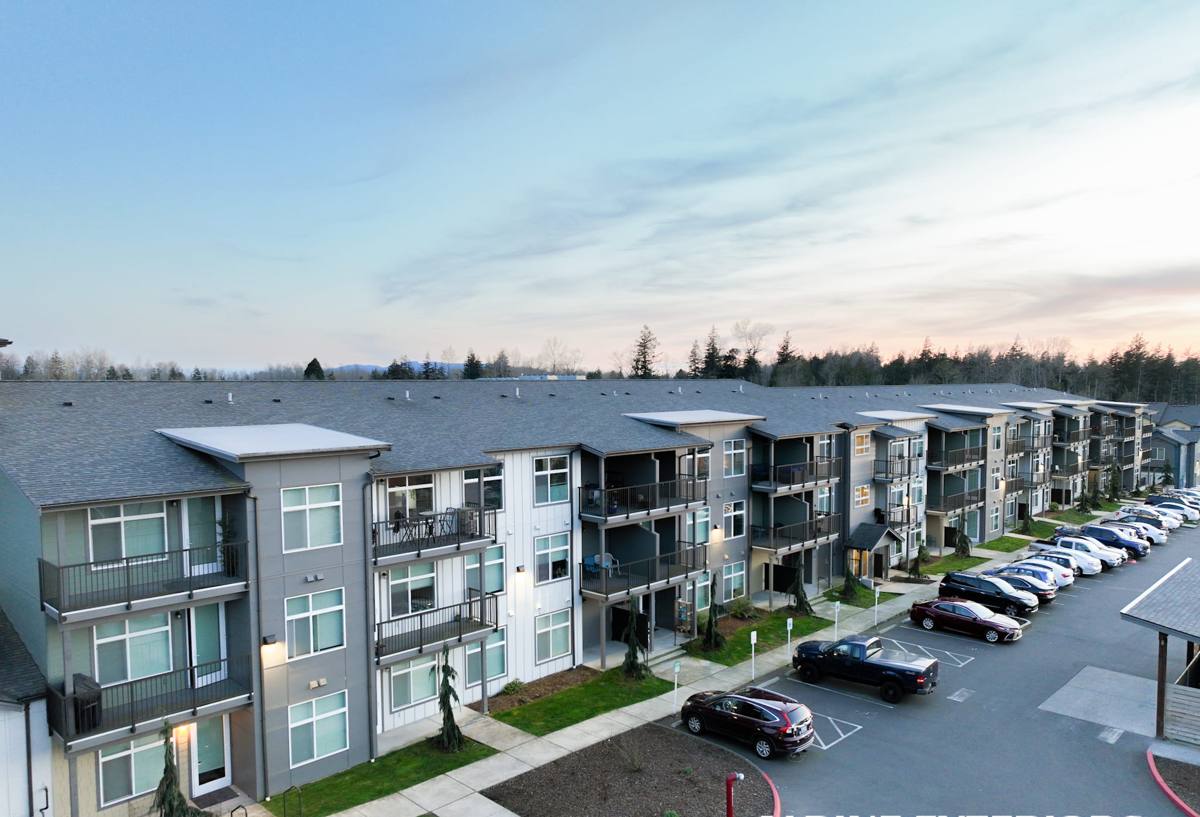
What Salt Air, Rain, and Moss Actually Do to a Wall
It helps to understand the mechanism, not just the symptom, because it explains every decision that follows in this guide.
- Salt air is corrosive to exposed metal fasteners, flashing, and trim edges, and it accelerates the breakdown of coatings and caulk that aren't rated for coastal exposure.
- Driving rain doesn't just fall on a wall — wind pushes it up and under laps, into seams, and behind trim that isn't properly flashed. A wall that only shed water falling straight down will still leak here.
- Moss and algae need moisture and organic material to grow. Wood-based siding products give them both. Once moss establishes on a north-facing or shaded wall, it holds water against the surface and speeds up whatever decay process is already underway.
None of these forces are unique to Grandview — they're a Pacific Northwest coastal story. But Grandview's proximity to open water puts it on the higher end of that exposure within Blaine, which is exactly why the installation details matter more here than they would a few miles east.
Why We Install Only James Hardie Fiber Cement — Not Vinyl, Not LP SmartSide
We get asked why we don't offer vinyl or engineered wood siding as a cheaper option. It's a fair question, and the honest answer is climate, not sales strategy.
Vinyl siding expands and contracts significantly with temperature swings, and its seams and J-channels rely heavily on lap-and-overlap design rather than a sealed, rigid surface — in a driving-rain environment, that geometry gives wind-blown water more opportunities to work its way behind the panel. Vinyl also isn't rated as a fire-resistive cladding, and it can warp under focused heat, which matters more every year as regional wildfire smoke and heat events become part of the calculus for building materials in Washington.
Engineered wood products like LP SmartSide use a wood-strand substrate with a factory-applied resin coating. It's a genuinely improved product over old-school hardboard siding, and it performs fine in a lot of climates. But it's still wood at its core — meaning any breach in the coating, any unsealed cut edge, or any spot where moisture sits against the surface for extended periods is a path to swelling and eventual rot. In a zone with this much sustained damp and salt exposure, that's a real long-term liability, not a theoretical one.
James Hardie fiber cement is cement, sand, and cellulose fiber — it doesn't have an organic substrate for moisture to break down, it doesn't burn, and it holds paint and factory finish far longer than wood-based products because it doesn't move with humidity the way wood does. Hardie's HZ5 product line is specifically engineered for harsh, wet, freeze-prone climates, which fits this stretch of Whatcom County better than a general-purpose product line does. That's the whole reason we standardized on it: it's the product we're comfortable putting our name behind on a Grandview wall, not just a wall in a mild climate.
What This Means in Practice
| Factor | Vinyl / LP SmartSide | James Hardie Fiber Cement |
|---|---|---|
| Moisture response | Wood substrate can swell, delaminate, or rot at breaches | Cement-based core does not rot or absorb moisture the way wood does |
| Salt air / coastal exposure | Coatings and seams degrade faster under sustained salt exposure | Factory ColorPlus finish is formulated to hold up under UV, salt, and moisture cycling |
| Fire exposure | Vinyl can deform under radiant heat; wood products are combustible | Non-combustible cement composition |
| Long-term appearance | More prone to fading, streaking, and moss buildup over time | Holds color and sheds moss more readily with a factory finish and proper install |
What a Correct Siding Installation Actually Involves
Siding installation isn't just nailing panels to a wall — the materials behind the siding and the details at every seam do most of the actual work of keeping water out. This is where a lot of installs, even ones using good material, quietly fail.
The Weather-Resistive Barrier Comes First
Before any siding goes up, the wall needs a properly lapped and sealed weather-resistive barrier (housewrap or building paper) that's integrated correctly with window and door flashing — not just stapled on and covered. In a wind-driven rain environment, this layer is the actual waterproofing system. Siding is the first line of defense; the barrier behind it is what catches what gets through.
Flashing and Drainage Details
Every window head, sill, deck ledger, and roof-to-wall transition needs flashing detailed so water is directed out and away from the wall assembly, not trapped behind it. A rainscreen gap (a small ventilated cavity between the siding and the wall) is especially valuable in a climate like this, because it lets any moisture that does get in dry out instead of sitting against the sheathing.
Fastening and Clearances
James Hardie specifies exact nailing patterns, fastener types, and minimum clearances — siding-to-grade, siding-to-roofline, siding-to-deck — for a reason. Fasteners that are overdriven, siding installed too close to grade or a roof deck, or gaps that aren't caulked with the right sealant all become entry points for moisture over time. None of these mistakes are visible on install day. They show up three, five, ten years later.
Caulking and Joint Treatment
Butt joints, corners, and trim intersections need to be treated with a sealant rated for the exposure — and in a salt air environment, cheaper caulk breaks down and cracks faster, opening a gap right where two boards meet.
Our Process for a Grandview Installation
- On-site assessment. We look at the existing wall assembly, moisture history, sun/shade exposure on each elevation, and any problem areas — this is different for a shaded, moss-prone north wall than for a south wall that gets full sun and heat cycling.
- Tear-off and sheathing check. Old siding comes off and we inspect the sheathing underneath for existing rot or moisture damage before anything new goes up. Covering a compromised wall with new siding just hides the problem.
- Weather barrier and flashing installation. This is the step that determines whether the wall actually stays dry — done carefully, with attention to every window, door, and penetration.
- Hardie installation to spec. Correct nailing pattern, correct clearances, correct fastener type for coastal exposure.
- Trim, caulking, and final detail work. This is where a rushed job shows. We treat every joint like it has to survive a decade of driving rain, because it does.
- Walkthrough. We go over the finished work with the homeowner before calling the job done.
Signs a Grandview Home May Need New Siding
Some of these are obvious, some aren't — but they're worth checking for before a small issue becomes an expensive one.
- Visible cupping, warping, or separation at panel seams
- Soft spots when you press on the siding, especially near the bottom courses or under windows
- Persistent moss or algae growth that comes back quickly after cleaning
- Paint that's peeling, bubbling, or failing faster than a normal repaint cycle would suggest
- Staining or streaking below nail heads or seams, which usually points to water tracking through a gap
- Visible gaps, cracked caulking, or daylight at trim joints
- Interior signs — musty smell, discoloration, or soft drywall near exterior walls — that can indicate moisture getting through from outside
What Affects the Cost of a Grandview Siding Installation
Every home is different, so we won't quote a number without seeing the job — but these are the factors that actually move the price, in rough order of impact.
| Cost Factor | Why It Matters |
|---|---|
| Condition of existing sheathing | Rot or moisture damage found during tear-off adds repair work before new siding can go on |
| Home size and wall complexity | More corners, dormers, and roof transitions mean more flashing and trim detail, not just more square footage |
| Siding profile and trim package | Lap width, shingle-style accents, and trim details all affect material and labor |
| Access and site conditions | Tight lot lines, slopes, or landscaping close to the house can add setup time |
| Story height | Two-story and higher walls require more scaffolding/staging, which adds labor time |
| Window and door count | Every opening needs its own flashing detail — more openings means more of that careful work |
Why It Matters That Your Crew Already Works Grandview
A crew that installs siding across a wide range of climates has to default to generic best practices. A crew that regularly works Grandview and the surrounding Blaine waterfront has already seen which walls take the worst of the salt and rain exposure, which fastening and flashing shortcuts fail first in this specific environment, and how James Hardie's HZ5 line performs here specifically — not in a manufacturer's general climate zone map. That local repetition is what turns "installed to spec" into "installed for this exposure."
It also means we're not guessing at permitting, inspection expectations, or how a particular elevation on a particular street handles wind-driven rain. We've been on enough Grandview roofs and walls to know what this climate actually does to a house, not just what a spec sheet says it should do.
If your Grandview home needs new siding, or you're just not sure whether what's on the walls now is holding up, we're happy to take a look. The estimate is free, there's no pressure, and you'll get a straight answer about what your home actually needs.