 Blaine Siding
 Custer Homes Face a Tougher Climate Than the Rest of the House Shows
Custer sits just inland from Blaine and Semiahmoo Bay, in the northwest corner of Whatcom County where marine air off the Strait of Georgia moves through year-round. That proximity to salt water, combined with the long, wet Pacific Northwest winter, puts a specific kind of stress on exterior siding — stress that doesn't always show up as a visible problem until it's already done damage underneath. Salt-laden air accelerates corrosion on metal fasteners and trim. Driving rain, pushed sideways by wind off the water, tests every seam, joint, and butt edge in the siding system. And the region's long moss season — months of shade, humidity, and slow-drying surfaces — gives organic growth plenty of time to take hold on north-facing walls and anything close to tree cover.
None of this means Custer is a bad place to own a home. It means siding here has to be chosen and installed with those specific conditions in mind, not just picked off a shelf because it looks good on day one.
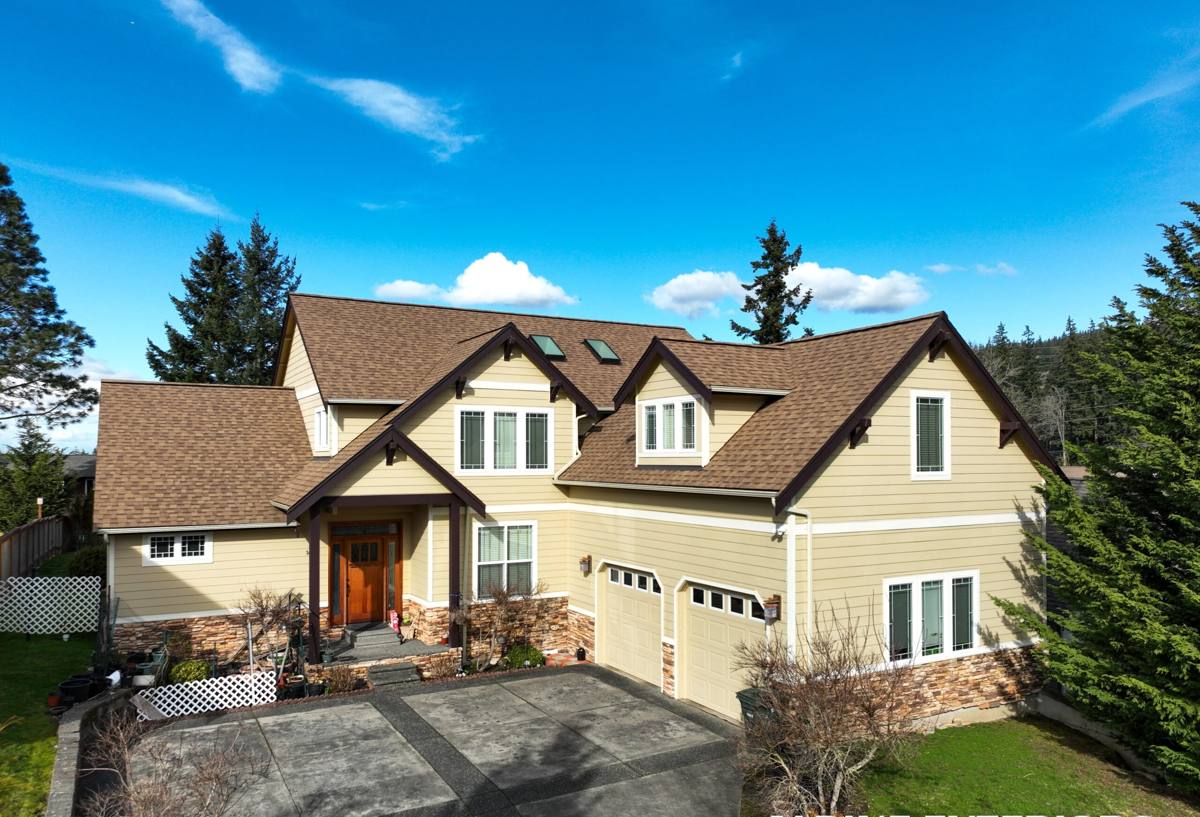
What Salt Air, Rain, and Moss Actually Do to Siding Over Time
Salt Air and Corrosion
Airborne salt is mildly corrosive to unprotected or poorly coated metal — fasteners, flashing, trim caps. Over years, corrosion at a fastener head can loosen a siding panel's grip, and a compromised flashing joint can quietly redirect water into the wall rather than off it. This is one of the reasons fastener choice and flashing detail matter as much as the siding material itself.
Wind-Driven Rain
Rain that falls straight down is easy to shed. Rain that comes in sideways during a Whatcom County windstorm finds its way into any gap that a calm-weather installation might get away with — unsealed butt joints, short laps, missing flashing above windows and doors. A siding job that looks fine in a dry-season photo can still leak in a January storm if the water management behind the siding wasn't done right.
Moss and Prolonged Moisture
Moss doesn't just grow on roofs. On siding, it tends to establish on shaded, north-facing walls, under overhangs that never get direct sun, and near trees that keep a wall damp for days after a storm. Left alone, moss holds moisture against the siding surface, which is a problem for any material that isn't dimensionally stable when wet — and it's a maintenance headache regardless of what's on the wall.
Why We Install Only James Hardie Fiber Cement in Custer
We standardized on James Hardie fiber cement siding for every home we work on, including Custer, and we don't install vinyl, LP SmartSide, primed wood, cedar, or other fiber cement brands. That's a deliberate professional standard, not a marketing position, and it comes down to how these products actually perform in exactly the conditions described above:
- Fiber cement is non-combustible and doesn't expand and contract with moisture the way wood-based products do.
- Hardie's ColorPlus factory finish is baked on and warrantied against peeling and cracking, which matters in a climate where paint gets tested by rain far more often than sun.
- Hardie's HZ5 product line is engineered specifically for climates with sustained moisture exposure, which describes Whatcom County about as well as any region in the country.
- Fiber cement holds paint and caulk adhesion better over time than vinyl, and it doesn't have vinyl's tendency to warp or gap as temperatures swing.
We're not going to tell you cedar or vinyl are junk — they're established products with real advocates, and each has situations where it makes sense. What we will say is that after years of doing this work in this specific climate, we stopped installing products that ask an owner to fight the marine air and rain cycle instead of shed it. James Hardie, installed correctly, is what we've settled on as the right long-term answer for homes here.
What a Correct Siding Installation Actually Involves
The siding panel itself is only part of the system. Most siding failures we get called to diagnose — on any brand — trace back to what's behind the panel, not the panel itself.
Water Management Before the First Panel Goes Up
A weather-resistant barrier (house wrap) goes on first, lapped correctly from bottom to top so water always sheds outward and down. Every window and door opening gets flashed — not just caulked — so that any water that does get behind the cladding has a path back out instead of a path into the wall cavity.
Fastening and Clearances
Fasteners are set to Hardie's specification for panel thickness and exposure, with corrosion-resistant fasteners appropriate for a marine-influenced climate. Siding is held off decks, patios, and grade with the clearance Hardie specifies, so the bottom edge isn't sitting in standing water or constant splash-back.
Joints, Caulking, and ColorPlus Handling
Butt joints are sealed or flashed per manufacturer detail, not just caulked and hoped over. Where ColorPlus prefinished siding is cut on site, cut edges get treated with Hardie's touch-up product so the factory finish's moisture protection isn't compromised at every field cut.
Our Process for a Custer Siding Installation
- Walk-through and assessment — we look at existing siding condition, water damage signs, and how sun/shade and tree cover affect each side of the house.
- Product and color selection — matching the right Hardie line and ColorPlus finish to the home and exposure.
- Removal and substrate check — old siding comes off and sheathing is inspected before anything new goes on; you don't want to cover up a problem that's already there.
- House wrap and flashing — the water management layer goes in correctly before a single piece of siding is installed.
- Installation to Hardie spec — fastening, clearances, and joint treatment done to manufacturer detail, not shortcuts.
- Final inspection — checking trim, caulking, and touch-up before we call the job done.
Siding Materials Compared for a Custer Exposure
| Factor | James Hardie Fiber Cement | Vinyl | Wood / Cedar |
|---|---|---|---|
| Behavior in wind-driven rain | Dimensionally stable, sheds water when installed to spec | Can gap or warp at seams over time | Absorbs moisture, prone to swelling |
| Salt air / corrosion exposure | Material itself doesn't corrode; relies on proper fastener choice | Material doesn't corrode but fasteners and hardware still exposed | Same fastener exposure, plus wood decay risk |
| Moss and organic growth | Resistant surface, doesn't feed growth | Resistant surface | More susceptible, especially untreated cedar |
| Finish longevity | ColorPlus factory finish, warrantied against peeling | Color molded in, can fade or chalk | Needs repainting/staining on a recurring cycle |
| Fire resistance | Non-combustible | Combustible | Combustible |
Cost Factors for a Custer Siding Project
| Factor | Why It Affects Price |
|---|---|
| Home size and wall complexity | More corners, gables, and dormers mean more cutting, flashing, and labor time |
| Existing siding removal | Tear-off and disposal adds time versus a bare-sheathing new build |
| Substrate repair | Rotted sheathing found underneath old siding needs to be fixed before new siding goes on |
| Product line and finish | HZ5 panels and specific ColorPlus colors vary in cost from standard options |
| Trim and accessory scope | Corner boards, window trim, and fascia work add to the total beyond flat wall siding |
We give straightforward, itemized estimates rather than vague ballpark numbers, because the honest answer is that these factors — not a fixed per-square-foot rate — are what actually drive cost on any given Custer home.
What to Ask Before Anyone Touches Your Siding
- Are you a certified or factory-trained installer for the siding brand you're proposing?
- What's your plan for flashing around windows, doors, and butt joints — not just caulk?
- What fastener type and spacing will you use, and is it rated for this climate?
- What clearance will the bottom edge of the siding have from grade, decks, and patios?
- What does the manufacturer's warranty actually cover, and does it transfer if I sell the house?
- Will you inspect the sheathing underneath before installing new siding over it?
Why a Crew That Already Works Custer Matters
Siding installation isn't just a product decision — it's a set of judgment calls made on site: how much clearance to leave near that shaded north wall where moss tends to establish, how to detail flashing on a wall that takes the brunt of wind off the water, which cut edges need extra ColorPlus touch-up because they're going to see more weather than others. A crew that's already worked homes in and around Custer and Blaine has made those calls enough times in this specific exposure to get them right the first time, instead of learning the climate's quirks on your house.
If you're planning a siding project in Custer, we're happy to walk your home, point out what we see, and put together a clear, no-pressure estimate — no obligation, just a straight answer about what your home actually needs. The form below is the easiest way to get that conversation started.