 Blaine Siding
 Coastal Exposure Wears on Semiahmoo Windows Differently
Semiahmoo sits right on the water, and that waterfront position is exactly why the windows there age faster than windows a few miles inland in Blaine or elsewhere in Whatcom County. Salt-laden air off the bay settles into window hardware, weep holes, and exterior trim, and over years it corrodes fasteners, pits aluminum components, and breaks down the finish on lower-grade vinyl and wood frames. Add in Whatcom County's driving rain — wind-driven storms that push water sideways into a wall assembly instead of letting it run straight down — and any weak point in a window's flashing or seal becomes a path for moisture to get behind the siding. Then there's moss season, which here runs long: months of damp, low-light conditions that let moss and algae take hold on north-facing sills, frame joints, and anywhere water sits instead of draining.
None of this means Semiahmoo homes need exotic products. It means the installation has to account for what the site actually experiences — wind exposure, water direction, and how long surfaces stay wet — rather than treating every window opening the same way a contractor might inland.
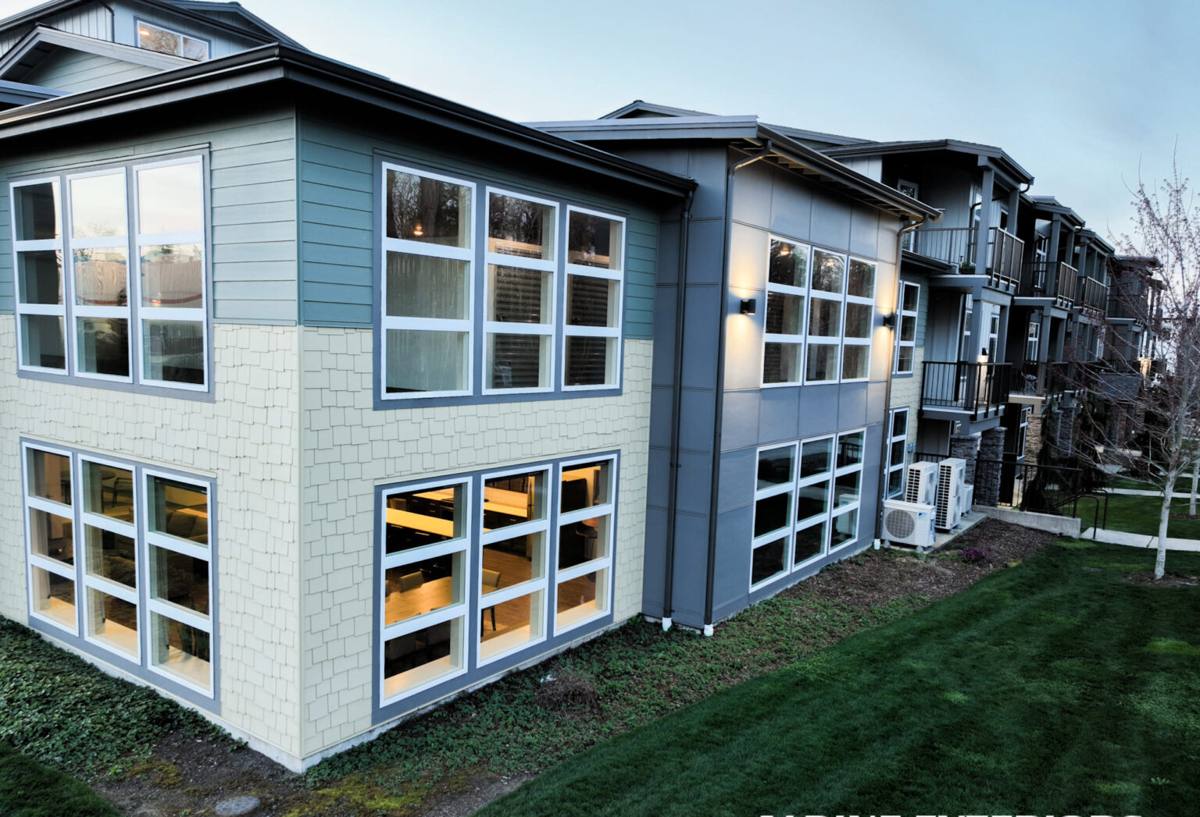
Signs Your Windows Are Losing That Fight
Most window failures near the water show up gradually, and homeowners often chalk up early signs to normal wear. Watch for:
- Fogging or a permanent haze between panes, which means the seal on a double- or triple-pane unit has failed and the gas fill is gone
- Soft or discolored trim and sill wood, especially on walls that face the water or catch prevailing wind
- Corroded or seized hardware — locks, cranks, or hinges that feel gritty or won't move smoothly
- Visible moss or dark streaking building up in frame corners and along the bottom rail
- Drafts you can feel with a hand near the frame on a windy day, even with the window latched
- Paint or finish that's bubbling or peeling on the interior sill, which usually points to moisture getting in behind the frame
Any one of these on its own might just need a repair. Several of them together, especially on an older window, usually means the unit and its installation have reached the end of their useful life.
What a Correct Installation Involves Here
Frame Materials That Hold Up Near Salt Water
We steer Semiahmoo homeowners toward frame materials and hardware finishes that are rated for coastal or marine-grade exposure. Vinyl and fiberglass frames generally outperform bare aluminum near the water because they don't corrode, and stainless or coated hardware holds up far longer than standard steel fasteners. This isn't a knock on any specific manufacturer — it's just an honest read of how different materials behave when they're exposed to salt air day after day for years.
Flashing and Moisture Management
The window itself is only part of the job. What actually keeps water out over the long run is the flashing and moisture barrier work around the opening — sill pans that direct any water that does get in back out to the exterior, properly lapped house wrap, and sealant applied at the right points, not everywhere. We treat this step as the real work of a window replacement, because a great window installed with sloppy flashing will still leak, and a modest window installed correctly will outperform it.
Glass and Weatherstripping for Driving Rain and Wind
Whatcom County storms don't just drop rain straight down — wind pushes it sideways into the wall, which is a harder condition for a window to resist than still-air rain. For Semiahmoo installs we pay close attention to the weatherstripping compression and the water-testing rating of the unit itself, not just its energy performance numbers. A window with a strong U-factor but weak air and water infiltration ratings can still let wind-driven rain through. We also favor low-E glass coatings that help manage the temperature swings between damp mornings and the sun that does break through, which reduces condensation on the interior glass — a common complaint in homes near open water.
Comparing Window Frame Options for a Waterfront Property
| Frame Type | Salt-Air Durability | Maintenance | Typical Trade-Off |
|---|---|---|---|
| Vinyl | Good — won't corrode or rust | Low; occasional cleaning | Fewer color/finish options; can look less premium on higher-end homes |
| Fiberglass | Very good — stable and corrosion-resistant | Low | Higher upfront cost than vinyl |
| Wood-clad | Fair — depends on cladding quality and sealing | Higher; needs monitoring at joints and sills | Best interior appearance, but more exposure risk if the cladding or sealant fails |
| Aluminum | Poor to fair near salt water unless marine-grade | Moderate to high | Slim sightlines, but corrosion risk without proper coating |
There's no single right answer for every home — a wood-clad window on a covered, wind-protected wall can perform fine for years, while the same window on an exposed, water-facing elevation will need more attention. Part of our estimate process is walking the exterior with you and pointing out which openings are higher-exposure so the material choice matches the actual conditions on each wall.
Our Window Replacement Process
- On-site assessment — we look at each window opening, note exposure direction, existing damage, and how water has been draining (or not) around the current units
- Measurement and material selection — exact sizing plus a frame and glass package suited to that wall's sun, wind, and rain exposure
- Removal — old units come out carefully to protect siding and interior finishes, with a check of the sheathing underneath for hidden rot before anything new goes in
- Flashing and sill pan installation — this is the step that determines whether the window stays dry for the next twenty years, and we don't shortcut it
- New window installation and shimming — set plumb, level, and square, with proper insulation in the gap rather than just foam sprayed in loosely
- Exterior sealing and trim — sealant at the correct points only, plus trim work that sheds water instead of trapping it
- Final walkthrough — we test operation, check the seal, and walk the job with you before we call it done
What Affects the Cost of a Semiahmoo Window Project
Every home is different, but a few factors consistently move the price up or down:
| Factor | Why It Matters |
|---|---|
| Number and size of openings | Larger picture windows and bay/bow configurations cost more than standard double-hungs |
| Frame material | Vinyl is typically the most budget-friendly; fiberglass and wood-clad cost more upfront |
| Condition of the existing opening | Hidden rot or water damage found during removal adds repair work before the new window goes in |
| Wall exposure | Water-facing or wind-exposed walls may call for upgraded flashing details or hardware finishes |
| Egress and code requirements | Bedroom windows and certain renovations may need to meet current egress sizing rules |
| Access | Second-story or hard-to-reach windows take more labor time than ground-level openings |
We give straightforward, itemized estimates so you can see what's driving the number, rather than a single lump figure. If a lower-cost option makes sense for a given wall, we'll tell you — our goal is a window package that matches the exposure, not the most expensive option on the list.
Why It Matters to Hire a Crew That Already Works Semiahmoo
A contractor who mostly works inland can still do a technically fine window install and still get surprised by how a waterfront property behaves. Wind patterns off the bay, how far salt spray actually reaches into a property, and which walls take the worst of a winter storm aren't things you learn from a general training manual — they're things you learn by working properties in this specific area over time. We've spent enough time on Blaine and Semiahmoo jobs to know which details are worth the extra attention here and which parts of a standard install are already more than adequate. That local pattern recognition is part of what you're paying for when you hire a crew that already knows this stretch of Whatcom County, not just window installation in general.
Living with New Windows Through Moss Season
A correct installation reduces maintenance, but it doesn't eliminate it. During Semiahmoo's long moss season, keep weep holes and drainage tracks clear of debris, and rinse frame corners and sills periodically if you notice green buildup starting — catching it early is far easier than scrubbing established growth later. New windows with proper flashing and quality frame materials will handle this environment with far less fuss than an aging install, but a few minutes of seasonal upkeep still goes a long way toward getting the full lifespan out of the investment.
If your windows are showing their age or you're just not sure whether repair or replacement makes sense for your situation, we're happy to take a look. Fill out the form below for a free, no-pressure estimate — we'll walk the property, point out what we see, and give you honest options for your home in Semiahmoo.