 Blaine Siding
 Why Board & Batten Fits Semiahmoo's Waterfront Homes
Semiahmoo sits right on the water, tucked against Semiahmoo Bay and Drayton Harbor at the northwest corner of Whatcom County, just south of the Canadian border. It's a different animal than siding a home a few miles inland in Blaine. Homes here are more exposed to wind off the water, more exposed to salt-laden air, and more exposed to the kind of sideways, driving rain that Pacific Northwest coastal storms bring in off the Strait of Georgia. Board and batten siding is a popular choice out here for good reason: the vertical lines read as clean and modern against the water, they pair well with the mix of contemporary and Pacific Northwest architecture common in the area, and the batten strips add visual depth that flat lap siding doesn't. But the same wide, exposed vertical panels that make board and batten look good are also the panels most punished by a bad install in a marine climate. Get the system wrong and you'll see it in the joints, the fastener lines, and the paint film within a few winters. Get it right and it's one of the lowest-maintenance exteriors you can put on a bay-front home.
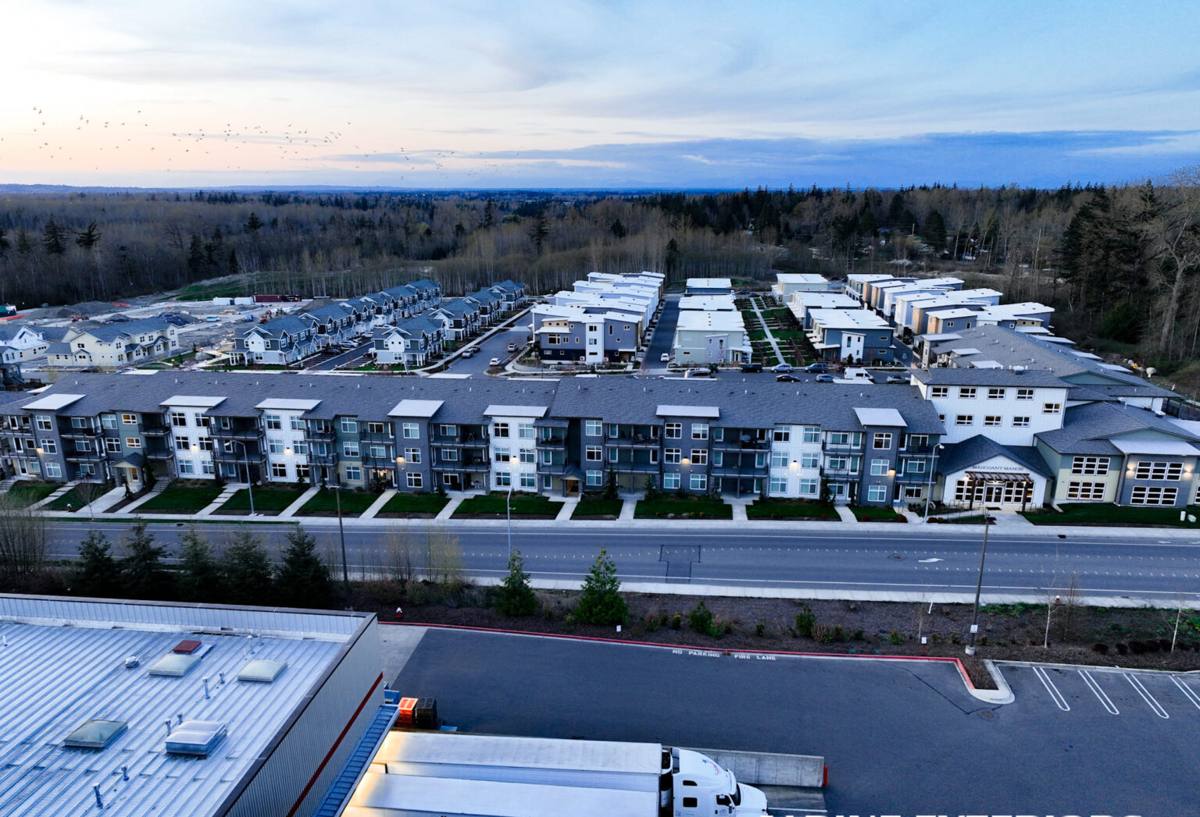
What Salt Air, Driving Rain, and Moss Season Do to Vertical Siding
Salt air
Airborne salt off the bay settles on every exterior surface, including siding, trim, and fasteners. It doesn't just sit there — it holds moisture against the surface longer than dry air would, and it accelerates corrosion on anything metal that isn't rated for coastal exposure. On board and batten specifically, that means fastener heads, flashing, and any exposed trim hardware are under more stress here than they would be on the same house set back from the water.
Driving rain
Board and batten's vertical joints run with the water flow instead of across it, which sounds like an advantage — and in a properly built system, it is. But under wind-driven rain, water doesn't just run straight down; it gets pushed sideways and can find its way behind a panel through any gap, seam, or under-flashed joint. A siding system that would shed a light rain fine can still let water in during a January windstorm coming straight off the water.
Moss season
Whatcom County's wet season runs long, and shaded, north-facing walls near mature trees or tight to a neighboring structure stay damp for months at a stretch. That's exactly the environment moss and algae need to take hold. On some siding materials that's mostly cosmetic. On siding with a weak factory finish or exposed raw edges, sustained moss growth holds moisture against the substrate and speeds up whatever decay process was already starting.
Board & Batten Done Right: The System Behind the Look
The visual result of board and batten is simple — wide panels, vertical battens over the seams — but a correct installation is a system, not a look. On a Semiahmoo project, we treat every one of these details as non-negotiable, not optional upgrades:
Rainscreen gap
We install furring strips to create a drainage gap between the siding and the weather-resistive barrier. That gap lets any moisture that does get past the panel face drain and dry out instead of sitting against the sheathing. On a home taking direct exposure off the bay, this gap is doing real work, not just satisfying a spec sheet.
Flashing at every transition
Windows, doors, roof-to-wall intersections, and horizontal trim bands are where vertical siding fails first if flashing is skipped or shortcut. Every horizontal transition gets proper flashing and correct water-shedding lap sequence — flashing over the layer below it, never the reverse.
Fastener placement and spacing
Board and batten panels move with temperature and moisture, and fastener spacing has to account for that without over-driving or under-driving nails into the panel face. Fastener type matters just as much in a salt-air environment — we use corrosion-resistant fasteners rated for the exposure, not whatever's cheapest by the box.
Sealed and primed cut edges
Every field cut exposes raw fiber cement that needs to be sealed before it's closed in. Skipping this step is invisible on install day and shows up as a failure point two or three winters later, usually at a corner or window return.
Why We Install Only James Hardie Board & Batten
We install James Hardie fiber cement exclusively — no vinyl, no LP SmartSide, no cedar, no primed spruce, no other fiber cement brand. For a bay-front install, that decision comes down to how the product behaves under exactly the conditions Semiahmoo homes deal with.
James Hardie's board and batten panels are non-combustible fiber cement, engineered specifically for wet, high-moisture climates through its HZ5 product line built for the Pacific Northwest. The panels carry a factory-applied ColorPlus finish, which is baked on under controlled conditions rather than field-applied — meaning the color coat is more uniform and more resistant to fading and moisture intrusion at the surface than a site-painted finish. That matters directly here: a factory finish holds up better against the UV and moisture cycling of a marine climate, and it comes with a stronger, factory-backed warranty on the finish itself, not just the substrate.
We're not saying every other product on the market is unusable — cedar has real appeal, vinyl is cheap, LP SmartSide has its fans. But cedar in a wet, moss-prone coastal climate is a maintenance commitment most owners underestimate — regular refinishing, vulnerability to rot at end grain, and ongoing moss and mildew management. Vinyl can warp, fade, and crack under UV and temperature swings, and it doesn't hold up structurally the way fiber cement does in wind-driven rain events. Primed wood trim and siding need repainting on a cycle that only gets shorter in salt air. We standardized on Hardie because, installed to spec, it's the product we're comfortable putting our name behind on a house that's going to take direct exposure off the bay for the next several decades.
Our Process for a Semiahmoo Board & Batten Project
- Site walk and exposure assessment — we look at which walls take direct wind and rain off the water, which stay shaded and damp longer, and where the existing siding or sheathing shows signs of prior moisture issues.
- Tear-off and sheathing inspection — old siding comes off and we inspect the sheathing underneath before anything new goes up. Rot or water damage gets addressed before it's covered again.
- Weather-resistive barrier and furring — a correctly lapped barrier goes down first, followed by the furring strips that create the rainscreen gap.
- Flashing installation — every window, door, and horizontal transition is flashed before panels go on.
- Panel and batten installation — Hardie panels are hung to correct fastener spacing, with battens set over the seams and all cut edges sealed on-site.
- Final trim and detail work — corners, transitions, and any penetrations (vents, fixtures, hose bibs) are sealed and finished.
- Walkthrough — we go over the finished exterior with the homeowner before calling the job done.
Board & Batten vs. Other Vertical Siding Materials
| Material | Coastal moisture behavior | Maintenance | Typical lifespan |
|---|---|---|---|
| James Hardie fiber cement (HZ5) | Engineered for wet climates; non-combustible; factory finish resists moisture at the surface | Occasional wash; repaint only if ever desired, not required on schedule | Decades, with strong transferable warranty |
| Cedar board and batten | Natural material; absorbs and releases moisture; prone to rot at end grain and fasteners | Regular refinishing, moss/mildew treatment, caulk maintenance | Shorter without diligent upkeep |
| Vinyl vertical siding | Can warp or distort under UV and temperature swings; seams can allow water intrusion | Low, but damage often requires panel replacement rather than repair | Variable; performance drops in direct coastal exposure |
| Primed wood/spruce | Vulnerable to moisture absorption if primer coat is compromised | Repainting on a recurring cycle, shorter in salt air | Shorter without consistent maintenance |
Maintenance in a Bay-Front, Moss-Prone Climate
Correctly installed Hardie board and batten is low-maintenance, not no-maintenance. A short seasonal routine keeps it performing the way it's designed to:
- Rinse salt residue and grime off the siding face once or twice a year, especially on walls with direct water exposure.
- Keep vegetation and tree cover trimmed back from shaded walls so they get airflow and dry out between rain events.
- Check caulking at window and door trim annually and re-seal any joints that have opened up or cracked.
- Look at ground-level trim and any splash zones near downspouts or hardscape for standing moisture or moss buildup.
- Address any impact damage or exposed cut edges promptly rather than leaving raw fiber cement exposed to weather.
What Board & Batten Siding Typically Costs
Cost on any Semiahmoo project depends on a handful of factors specific to the site, not just square footage:
| Cost factor | Why it matters here |
|---|---|
| Wall exposure and access | Waterfront-facing walls and tight-lot access affect scaffolding, staging, and installation time |
| Existing sheathing condition | Prior moisture intrusion found during tear-off may require repair before new siding goes on |
| Amount of trim and window/door detail | More transitions mean more flashing and cut-and-seal work |
| Panel and batten configuration | Batten spacing and reveal choices affect material quantity and labor |
| Color and finish selection | ColorPlus factory finish options vary slightly in cost from standard primed panel |
We don't quote broad numbers here because every one of these factors shifts the estimate — that's exactly what a site visit and written quote are for.
Why a Crew That Already Works Semiahmoo Matters
A siding crew that hasn't worked bay-front properties before will treat a Semiahmoo home like any other job in Whatcom County — same fastener spacing, same flashing details, same assumptions about how much weather the wall is going to see. That's how you end up with a house that looks right on install day and starts showing problems at the joints and corners a couple of winters in. Working this specific stretch of coastline repeatedly means knowing which walls need the most attention to flashing and rainscreen detail before the crew ever shows up, not figuring it out on the fly. It also means we've already made the call on materials — board and batten, in James Hardie fiber cement, installed to a system built for exactly this kind of exposure — rather than defaulting to whatever's fastest to install.
If you're planning a board and batten project on a Semiahmoo home, we're happy to walk the site with you and give you a straight, no-pressure estimate — what your walls are actually dealing with, what the job involves, and what it will cost. There's a form below to get started.