 Blaine Siding
 Why Semiahmoo Roofs Wear Differently Than Roofs Inland
Semiahmoo sits out on its own spit, with water on multiple sides and very little to break the wind before it hits a roofline. That changes what a roof deals with compared to a home a few miles inland in Blaine proper. You get more sustained wind loading, more wind-driven rain forced up under shingle edges and around penetrations, and a heavier, more persistent coating of salt-laden air settling on every exposed surface. None of that is dramatic on any single day. It's the accumulation over years that separates a roof that makes it to 25-30 years from one that starts showing granule loss, curling edges, and soft spots at 12-15.
Add in Whatcom County's long wet season and the shade thrown by mature conifers on many Semiahmoo lots, and you have ideal conditions for moss and algae to take hold on anything that isn't detailed correctly. We're not describing anything unusual for this corner of the Pacific Northwest — it's just concentrated here by the exposure and the water on every side.
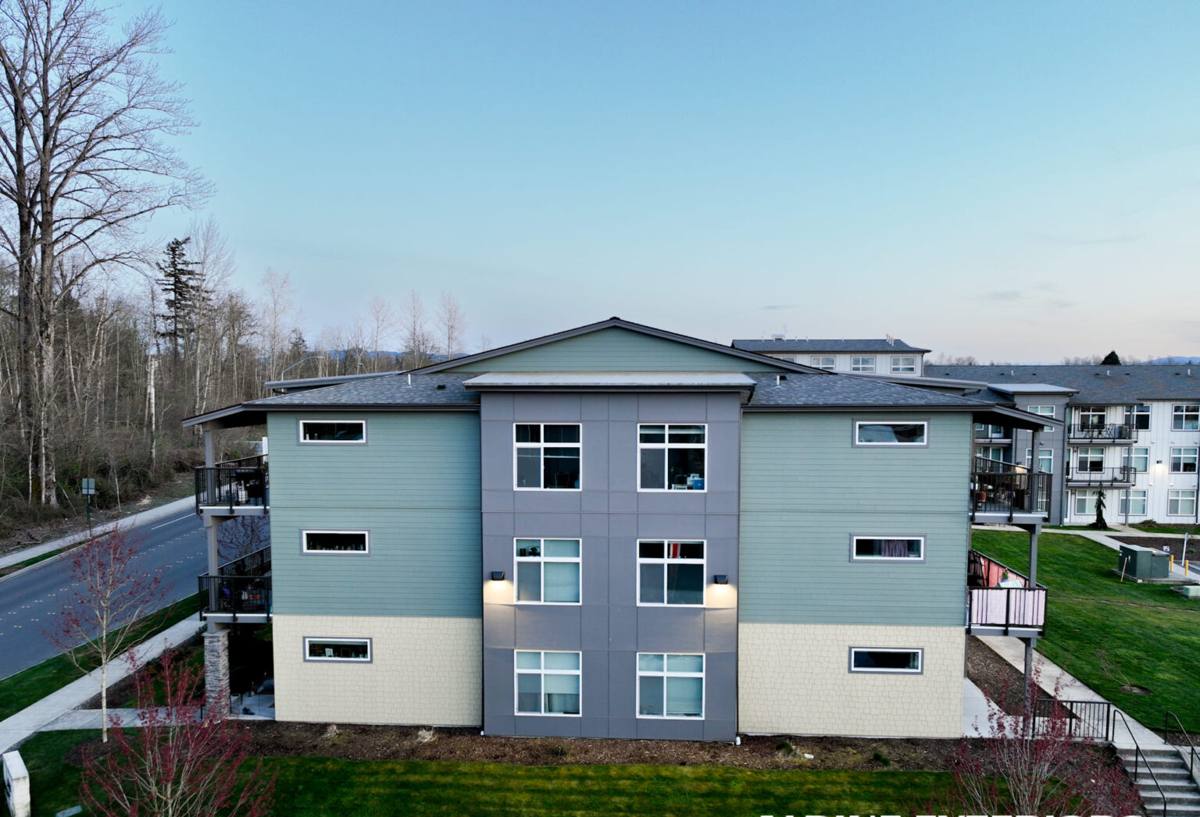
What a Correctly Built Shingle Roof Needs on the Spit
A shingle roof is a system, not just a layer of shingles nailed to plywood. On a waterfront lot like this, every layer underneath the shingles matters more than it would on a sheltered inland roof, because wind-driven rain will find any weak point in the assembly.
Underlayment and Water Protection
We install synthetic underlayment across the full roof deck and self-adhering ice-and-water membrane at the eaves, valleys, and around every penetration — chimneys, vent stacks, skylights. On a home taking direct wind off the water, we treat this layer as the actual waterproofing, with the shingles as the wear surface and first line of defense. That's a different mindset than treating underlayment as an afterthought, which is common in drier, more sheltered markets but doesn't hold up here.
Flashing That Matches the Exposure
Step flashing at walls, apron flashing at eaves, and properly lapped valley metal are non-negotiable on a spit lot. Wind-driven rain doesn't just fall straight down — it gets pushed sideways and upward under flashing that's only adequate for calm weather. We size and lap flashing for the wind exposure this location actually sees, not the minimum a code inspector would sign off on inland.
Ventilation That Keeps Moisture Moving
Balanced intake and exhaust ventilation matters everywhere, but on a marine-climate roof it does double duty: it dries out the sheathing after wind-driven moisture gets in around vents and penetrations, and it keeps attic humidity from feeding mold and rot from the inside. A roof can look fine on the surface for years while the deck underneath is quietly failing because ventilation was never balanced correctly.
Choosing a Shingle That Can Actually Handle Salt Air and Wind
Not every asphalt shingle is built for this kind of exposure, and the differences aren't cosmetic — they show up in how the roof ages.
| Shingle Type | Wind Performance | Algae/Moss Resistance | Best Fit for Semiahmoo |
|---|---|---|---|
| Standard 3-tab | Lower wind rating, more prone to edge lift in gusts | Standard granules only, no built-in resistance | Budget projects on sheltered, non-waterfront lots |
| Architectural / laminate | Higher wind rating, thicker laminated construction | Available with algae-resistant granules | Our default recommendation for most Semiahmoo homes |
| Impact-resistant laminate | Highest wind rating, reinforced mat | Available with algae-resistant granules | Fully exposed waterfront lots, homes with a history of storm damage |
We steer most Semiahmoo homeowners toward algae-resistant architectural shingles as the baseline, not because other products are junk, but because the copper- or zinc-infused granules genuinely slow moss and algae growth, and the thicker laminated construction handles wind uplift better at eaves and rakes — the two spots that fail first in a coastal wind event. Lighter 3-tab shingles still have a place on more sheltered, inland-facing sections, but we won't put them on a fully exposed waterfront elevation and call it a long-term fix.
Our Process, Start to Finish
- On-site inspection. We get on the roof, check the deck condition from the attic side where possible, and look specifically at flashing, valleys, and ventilation — not just shingle wear.
- Written scope and estimate. You get a clear breakdown of tear-off, deck repair allowance, underlayment, flashing, shingle product, and ventilation work — no vague lump-sum guessing.
- Tear-off and deck check. We remove the old roofing down to the deck and address any soft or delaminated sheathing before anything new goes down, since covering a bad deck just hides the problem.
- Underlayment and flashing installation. Ice-and-water membrane at vulnerable areas, synthetic underlayment across the field, new flashing at every wall, valley, and penetration.
- Shingle installation. Installed to the manufacturer's wind-rated nailing pattern — this is where a lot of wind warranty claims get denied on other jobs, because the pattern was rushed or shortcut.
- Ventilation and final details. Ridge and soffit ventilation balanced, all penetrations sealed, site cleaned and magnet-swept for stray fasteners.
- Walkthrough. We go over the finished roof with you before we consider the job done.
Moss, Algae, and What Actually Slows Them Down
Moss and dark algae streaking are the two complaints we hear most from Semiahmoo homeowners, usually on north-facing slopes or sections shaded by trees. There's no shingle that makes moss impossible in this climate — anywhere Whatcom County stays wet and shaded long enough will grow something eventually. What actually helps:
- Algae-resistant granules built into the shingle, which slow (not eliminate) the growth that causes those dark streaks
- Keeping tree limbs trimmed back so roof sections get more sun and airflow, which is often more effective than any product choice
- Zinc or copper strips at the ridge on shaded roofs, which release trace metal with rainfall runoff to inhibit regrowth over time
- Gentle, low-pressure cleaning on a schedule — not pressure washing, which strips granules and shortens shingle life
- Keeping gutters clear so trapped moisture at the eaves doesn't accelerate moss growth right where wind-driven rain is already testing the roof
We'll tell you honestly if a section of your roof is a moss magnet no matter what shingle goes on it — usually because of shade and orientation, not the roofing material — so you're not paying for a promise the site itself can't keep.
What Affects Cost on a Semiahmoo Re-Roof
Every roof is priced from an actual measurement and inspection, but a few things consistently move the number on homes out here more than they would on a typical inland Blaine roof:
| Factor | Why It Matters Here |
|---|---|
| Wind exposure of the lot | Fully exposed waterfront elevations often call for a higher wind-rated shingle and more robust flashing details |
| Deck condition | Long-term moisture exposure can mean more sheathing replacement than an inland roof of the same age |
| Roof complexity | Valleys, dormers, and multiple roof planes all add flashing work, which matters more when wind-driven rain is a real factor |
| Access | Waterfront and resort-area lots sometimes have tighter access or landscaping to protect, which affects setup and cleanup time |
| Shingle tier selected | Algae-resistant and impact-resistant products cost more up front but reduce maintenance and moss remediation later |
We're not going to publish a fake per-square price here, because a roof priced without seeing the deck and the site is a guess, not an estimate. What we can tell you is that we break every number down by category so you can see exactly where the money goes.
Signs Your Semiahmoo Roof Needs a Closer Look
- Granules collecting in gutters or at downspout outlets
- Shingle edges curling or lifting, especially at eaves and rakes facing the water
- Dark streaking or visible moss patches on north-facing or shaded slopes
- Soft spots underfoot when walking the roof, or sagging visible from the ground
- Daylight or water staining visible in the attic around penetrations or valleys
- Missing or lifted shingles after a windstorm, even just a few
- Rusting or visibly separated flashing at walls, chimneys, or valleys
Any one of these on its own isn't necessarily an emergency, but on an exposed lot they tend to compound faster than homeowners expect. Catching them early is almost always cheaper than waiting for a leak to show up on the ceiling.
Why It Matters That We Already Work This Area
Semiahmoo isn't a typical subdivision, and a crew that mostly works sheltered inland streets doesn't automatically know how to detail a roof for direct wind off the bay. We've built our flashing details, shingle recommendations, and ventilation approach around what actually holds up on exposed Whatcom County waterfront lots — not around a generic install that happens to meet minimum code. That shows up in fewer callbacks for wind-lifted shingles and fewer surprise moss complaints two winters after the job is done.
It also means we're not learning on your roof. We know which elevations on a spit lot need the heavier shingle and reinforced flashing, and which ones don't, so you're not overpaying for protection you don't need or underbuilding a section that's genuinely exposed.
Get a Straight Answer on Your Roof
If you're not sure whether your Semiahmoo roof needs a repair, a partial re-roof, or a full replacement, we'll come look at it and tell you honestly which one it is. We offer free, no-pressure estimates — you'll get a clear written scope and a real number, not a sales pitch. Use the form below to get started.