 Blaine Siding
 Sandy Point Windows Work Harder Than Most
Sandy Point sits right up against the marine weather that rolls off the Strait of Georgia and Boundary Bay, and that changes what a window has to survive here compared to a house a few miles inland in Blaine or elsewhere in Whatcom County. Salt-laden air corrodes hardware and pits aluminum. Wind-driven rain finds gaps that would never leak in a sheltered yard. And the long stretch of damp, low-light months every fall and winter feeds a moss and algae season that keeps sills, tracks, and exterior trim wet for weeks at a time. None of that is a reason to panic about your windows — but it is a reason to replace them correctly, with materials and installation details matched to a waterfront exposure instead of a generic inland spec.
This page covers window replacement specifically for Sandy Point homes: what the climate demands, what a correct installation actually involves, and how we approach the job for a community we already work in regularly.
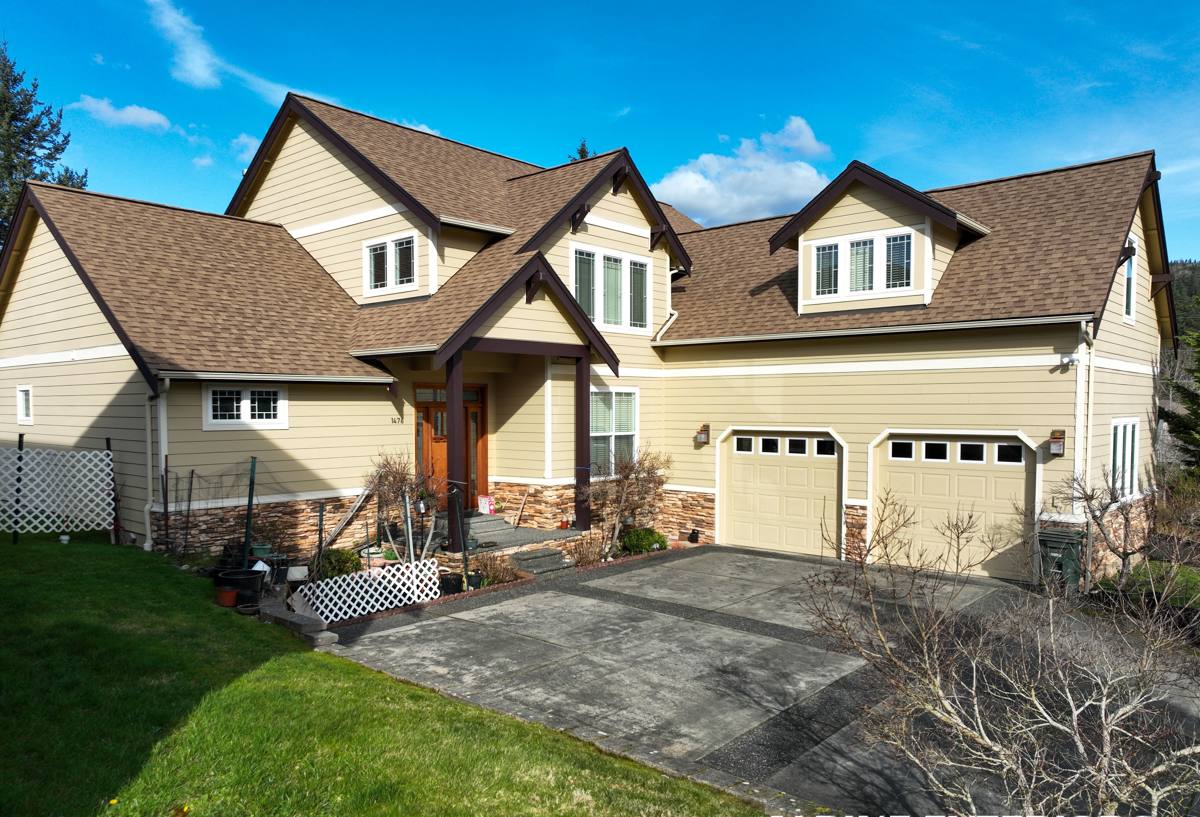
Signs a Sandy Point Home Needs Window Replacement
Coastal exposure tends to show up in windows before it shows up anywhere else on a house, because glass units and seals take the brunt of temperature swings, salt, and moisture cycling. Here's what we look for, and what you can check yourself before calling anyone:
- Fogging or a hazy film between panes — the sign of a failed seal in a double- or triple-pane unit, common after years of salt air and temperature cycling
- Soft or spongy wood at the sill or lower corners of the frame, especially on windows facing prevailing wind and rain
- Corroded or pitted hardware — locks, cranks, and hinges that stick, won't latch fully, or have visible rust bloom
- Visible moss, algae, or dark staining building up in the frame or on the sill even after cleaning
- Noticeable draft or a cold band of air near the frame during winter storms off the water
- Difficulty opening or closing, which often means the frame itself has shifted or begun to swell
- Single-pane or original builder-grade windows that have simply never been upgraded
Any one of these can sometimes be handled with a repair. Several at once, on a window that's already original to the house, usually means replacement is the better long-term move — repeated patching on a frame that's already compromised rarely holds up through another wet season.
What a Correct Installation Involves Here
The window unit itself matters, but in a marine environment the installation details matter just as much — arguably more, since a good window installed with poor flashing will still leak, and a modest window installed correctly will outperform it.
Flashing and Water Management
Every opening gets flashed so that any water that reaches the wall assembly is directed back out, not trapped behind the siding. That means proper sill pan flashing, correctly lapped side and head flashing, and sealant used in the right places — not as a substitute for flashing, but as a backup to it. On a Sandy Point home taking direct wind-driven rain, this is the single biggest factor in whether a window replacement lasts fifteen years or fails in five.
Frame and Rough Opening Condition
We don't install a new window into a rotted or compromised rough opening and call it done. If sheathing or framing around the opening has taken on moisture damage, that gets addressed first — otherwise you've spent money on a new window sitting in a wet frame, and the problem resurfaces within a couple of seasons.
Sealing and Insulation
Gaps around the new frame get properly insulated and air-sealed, not just caulked at the exterior trim. This affects both energy performance and how much wind noise and draft you notice during winter storms.
Choosing Materials for a Waterfront Exposure
Not every window material handles salt air and constant moisture cycling the same way. Here's how the common options compare for a Sandy Point property specifically:
| Material | Salt Air / Corrosion | Moisture Behavior | Maintenance | Typical Cost Position |
|---|---|---|---|---|
| Vinyl | Excellent — won't corrode or rust | Doesn't absorb water, but seals and hardware still need to be quality-grade | Low — occasional cleaning | Lower to mid |
| Fiberglass | Excellent — very stable in coastal conditions | Dimensionally stable, resists swelling | Low | Mid to higher |
| Wood (clad exterior) | Good if cladding is intact; exposed wood suffers | Vulnerable at any point the cladding is breached or unsealed | Higher — needs monitoring at joints and sills | Higher |
| Aluminum | Poor without marine-grade coatings — prone to pitting and corrosion | Conducts cold and can promote condensation | Moderate to high near saltwater | Varies |
We generally steer Sandy Point homeowners toward vinyl or fiberglass for most applications, simply because they hold up with the least maintenance in salt air. That's a practical trade-off recommendation based on how these materials behave in coastal exposure over time — not a claim that other materials can't work. A clad-wood window can absolutely perform well here if the cladding and flashing details are done right and someone keeps an eye on it; it's a higher-maintenance choice, and we'll tell you that plainly before you commit to it.
Glass Package
Double-pane, low-E glass is the standard baseline for this climate and handles Whatcom County's temperature range well. Triple-pane adds further insulation and sound dampening, which some owners value given how often storms roll through, but it's a real cost increase and not strictly necessary on every elevation of every house — it's most worth considering on windows facing the water directly or on a north-facing wall that stays cold and damp longest.
Our Process for a Sandy Point Window Replacement
1. On-Site Assessment and Measurement
We look at each opening individually — sun and wind exposure, current condition of the sill and framing, and how the existing window has held up — before recommending materials. A window on the water-facing side of the house often warrants a different spec than one on a sheltered wall.
2. Removal and Opening Prep
Old units come out carefully to avoid unnecessary damage to surrounding siding and trim. Any soft or water-damaged framing found at this stage gets flagged and addressed before the new window goes in — this is the point where hidden problems surface, and it's better to deal with them now than after the new window is sealed in place.
3. Flashing, Installation, and Sealing
New sill pan and flashing go in first, then the window is set plumb and level, fastened per manufacturer spec, insulated around the frame, and sealed at the exterior with the right materials for the siding type.
4. Interior and Exterior Finish
Trim is reinstalled or replaced, caulking lines are cleaned up, and the opening is finished on both sides so it looks intentional, not patched.
5. Walkthrough
We check operation, latching, and seal on every window before we consider the job finished, and we're straightforward about anything that needs a return visit.
Timing and Moss Season
Window replacement can happen most of the year here, but there are practical reasons to plan around Blaine's wet season rather than in the middle of it. Working during the driest stretch of the year reduces the number of days an opening is exposed before the new unit is sealed in, and it gives fresh caulk and sealant proper cure time before the next round of driving rain arrives. If a window is actively failing — leaking or letting in water — we don't wait for ideal weather to address it; we prioritize getting the opening weathertight and schedule the full replacement as soon as reasonably possible.
Moss and algae buildup on sills and tracks isn't just cosmetic — trapped organic growth holds moisture against wood and finishes longer than plain rain does, which is part of why older single-pane wood windows in this area often show sill damage well before the glass or hardware fails.
What Affects the Cost
Every Sandy Point property is a little different, so we don't quote sight-unseen, but the main variables are consistent:
- Number of windows and whether they're standard sizes or custom shapes
- Material chosen — vinyl, fiberglass, or clad wood, as outlined above
- Glass package — double-pane versus triple-pane, and whether specific elevations need upgraded glass
- Condition of the rough opening — hidden rot or framing damage adds scope once an old window comes out
- Story height and access — second-story or hard-to-reach openings take more time and equipment
- Exterior finish work needed to match existing trim and siding
We walk through these factors on-site so you know what's driving the number, not just what the final total is.
Why a Crew That Already Works Sandy Point Matters
A contractor who mainly works inland jobs may not think twice about flashing detail or hardware corrosion resistance, because those things rarely bite an inland house. On a Sandy Point property, cutting that corner shows up as a leak or a jammed lock within a few seasons instead of a couple of decades. Working regularly in this specific stretch of Whatcom County means we're not guessing at what the exposure here requires — wind direction, rain intensity, and how long moisture sits on a surface before it dries are all things we account for by default, not as an upsell.
It also means straightforward answers about what your specific house needs versus what's simply a good upgrade elsewhere. Not every window on a Sandy Point home needs the top-tier spec — the ones facing the water usually deserve it more than the ones tucked on a sheltered wall, and we'll tell you which is which.
Get a Straight Answer for Your Home
If you're dealing with foggy glass, corroded hardware, drafts, or a window that's simply original and tired, we're happy to take a look and give you an honest read on repair versus replacement — no pressure, no inflated scope. Reach out for a free estimate using the form below, and we'll walk your Sandy Point property with the local climate in mind from the start.