 Blaine Siding
 Why Sandy Point Roofs Age Differently
Sandy Point sits right up against the water, and that changes what a roof has to deal with year after year. Salt-laden air moves inland off the Strait, driving rain comes in sideways during winter storms, and the shaded, moisture-heavy stretches of fall through spring keep roof surfaces damp far longer than they would be a few miles inland. None of that is dramatic on its own, but stacked together over a decade or two, it wears through roofing materials faster than a standard interior-Whatcom County home ever sees.
We're not describing a worst-case scenario — this is just the normal weather pattern for homes this close to the water in Whatcom County. A roof replacement done right here accounts for all three factors: salt exposure, wind-driven rain, and a moss season that can run most of the year. A roof that would perform fine in a drier, more sheltered setting can fall short here if it's installed the same way.
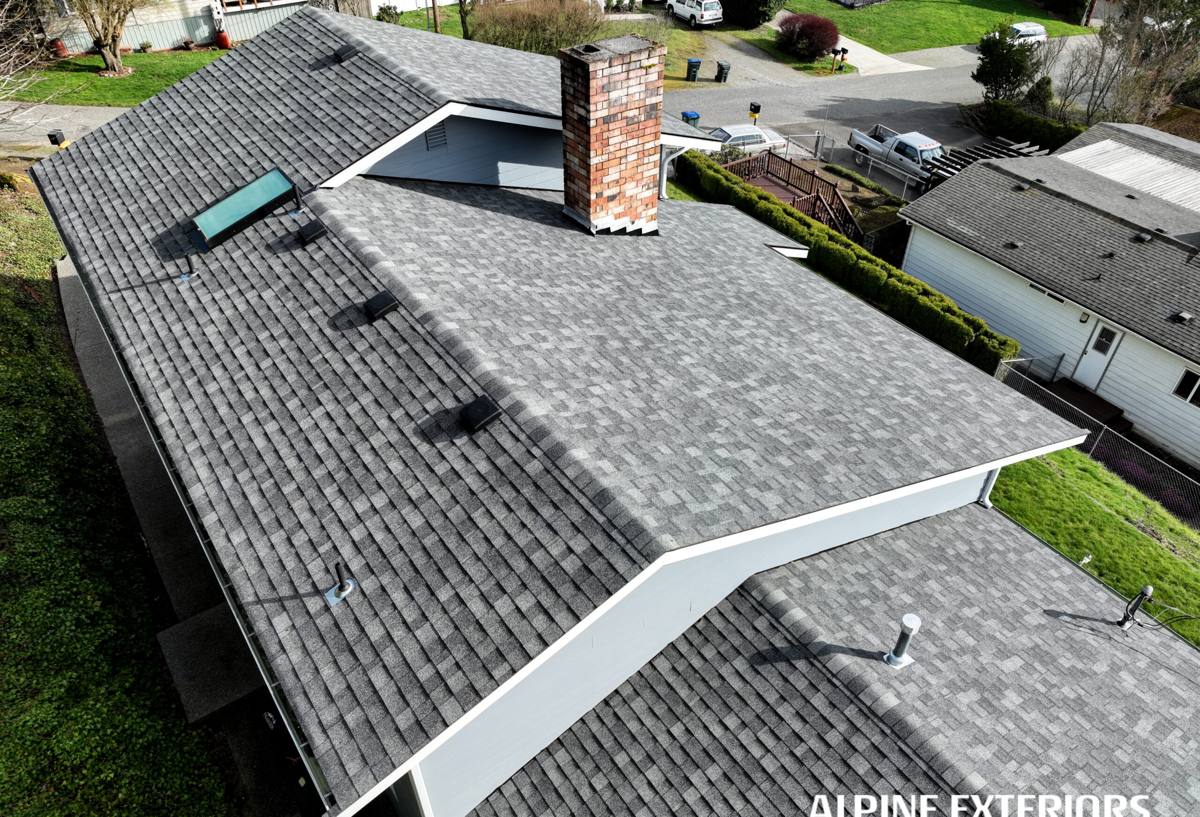
Signs a Sandy Point Roof Needs Replacing, Not Patching
Repairs make sense when a roof has isolated damage and the rest of the system is sound. Replacement becomes the honest recommendation when the underlying materials are worn out broadly, even if only a few spots are actively leaking. Some signs we look for on local homes:
- Granule loss heavy enough that shingles look patchy or the color has gone uneven across large sections
- Moss that keeps returning within a season or two of cleaning, especially on north-facing or shaded slopes
- Soft or spongy decking felt underfoot during an inspection, a sign moisture has been getting past the surface layer
- Flashing around chimneys, vents, and valleys that's rusted, lifted, or was never properly step-flashed to begin with
- Shingles curling, cupping, or losing their seal — common once asphalt roofing passes the 15-20 year mark near saltwater
- Daylight visible through the attic decking, or consistent damp insulation even without an obvious active leak
If a roof is showing two or three of these at once, patching individual spots usually just delays a full tear-off while the underlying deck keeps taking on moisture.
Age Alone Isn't the Whole Story
A roof's age tells you something, but a 12-year-old roof on a shaded, wind-exposed Sandy Point lot can be in worse shape than an 18-year-old roof on a sunnier, more sheltered one. We look at actual condition — decking, flashing, ventilation, and material wear — rather than going strictly by install date.
What a Correct Roof Replacement Involves
A roof replacement is more than swapping old shingles for new ones. Done properly, every layer gets attention, because a weak layer underneath will undercut even the best material on top.
Tear-Off and Deck Inspection
We remove the old roofing down to the deck rather than layering over it. That's the only way to actually see the sheathing — soft, delaminated, or water-stained sections get identified and replaced before anything new goes down. Covering over a compromised deck just hides the problem for another few years.
Underlayment Built for Wet Winters
Underlayment is the roof's backup layer if wind ever drives rain up under the shingles, which happens more often on exposed, water-adjacent lots than most homeowners realize. We use a synthetic or ice-and-water underlayment appropriate to the exposure of the roof, with extra protection at eaves, valleys, and any low-slope transitions where water lingers longest.
Flashing That Actually Sheds Water
Most leaks that show up years after a roof job trace back to flashing, not the shingles themselves. Chimneys, skylights, sidewalls, and valleys all need properly layered, corrosion-resistant flashing — not just a bead of sealant. In a salt-air environment, the metal itself matters: some flashing metals corrode faster near saltwater, and we account for that in what we install.
Ventilation Sized to the Home
Balanced intake and exhaust ventilation keeps the attic close to outside temperature and moisture levels. Without it, warm, moist air collects under the deck, which is exactly the condition moss and rot both need to take hold. We calculate ventilation based on attic square footage, not a one-size-fits-all vent count.
Material Options for a Salt Air, High-Moss Climate
There's no single "best" roofing material for every home — it depends on budget, roof pitch, how long the homeowner plans to stay, and how much long-term maintenance they want to take on. Here's how the common options compare for a Sandy Point setting specifically.
| Material | Typical Lifespan Here | Moss/Moisture Behavior | Salt Air Considerations |
|---|---|---|---|
| Architectural asphalt shingle | 20-30 years | Algae-resistant granule options reduce moss/streaking but don't eliminate it — periodic cleaning still needed | Performs well; fasteners and flashing metal should be corrosion-resistant |
| Standing seam metal | 40-60+ years | Sheds moisture fast, moss has little to hold onto on smooth panels | Choose coatings and fastener hardware rated for coastal exposure |
| Synthetic/composite shingle | 30-50 years | Resists moisture absorption better than wood-look alternatives | Generally stable in salt air; confirm manufacturer coastal warranty terms |
| Cedar shake | 20-30 years with upkeep | Highest moss and moisture risk of the group; needs regular treatment | Salt air and constant damp accelerate wear without diligent maintenance |
We're upfront when a material isn't a good fit for a specific roof. Cedar shake, for example, can look great, but it asks for a level of ongoing maintenance — cleaning, treating, monitoring for moisture — that's a harder commitment on a shaded, damp, salt-exposed lot. That's a maintenance and moisture-behavior trade-off, not a knock on the product itself; some owners are happy to take that on, and we'll install it correctly if that's the choice.
What Drives Cost on a Sandy Point Roof Replacement
Every roof is different, so we don't quote sight-unseen, but these are the main factors that move a project's price up or down:
| Factor | Why It Matters |
|---|---|
| Roof size and pitch | Steeper roofs take longer, need more safety setup, and use more material per square |
| Number of layers to remove | Tear-off cost rises with each existing layer of roofing on the deck |
| Deck repair needed | Rotted or soft sheathing sections add material and labor beyond the base roofing job |
| Material choice | Asphalt, metal, and synthetic products span a wide cost range and different install labor |
| Flashing and ventilation scope | Chimneys, skylights, valleys, and vent upgrades all add detail work |
| Access and site conditions | Tight lots, tree cover, or difficult staging can add setup time |
We walk homeowners through these line by line during the estimate so there's no confusion about what's driving the number.
Our Replacement Process
The process is straightforward, but we don't skip steps to save time — skipped steps are usually where future leaks come from.
- On-site inspection of the current roof, decking, flashing, and attic ventilation
- Written estimate covering material options, scope, and a realistic timeline
- Scheduling around weather windows — we don't tear off a roof ahead of an incoming storm system
- Full tear-off and deck inspection, with any repairs identified and reviewed with the homeowner before covering them up
- Underlayment, flashing, and ventilation installed to the standard the home actually needs
- Final material installation, followed by a walk-through of the finished roof
- Job-site cleanup, including a magnetic sweep for stray fasteners
Why a Crew Familiar With Sandy Point Matters
A roof replacement isn't just a product installed on a home — it's a system that has to be matched to how that specific property sits in the weather. Crews who regularly work this stretch of Whatcom County already know which slopes tend to hold moss longest, where wind-driven rain causes the most trouble around flashing, and which fastener and flashing materials hold up against salt air instead of corroding early. That familiarity shows up in fewer surprises during the job and a roof that's built for the actual conditions it'll face, not generic assumptions.
It also matters for permitting and inspection — working within Whatcom County and City of Blaine requirements without delays that stall a project mid-tear-off, which is the worst time for a roof to sit exposed.
Maintaining a New Roof in This Climate
A correctly installed roof still benefits from basic upkeep in a climate like this one:
- Clear gutters and downspouts each fall so water isn't backing up under the eaves
- Have moss growth addressed early, before it lifts shingle edges or holds moisture against the surface
- Keep overhanging branches trimmed back to reduce shade and debris buildup on the roof
- Schedule a periodic visual check after major windstorms, since that's when flashing and fasteners are most likely to loosen
None of this is intensive, but staying ahead of it is what lets a well-installed roof reach the full end of its expected lifespan instead of falling short of it.
Get a Straight Answer on Your Roof
If you're not sure whether your Sandy Point roof needs a full replacement or can hold on a bit longer, we're glad to take a look and give you an honest read — no pressure either way. Use the form below to request a free estimate, and we'll walk the roof, explain what we find, and lay out your real options.