 Blaine Siding
 Building a Deck That Actually Belongs at Sandy Point
Sandy Point sits close enough to the water that every deck out here is fighting the same battle: salt-laden air, wind-driven rain coming off the Strait, and a wet season that runs long even by Whatcom County standards. A deck built the way you'd build one twenty miles inland — standard hardware, standard spacing, standard finish schedule — will show its age here in a fraction of the time. Rust bleeds out of fastener heads within a couple of seasons, moss takes hold in shaded corners and stair treads, and boards that were never detailed for drainage start trapping water where they shouldn't.
None of that means a deck at Sandy Point has to be high-maintenance or short-lived. It means the build has to account for where it's going before the first post hole is dug. This page walks through what that actually looks like — the materials, the connection details, and the process — for anyone planning a new deck or replacing one that didn't hold up.
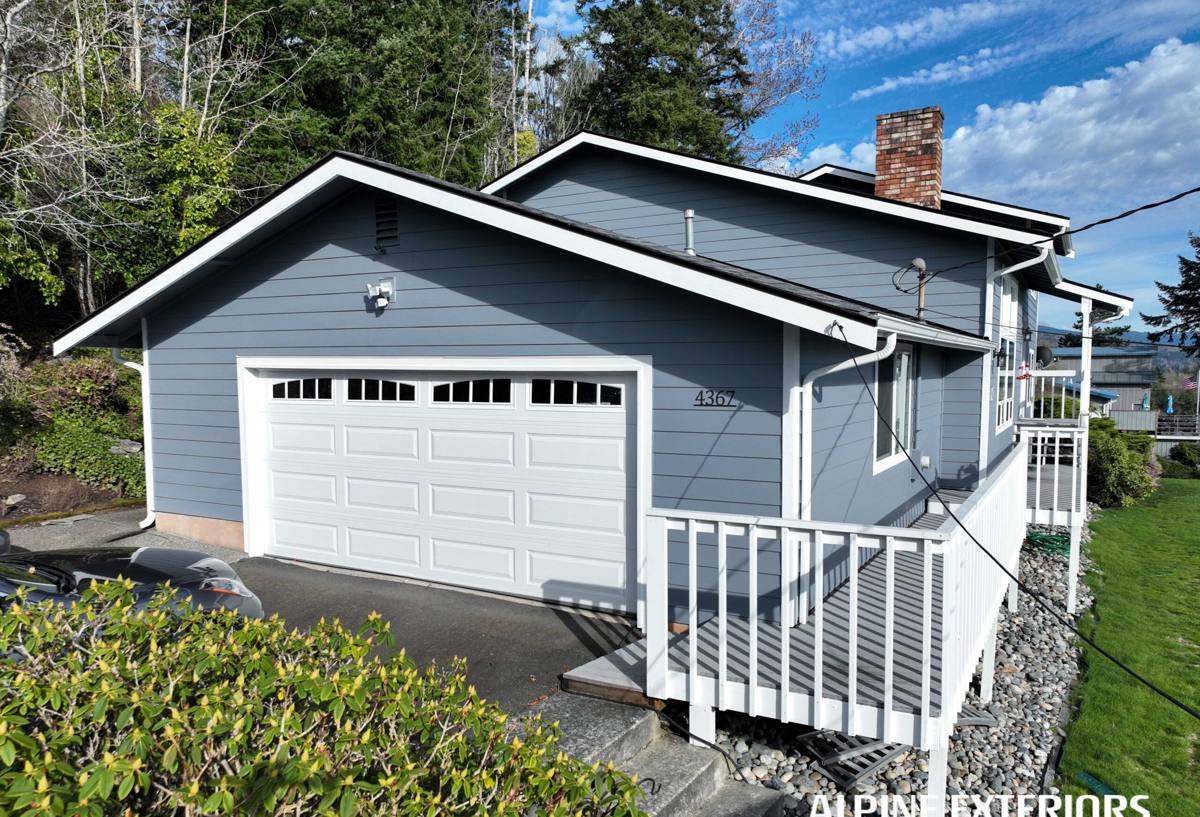
Why Sandy Point Is Harder on a Deck Than a Typical Blaine Lot
Three things stack up against outdoor structures in this part of Whatcom County, and they compound each other:
- Salt air: airborne salt off the Strait of Georgia and Semiahmoo Bay accelerates corrosion on any exposed metal — nails, screws, joist hangers, bolts, and railing hardware. This isn't a coastal-Florida level of exposure, but it's real, steady, and cumulative over years.
- Driving rain: storms here don't just fall straight down — wind pushes rain sideways into ledger connections, under railing posts, and into any horizontal surface that isn't sloped or flashed correctly.
- A long moss season: shaded, north-facing, or tree-covered decks stay damp for months at a stretch. Moss and algae aren't just cosmetic — they hold moisture against the wood surface and make treads and landings slick.
Individually, any one of these is manageable. Together, on a deck that wasn't detailed for them, they shorten the life of fasteners, framing, and decking boards well below what the materials are rated for.
What a Correctly Built Deck Needs Out Here
Corrosion-Resistant Hardware, Not Just Coated Hardware
Standard galvanized fasteners are fine for a lot of the region, but near the water we treat stainless steel or high-grade coated fasteners (rated for the specific decking and framing being used) as the baseline, not an upgrade. The joist hangers, structural screws, and any exposed bolts or brackets get the same treatment. This matters more than almost any other single decision on the job, because fastener failure is the most common reason a structurally sound-looking deck turns out to be unsafe underneath.
Drainage Built Into the Framing, Not Added Later
Every horizontal surface on a deck — the ledger connection, the joists, the decking itself — needs somewhere for water to go. That means proper flashing at the ledger board where the deck meets the house, correct board spacing for drainage and airflow, and, where a deck sits close to grade or has limited underside ventilation, attention to how air and water move underneath it.
Material Choices That Match the Site
Not every deck at Sandy Point needs the same decking material — sun exposure, tree cover, and how close the lot sits to the water all factor in. We walk through that with you rather than defaulting to one product for every job.
Decking Material Comparison for a Salt-Air, High-Moisture Site
| Material | Salt Air / Moisture Behavior | Moss Season Maintenance | Typical Cost Position |
|---|---|---|---|
| Pressure-treated wood | Good if properly sealed and re-sealed on schedule; end grain and fastener points are the weak spots | Needs periodic cleaning and re-sealing to resist moss and graying | Lowest upfront cost |
| Cedar | Naturally moisture- and insect-resistant, but still needs finish maintenance near salt air | Can develop moss/mildew in shaded areas without upkeep | Mid-range |
| Composite decking | Doesn't absorb moisture the way wood does; resists rot at the board level | Surface can still grow algae/moss in damp shade — needs occasional washing | Higher upfront, lower ongoing maintenance |
| PVC/capped composite | Very strong moisture resistance, including at cut ends when capped correctly | Easiest to keep clean of moss and grime | Highest upfront cost |
There's no universally "correct" answer in this table — it's about matching the material to the site conditions, the budget, and how much upkeep the homeowner actually wants to do. What we won't do is put a moisture-sensitive product in a low-airflow, shaded spot and call it good; that's a maintenance headache we can usually see coming and steer around at the design stage.
Framing and Ledger Attachment: Where the Real Risk Lives
Most deck failures that make the news aren't decking board failures — they're ledger board or framing connection failures, and they're invisible from the top until something gives. A ledger board bolted to the house without correct flashing will let water track behind it for years, quietly rotting the rim joist or sheathing it's attached to. In a driving-rain climate, that flashing detail is not optional trim work — it's the difference between a deck that lasts and one that fails from the inside out.
We also pay attention to post bases and any framing member that sits close to grade or standing water. Direct wood-to-concrete or wood-to-soil contact is where rot starts fastest, especially with the amount of rain Whatcom County sees over a typical winter.
Railings, Stairs, and Safety Through Moss Season
Railings and stair treads take the brunt of moss and algae growth because they're often in shade and rarely walked on enough to stay clear naturally. A few things we build in from the start:
- Stair tread material and spacing chosen with slip resistance in mind, not just appearance
- Railing post connections detailed to shed water rather than pool it at the base
- Baluster and post spacing that meets code, with hardware that won't streak or corrode into the surrounding wood or composite
- Layout that avoids unnecessary shaded pockets where moss gets a foothold and never dries out
None of this eliminates the need for a homeowner to clean a deck occasionally — no coating or material makes that fully unnecessary in this climate — but good detailing at the build stage cuts down how often and how hard that cleaning has to be.
Our Process for a Sandy Point Deck Build
1. Site Walk and Exposure Assessment
We look at the lot's actual exposure — how close it sits to the water, prevailing wind and rain direction, tree cover, and existing drainage patterns — before talking materials. Two lots a few blocks apart at Sandy Point can have meaningfully different exposure.
2. Material and Layout Discussion
Based on that walk, we go through decking material, hardware grade, and railing options with you, including honest trade-offs on maintenance and upfront cost — not just what's easiest for us to install.
3. Permitting
Deck construction in and around Blaine typically requires a permit, and lots near the water can carry additional setback or shoreline-related review depending on the parcel. We handle that process as part of the job rather than leaving it for the homeowner to sort out.
4. Framing and Flashing First
Ledger flashing, joist hangers, post bases, and fastener grade get set before any decking goes down — this is the part of the job that determines how long the deck lasts, even though it's the part nobody sees once it's finished.
5. Decking, Railing, and Finish Work
Board installation, railing assembly, and stair construction follow, with attention to spacing and drainage throughout, not just at the edges.
6. Walkthrough
We walk the finished deck with you, cover what maintenance it actually needs (and what it doesn't), and answer questions before we consider the job done.
Maintenance Checklist for a Salt-Air, Moss-Season Deck
- Sweep debris and standing leaves off the deck surface regularly, especially in shaded corners
- Wash down decking and stair treads at least once or twice a year to clear early moss and algae growth before it builds up
- Check railing post bases and stair stringers periodically for any signs of trapped moisture or rust bleed from fasteners
- Re-seal wood decking on the schedule the product calls for — don't wait until graying is severe
- Keep gutters and downspouts near the deck clear so runoff isn't dumping extra water onto or under it
- Trim back overhanging branches that keep sections of the deck shaded and damp longer than necessary
Why a Crew That Already Works Sandy Point Is Worth It
A lot of deck problems out here aren't the result of bad workmanship in general — they're the result of a build that would have been fine somewhere drier, applied to a lot that gets driving rain and salt air. A crew that already works this stretch of Whatcom County isn't guessing at hardware grade or flashing details; they've seen what fails first on decks in this specific environment and build around it from the start. That's less about a sales pitch and more about not paying twice — once for the deck, and again a few years later to fix the parts that were never suited to where they were built.
If you're planning a new deck at Sandy Point or need to replace one that didn't hold up, we're glad to take a look and talk through what your specific lot needs — no pressure, no upsell on materials you don't need. Reach out for a free estimate using the form below.