 Blaine Siding
 Board & Batten Built for a Beach Community
Sandy Point sits close enough to the water that the weather isn't the same as siding a house a few miles inland in Blaine. Salt-laden air off the Strait of Georgia works on fasteners, trim, and paint film in ways that inland homes never experience. Wind-driven rain hits gable ends and exposed walls at an angle instead of falling straight down, which means water finds every gap a lazy installation leaves behind. And the long gray stretch of fall through spring here keeps north-facing walls and anything under tree cover damp enough, long enough, for moss and algae to take hold. Board and batten siding — with its vertical boards and raised battens covering the seams — is a great look for the cottage and coastal-cabin style common around Sandy Point, but it is also a style with more seams, more fastener penetrations, and more opportunities for water to get trapped than a plain lap siding job. Done right, it holds up beautifully in this environment. Done wrong, it's one of the faster ways to end up with rot behind the battens within a few years.
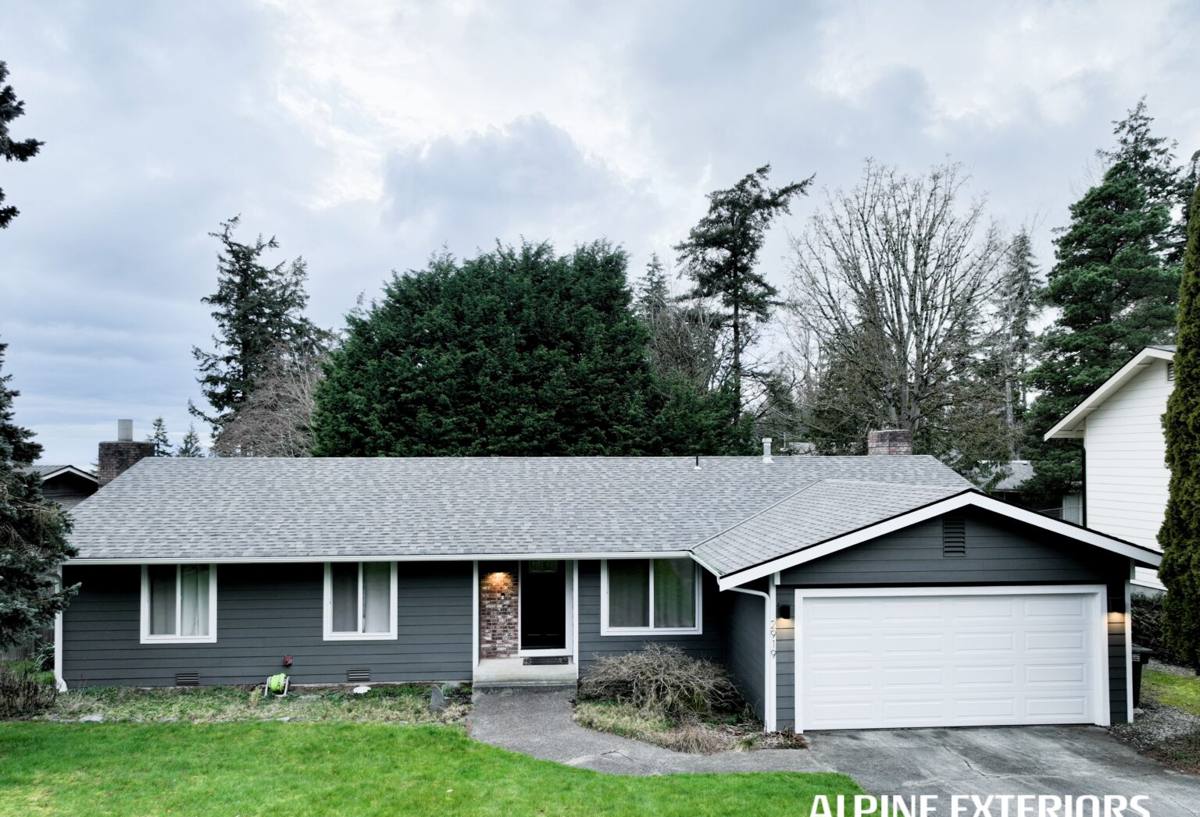
What Board & Batten Siding Actually Is
Board and batten is a vertical siding pattern: wide flat boards installed side by side, with narrower strips (the battens) fastened over the seams between them. It's been used on coastal and farm buildings for generations because the vertical lines shed water well when the assembly underneath is built correctly, and because the look reads as clean, casual, and a little more distinctive than standard horizontal lap siding.
Why It Fits the Sandy Point Look
A lot of homes in and around Sandy Point lean into a beach-cottage or Pacific Northwest coastal aesthetic — simple rooflines, covered porches, muted or weathered color palettes. Board and batten pairs naturally with that style, whether it's used on an entire house, a gable accent, or a porch and entry feature against a field of lap siding. It's a design choice as much as a technical one, and we treat it that way: get the proportions, batten spacing, and reveal right, and it looks intentional. Get them wrong, and it looks like siding was hung without a plan.
Why We Only Install This in James Hardie Fiber Cement
Board and batten can be built in several materials, and every one of them shows up in siding jobs around Whatcom County. We install it in James Hardie fiber cement exclusively, and it's worth explaining why, because the reasons are specific to this style and this location.
Cedar Board and Batten
Real cedar is the traditional material for this look, and it can look excellent. But cedar is also a wood product living in a climate that stays wet for months at a time, sitting a short distance from salt air. It needs consistent refinishing to keep water out of the end grain and the batten seams, and any missed maintenance cycle shortens its life. We're not saying cedar is a bad product — we're saying it asks for a maintenance commitment that most homeowners underestimate when they're picturing the finished look rather than the upkeep schedule.
Vinyl Board and Batten
Vinyl board and batten exists and is inexpensive, but it's a poor match for this style specifically. Vinyl expands and contracts significantly with temperature swings, and board and batten's vertical seams and raised battens make that movement more visible than it is on lap siding. In a salt-air environment it also fades and becomes brittle faster than in a drier inland climate, and it can't be painted to refresh it once it does.
LP SmartSide and Other Engineered Wood
Engineered wood siding is a wood-strand product with a resin binder, and its long-term performance depends entirely on unbroken edge sealing. Board and batten multiplies the number of cut edges and fastener points compared to plain lap siding, and every one of those is a place moisture can start working into the substrate if the seal isn't perfect and stays that way. In a climate with this much sustained damp exposure, that's a risk we're not willing to build into a home.
James Hardie Fiber Cement
Hardie fiber cement doesn't have organic material for moisture to break down, doesn't expand and contract the way vinyl does, and is non-combustible. Its ColorPlus factory finish is baked on and warranted against fading, which matters directly here — salt air and UV are hard on painted finishes, and a factory finish holds up better than field-applied paint on a house exposed to both. Hardie's HZ5 product line is engineered for exactly this kind of moisture and freeze-thaw exposure. It's the one material in this comparison we're comfortable standing behind for a style with this many seams, in this environment.
What a Correct Installation Actually Involves
The material is only half the equation. Board and batten fails more often from installation shortcuts than from a bad product choice, and in a high-moisture climate those shortcuts show up faster.
Rainscreen Gap
Vertical siding should be installed over furring strips that create a drainage gap behind the boards, not fastened flat against the weather-resistive barrier. That gap lets any water that gets past the surface drain and dry instead of sitting against the sheathing. On a wall this exposed to driving rain, skipping the rainscreen is the single most common reason board and batten fails early.
Batten Spacing and Fastening
Battens need consistent spacing over the board seams and correct fastener placement — through the underlying board, not just into the batten — following the manufacturer's engineering. Fasteners placed wrong or spaced too far apart let the boards move and open the seams over time, which is exactly where water gets in.
Flashing at Every Transition
Every window, door, roofline, and horizontal trim board where board and batten terminates needs proper flashing and a drip cap, not just caulk. Caulk is a maintenance item that needs to be renewed; flashing is a permanent water-management detail. In a climate that stays wet as long as this one does, relying on caulk alone at these transitions is asking for a callback in a few years.
Ground Clearance and Bottom Terminations
The bottom of the siding needs proper clearance from grade, decks, and roof surfaces so boards aren't sitting in standing water or splashback. This is a detail that's easy to shortcut around porches and lower walls, which are common on the covered-porch style of homes near Sandy Point.
Comparing Board and Batten Materials for This Climate
| Material | Salt Air Resistance | Moisture Tolerance | Maintenance | Finish Longevity |
|---|---|---|---|---|
| James Hardie Fiber Cement | Strong | Strong — non-organic substrate | Low — occasional wash | Factory ColorPlus finish, warranted |
| Cedar | Moderate | Moderate — needs sealed finish maintained | High — refinish on a cycle | Field-applied, fades and needs renewal |
| LP SmartSide / Engineered Wood | Moderate | Depends entirely on edge sealing | Moderate — monitor cut edges and seams | Factory finish, edge-dependent |
| Vinyl | Weak — fades and embrittles in salt air | Fair, but seams matter less structurally | Low, but not repaintable | Fades over time, cannot be refinished |
How We Handle Sandy Point Projects
We work Sandy Point regularly, so a project here isn't the first time we're figuring out how a beach-adjacent Blaine home behaves.
- On-site walk and assessment of wall exposure — which elevations take the most wind-driven rain, which stay shaded and damp longer, and how the existing wall assembly is built.
- Removal of old siding and inspection of the sheathing underneath for any moisture damage before anything new goes on.
- Repair of any compromised sheathing or framing found during tear-off — this gets flagged and discussed before we cover it back up.
- Installation of a weather-resistive barrier and furring strips to build in the drainage gap board and batten needs.
- Hardie board and batten installation to manufacturer spec, with correct fastening, batten spacing, and flashing at every window, door, and transition.
- Final walk-through so you can see the finished detailing before we call the job done.
What We Check Before Quoting
Because board and batten adds more seams and edges than lap siding, we look closely at wall exposure and existing moisture conditions before pricing a Sandy Point project — a shaded north wall near mature trees gets treated differently in the plan than a wall that gets full sun and wind off the water.
Living With Board and Batten in a Salt Air, Moss-Prone Climate
A correctly installed Hardie board and batten system is genuinely low-maintenance, but "low" isn't "zero." A little seasonal attention keeps it looking right and keeps small issues from becoming big ones.
- Rinse salt residue and grime off the siding once or twice a year, especially on walls facing the water
- Keep gutters clear so water isn't overflowing and running down wall surfaces
- Trim back vegetation and tree cover that keeps any wall shaded and damp longer than it needs to be
- Watch shaded, north-facing sections for early moss or algae growth and clean it before it spreads
- Check caulking at trim and transition points annually, even with proper flashing underneath
- Have any impact damage or fastener issues looked at promptly rather than waiting
Why Hiring a Crew That Already Works Here Matters
A siding crew that mostly works drier, more sheltered parts of Whatcom County can still do competent lap siding work and still get board and batten wrong on a property like this — not from lack of skill, but from not building in the extra margin this exposure calls for. Knowing that a wall faces prevailing wind-driven rain, or that a shaded corner is going to stay damp longer than the rest of the house, changes decisions on furring, flashing, and fastening before a single board goes up. That's the value of a crew that already works Sandy Point regularly: the climate-specific details aren't an afterthought, they're the starting assumption.
If you're considering board and batten siding for a home in Sandy Point, we're happy to walk the property, look at your wall exposure, and put together a straightforward, no-pressure estimate — just fill out the form below to get started.