 Blaine Siding
 Roof Replacement Built for Lynden's Climate
Lynden sits far enough inland from the water to feel different from Blaine's shoreline, but the two share the same weather engine: wet Pacific systems rolling off the Strait of Georgia, long stretches of low gray sky, and a moss season that can run eight months out of the year in a shaded yard. A roof out here isn't just shedding rain a few times a week during storm season — it's living under a near-constant film of moisture from fall through spring, with salt-tinged air drifting in from Semiahmoo Bay and Drayton Harbor adding its own slow toll on metal fasteners and flashing. Roof replacement in this part of Whatcom County has to account for all of that, not just the roof-shape-and-shingle-color decisions that dominate a generic remodel.
We work Lynden and the surrounding Blaine area regularly, which means we're not guessing at how a roof here ages — we're looking at roofs we installed five, ten, fifteen years ago and seeing firsthand which details held up and which didn't.
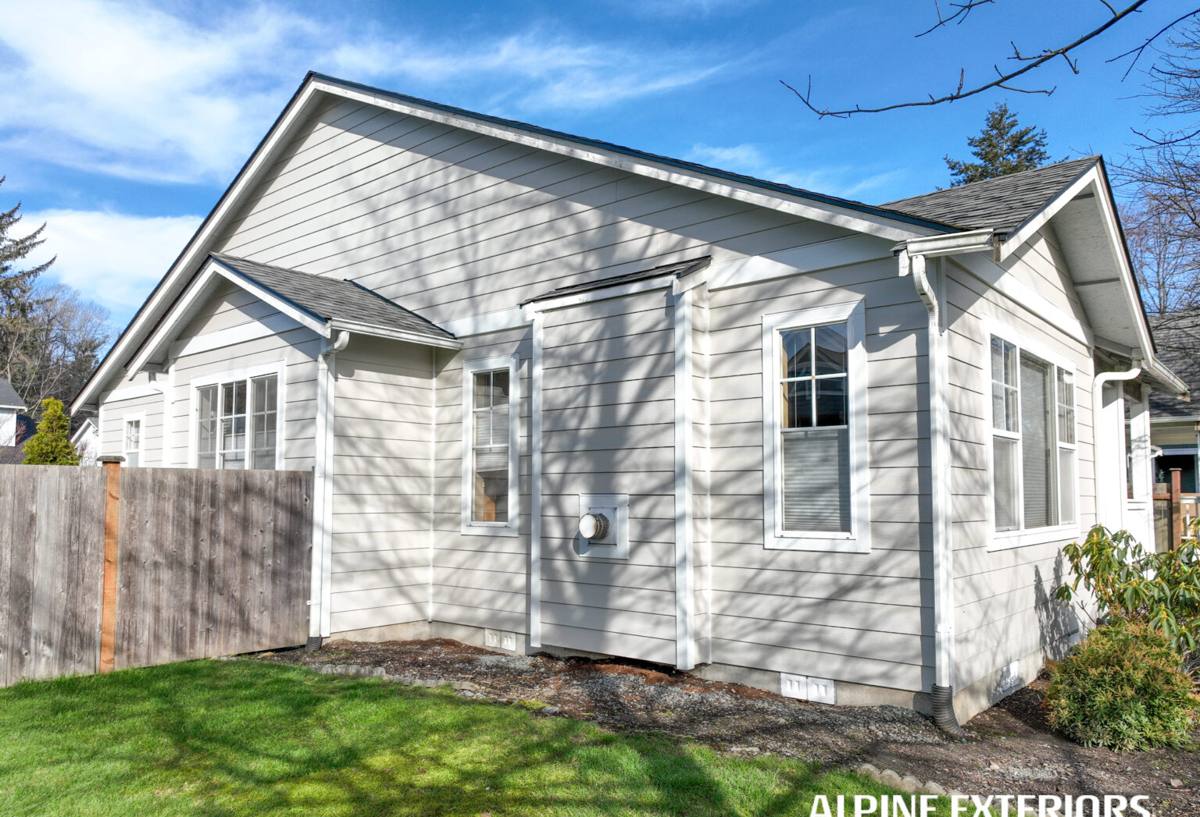
What Whatcom County Weather Actually Does to a Roof
Moss and Organic Growth
Lynden's tree cover, dairy-country humidity, and mild winters are close to ideal conditions for moss, lichen, and algae. Moss isn't just cosmetic — it holds moisture against the roofing material, works its way under shingle tabs and lifts them, and on older roofs it can hold enough water that the deck underneath stays damp for weeks at a time. North-facing slopes and anything shaded by mature trees or a neighboring structure will always be the first place it shows up.
Driving Rain and Wind-Driven Water
Storms coming off the water don't always fall straight down. Wind-driven rain pushes water sideways under shingle edges, around chimney flashing, and into any gap in a ridge vent or valley that wasn't sealed correctly the first time. A roof that's fine in a light drizzle can still leak in a January windstorm if the underlayment and flashing details weren't built for sideways water.
Salt Air and Corrosion
Blaine and the shoreline stretch toward Lynden get a steady dose of salt-laden air. Over years, that air accelerates corrosion on exposed fasteners, cheap flashing, and unprotected metal roof edges. It's a slower process than the moss issue, but it's part of why we pay attention to fastener and flashing material, not just the shingle brand, on every job out here.
Freeze-Thaw Cycling
Whatcom County winters aren't brutally cold, but they do dip below freezing on clear nights and warm back up during the day. That freeze-thaw cycling is hard on any roofing material that's already holding trapped moisture — it's one more reason a wet, moss-covered roof deteriorates faster here than the same roof would in a drier climate.
Signs a Lynden Roof Needs Replacing, Not Patching
- Granule loss heavy enough that you're finding grit in gutters and downspouts every time it rains
- Shingles that are cupping, curling at the edges, or cracking when you look at them from the ground
- Moss or dark algae streaking that keeps coming back within a year or two of cleaning
- Soft or spongy spots on the deck, felt through the roof surface or visible from the attic
- Daylight visible through the roof boards from inside the attic
- Repeated leaks around the same chimney, skylight, or valley despite prior patch repairs
- A roof that's past 20-25 years old (composition shingle) or showing widespread wear rather than one isolated problem area
- Missing or lifted shingles after a windstorm, especially if it's happened more than once in a season
One or two of these on their own might mean a targeted repair is enough. Several at once, especially on a roof already past the 20-year mark, usually means repair costs start competing with replacement costs without buying you much extra life.
What a Correct Roof Replacement Involves
A roof replacement done right isn't just stripping old shingles and nailing down new ones. For Lynden's conditions, the details underneath the shingles matter as much as the shingles themselves.
Tear-Off and Deck Inspection
We remove the old roofing down to the deck so we can actually see what's there. Trapped moisture under an old roof often means soft or delaminated sheathing, and that has to be replaced before anything new goes down — covering a rotten deck with new shingles just hides the problem.
Underlayment Selection
Given how much wind-driven rain this area sees, underlayment choice matters more than it would in a drier climate. We use synthetic or ice-and-water underlayment strategically at eaves, valleys, and roof penetrations — the spots most likely to see water pushed sideways or pooling during heavy weather.
Flashing and Penetrations
Chimneys, vents, skylights, and valleys are where most roof leaks actually start, not in the open field of shingles. We use corrosion-resistant flashing material and proper step-and-counter-flashing techniques rather than relying on caulk or roof cement as a long-term seal — sealant fails over time; correctly lapped metal doesn't.
Ventilation
A roof that can't breathe traps moisture in the attic, which shortens the life of the deck and the shingles from underneath. We check that intake (soffit) and exhaust (ridge or box vents) are balanced, not just present, before closing the job out.
Fastening and Wind Resistance
Proper nail count and placement, per the manufacturer's wind-rated installation instructions, is what actually keeps shingles on the roof during a Whatcom County windstorm — not the shingle's rated wind speed on paper.
Choosing Materials for This Climate
There's no single "best" roofing material for Lynden — it depends on the home, the budget, and how much long-term maintenance the owner wants to take on. Here's how the common options actually compare for this climate:
| Material | Moss/Moisture Resistance | Maintenance | Typical Lifespan Here |
|---|---|---|---|
| Architectural composition shingle | Good with proper ventilation; algae-resistant granules help | Periodic moss removal recommended | 20-30 years |
| Metal roofing | Excellent — sheds moisture, doesn't hold organic growth | Low; check fastener condition over time near salt air | 40-60+ years |
| Cedar shake | Requires diligent upkeep; moss-prone without treatment | High — regular treatment and inspection needed | 20-30 years with upkeep |
| Synthetic/composite shingle | Good; resists moisture absorption | Low to moderate | 30-50 years |
We'll walk through the honest trade-offs for your specific roof — pitch, sun exposure, tree cover, and budget all change which option makes the most sense.
Our Process for a Lynden Roof Replacement
- On-site inspection — we look at the current roof, the attic, ventilation, and any trouble spots before quoting anything
- Written estimate — a clear scope of work and material options, no pressure to decide on the spot
- Scheduling around weather — we plan tear-off and dry-in around the forecast so your home isn't exposed during a storm
- Tear-off and deck repair — old material removed, deck inspected and repaired as needed
- Underlayment, flashing, and shingle installation — built to the details above, not just the minimum code requirement
- Cleanup and final walkthrough — magnetic sweep for debris and a final look together before we call it done
Why Local Experience Matters for This Job
Roofing crews who don't work this area regularly tend to default to whatever spec sheet they use everywhere else. That can mean underlayment and ventilation choices that are fine in a drier inland climate but undersized for the driving rain and moss pressure a Lynden roof actually deals with. Working Blaine and the surrounding Whatcom County communities consistently means we're not applying a generic template — we're applying what we've watched actually hold up, and what hasn't, on roofs a few miles from yours.
It also means we're not a stranger showing up once. If a question comes up after the job — about ventilation, about a spot of moss returning, about how the roof is handling its first real windstorm — we're a local call, not a call center.
Maintaining a New Roof in This Climate
- Keep gutters and downspouts clear so water isn't backing up under the shingle edge
- Trim back overhanging branches to cut down on shade, debris, and moss pressure
- Have moss and algae growth addressed early rather than left to spread — soft-washing rather than aggressive scraping protects the shingle surface
- Check attic ventilation isn't blocked by insulation or debris
- Have the roof looked at after any major windstorm, even if nothing looks obviously wrong from the ground
None of this replaces a proper inspection, but it's the difference between a roof that reaches the top end of its expected lifespan and one that needs attention years early.
Get a Straight Answer About Your Roof
If you're in Lynden or anywhere around the Blaine area and wondering whether your roof needs a full replacement, a targeted repair, or just some overdue maintenance, we're happy to take a look and give you an honest read — no pressure, no upsell. Use the form below to request a free estimate.