 Blaine Siding
 Custer's Roofs Work Harder Than Most
Custer sits close enough to the water that salt air is part of daily life, and far enough into Whatcom County's marine weather pattern that roofs here deal with near-constant moisture for much of the year. That combination — airborne salt, driving rain off the Strait, and a moss season that can run eight months or longer — is rough on roofing materials that weren't built or installed with this climate in mind. A roof replacement done right in Custer isn't the same job as one done in a dry inland town, and the details that get skipped on a rushed job are exactly the ones that show up as leaks, rot, and premature failure three to five years later.
This page covers what a correct roof replacement looks like for Custer homes specifically: what the climate demands, what our process actually involves, and what to look for so you can tell a proper job from a fast one.
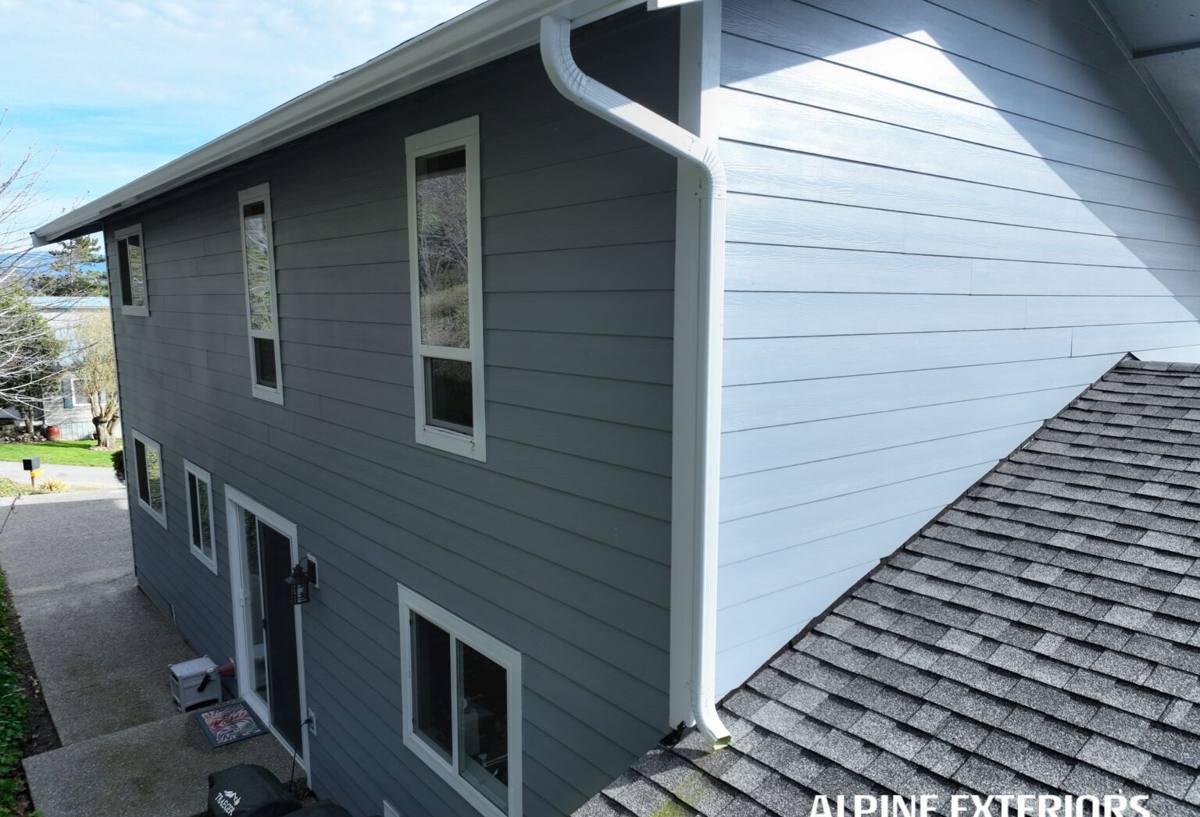
Signs a Custer Roof Needs Replacement, Not Another Repair
Not every roofing problem calls for a full tear-off. But in this climate, certain signs mean patching is just delaying a bigger bill.
- Granule loss heavy enough that you're finding shingle grit in gutters and downspouts every season
- Moss that keeps returning within a year of cleaning, especially on north-facing slopes that stay shaded and damp
- Soft or spongy decking felt underfoot in the attic, a sign moisture has already reached the sheathing
- Rust staining or corrosion around metal flashing, vents, or fasteners — common near Custer given the salt content in coastal air
- Multiple past repairs in different spots, which usually means the underlayment and flashing system as a whole is failing, not just one shingle run
- Visible curling, cracking, or missing shingles after wind events, which are frequent enough along this stretch of coastline to matter
If you're seeing two or more of these, it's worth getting a straight answer on repair versus replacement before spending more money chasing leaks.
What a Correct Roof Replacement Involves Here
Full Tear-Off, Not Roofing Over
We don't install new shingles over old ones. Layering hides the condition of the decking underneath, and in a wet climate that's exactly where problems hide. A full tear-off lets us actually see and fix what's underneath before it becomes a hidden liability.
Decking Inspection and Repair
Once the old roofing is off, every section of decking gets checked for soft spots, delamination, or rot — common where past flashing failures let water track along the sheathing. Any compromised sections get replaced before anything new goes down. Skipping this step is the single most common shortcut in this trade, and it's the one that causes the most expensive failures down the road.
Underlayment Built for Driving Rain
Custer's rain doesn't always fall straight down — wind off the water drives it sideways and under standard shingle edges. We use synthetic underlayment across the full roof and self-adhered ice-and-water membrane at the vulnerable points: eaves, valleys, and any low-slope transitions. This is the layer that keeps the house dry even if wind-driven rain gets past the surface shingles, which it will over the life of the roof.
Flashing Details That Match Local Conditions
Flashing failure is the top cause of roof leaks, not shingle failure. Every penetration — chimneys, vents, skylights, wall-to-roof transitions — gets new flashing, not reused old metal. Near the coast we pay particular attention to fastener and flashing material choice, since standard galvanized components corrode faster in salt air than they would further inland.
Material Choices for Whatcom County Weather
There's no single "best" roofing material for Custer — it depends on your home's exposure, roof pitch, and budget. Here's how the common options actually perform in this specific climate.
| Material | Performance in Salt Air & Driving Rain | Moss Resistance | Typical Lifespan Here |
|---|---|---|---|
| Architectural composition shingle | Good, with proper underlayment and flashing | Moderate — benefits from copper or zinc strips | 20–25 years |
| Standing seam metal | Excellent when fasteners and flashing are marine-grade | High — sheds moss growth well due to slope and surface | 40–50+ years |
| Synthetic composite (slate/shake look) | Good, low water absorption | Moderate to high | 30–40 years |
| Wood shake | Weakest — absorbs moisture and holds it | Low — requires the most maintenance in this climate | 15–20 years with upkeep |
We'll walk you through the real trade-offs for your roof rather than pushing one product. Composition shingle remains the most common choice for good reason — it balances cost and performance well here — but metal earns its higher upfront price back over decades for homeowners planning to stay put.
Roof Ventilation and the Custer Moss Problem
Moss doesn't just grow on roofs here — it grows fast, and it holds moisture against the shingle surface long after the rain stops. A roof replacement is the right time to fix ventilation problems that make moss worse, because attic airflow directly affects how quickly a roof deck dries out between storms.
We check and correct intake and exhaust ventilation as part of every replacement — balanced soffit intake and ridge or roof-vent exhaust, sized to the attic volume. Poor ventilation traps humid air against the underside of the deck, which accelerates both moss growth on top and rot underneath. It's a detail that's invisible once the roof is finished, but it's a major factor in whether the new roof lasts 15 years or 25.
Our Roof Replacement Process
- On-site inspection — we assess the current roof, decking condition where visible, ventilation, and flashing points, and give you an honest read on repair versus replacement
- Written estimate — clear scope, material options, and pricing with no vague allowances
- Scheduling around weather — we plan tear-off days with Whatcom County's rain patterns in mind and always have the roof dried in before end of day
- Full tear-off and decking inspection — old materials removed, decking checked and repaired as needed
- Underlayment, flashing, and ventilation install — the layers that determine how the roof performs, not just how it looks
- Final material installation — shingles or panels installed to manufacturer spec and local wind-exposure standards
- Cleanup and walkthrough — magnetic sweep for debris, gutter check, and a final walk so you know exactly what was done
What Affects the Cost of a Roof Replacement in Custer
| Factor | Why It Matters Locally |
|---|---|
| Roof pitch and complexity | Steeper or multi-plane roofs need more flashing detail, which matters more given driving rain exposure |
| Decking condition | Long-term moisture exposure sometimes means more sheathing replacement than expected until tear-off reveals it |
| Material choice | Metal costs more upfront but reduces maintenance and moss-related upkeep over time |
| Ventilation upgrades | Correcting inadequate intake/exhaust adds modest cost but extends roof life meaningfully in this climate |
| Access and roof height | Affects labor and staging, same as anywhere, but rural Custer lots sometimes add driveway or access considerations |
We give straightforward, itemized estimates so you can see exactly what you're paying for and why — no vague per-square pricing that hides what's actually included.
Why a Crew That Already Works Custer Matters
A roofing crew that regularly works Whatcom County's coastal areas already knows which fastener grades hold up against salt air, which flashing details actually stop wind-driven rain, and how much ventilation a given attic needs to fight back against an eight-month moss season. That's knowledge you don't get from a crew that mostly works drier, inland conditions and treats every roof the same way.
It also means we're not guessing at permitting, local code requirements, or the realities of scheduling around this area's weather. When we say a roof will be dried in by end of day, that's based on knowing what Custer weather actually does, not a generic promise.
Questions to Ask Before Hiring Anyone for a Roof Replacement
- Will you do a full tear-off, or is roofing over the old layer on the table?
- What underlayment and ice-and-water membrane will you use at eaves and valleys?
- How will you handle ventilation if the current setup is inadequate?
- What fastener and flashing materials do you use given the salt air here?
- What's your plan if weather interrupts the tear-off mid-project?
- Is the estimate itemized, or is it a single lump-sum number?
Get a Straight Answer on Your Roof
If your Custer home's roof is showing its age, or you just want an honest opinion on whether repair still makes sense, we're happy to take a look. We'll give you a free, no-pressure estimate and tell you plainly what we find — no upsell, no scare tactics. Fill out the form below and we'll get in touch to schedule a time that works.