 Blaine Siding
 Bellingham Homes Sit in the Middle of a Tough Coastal Climate
Bellingham sits on Bellingham Bay, part of the same stretch of Whatcom County coastline our crew works out of Blaine, and the two towns deal with a nearly identical set of pressures on exterior materials: salt-laden air moving in off the water, winter storms that push rain sideways into walls instead of straight down, and a moss season that barely lets up between fall and spring. We already run jobs up and down this part of the county, and Bellingham's mix of waterfront neighborhoods, tree-covered hillside lots, and older in-town housing stock gives us a good sense of what actually holds up here versus what looks fine on a spec sheet and starts failing a few wet seasons in.
This page is about one thing specifically: installing James Hardie fiber cement siding on a Bellingham home. We install Hardie exclusively — no vinyl, no LP SmartSide, no Cemplank, no Allura, no primed spruce or cedar — and what follows is the climate reasoning behind that standard, what a correct installation actually requires, and how our process runs from first look to final walkthrough.
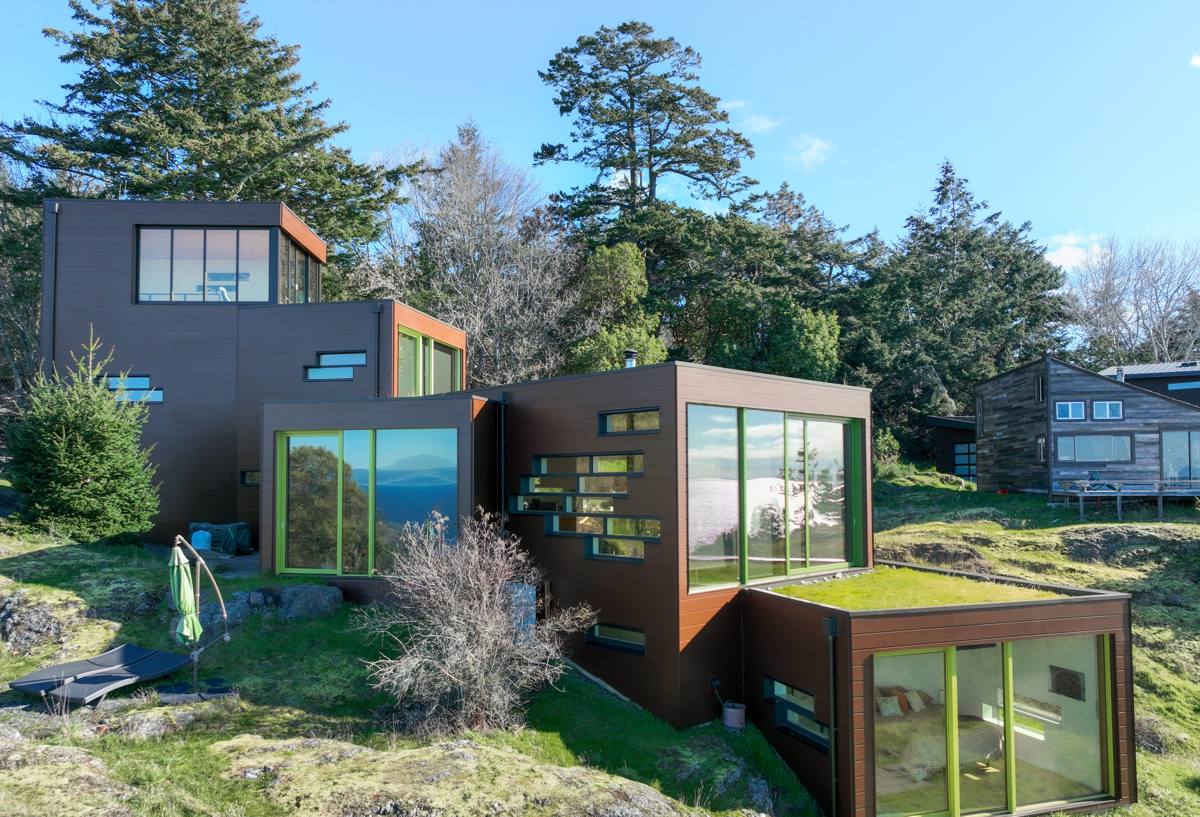
What Salt Air, Driving Rain, and Moss Actually Do to Siding Here
Salt Air Off Bellingham Bay
Homes closer to the water pick up salt-laden air on a near-daily basis, and that exposure works on exterior materials in ways that aren't always obvious until years in: it accelerates corrosion on fasteners and lower-grade trim hardware, and it speeds up fading and chalking on finishes that weren't built to handle it. A house set back from Bellingham Bay sees meaningfully less of this than one facing the water directly, which is one of the first things worth assessing on any siding job in this area.
Driving Rain and Wind-Driven Moisture
Storms moving through this part of Whatcom County in the fall and winter rarely drop rain straight down. Wind pushes it sideways into siding joints, window and door flashing, and the transitions where roof meets wall — the exact spots where a siding system either sheds water cleanly or lets it work its way behind the cladding. That wind-driven load, more than any single rainfall total, is usually what separates a siding job that holds up for decades from one that starts trapping moisture within a few wet seasons.
A Moss Season That Doesn't Really End
Mild, wet weather for most of the year adds up to a moss and mildew season that runs long on shaded and north-facing walls, and Bellingham's tree cover — especially on lots tucked into hillsides or under mature evergreens — gives it plenty of surface to grow on. Any siding material that holds moisture against the substrate, or that's even slightly porous at the surface, becomes a growth surface over time. The sun-facing side of a house often stays noticeably drier than its shaded side, so moss pressure can vary a lot across a single property.
Why James Hardie Is the Standard We Hold To
We narrowed our siding work down to one system after seeing, on jobs across this stretch of Whatcom County, what genuinely holds up against sustained marine exposure and what just performs well on paper.
- HZ5 climate-engineered formulation: built for regions with significant moisture exposure and freeze-thaw cycling, which describes Bellingham and the rest of the Whatcom County coastline well.
- Factory-applied ColorPlus finish: cured under controlled conditions rather than brushed on in the field, so it holds color and adhesion far longer under sustained salt air and UV exposure.
- Non-combustible fiber cement core: doesn't feed a fire the way wood-based siding can, which matters for both homeowner safety and insurance underwriting.
- Dimensional stability: doesn't swell, cup, or warp the way engineered wood siding can after repeated wetting cycles in a wet coastal climate.
- A strong transferable warranty: one of the more robust structures in the industry, provided the installation follows Hardie's published specifications.
We don't install LP SmartSide, vinyl siding, Cemplank, Allura, primed spruce, or cedar. Each has its place in the broader market, and there are homeowners elsewhere who are satisfied with them. Our position is specific to this climate: with this much sustained salt and moisture exposure working on a house year-round, we'd rather commit fully to one system we can stand behind than offer a lower-cost alternative that quietly shifts maintenance risk onto the homeowner down the road.
How the Alternatives Tend to Perform in This Climate
| Product | Common trade-off in a Bellingham-area climate |
|---|---|
| Vinyl siding | Can become brittle or warp under sustained UV and temperature swings; panel seams give wind-driven rain a path behind the cladding |
| LP SmartSide / engineered wood | Wood-strand core is more sensitive at cut edges and fastener points than fiber cement, a real concern under near-constant coastal moisture |
| Primed spruce or cedar | Needs ongoing paint and moisture upkeep to avoid rot; salt air and long wet seasons shorten the maintenance cycle |
| Other fiber cement brands | May not carry the same climate-specific HZ formulation or the same factory-finish warranty depth James Hardie backs its product with |
Choosing the Right Hardie Product Line and Profile
Beyond the HZ5 formulation, the profile you choose changes how a home reads and how it sheds water. This is worth working through with your contractor rather than defaulting to whatever the last house on the street used.
HardiePlank Lap Siding
The most common choice on Bellingham homes, with a horizontal reveal that sheds wind-driven rain cleanly when installed with correct overlap and fastening. It suits craftsman, cape cod, and traditional styles common throughout the area.
HardiePanel Vertical Siding
Often used as an accent on gables or a more modern-styled home. The unbroken vertical lines read bold, and the seams need careful battening or sealing to perform well under this area's driving rain.
HardieShingle
A shingle profile that reads more traditional and softens the look of a home, though the added shadow lines and coverage detail make correct installation even more important on a wall that takes direct wind and rain.
What a Correct James Hardie Installation Actually Involves
Fiber cement siding performs the way it's rated to only when it goes on correctly. A rushed installation or a shortcut on manufacturer spec can undercut even the best material, and this is where a lot of the real difference between contractors shows up.
Sheathing and Substrate Check
Once old siding comes off, the sheathing underneath gets checked for rot or soft spots before anything new goes up. Covering damaged sheathing with new siding just hides a problem that keeps getting worse behind the wall.
Weather Barrier and Flashing
Because most coastal siding failures trace back to water getting behind the cladding rather than through it, the house wrap, window flashing, and every penetration in the wall need careful, unhurried attention. This step is easy to rush and almost impossible to inspect once the siding goes up, which is exactly why it shouldn't be treated as an afterthought.
Fastening, Clearances, and Field-Cutting to Spec
James Hardie's warranty depends on the installation following their published specifications — correct fastener type and spacing, proper clearance above grade and roofline, and sealed, correctly primed field cuts. We treat that spec as the baseline for every job, not as an optional upgrade.
How Our Process Works on a Bellingham Project
Inspection and Estimate
Every job starts with a straightforward look at the house — current siding condition, any signs of trapped moisture or sheathing damage, and how exposure varies across the different walls given the property's distance from the water and tree cover. That assessment shapes the estimate rather than a flat per-square-foot number.
Tear-Off
Old siding comes off and the sheathing gets inspected before any new material is ordered or installed, so surprises found mid-project are the exception rather than the rule.
Installation to Manufacturer Spec
New James Hardie siding goes up following the fastening, clearance, and sealing details covered above, with attention to which walls take the most wind-driven rain and salt exposure on that specific property.
Final Walkthrough
We walk the finished job with the homeowner, cover maintenance expectations specific to this climate, and confirm the finished work matches what was estimated before calling the job done.
Signs a Bellingham Home's Siding Needs a Closer Look
- Moss or dark staining that returns quickly after cleaning, especially on shaded or north-facing walls
- Soft or spongy siding, particularly low on the wall or around window and door trim
- Peeling paint or visible warping, most common on older wood-based or engineered wood siding
- Cracked, buckled, or missing panels after a windstorm off the water
- Rust staining running down from fasteners or trim hardware
- Musty odors or staining on interior walls that back up to exterior siding
- Siding older than 20-25 years with no documented replacement history
None of these automatically mean a full replacement is the only option, but each is worth a professional look before another wet season adds to the damage.
What Affects the Cost of a James Hardie Project in Bellingham
Every estimate is specific to the house, but a handful of factors consistently move the number: total square footage and number of stories, how much trim and detail work surrounds windows and rooflines, the condition of the sheathing once old siding comes off, how exposed the property is to wind and salt off the water, and which Hardie product line and color fits the home. We walk through those factors specifically during the estimate rather than handing over a number with no explanation behind it.
Why Hiring a Crew That Already Works This Area Matters
Working this part of Whatcom County regularly, not as an occasional stop between bigger jobs elsewhere, means being familiar with how Bellingham's specific mix of waterfront exposure, hillside lots, and tree cover plays out on a real wall — which sides of a house stay wet longest, where extra flashing attention earns its keep, and which install-day details are worth the time so a homeowner isn't dealing with a callback two winters later. It also means that if a warranty or maintenance question comes up years down the line, it's a call to a crew still working in this area, not one that's moved on somewhere else.
If your Bellingham home needs new siding, we're glad to come take a look and put together a straightforward, no-pressure estimate — reach out using the form below to get started.