 Blaine Siding
 Roof Repair Built for Semiahmoo's Waterfront Conditions
Semiahmoo sits right on the water at the edge of Blaine, and that location is exactly what makes roofing here different from a job five miles inland in Whatcom County. Homes on the spit and along the bay face salt-laden air, wind-driven rain coming almost sideways off the water, and a moss season that runs longer than most homeowners expect. A roof repair done without accounting for those three things tends to fail again within a year or two. One done correctly, with the right materials and sequencing, holds up for the long haul.
This page covers what a proper roof repair looks like for a Semiahmoo home, what we actually do on a repair call, and why local experience on this stretch of coastline matters more than it would for a typical inland repair.
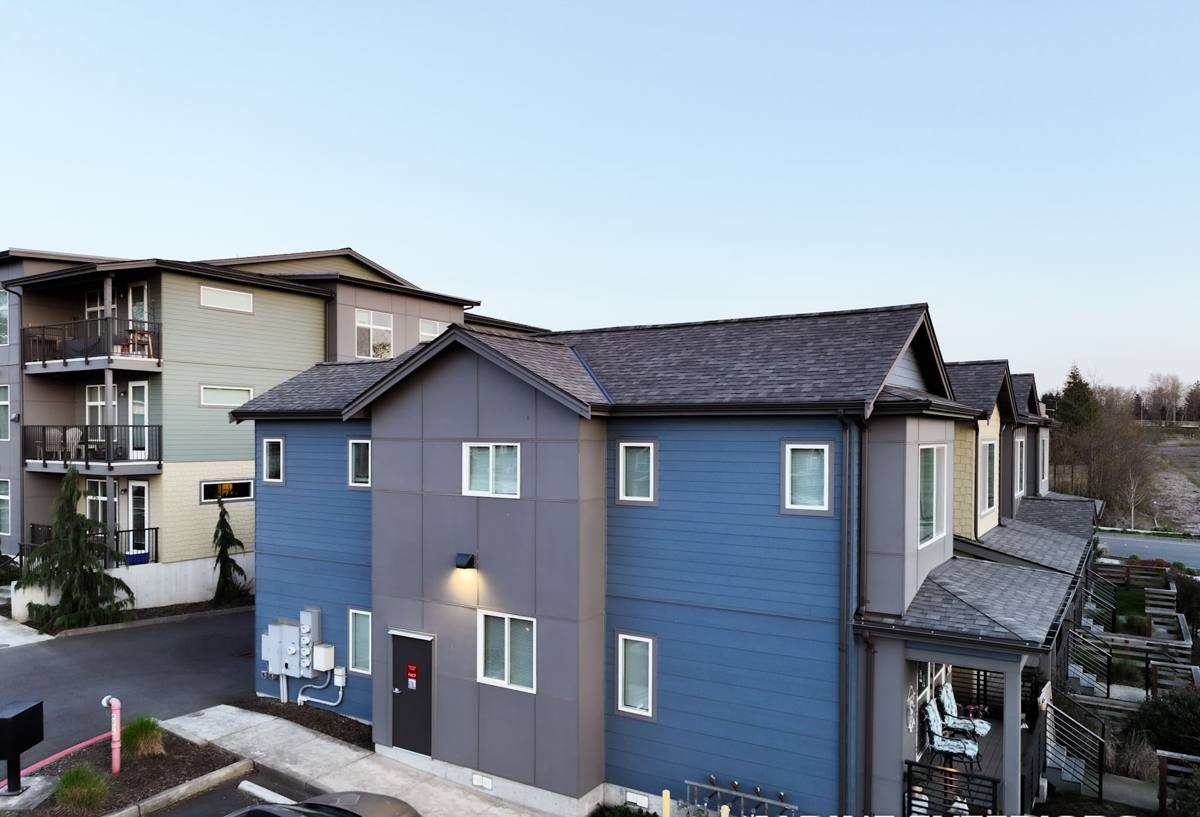
Why Semiahmoo Roofs Wear Differently Than Roofs Elsewhere in Blaine
Three conditions stack up here in a way they don't for most of Whatcom County:
Salt Air and Corrosion
Airborne salt off the bay accelerates corrosion on exposed metal — fasteners, flashing edges, gutter hangers, and any bare cut metal. A fastener or flashing detail that would last decades a few miles inland can start rusting and losing its seal years earlier on a waterfront lot. This is one of the most common root causes we find on Semiahmoo repair calls: not a shingle problem at all, but a corroded fastener or flashing seam that let water in underneath a roof that otherwise looks fine.
Driving Rain Off the Water
Rain that comes in mostly straight down is a much easier problem for a roof to handle than rain pushed sideways by open-water wind. Waterfront and spit-facing homes get more of the latter. Wind-driven rain finds its way in through the smallest gap in flashing, the tiniest lift in a shingle tab, or a poorly lapped seam — spots that would never leak in calmer weather. Repairs here have to assume the roof will occasionally be tested by rain moving horizontally, not just falling straight.
A Long Moss Season
Whatcom County's mild, wet winters and cool, damp shoulder seasons give moss and lichen a long window to establish themselves, especially on north-facing slopes and anywhere tree cover keeps a section of roof shaded and slow to dry. Moss doesn't just look bad — it holds moisture directly against the roofing material, works its way under shingle tabs as it grows, and can lift edges enough to let wind-driven rain in underneath.
What a Correct Roof Repair Actually Involves
A repair is only as good as the diagnosis behind it. Water rarely enters where it shows up on a ceiling or in an attic — it travels along rafters, sheathing, and underlayment before finding a path down. A repair that just patches the visible spot without tracing the actual entry point is a repair that comes back.
A proper repair call includes:
- Tracing the leak or damage back to its actual source, not just the point where it became visible indoors
- Checking the condition of the decking underneath — soft, delaminated, or stained sheathing needs to be addressed, not covered over
- Replacing damaged shingles, shakes, or other roofing material in the affected section with matching material where possible
- Re-flashing, not just re-caulking, at chimneys, dormers, valleys, and wall intersections where the original flashing has failed
- Confirming ventilation and drainage in the repaired area aren't part of the underlying problem
Materials and Details That Matter More Here
Fasteners and Flashing Metal
In a marine-influenced climate like Semiahmoo's, we treat fastener and flashing material as part of the repair decision, not an afterthought. Corrosion-resistant fasteners hold up longer against salt air than standard electro-galvanized ones, and flashing metal choice matters at every roof-to-wall and roof-to-chimney intersection. This is a place where using the cheaper standard hardware shows up as a callback within a few years — we'd rather spec it right the first time.
Underlayment and Water Barriers
Self-adhered waterproof underlayment at eaves, valleys, and around penetrations gives a roof a second line of defense for the moments when wind-driven rain gets past the surface material. On a waterfront repair, we treat these zones as non-negotiable rather than optional upgrades.
Moss and Debris Management
Repairing moss-related damage means more than scraping off what's visible. It means clearing debris from valleys and behind chimneys where moss and needles collect and hold moisture, and, where appropriate, installing zinc or copper strips near the ridge that let rain carry trace minerals down the roof slope to discourage regrowth. Chemical treatments alone don't fix a moisture problem that's already established itself under a shingle edge.
Common Repair Scenarios We See Around Semiahmoo
Most repair calls in this area fall into a handful of recurring patterns:
- Flashing failures at chimneys and dormers — corroded or improperly lapped flashing that let water track down into the wall or ceiling below
- Wind-lifted or cracked shingles — tabs loosened by repeated gusts off the bay, especially on the most exposed slopes
- Valley leaks from moss and debris buildup — water backing up and finding a path under the roofing material instead of running off
- Skylight seal failures — original flashing or sealant that's degraded faster than expected due to sun and salt exposure combined
- Soffit and fascia rot — trapped moisture at the roof edge, often traced back to a gutter or drip-edge issue rather than the shingles themselves
Our Process for a Semiahmoo Repair Call
- Inspection, inside and out. We walk the roof, check the attic for staining or moisture where accessible, and look at the exterior details — flashing, fasteners, gutters, and drainage — that are easy to overlook from the ground.
- A clear, written scope. Before any work starts, you get a plain explanation of what's actually wrong, what causes it, and what it will take to fix — not just a line item for "shingles" with no context.
- The repair itself. We match materials where possible, use corrosion-resistant fasteners and flashing appropriate to a marine environment, and address the root cause — not just the symptom that got noticed first.
- Cleanup and site check. Old material, nails, and debris are cleared from the property, including gutters and ground-level areas where roofing debris tends to collect.
- Maintenance guidance. If we see other areas showing early wear — moss starting on a shaded slope, fasteners beginning to show rust — we'll tell you honestly, so you can plan ahead instead of getting surprised later.
Repair or Replacement? How We Help You Decide
Not every roof problem calls for a full replacement, and not every leak can be permanently solved with a patch. The right call depends on the roof's age, how widespread the damage is, and what's happening underneath the surface material.
| Factor | Leans Toward Repair | Leans Toward Replacement |
|---|---|---|
| Roof age | Roof is well within its expected service life | Roof is at or past the age where the material is naturally failing |
| Extent of damage | Isolated to one section, flashing detail, or penetration | Widespread across multiple slopes or recurring in different spots |
| Decking condition | Sheathing underneath is solid | Significant rot or soft decking found in more than one area |
| Moss/salt exposure history | First real issue after years of normal wear | Long-neglected moss or corrosion affecting large sections |
| Budget and timeline | Targeted fix now, plan ahead for eventual replacement | Repair costs are approaching a meaningful share of replacement cost |
We'll always tell you honestly which side of that table your roof falls on. A repair that's likely to need another repair in a year isn't a good use of your money, and we'd rather say so upfront than let you find out the hard way.
Seasonal Timing and Ongoing Maintenance
Given how long moss season runs in this part of Whatcom County, timing matters. A few habits go a long way toward keeping a Semiahmoo roof out of repair territory in the first place:
- Inspect the roof after fall leaf-drop and before the heaviest winter rain sets in
- Clear moss and debris from valleys and shaded slopes before the spring growth surge, not after it's established
- Keep gutters clean year-round — trapped debris backs water up under the roof edge, which is one of the most common causes of edge and fascia rot we see
- Check attic ventilation periodically; poor airflow traps moisture and speeds up decking and underlayment failure from the inside
- Watch for granule buildup in gutters, which signals accelerated shingle wear worth having looked at before it becomes a leak
Why Hiring a Crew That Already Works Semiahmoo Matters
A roofer who mainly works inland jobs isn't wrong about roofing in general — but they may not think to spec corrosion-resistant fasteners by default, or know which slopes on a waterfront lot take the worst of the wind-driven rain. Working this stretch of coastline regularly means we've already seen which details fail first out here, and we build repairs around that instead of relearning it on your roof.
There's also a practical side to it: access on the spit and around the marina and resort area can be tighter than a typical residential street, and being familiar with that in advance means less guesswork and fewer surprises on repair day. Local permitting and any community guidelines that apply to waterfront properties in this part of Blaine are also easier to navigate when you've dealt with them before.
Get an Honest Look at Your Roof
If you're dealing with a leak, visible moss, lifted shingles, or just want a straight answer on whether repair or replacement makes more sense for your Semiahmoo home, we're glad to take a look. The estimate is free, there's no pressure, and you'll get a clear explanation of what we find — use the form below to get started.