 Blaine Siding
 Roof Repair for the Peace Arch Area of Blaine
Homes near the Peace Arch border crossing and shoreline sit in one of the more demanding microclimates in Whatcom County. You're close enough to the water to catch salt-laden air off Semiahmoo Bay and the Strait of Georgia, exposed enough to take wind-driven rain straight off the water during winter storms, and shaded enough in a lot of yards that moss has an easy time settling in and staying. None of that is unusual for this part of Blaine — but it does mean a roof here ages differently than one ten miles inland, and repairs need to account for that instead of treating every leak the same way.
This page covers what roof repair actually looks like for homes in and around Peace Arch: the specific problems we see most, what a correct repair involves, how our process works, and why it matters to hire a crew that already knows this stretch of coastline instead of learning it on your roof.
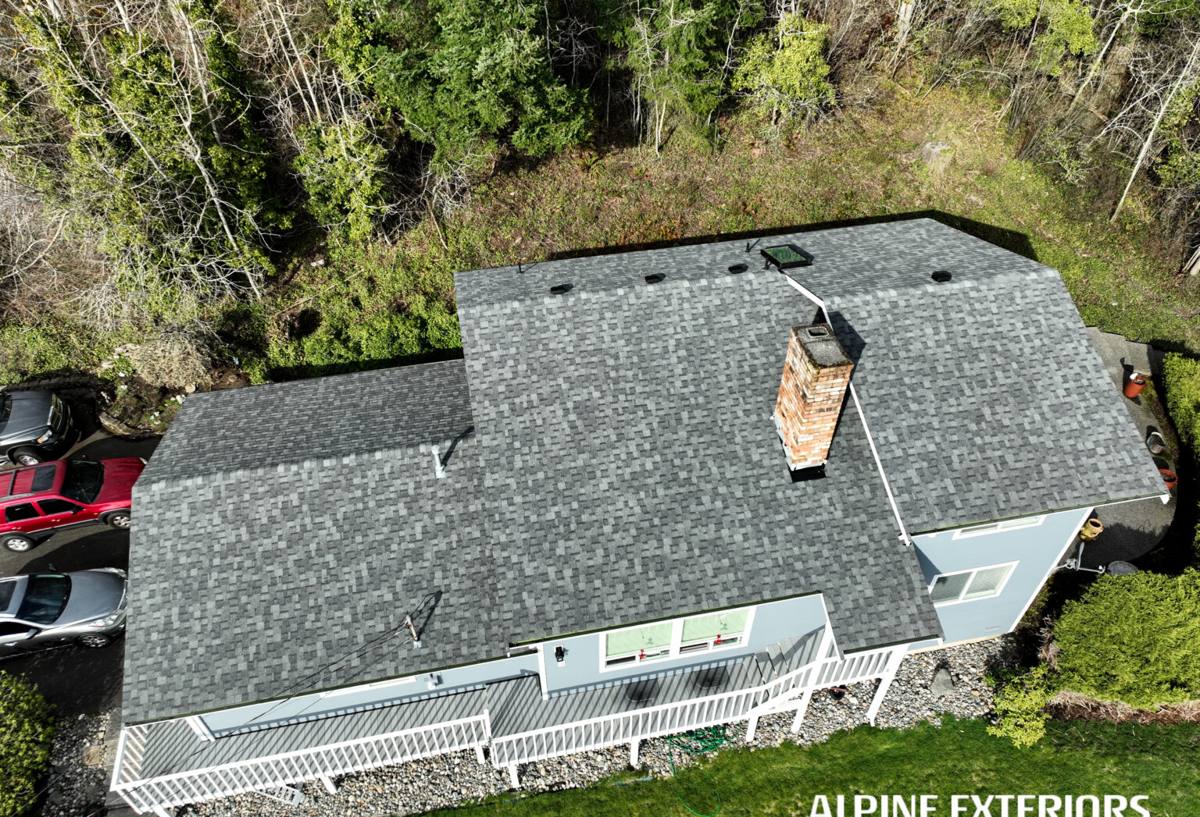
Why This Location Is Harder on a Roof
Salt Air
Airborne salt doesn't just affect boats and cars. It settles on metal flashing, fasteners, gutter systems, and roof vents, and it accelerates corrosion over time — especially on anything that isn't rated for coastal exposure. A nail or flashing piece that would last decades inland can start showing rust streaks and pinhole leaks years earlier this close to the water.
Driving Rain
Blaine's winter storms often come in off the water with real wind behind them, which pushes rain sideways instead of straight down. That matters because a roof can shed vertical rain just fine while still leaking at every penetration, seam, and flashing edge when the rain is being driven at an angle. Chimneys, skylights, roof-to-wall transitions, and vent boots take the brunt of it.
Moss Season
Whatcom County's mild, wet winters give moss a long window to establish itself, and shaded roof sections — north-facing slopes, areas under trees, spots that stay damp longer after a storm — are the first places it takes hold. Moss isn't just cosmetic. It holds moisture against the roofing material, lifts shingle edges as it grows, and works its way under flashing over time.
Common Roof Repair Issues We See in Peace Arch
- Flashing failures around chimneys, skylights, and roof-to-wall intersections, often from corrosion or age rather than a single storm event
- Leaks at vent boots where the rubber collar has cracked or shrunk from years of weather cycling
- Valley leaks where two roof planes meet and debris or moss has slowed drainage
- Granule loss and shingle brittleness on the sections that face the water and take the most wind and salt exposure
- Moss-lifted shingles on shaded, north-facing slopes
- Corroded or loosened fasteners, particularly on older metal roofing or exposed-fastener systems
- Gutter and edge-metal deterioration that lets water back up under the roofing rather than draining away
What a Correct Repair Actually Involves
A roof repair that holds up here needs to do more than patch the visible symptom. If a ceiling stain shows up in one room, the actual entry point for water might be several feet away — water travels along the underlayment or decking before it finds a way through. A correct repair starts with tracing the leak to its real source, not just sealing the spot where the damage is showing.
Matching Materials, Not Just Covering Holes
Repairs should use materials compatible with what's already on the roof — matching shingle type and, where possible, color and profile, so the repair doesn't stand out or create a mismatched wear pattern down the road. On metal roofing, that means matching panel profile and using fasteners rated for the coastal environment.
Fastener and Flashing Choice Matters More Here
In a salt-air environment, standard galvanized fasteners and flashing corrode faster than they would inland. We favor stainless steel or properly coated fasteners and flashing for repairs in this area — it costs a little more up front but avoids repeat leaks from corrosion in a few years.
Underlayment and Decking Check
Any time we're opening up a section of roof for a repair, we check the underlayment and decking underneath. Wet, soft, or delaminating decking needs to be addressed before new roofing goes back down — patching over compromised decking just hides the problem until it reappears, usually worse.
Our Roof Repair Process
- Inspection and leak tracing. We look at the roof from both outside and, where accessible, from the attic or interior, to find the actual water path rather than guessing from the stain location.
- Moss and debris assessment. If moss or organic buildup is contributing to the problem, we address it as part of the repair, not as an afterthought.
- Written scope before work starts. You'll know what's being repaired, what materials we're using, and why, before anything is opened up.
- Repair using matched, coastal-appropriate materials. Shingle, flashing, or metal repairs use fasteners and flashing suited to salt-air exposure.
- Decking and underlayment check. Any compromised decking found during the repair gets flagged and addressed, not covered over.
- Final check for related risk points. Since one failed flashing detail often means nearby details are aging the same way, we take a look at adjacent penetrations and edges before calling the job done.
Repair or Replace? What the Signs Usually Mean
Not every leak means a new roof, and not every roof that "just needs a patch" is actually a good repair candidate. Here's how we think through it:
| What You're Seeing | What It Usually Means | Repair or Replace Signal |
|---|---|---|
| Isolated leak at one chimney or vent | Localized flashing failure | Usually a straightforward repair |
| Heavy moss across one or more slopes | Trapped moisture, possible shingle lift underneath | Repair if caught early; replacement if shingles are degraded under the moss |
| Granule buildup in gutters, thinning shingles | Roofing material nearing end of service life | Repair buys time; full replacement likely within a few years |
| Soft or spongy decking when walked | Sustained moisture intrusion, possible rot | Replacement of affected section at minimum |
| Rust streaking from fasteners or flashing | Salt-air corrosion of metal components | Repair with upgraded corrosion-resistant materials |
| Multiple leaks in different areas, older roof | System-wide wear rather than an isolated failure | Full replacement is usually more cost-effective long term |
Broad ballpark: a targeted flashing or vent repair is often a modest, contained cost, while decking replacement or multi-area repairs run higher depending on scope. We won't know the real number for your roof until we've actually looked at it, and we'll always tell you honestly if a repair is a short-term fix versus a lasting one.
Roof Types We Work With in This Area
Asphalt Composition Shingle
The most common roofing on homes in this area. Repairs focus on matching shingle type and color, replacing damaged flashing with corrosion-resistant materials, and clearing moss before it lifts more shingles than necessary.
Metal Roofing
Less common but present on some homes and outbuildings in the area. Repairs typically involve fastener replacement, seam and panel-lap resealing, and addressing any corrosion at cut edges or exposed fasteners — points that fail first in a salt-air environment.
A Practical Maintenance Checklist for Salt-Air, Moss-Prone Roofs
- Clear gutters and valleys of debris before the fall rains start, so water has a clear path off the roof
- Have shaded, moss-prone slopes checked and treated before moss has a chance to establish over a full wet season
- Look (or have us look) at flashing around chimneys, skylights, and vents for early rust or lifting, before it becomes a leak
- After any major windstorm off the water, do a visual check for lifted or missing shingles, especially on water-facing slopes
- Don't ignore a small ceiling stain — trace it early, since water often travels before it shows itself
- Ask that any fastener or flashing replacement use corrosion-resistant materials, not standard galvanized
Why It Matters to Hire a Crew That Already Works Peace Arch
A roofer who mostly works inland can still do competent work, but they're often learning this area's specific failure patterns on your roof instead of already knowing them. A crew that regularly works the Peace Arch area and similar shoreline-adjacent parts of Blaine already knows which slopes tend to hold moss longest, which flashing details fail first under driving rain, and which fasteners actually hold up against the salt air instead of needing replacement again in a few years. That familiarity shows up in fewer callbacks and repairs that are built for the conditions your roof actually faces, not generic conditions.
It also matters for response time. Storm damage near the water doesn't always wait for a convenient scheduling window, and a local crew can typically get eyes on a problem faster than one dispatching from farther away.
Get a Straight Answer on Your Roof
If you're dealing with a leak, moss buildup, or storm damage on a roof in the Peace Arch area, we're glad to take a look and give you an honest read on whether it's a repair, and what that repair should actually involve. We offer free, no-pressure estimates — use the form below to get started.