 Blaine Siding
 Point Roberts Is a Different Kind of Roofing Job
Point Roberts sits on its own peninsula, surrounded on three sides by water and cut off by land from the rest of Whatcom County — the only way in by car is through Canada. That geography shapes everything about how a roof ages here and how a roofing job has to be planned. Salt-laden air comes off Boundary Bay and the Strait of Georgia and settles on every exposed surface. Rain rolls in off the water for months at a stretch. Overhanging conifers and constant shade on north-facing slopes keep roofs damp long after a storm has passed. None of that is unique to any one street or subdivision in Point Roberts — it's the condition of the whole community, and it's why a roof replacement here needs to be planned around the local climate, not just installed off a standard spec sheet.
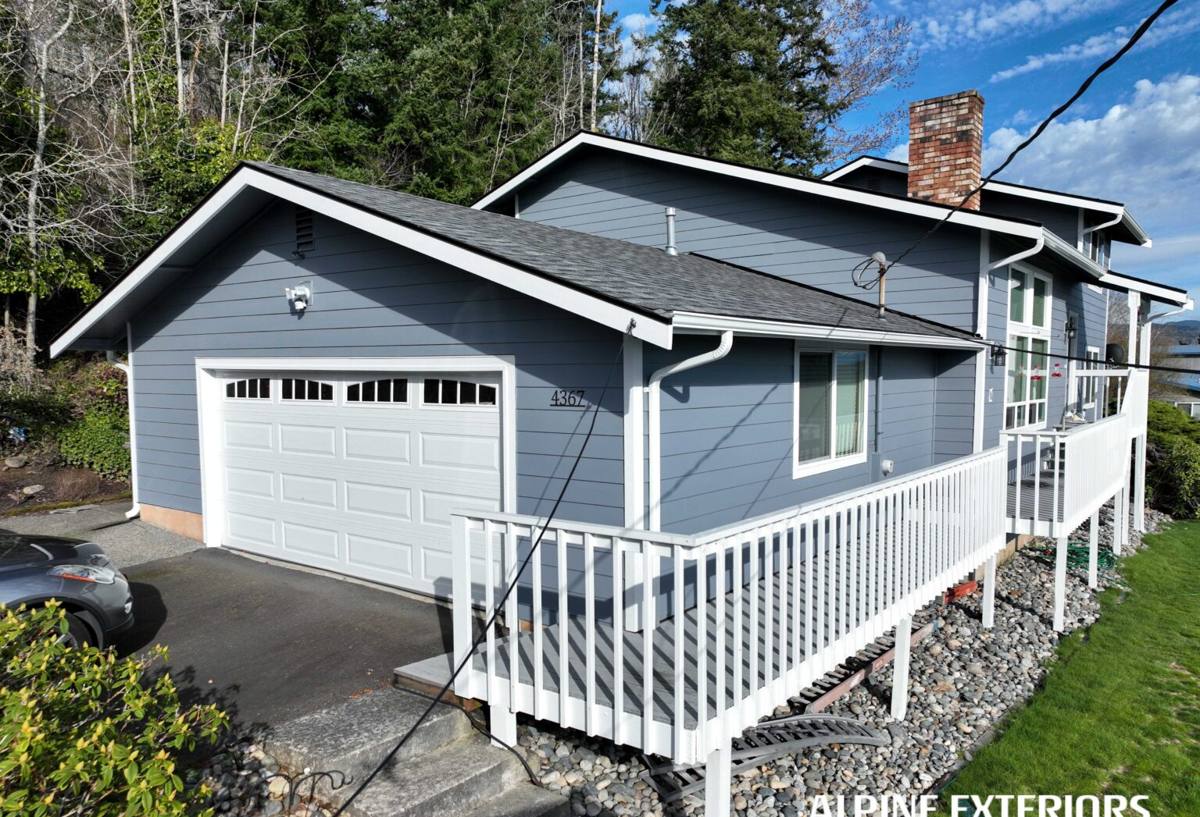
What Salt Air, Rain, and Moss Actually Do to a Roof
Each of these stresses attacks a roof differently, and they compound each other over time.
Salt Air and Corrosion
Airborne salt accelerates corrosion on any exposed metal — nails, flashing, drip edge, valley metal, vent stacks. Once corrosion starts at a fastener or flashing seam, it's usually a slow leak problem long before it's a visible one. Standard galvanized fasteners and thin flashing stock don't hold up as well this close to open water as they do further inland.
Driving Rain and Wind-Driven Water
Point Roberts gets weather straight off open water with little to break it up. Wind-driven rain doesn't just fall on a roof — it gets pushed sideways and upward under shingle edges, around vent penetrations, and into valleys. A roof that's fine in a light straight-down rain can still leak in a sideways storm if the underlayment, flashing, and shingle overlap aren't installed correctly.
Moss, Algae, and a Long Wet Season
Shade, moisture, and organic debris (needles, leaves) are the three ingredients moss needs, and a lot of Point Roberts properties have all three most of the year. Moss doesn't just look bad — it holds water against the roof surface, lifts shingle edges as it grows, and works its way under tabs and around nail heads. Left alone for a few seasons, a mossy roof loses years of service life it should have had.
Signs a Point Roberts Roof Is Due for Replacement
Repairs make sense for isolated damage. Replacement makes sense once the roof is failing broadly rather than in one spot. Common signs we look for on inspections out here:
- Granule loss heavy enough to show bare, shiny patches on shingles, especially on south- and west-facing slopes
- Moss or algae staining across large sections rather than one shaded corner
- Curling, cupping, or cracked shingles, particularly along ridges and edges exposed to wind
- Rusted or visibly corroded flashing around chimneys, skylights, and vent pipes
- Soft spots in the decking, or staining on interior ceilings near exterior walls
- A roof that's 20+ years old (for asphalt) with no major work done since it was installed
- Multiple recent repairs in different spots — a sign the whole roof is aging out, not just one area
What a Correct Roof Replacement Involves Here
A roof replacement is more than swapping old shingles for new ones. Done right for this climate, it includes several layers most homeowners never see:
Tear-Off and Deck Inspection
We remove the old roofing down to the deck so we can actually see the plywood or plank sheathing underneath. Any soft, rotted, or delaminated decking gets replaced before anything new goes down — covering over bad decking just hides the problem and voids most manufacturer warranties anyway.
Underlayment That Handles Wind-Driven Rain
Given how much sideways rain this area sees, we don't treat underlayment as an afterthought. Synthetic underlayment with proper overlap, plus ice-and-water shield in valleys, around penetrations, and along eaves, gives the roof a real second line of defense if wind ever drives water past the shingles.
Flashing and Metal Upgrades
This is where salt-air corrosion gets addressed directly. Where it makes sense, we upgrade flashing material and fastener quality around chimneys, skylights, and valleys rather than reusing whatever corroded metal came off the old roof.
Ventilation
Poor attic ventilation traps moisture underneath the roof deck, which speeds up rot and makes moss and algae growth worse from below as well as above. Balanced intake and exhaust ventilation is part of doing the job right, not an upsell.
Algae-Resistant Shingles Where It Makes Sense
Many manufacturers now offer shingles with copper or zinc-infused granules designed to slow algae and moss growth. Given how shaded and damp a lot of Point Roberts properties stay, this is worth discussing as part of material selection — it won't eliminate moss on a heavily shaded roof, but it slows regrowth compared to a standard shingle.
Comparing Roofing Materials for This Climate
There's no single "best" material for every home — it depends on roof pitch, shade, budget, and how the house is built. Here's how the common options stack up against the specific stresses Point Roberts roofs deal with.
| Material | Salt Air Resistance | Moss Resistance | Typical Lifespan | Trade-offs |
|---|---|---|---|---|
| Standard architectural asphalt shingle | Good with quality fasteners/flashing | Moderate; benefits from algae-resistant granules | 20–30 years | Most economical; needs periodic moss treatment on shaded roofs |
| Algae-resistant asphalt shingle | Good | Better than standard for regrowth control | 20–30 years | Small cost premium; still needs shade/debris management |
| Metal roofing | Very good with coated/corrosion-rated panels | Very good — sheds moisture, little to hold moss | 40–60 years | Higher upfront cost; installation quality matters a lot for fastener corrosion |
| Cedar shake | Fair; needs maintenance near salt air | Poor without regular treatment | 20–30 years with upkeep | Traditional look, but highest maintenance burden in a damp, shaded setting |
The Logistics of Doing This Job in Point Roberts
Point Roberts creates a scheduling and logistics challenge most roofing jobs elsewhere don't have. Materials, dump trailers, and crew all have to cross the border through Canada to get there, which means realistic lead times, correct paperwork, and a crew that's used to the crossing — not one that's caught off guard by it on the day of the job. We build that into the schedule from the start: material orders are timed so everything arrives together, and the crew plans the crossing rather than treating it as an afterthought. A crew unfamiliar with Point Roberts can lose a full day just working out logistics that a crew who's already done jobs out there has solved before.
Permitting still runs through Whatcom County regardless of the border crossing, and we handle that the same way we would for any Whatcom County job — permit pulled, inspections scheduled, everything documented.
Our Process for a Point Roberts Roof Replacement
- On-site inspection — we look at the deck, attic ventilation, flashing condition, and shading/moss exposure specific to the property, not just the shingle surface.
- Written estimate — clear scope, material options, and a straightforward price, with the trade-offs of each material spelled out honestly.
- Material and logistics planning — ordering timed around border crossing and delivery, so the crew isn't waiting on materials mid-job.
- Tear-off and deck repair — old roofing removed, decking inspected and repaired as needed before anything new goes on.
- Installation — underlayment, flashing, ventilation, and shingles or metal installed to manufacturer spec, built around the wind and rain exposure of the site.
- Final walkthrough — we review the finished roof with the homeowner and cover basic moss-prevention upkeep going forward.
What Drives the Cost of a Point Roberts Roof Replacement
| Factor | Why It Matters |
|---|---|
| Roof size and pitch | More surface area and steeper pitches mean more material and labor time |
| Decking condition | Rotted or delaminated sheathing found during tear-off adds repair cost |
| Material choice | Asphalt, algae-resistant asphalt, and metal have different material and labor costs |
| Flashing and ventilation upgrades | Replacing corroded metal or improving attic ventilation adds to scope but reduces future problems |
| Access and logistics | Point Roberts' border-crossing logistics factor into scheduling and delivery, though not typically into the base labor rate |
Every roof is different, so exact pricing depends on the inspection findings — but a homeowner should always get a written scope of work, not just a lump-sum number, so it's clear what's included.
Moss Prevention After the New Roof Is On
A new roof resets the clock, but the underlying conditions — shade, salt air, long wet stretches — don't go away. A little routine upkeep keeps a new roof performing for its full expected lifespan:
- Keep gutters and valleys clear of needles and leaf debris, especially heading into fall
- Trim back overhanging branches where reasonable to reduce shade and debris load
- Have moss buildup addressed early with proper roof-safe treatment rather than pressure washing, which can strip granules
- Schedule a periodic roof check, particularly after major windstorms off the water
Why It Matters That the Crew Already Works Point Roberts
A roof replacement is only as good as the details most homeowners never inspect themselves — how the valleys are flashed, whether the underlayment overlaps correctly, whether the fasteners will hold up to salt air. A crew that already works Point Roberts regularly has already worked through the border logistics, already knows what Whatcom County permitting requires, and has already seen how roofs in this specific spot fail — which means fewer surprises and a job planned right the first time, instead of learned on your roof.
If you're weighing a repair against a full replacement, or just want an honest read on where your roof stands, we're happy to take a look. Reach out for a free, no-pressure estimate using the form below.