 Blaine Siding
 Siding Built for a Small Peninsula With Big Exposure
Point Roberts is one of the more unusual places to own a home in Whatcom County. It's a U.S. exclave — a small peninsula hanging south of the Canadian border, cut off from the rest of the county by water rather than connected by a continuous road. Homes here sit close to the water on more sides than most inland properties ever face, and that geography shapes what a siding system actually needs to survive here. We're a James Hardie fiber cement crew based just up the road in Blaine, and Point Roberts is regular territory for us, not an occasional trip. This page is specifically about what James Hardie siding needs to look like on a Point Roberts home, why the climate here is a serious test for exterior materials, and what our process looks like when a project is on the peninsula.
We install James Hardie fiber cement exclusively — no vinyl, no LP SmartSide, no Cemplank, no Allura, no primed spruce, no cedar. That's a professional standard we've built from what we see on tear-offs and service calls across Whatcom County, and Point Roberts, with its close-in water exposure on nearly every side, is one of the clearest cases for why that standard exists.
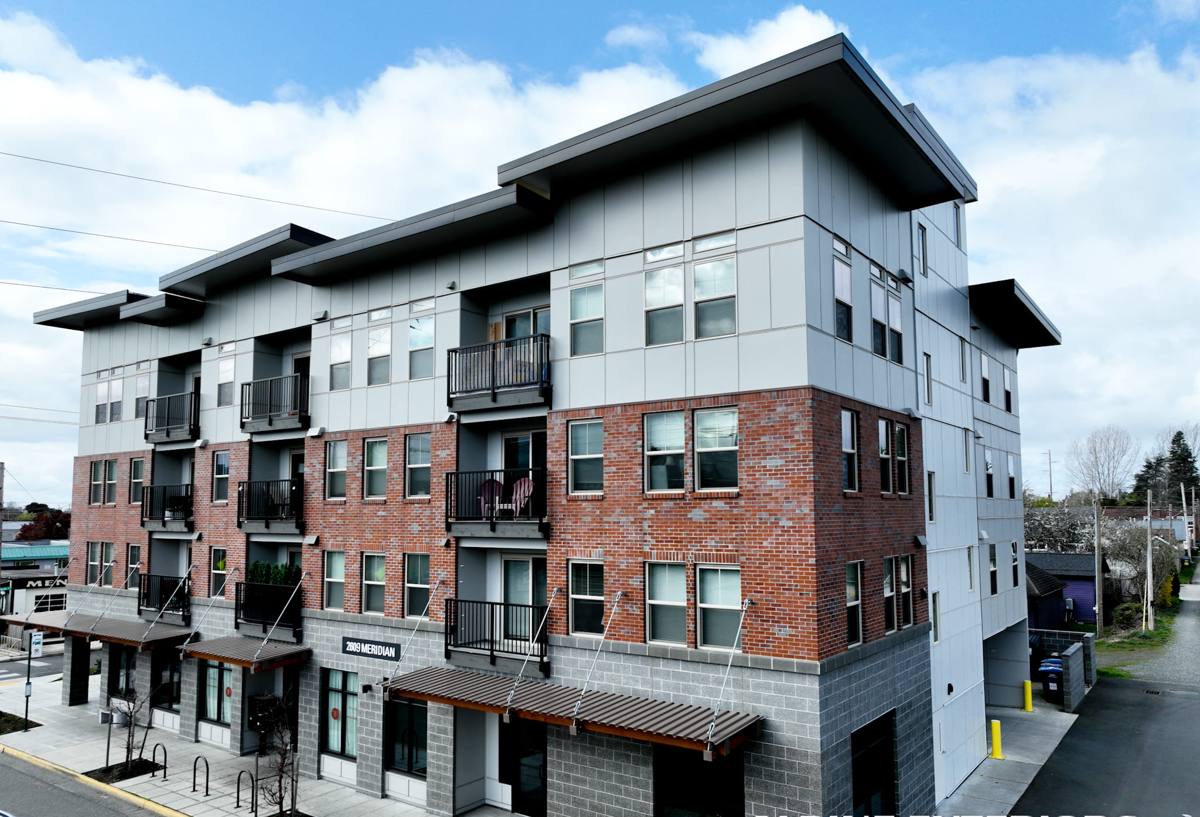
What Point Roberts' Climate Does to a House
Salt Air From More Than One Direction
Most towns in Whatcom County have a water side and a land side. Point Roberts doesn't work that way — the peninsula is bordered by water on nearly its entire perimeter, so salt-laden air isn't limited to homes with a water view. It moves across the whole community. Salt exposure accelerates corrosion on fasteners, flashing, and exposed trim hardware, and it breaks down lower-quality coatings and finishes faster than a typical inland climate would. On a peninsula this exposed, the margin for a cut corner on hardware or finish quality is thinner than almost anywhere else in the county.
Driving Rain With Nothing to Block It
Storm systems coming off the water hit Point Roberts with less of a buffer than towns set back from the coast. Wind pushes rain sideways into wall assemblies, window flashing, and the joints where trim meets siding, and that sideways-driven moisture is a harder test on a house than the same rainfall falling straight down. Water finds gaps that a careless installation leaves behind, and on an exposed peninsula those gaps get tested more often and with more force.
A Long Moss Season
Mild temperatures and near-constant moisture add up to a moss and mildew season that runs most of the year on shaded or north-facing walls. Point Roberts has plenty of tree-covered lots and homes that don't get much direct winter sun, and any siding material with surface porosity becomes a growth surface over time in those conditions. Moss and mildew trap moisture against the wall behind them, which is where a lot of long-term siding problems actually start.
Why We Install James Hardie Exclusively Here
We didn't standardize on one siding product because of a supplier relationship or a sales angle. It came from watching how different materials actually perform in coastal, high-moisture conditions like Point Roberts sees year-round.
- Non-combustible core: Fiber cement doesn't feed a fire the way wood-based siding products can, which matters for both safety and insurance considerations, especially on a property that may sit empty for stretches at a time.
- Factory-applied ColorPlus finish: The color is baked on under controlled factory conditions rather than brushed on in the field, which holds up better against fading, chalking, and salt exposure than site-applied paint.
- Climate-engineered HZ5 product line: Hardie's HZ5 formulation is built for regions with sustained moisture and freeze-thaw cycling, which fits Point Roberts' exposure better than a product engineered for a milder, drier market.
- Dimensional stability: Fiber cement doesn't swell, cup, or warp the way engineered wood products can after repeated exposure to wet, salt-laden air off the water.
- Strong transferable warranty: Hardie backs the product with one of the stronger warranty structures in the industry, which matters for a homeowner who may not be checking on the property every week.
A fair number of Point Roberts properties are seasonal or part-time homes, and some owners split time across the border. A siding system that needs regular touch-up paint or careful monitoring for early rot is a harder ask when nobody's walking the property every weekend to catch a problem early. That's a practical reason, on top of the climate reasons, that we don't offer a cheaper option that quietly shifts maintenance risk onto an owner who may not be around to notice it.
What Correct Installation Looks Like Here
Hardie siding only performs the way it's engineered to when the installation follows spec, and on an exposed peninsula like Point Roberts, the details matter more than they would in a sheltered inland town. A few of the basics we won't skip:
Rain Screen Drainage Gap
A small cavity behind the siding lets any moisture that gets past the exterior surface drain and evaporate instead of sitting against the wall sheathing. On a property that takes wind-driven rain from multiple directions, that drainage path is doing real work, not just satisfying a checklist.
Fastener Type and Spacing
Hardie specifies corrosion-resistant fastener types and precise spacing for a reason. Loose spacing or the wrong fastener is one of the more common causes of early siding failure we find on tear-offs, and salt air makes an underspec fastener choice fail faster than it would further inland.
Flashing and Sealed Transitions
Every seam, butt joint, and trim transition needs to shed water down and out, especially on walls that face open water with nothing upwind to slow the rain down. Open or poorly sealed joints are where salt-laden moisture finds its way behind the siding first.
Working on the Peninsula: What's Different Logistically
Point Roberts isn't reachable by a continuous domestic road — getting a crew, equipment, and material onto the peninsula means routing through Canada by land, since there's no other road connection to the rest of Whatcom County. That's a genuinely different logistics picture than a normal siding job in Blaine or Lynden, and it affects how we plan a project, not just how we execute it once we're on site.
- Material staging: We plan deliveries and staging in advance so a project isn't waiting on a second or third supply run mid-job.
- Crew scheduling: Border crossing adds time to a normal workday, so we build that into the schedule instead of treating it as a surprise delay.
- Debris removal: Tear-off waste and packaging have to be hauled back off the peninsula the same way everything else gets in, so we plan disposal logistics as part of the project timeline, not as an afterthought.
None of this is a reason to avoid the work — it's just a reason a crew with real Point Roberts experience runs a tighter, more predictable project than one that's never planned around the peninsula's access before.
Our Process for a Point Roberts Siding Project
- On-site assessment: We walk the property, check the existing siding and substrate for moisture damage, and note exposure — which walls face open water, which stay shaded, and where wind-driven rain hits hardest.
- Scope and estimate: We put together a straightforward estimate based on what we actually find, not a generic per-square-foot number, since substrate condition varies more on exposed coastal homes than on sheltered inland ones.
- Material staging and scheduling: Given the peninsula's access, we plan delivery and crew scheduling around border crossing time so the project runs on a predictable timeline once work starts.
- Tear-off and substrate repair: Old siding comes off, and any water-damaged sheathing or framing gets addressed before new material goes on — covering that up would undercut everything installed over it.
- Installation to spec: Rain screen, correct fasteners, flashing, and sealed transitions, done to Hardie's installation spec rather than shortcut on the parts that are hard to see once the job is finished.
- Final walkthrough: We review the finished work with the homeowner before we consider the project complete.
Cost Factors for a Point Roberts Siding Project
| Factor | What Drives It | Point Roberts Consideration |
|---|---|---|
| Home size and layout | Total square footage, number of stories, trim complexity | No difference from a typical home, though corner and gable exposure to open water matters more |
| Tear-off vs. overlay | Condition of existing siding and substrate | Homes closer to the water more often need substrate repair once old siding comes off |
| Material and finish | HardiePlank, HardiePanel, or HardieShingle; ColorPlus color selection | Same product options as anywhere else we work; no premium products limited to this area |
| Project logistics | Crew scheduling, material delivery routing | Border crossing time and material staging add planning, not extra material cost |
These are general drivers, not a quote. Every Point Roberts property sits at a slightly different distance from the water and under different tree cover, so we walk the property before putting a real number on the work.
Signs a Point Roberts Home Needs Siding Attention
- Moss or dark staining that comes back quickly after cleaning, especially on shaded or north-facing walls
- Soft or spongy siding, particularly low on the wall or around window and door trim
- Rust staining or corroded fasteners and trim hardware, more common this close to the water
- Peeling or chalking paint on siding that isn't factory-finished
- Visible warping, cupping, or gaps opening up between boards
- Water staining inside near exterior walls, which often traces back to a siding or flashing failure outside
Why Hiring a Crew That Already Works Point Roberts Matters
A crew that's worked Point Roberts before knows the practical realities that don't show up on a spec sheet: which walls take the worst of the wind-driven rain, how the border crossing affects a project schedule, and what it takes to keep material and debris logistics from turning into delays. For an owner who isn't on the property full-time — which describes a lot of Point Roberts homes — that experience translates into fewer surprises and fewer callbacks. We treat every Point Roberts project with the same installation standard we hold everywhere else in Whatcom County, but we plan around the peninsula's access instead of learning it for the first time on your job.
If your Point Roberts home needs new siding or you're weighing options after storm damage or a failing exterior, we're glad to walk the property and give you a straightforward assessment. Reach out using the form below to schedule a free, no-pressure estimate.