 Blaine Siding
 Why Point Roberts Roofs Take a Different Kind of Beating
Point Roberts sits out on its own — a piece of Washington State separated from the rest of the country by water on three sides and by Canada on the fourth. That geography is charming to live in and hard on a roof. Homes here sit close to the Strait of Georgia and Boundary Bay, which means near-constant exposure to salt-laden marine air, wind-driven rain off the water, and a wet season that runs long even by Whatcom County standards. Add in the mature tree cover that shades a lot of Point Roberts lots, and you get roofs that hold moisture and grow moss faster than roofs ten or twenty miles inland.
None of this means asphalt shingle roofing is a bad choice for the area — it's still the most practical, cost-effective option for most homes here. It means the installation details matter more than they would in a drier, more sheltered location. A roof that would be perfectly fine in a dry inland town can fail early in Point Roberts if it's built to a generic spec instead of a marine-climate one.
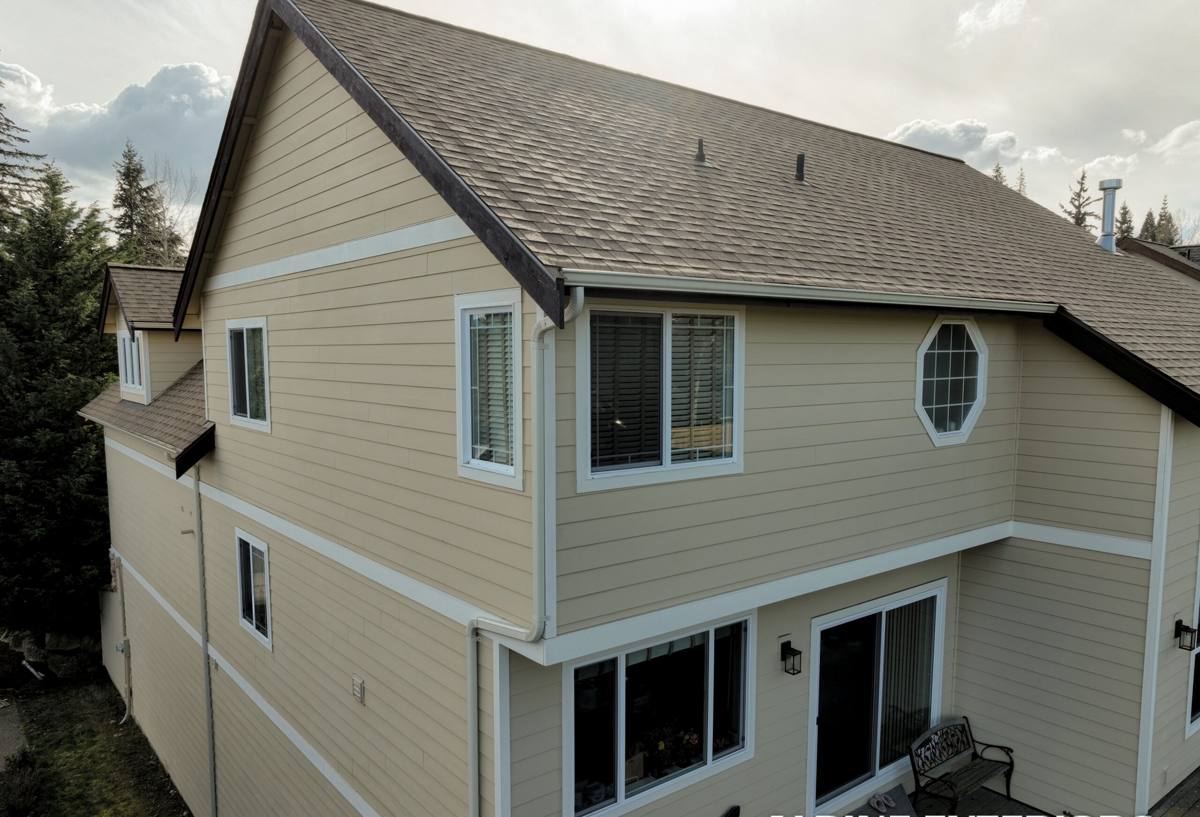
What Salt Air Does to an Asphalt Shingle Roof
Salt air is corrosive to metal, and a roof is full of metal — nail heads, flashing, drip edge, vent stacks, valley metal. Standard electro-galvanized fasteners can start to rust and weaken years before the shingles themselves wear out. Once a nail head corrodes and loses its grip, the shingle above it is free to lift in wind, and a lifted shingle is how water gets under the roof system instead of running off it.
Salt-bearing wind also accelerates granule loss on the shingle surface. Those granules aren't decorative — they're what protects the asphalt layer underneath from UV breakdown. A roof that's shedding granules faster than normal is aging faster than normal, even if it still looks fine from the ground.
The practical response isn't a special "salt air shingle" — it's using corrosion-resistant fasteners and flashing, and not cutting corners on the metal components, since those are almost always what fails first in a coastal install.
Moss, Algae, and the Long Wet Season
Moss needs shade and sustained moisture to take hold, and Point Roberts' tree cover plus its long stretch of wet weather gives it both. Moss doesn't just look bad — it holds water directly against the shingle surface for weeks at a time, which is exactly the opposite of what a shingle roof is designed to do. Over time, moss can work its way under shingle tabs and lift them, creating small entry points for water that show up later as a leak somewhere else entirely, often nowhere near where the moss was growing.
You'll also see dark streaking on north-facing or shaded slopes that isn't moss at all — it's algae. It's mostly a cosmetic issue rather than a structural one, but it's worth understanding the difference, because the fix and the shingle choice differ depending on which one you're dealing with.
Algae-resistant (AR) shingles, which use copper-infused granules, are worth the small upcharge on most Point Roberts homes, especially on shaded roof planes. They don't stop moss, but they meaningfully slow algae staining, and most manufacturers back that resistance with a specific warranty period rather than a vague promise.
What a Correct Installation Requires in This Climate
A shingle roof is a system, not just a layer of shingles laid over plywood. In a climate like this one, every layer underneath the visible shingle has to be doing its job, because the shingles alone can't carry the whole burden of keeping water out.
Underlayment and Water Barriers
Synthetic underlayment is standard now for good reason — it holds up better than old felt paper if a roof sits open partway through a job when weather rolls in unexpectedly, which happens on the water. At eaves, valleys, and anywhere water tends to pool or back up, self-adhering ice-and-water barrier membrane should go down under the underlayment as a second line of defense.
Flashing and Edges
Drip edge at the eaves and rakes, step flashing at walls and chimneys, and valley metal all need to be installed in the correct order relative to the underlayment and shingles — not caulked over as an afterthought. Sealant has a role in roofing, but it's a supplement to correct flashing sequence, never a substitute for it.
Fastening and Wind Resistance
Driving rain in this area is almost always accompanied by wind, so proper nail placement — the right number of nails, in the manufacturer's specified nailing zone, driven flush and not overdriven — is what actually keeps shingles attached in a storm. High-wind-rated shingle lines and six-nail patterns are worth discussing for exposed lots, particularly anything facing open water.
Ventilation
Balanced intake and exhaust ventilation keeps the attic dry and temperature-stable, which protects the roof deck from the underside and helps prevent condensation-driven rot — a slower but just as damaging problem as a surface leak.
Choosing the Right Shingle for the Job
Not every shingle tier is worth the upgrade on every roof, but on a coastal, moss-prone, shaded lot, the differences show up faster than they would elsewhere.
| Shingle Type | Typical Lifespan | Best Fit For |
|---|---|---|
| 3-Tab | 15-20 years | Budget-driven projects on more sheltered, less shaded lots |
| Architectural / Laminate | 25-30 years | Most Point Roberts homes — better wind rating and thicker profile |
| Premium / Designer | 30+ years | Exposed or high-visibility roofs where wind rating and warranty depth matter most |
Beyond tier, look for a documented wind rating appropriate to an open, water-adjacent lot, and algae resistance as a near-default choice given the climate here. Color matters too in a practical sense — very dark shingles run hotter and can show algae staining less readily than lighter colors, which is worth weighing against your home's style and any HOA or covenant guidelines that may apply.
The Logistics of Roofing Work in an Exclave
Point Roberts is physically part of Washington but geographically cut off from it — the only land route in and out crosses through Canada. That's a fact of life for anyone who lives there, and it's also a real, practical factor in how a roofing project gets run. Material deliveries, dumpster or debris hauling, and crew scheduling all have to account for a border crossing that keeps its own operating hours rather than running around the clock.
A crew unfamiliar with that reality can end up with a truck of shingles stuck at the border, a dumpster that can't get picked up on schedule, or a crew that shows up late because they didn't plan around crossing times. It sounds like a small thing until it turns a two-day tear-off into a roof sitting open overnight in the rain. Working Point Roberts regularly means knowing the crossing's rhythms, keeping the right paperwork in order for hauling tools and materials, and building delivery and disposal schedules around the realities of getting equipment on and off the Point — not learning it for the first time on your job.
Whatcom County permitting also applies to Point Roberts the same as anywhere else in the county, and a crew that pulls permits here regularly moves through that process faster than one working from scratch.
How We Handle a Point Roberts Roofing Project
The process itself isn't exotic — it's the attention to sequence and detail that changes based on everything above.
- Inspection. We walk the roof and attic, check for moss, granule loss, soft decking, and ventilation problems, and look at flashing condition at every penetration and wall intersection.
- Written estimate. A clear scope covering tear-off, decking repair allowances, underlayment and ice-and-water placement, shingle selection, and flashing work — no vague line items.
- Tear-off and deck check. Old roofing comes off down to the deck so we can actually see the plywood or planking condition, not guess at it from underneath.
- Installation. Underlayment, ice-and-water barrier at vulnerable areas, drip edge, flashing, and shingles installed to the manufacturer's nailing and exposure specs.
- Cleanup and walk-through. Magnetic nail sweep of the property, debris hauled off, and a final walk-through so you know exactly what was done and what your warranty covers.
Maintenance and When to Call
A correctly installed roof still needs some upkeep in this climate — moss and salt air don't take a season off.
- Have moss physically removed (not just chemically treated) before it works under shingle tabs, generally once a year on shaded roofs
- Keep gutters clear so water isn't backing up under the shingle edge, especially through the wet months
- Trim back tree limbs that keep a roof plane shaded and damp longer than the rest of the house
- Have flashing points — chimneys, vent stacks, wall intersections — checked after any major windstorm
- Watch for granules collecting in gutters, curling shingle edges, or daylight visible in the attic, all signs a roof is nearing the end of its service life
Most of that is a once-or-twice-a-year job, and catching a small flashing or moss problem early is a lot cheaper than repairing the rot or interior damage that comes from ignoring it for a few winters.
Why a Crew That Already Works Point Roberts Matters
Anyone can install shingles on a dry day. The difference on a Point Roberts roof shows up in the details you don't see once the job is finished — whether the fasteners were rated for salt exposure, whether the flashing sequence was actually correct instead of caulked together, whether the crew planned material and disposal logistics around a border crossing instead of finding out the hard way. A crew that already works this area on a regular basis has already worked through those logistics and already knows what this specific climate does to a roof over time, rather than applying a generic inland spec to a very non-generic location.
If you're weighing a repair against a full replacement, or just want an honest read on where your current roof stands, we're happy to take a look. Reach out for a free, no-pressure estimate using the form below.