 Blaine Siding
 Siding in the Peace Arch Area Faces Its Own Set of Conditions
The Peace Arch area sits at Blaine's western edge, near the international border crossing and the park and green space that share its name, with Semiahmoo Bay and Drayton Harbor close enough to shape the air homes here breathe every day. It's a setting that combines a few things at once: open exposure to marine air moving off the water, mature tree cover on many lots that keeps things shaded and slow to dry, and a border-town climate that stays cool and wet for most of the year. None of that is unique to this one pocket of Whatcom County on its own, but the combination shows up on siding here in a specific way — salt-laden air working on hardware and finishes, driving rain finding its way into anything not properly detailed, and a moss season that can run nearly year-round on shaded, north-facing walls.
This page is about siding installation specifically for homes in the Peace Arch area — new work and full re-siding, not spot repair — and what that combination of conditions actually demands from the job. We install James Hardie fiber cement exclusively, and everything below reflects that system, since it's the only one we put on homes in this part of Blaine.
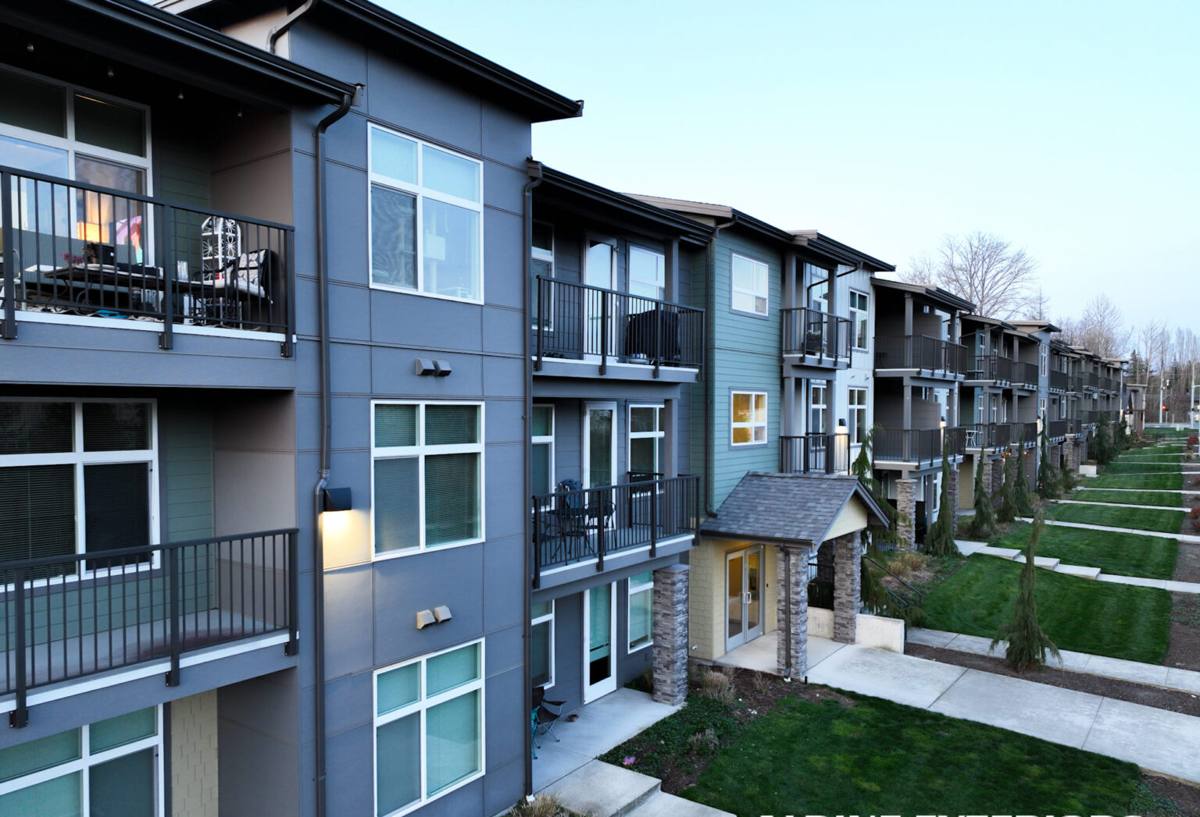
What Local Homes Need From an Installation
Salt Air Off the Water
Homes within a mile or two of Semiahmoo Bay or Drayton Harbor take on salt-carrying air as a daily condition, not an occasional event. That air accelerates corrosion on fasteners, flashing, and trim hardware faster than it would further inland, and it does it quietly — the damage doesn't show until rust streaking or loosened trim shows up a few years later.
Wind-Driven Rain
Rain moving in off open water rarely falls straight down. It gets pushed sideways into panel joints, window flashing, and trim seams, which means the water-resistive barrier underneath the siding — and how carefully it's lapped and sealed at every penetration — matters as much as the siding itself. A properly installed barrier sheds that wind-driven water before it reaches the sheathing; a rushed one gives it a way in.
A Long Moss Season Under Tree Cover
Many Peace Arch lots back onto mature trees or sit close to the park's green space, which keeps walls shaded and slower to dry after every wet spell. Combined with Blaine's mild, damp climate for much of the year, that shade turns any wall that stays even a little damp into a surface moss will eventually colonize. Installation details — clearance at the base of the wall, a working drainage plane, siding that isn't crowded tight against trim — determine how much of a head start moss gets.
What a Correct Installation Involves Here
Moisture Barrier and Flashing
The water-resistive barrier goes on with full overlap and taped seams before any flashing or siding covers it, and every window, door, and wall penetration gets flashed to shed water outward, not trap it behind the cladding. This layer is completely hidden once the job is done, which is exactly why it can't be the place a crew cuts corners to save time.
Fastening and Clearances
James Hardie specifies fastener type, spacing, and minimum clearance above grade, decks, and roofing, and those numbers don't flex based on schedule pressure. Corrosion-resistant hardware matters more here than on an inland job, and clearance at the base of the wall is what keeps the bottom courses out of standing water and splash-back.
Sealed Field Cuts
Every panel cut on site — at a window, a corner, the end of a run — needs its cut edge sealed or primed before it goes up. Left raw, a field cut is one of the more common places fiber cement actually takes on water, and it's an easy step to catch or miss depending on how carefully a crew works.
Comparing Siding Materials for This Area
Homeowners in the Peace Arch area often ask why we don't offer a lower-cost alternative. Here's an honest look at how the common options actually hold up under salt air, driving rain, and heavy shade:
| Material | How it handles this climate | Where it falls short here |
|---|---|---|
| James Hardie fiber cement | Non-combustible, factory-finished, engineered climate zones account for moisture and freeze-thaw cycling | Higher upfront cost than vinyl; installation must follow spec closely |
| Vinyl siding | Low upfront cost, no painting required | Can warp or crack in temperature swings, seams and panels give wind-driven rain an easy path in over time |
| Cedar or primed wood | Traditional look many homeowners like | Needs ongoing refinishing to resist moisture and moss; shaded, damp lots shorten the interval between maintenance cycles |
| Engineered wood (e.g. LP SmartSide) | Lighter and easier to install than fiber cement | Wood-based core is more moisture-sensitive at cut edges and seams than fiber cement, which matters in a wet, shaded climate |
We used to install a broader range of these products. What settled us on fiber cement wasn't a sales pitch — it was watching which materials held up on homes exactly like the ones near Peace Arch, and which ones brought homeowners back for service calls a few years later.
Why We Install Only James Hardie Fiber Cement
James Hardie fiber cement is non-combustible, which matters for basic fire safety regardless of location, and it comes factory-finished with ColorPlus, a baked-on coating that holds color and resists moisture better than a coat of paint applied on site. Hardie also engineers its products by climate zone — Blaine's cool, wet, marine conditions fall under the HZ5 formulation, built specifically for regions with significant moisture exposure and freeze-thaw cycling, which is what we specify for every installation in this area. The product also carries a strong transferable warranty, though like any manufacturer warranty, it depends on the installation actually following Hardie's published specification — which is the part a homeowner can't see just by looking at the finished wall.
Our Installation Process
- Site and exposure assessment — we look at which walls take direct wind and salt air, which sit shaded under trees or near the park's green space, and where existing moss or moisture staining points to a chronic problem rather than a one-time issue.
- Tear-off and sheathing inspection — old siding comes off and the sheathing underneath gets checked before anything new goes up, so rot or soft spots get addressed rather than covered over.
- Weather barrier installation — a continuous, properly lapped and taped water-resistive barrier goes on before flashing and siding, since this layer does most of the real work of keeping wind-driven rain out of the wall.
- Siding installation to manufacturer spec — panels go up following Hardie's fastening, spacing, and clearance requirements as the baseline, with field cuts sealed as they're made.
- Final walkthrough — we go over the completed job with the homeowner and talk through what basic maintenance looks like on a home this close to the water and this shaded by trees.
Signs Your Peace Arch Home May Need New Siding Soon
- Persistent moss or dark streaking on north-facing or shaded walls that returns shortly after cleaning
- Soft, spongy siding near the base of the wall, around deck ledgers, or below window sills
- Rust streaking around fasteners or trim, especially on walls facing open water
- Paint or finish failing years earlier than expected, particularly on wood or engineered wood siding
- Visible gaps, warping, or cracked panels after a hard wind event off the bay
- Interior staining or a musty smell near exterior walls, which often points to a moisture problem that's been building behind the siding
Why a Crew That Already Works This Area Matters
Installation quality on paper and installation quality in practice aren't the same thing, and the difference shows up faster in a climate like this. A crew that regularly works homes near Peace Arch has already seen which walls in this specific setting take the worst of the wind and salt, which shaded lots hold moisture longest, and which fastener and flashing choices actually hold up rather than just look right on install day. That kind of judgment comes from doing this work repeatedly in this specific area, not from applying a generic installation checklist the same way on every job regardless of where it sits. It also means fewer surprises on scheduling — a crew familiar with this stretch of Blaine plans around the same wind and rain patterns that affect every job here, rather than treating weather delays as an unexpected setback.
Maintenance After Installation
A correctly installed Hardie system needs far less upkeep than wood or vinyl, but it isn't maintenance-free, especially on a shaded, water-adjacent lot. Periodic rinsing to keep moss and organic buildup from establishing on north-facing walls, a visual check of caulking and trim after major storms, and prompt attention to any soft spots or staining will keep a correctly installed system performing the way it's designed to for decades.
If you're planning new siding for a home in the Peace Arch area, or want a second opinion on an existing installation, we're glad to take a look. Reach out using the form below for a free, no-pressure estimate.