 Blaine Siding
 Why Peace Arch Homes Put Windows to the Test
Homes in the Peace Arch area of Blaine sit close enough to the water and the border that they take on a specific mix of weather stress most inland Washington homes never deal with. Salt-laden air off the Strait works its way into hardware and seals. Driving rain off Boundary Bay hits window walls sideways more often than straight down, which pushes water into gaps that would stay dry in a calmer climate. And Whatcom County's long, damp moss season keeps humidity sitting against exterior surfaces for months at a stretch, which is exactly the condition that finds and exploits any weakness in a window's seal or flashing.
None of that means windows here fail faster by nature. It means the margin for a mediocre install or a builder-grade unit is thinner. A window that would perform fine for fifteen years in a drier, more sheltered spot can start showing fogged glass, soft trim, or drafty sashes in half that time here if it wasn't specified and installed for this exposure. That's the lens we use on every Peace Arch window job — not just "will it look good," but "will it still be sealed tight in year twelve of salt air and winter storms."
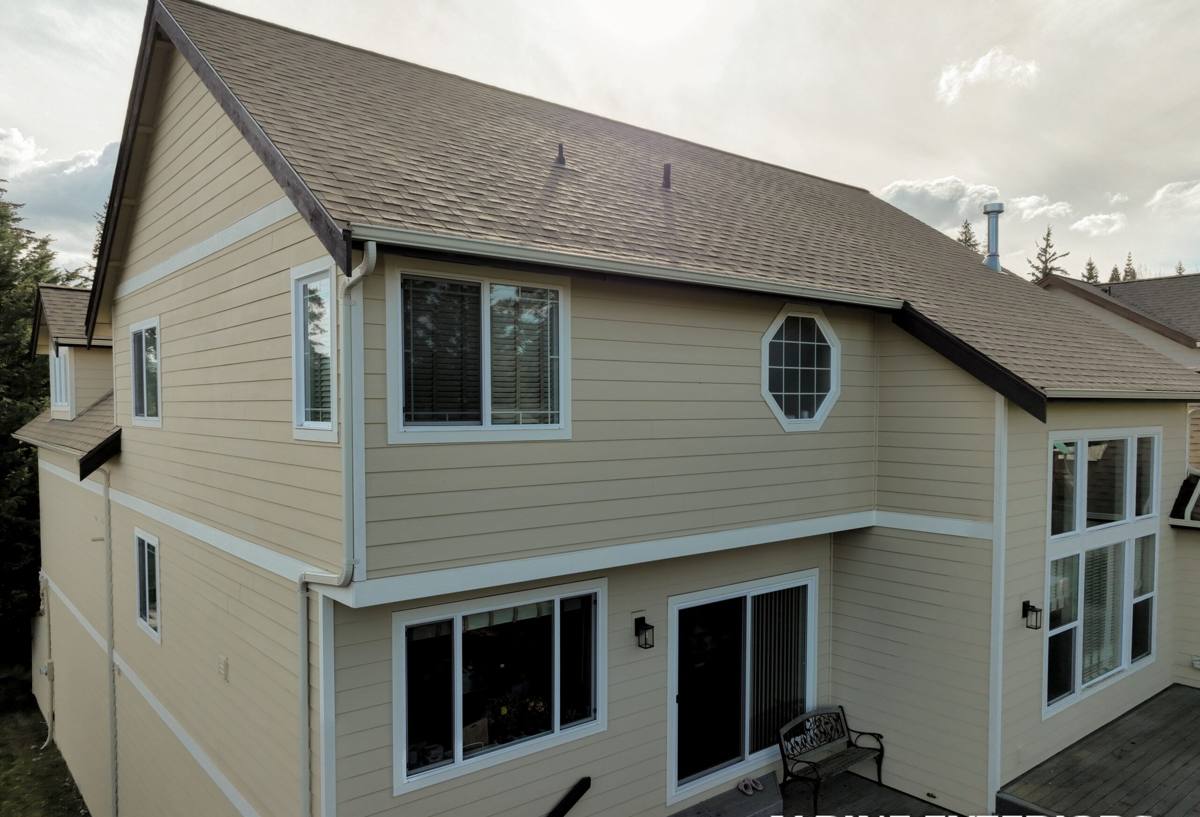
What "Energy-Efficient" Actually Means for a Window
The term gets used loosely. For a coastal Blaine home, energy efficiency isn't one spec — it's a combination of the frame material, the glass package, and how tightly the unit is sealed into the wall. Get one of those wrong and the other two don't matter much.
Frame Materials That Hold Up to Salt Air
Vinyl and fiberglass frames are the two materials we lean on for this area, and for good reason: neither one corrodes, and both resist moisture absorption far better than bare wood. Vinyl is the more budget-friendly option and performs well when it's a quality multi-chambered profile, not a thin builder-grade extrusion. Fiberglass costs more up front but expands and contracts with temperature swings at nearly the same rate as glass, which keeps seals intact longer and matters more in a climate with constant humidity cycling. Wood-clad windows can still work here, but they demand more upkeep — the cladding has to stay fully intact, because any breach lets moisture reach the wood core, and salt air accelerates that kind of deterioration once it starts.
Glass Packages and What They Do
Double-pane, low-E, argon-filled glass is the baseline we recommend for this area — it's a meaningful step up from older single-pane or basic double-pane units in both insulation and condensation resistance. Triple-pane goes further and is worth considering on north- and west-facing walls that catch the brunt of winter wind, though it adds weight and cost that isn't always justified on every elevation. The low-E coating matters as much as the pane count — it's what actually blocks radiant heat transfer, keeping interiors more stable in both summer sun and winter chill.
Signs Your Current Windows Are Costing You Money
Most homeowners don't replace windows because of one dramatic failure — it's a slow accumulation of small problems that adds up on the energy bill and in comfort. Here's what we look for during an assessment, and what you can check yourself:
- Visible condensation or fogging between panes — a sign the seal has failed and the insulating gas has escaped
- Drafts you can feel by hand along the sash or frame edge on a windy day
- Soft, discolored, or swollen trim and sill material, especially on walls facing the water or prevailing wind
- Windows that are difficult to open, close, or lock — often a sign the frame has shifted slightly out of square
- Visible moss or algae growth on the sill or lower frame that keeps returning even after cleaning
- Noticeably higher heating bills compared to similar-sized homes nearby
- Paint or finish that's failing specifically around the window opening, not the rest of the wall
Any one of these on its own isn't necessarily urgent. Several together, especially on the sides of the house that face the wind and water, usually means the window system has been losing its seal for a while.
Comparing Window Options for Coastal Whatcom County Homes
There's no single "best" window for every house — it depends on exposure, budget, and how much upkeep you want to take on. Here's how the common options stack up for this specific climate:
| Option | Salt Air / Moisture Resistance | Maintenance | Typical Fit |
|---|---|---|---|
| Vinyl, multi-chamber | Strong — won't corrode or rot | Low — occasional cleaning | Most homes; best value |
| Fiberglass | Excellent — stable through temperature and humidity swings | Low | Exposed walls, higher-end renovations |
| Wood-clad | Good if cladding stays intact; vulnerable if breached | Higher — cladding and seals need periodic checks | Homes prioritizing a specific interior wood look |
| Aluminum | Prone to conductivity issues and condensation in this climate | Moderate | Rarely our first recommendation here |
We don't install every option on this list on every job. Aluminum in particular tends to conduct cold straight through the frame in a climate this damp, which works against the whole point of an energy-efficient upgrade — it's less about the product being poor quality and more about it being a mismatch for driving coastal rain and moss-season humidity.
How We Approach a Window Replacement Job
The window unit itself is maybe half of what determines how it performs over time. The other half is the install — and that's where a lot of shortcuts get taken by crews unfamiliar with this kind of exposure.
- On-site assessment. We look at each opening individually — sill condition, existing flashing, framing square, and which elevations take the worst weather.
- Product selection matched to exposure. A window facing the water gets different specification treatment than one on a sheltered side of the house.
- Removal and inspection of the opening. Once the old unit is out, we check the sheathing and framing underneath for hidden moisture damage before anything new goes in.
- Flashing and water management first. This step happens before the new window is even set — it's the part that actually keeps water out over the long run.
- Setting, shimming, and sealing the unit. The window has to sit square and be sealed correctly on all sides, not just caulked around the trim afterward.
- Interior and exterior trim finish. Final weatherproofing and finish work to match the home.
- Walkthrough. We check operation, seals, and finish with you before calling the job done.
Moisture, Flashing, and the Details That Actually Prevent Failures
Most window failures we get called out to inspect in this area trace back to flashing and sealant details, not the window product itself. A window can be a genuinely good unit and still fail early if water is allowed to get behind the frame instead of being directed out and away from the wall assembly. In a climate with driving rain and a long wet season, that detail work isn't optional — it's the difference between a window that lasts decades and one that needs attention again in a few years.
We pay particular attention to sill pan flashing, proper head flashing above the opening, and using sealants rated for exterior UV and moisture exposure rather than general-purpose caulk that breaks down faster in this kind of weather. It's not the most visible part of the job, but it's the part that determines whether the window is still performing correctly ten winters from now.
What Affects the Cost of a Window Project
Every home and every opening is different, so we don't quote sight-unseen — but the factors that typically move the price are consistent:
- Frame material — vinyl is generally the most economical, fiberglass and wood-clad cost more
- Glass package — double-pane low-E versus triple-pane, and any added coatings
- Number and size of openings — larger or custom-shaped windows cost more than standard sizes
- Condition of the existing opening — hidden rot or framing issues found during removal add scope
- Access and elevation — upper-story or hard-to-reach windows take more labor
Generally speaking, a straightforward like-for-like window replacement runs at the lower end of typical remodeling costs, while full-frame replacements with structural repair or upsized openings run higher. We'll walk through the specifics for your home rather than quote a number that doesn't reflect your actual openings.
Why It Matters That We Already Work in Peace Arch
A crew that mostly works drier, more sheltered parts of Whatcom County can still do competent work, but they're often specifying and detailing windows the way they would for a less exposed site. Working regularly in Blaine's Peace Arch area means we already know which elevations tend to take the worst of the wind and rain, how quickly moss and salt buildup show up on sills and trim here, and which flashing details actually hold up through a full wet season rather than just looking right on installation day. That local pattern recognition is hard to substitute for, no matter how good the window product is on paper.
If your windows are drafty, fogged, sticking, or just old enough that you're wondering whether they're still doing their job, we're happy to take a look. Reach out for a free, no-pressure estimate using the form below — we'll assess your home's specific exposure and give you an honest read on what makes sense.