 Blaine Siding
 Deck Repair Built for the Peace Arch Area's Climate
Homes in the Peace Arch area of Blaine sit close to the water and close to the border, which means decks here take on a specific kind of punishment. Salt-laden air off the bay works into fasteners and metal connectors faster than it does further inland. Driving rain off Puget Sound finds every gap in a ledger board or a poorly flashed post base. And Whatcom County's long, wet moss season coats horizontal surfaces for months at a time, holding moisture against wood long after a storm has passed. A deck that would hold up fine in a drier climate can develop real structural problems here within a few seasons if it wasn't built or maintained with that combination in mind.
We work on decks throughout the Blaine area regularly, and the repair calls we get from homes near Peace Arch tend to follow a pattern: soft or spongy decking boards, rust bleeding out of fastener heads, slippery moss buildup, and rot showing up at ground-contact points like posts and stair stringers. None of that is unusual for the area — it's just what marine air and a wet climate do to exterior wood over time. The point of a good repair isn't just to patch what's failing, it's to figure out why it failed there and make sure the fix doesn't just buy you another two or three years before the same problem comes back.
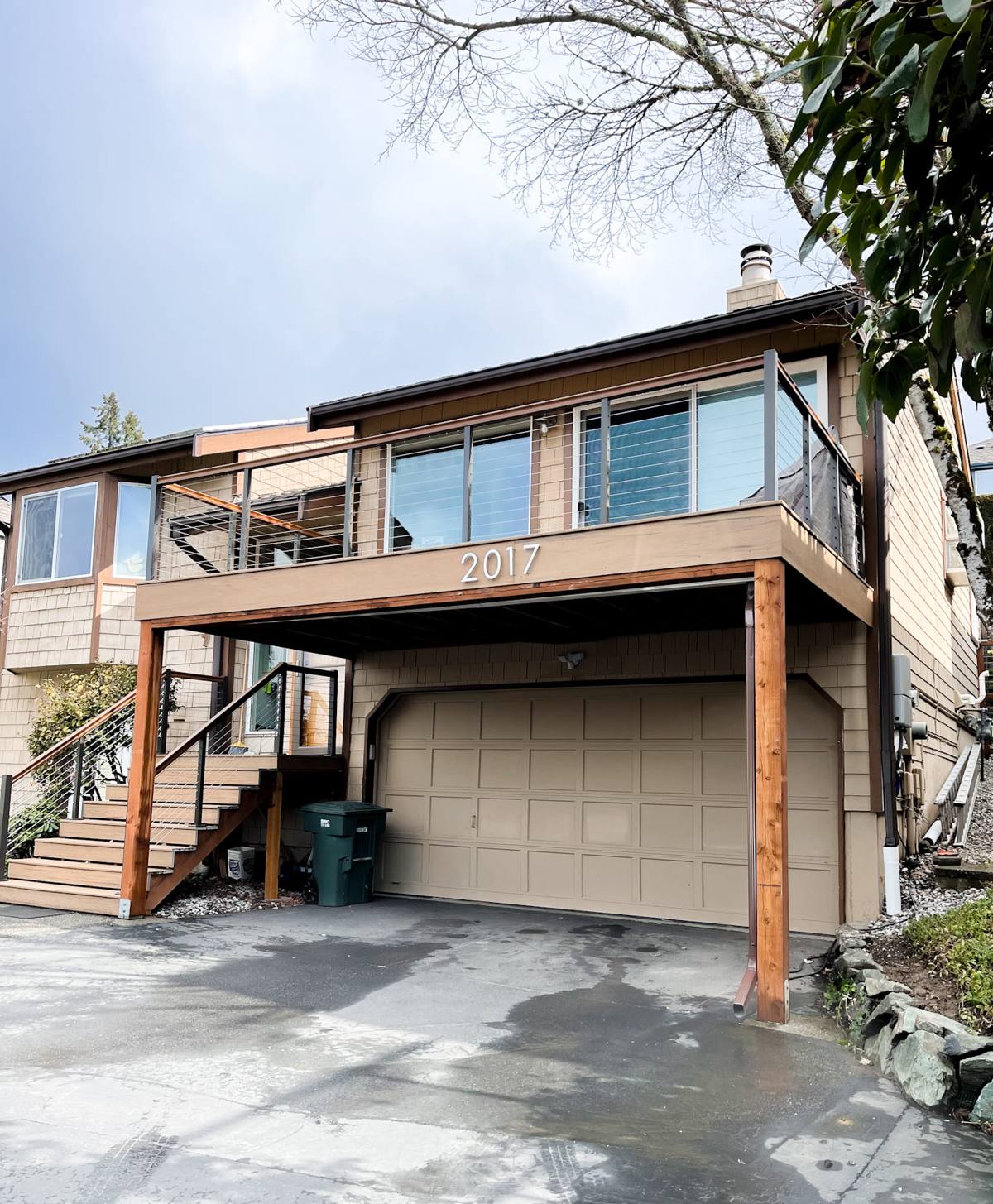
Why Decks Fail Faster Near the Water
Salt Air and Metal Fasteners
Standard fasteners that aren't rated for coastal or marine exposure corrode faster near the water. Once a nail, screw, or joist hanger starts rusting, it loses holding strength well before it looks obviously bad from the surface. That's a structural issue, not a cosmetic one — a rusted-through joist hanger can let a beam shift under load.
Driving Rain and Water Intrusion
Wind-driven rain doesn't just fall straight down — it gets pushed sideways into ledger connections, under railings, and into any seam that isn't properly flashed or sealed. Over time, water that gets behind decking boards or into a ledger board connection to the house is one of the more serious problems we find, because it's hidden until the wood underneath is already compromised.
The Long Moss Season
Moss and algae thrive on horizontal wood surfaces that stay damp for extended periods, which describes most decks here for a good chunk of the year. Beyond making a deck surface slick and dangerous to walk on, sustained moss growth traps moisture against the wood fibers, accelerating rot in exactly the areas that get walked on most.
What a Deck Repair Inspection Actually Covers
A proper deck repair starts with an inspection that goes beyond the visible surface. We check the framing and connections, not just the decking boards, because the boards are usually the last thing to show a problem that started somewhere else.
- Ledger board attachment to the house, including flashing condition
- Joist and beam condition, especially where wood contacts concrete or grade
- Post bases and footings for movement, rot, or inadequate drainage
- Fastener condition — rust, corrosion, or loosening at structural connections
- Railing and guard post stability, since these take direct load from people leaning on them
- Stair stringer condition, a common rot point due to ground contact and splash-back
- Surface condition of decking boards — cupping, splitting, soft spots, and moss coverage
We look at all of this before we talk about scope, because a deck that looks fine on top can still have a compromised ledger connection, and a deck with rough-looking boards can sometimes have completely sound framing underneath.
Common Repairs We Handle in This Area
Board Replacement and Surface Repair
Individual boards that have gone soft, cupped, or split get replaced rather than the whole deck being torn off, as long as the framing underneath is sound. This is usually the most cost-effective repair when the problem is limited to the wearing surface.
Ledger and Flashing Repair
Where the deck attaches to the house is one of the most important connections on the whole structure, and it's also one of the most common places we find hidden water damage. Repairing or replacing failed flashing here stops water intrusion at the source instead of just addressing the symptom.
Fastener and Hardware Upgrades
When we find corroded fasteners or connectors, we replace them with hardware rated for exterior and coastal-adjacent use, not standard interior-grade fasteners. This matters more here than it would further from the water.
Post, Beam, and Footing Repair
Rot at post bases or movement at footings is a structural issue that needs to be corrected properly — sistering, replacing, or resetting as needed — rather than masked with cosmetic fixes.
Railing and Stair Repair
Loose railings and deteriorating stair stringers are safety issues first and repair issues second. These get prioritized because they're the parts of a deck most likely to cause an injury if they fail.
Repair or Replace: How We Decide
Not every deck problem calls for a full rebuild, and not every deck is worth patching indefinitely. We base the recommendation on where the damage is and how much of the structure it affects.
| Factor | Leans Toward Repair | Leans Toward Replacement |
|---|---|---|
| Framing condition | Joists and beams solid, minor surface issues | Widespread rot in structural framing |
| Ledger connection | Sound, properly flashed | Compromised or improperly installed originally |
| Extent of decking damage | Isolated boards affected | Most boards cupped, split, or soft |
| Age of structure | Newer build, isolated wear | Older deck nearing end of practical service life |
| Code compliance | Meets current railing/attachment standards | Outdated construction not up to current standards |
We'll always tell you honestly which side of that table your deck falls on. If a repair is the right call, we won't push a replacement just to increase the scope of the job.
Our Deck Repair Process
- Inspection. We walk the full structure, framing included, and document what we find.
- Honest scope and estimate. You get a clear explanation of what needs to be fixed and why, with repair options where they exist.
- Removal of damaged material. We take out rotted or compromised wood and hardware down to sound material — no covering up a problem with a new surface.
- Structural correction first. Framing, ledger, and post issues get addressed before any cosmetic work happens.
- Fastener and hardware selection. We use fasteners and connectors suited to this climate, not just whatever is cheapest.
- Final walkthrough. We go over the completed repair with you and point out anything worth keeping an eye on going forward.
Materials and Hardware Choices That Matter Here
The materials used in a deck repair matter as much as the workmanship, especially given the salt air and moisture this area sees. We favor exterior-rated, corrosion-resistant fasteners and connectors for structural work, because the cost difference over standard hardware is small relative to what it costs to redo a repair that failed early from corrosion. For decking material, both wood and composite have a place, and the right choice depends on your budget, maintenance preference, and how the deck is used — we'll walk through the honest trade-offs of each rather than pushing one option across the board. Wood decking generally costs less upfront but needs more regular maintenance in this climate to keep moisture and moss from taking hold. Composite decking costs more initially and needs less ongoing upkeep, but it's not immune to the effects of trapped moisture underneath if the framing or drainage isn't handled correctly.
Maintaining a Deck After Repair
A repair holds up longer with a little regular attention, especially in a climate that stays wet for months at a stretch. None of this requires special equipment or professional help most of the time.
- Sweep debris and standing leaves off the deck surface regularly, especially in fall
- Address moss and algae buildup before it spreads across the whole surface
- Check that gaps between boards stay clear so water can drain rather than pool
- Look at railings and stair connections periodically for looseness
- Keep an eye on the ledger board area during heavy rain for any signs of water tracking
- Reseal or refinish wood decking on the manufacturer's recommended schedule
Catching small issues during routine checks is almost always cheaper and simpler than waiting until a problem becomes structural.
Why a Crew That Already Works This Area Makes a Difference
Deck repair isn't one-size-fits-all, and a crew that regularly works decks in Blaine and the Peace Arch area already knows what tends to go wrong here versus what gets found on decks in drier parts of the state. That familiarity with the local exposure to salt air, driving rain, and moss buildup means less guesswork during the inspection and a repair plan that accounts for conditions specific to this part of Whatcom County, not a generic checklist. It also means we're not learning on your project — the patterns of wear we see near the water show up often enough that we know where to look first and what's worth flagging even if it hasn't failed yet.
If your deck near Peace Arch has soft spots, rust stains, moss buildup, or just doesn't feel as solid as it used to, we're happy to take a look and give you a straightforward, no-pressure estimate on what it would take to fix it right. Use the form below to get started.