 Blaine Siding
 Building a Deck That Actually Holds Up in Peace Arch
Peace Arch sits right up against the water at the northern edge of Blaine, close enough to Semiahmoo Bay and the Canadian border that the weather here behaves differently than it does even a few miles inland. Homes in this pocket of Whatcom County take a steadier beating from salt-carrying wind, wind-driven rain, and a moss season that can run most of the year. A deck built with generic assumptions — the kind that might hold up fine in a drier, more sheltered part of the county — tends to show its age fast here: soft spots at the ledger, black streaks on the boards, rust bleeding from fasteners, railings that wobble a season or two after installation.
This page covers what we actually pay attention to when we build or replace a deck for a Peace Arch property, and why the local climate changes some of those decisions.
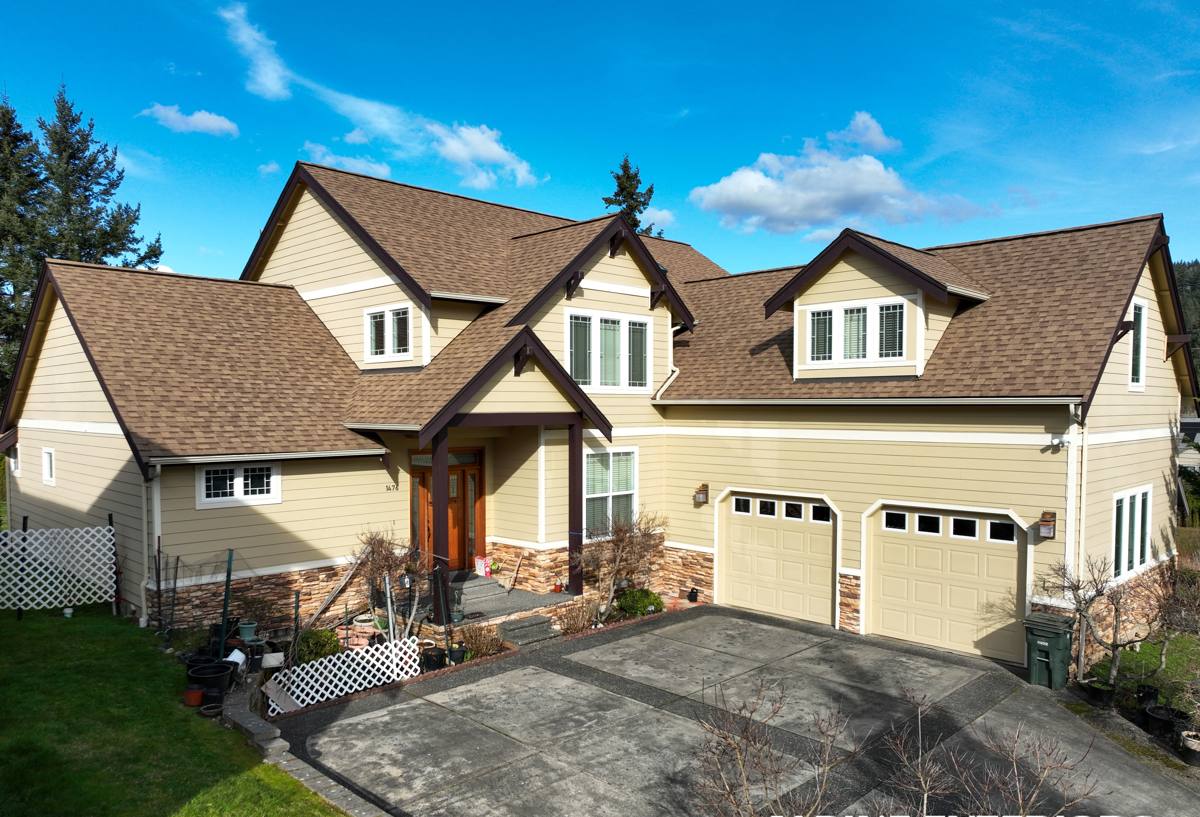
What Salt Air, Driving Rain, and Moss Do to an Ordinary Deck
Salt-Laden Wind Off the Water
Proximity to the bay means airborne salt reaches siding, railings, and fasteners even on days with no direct spray. Salt accelerates corrosion in anything metal that isn't rated for coastal exposure — deck screws, joist hangers, bolts, post bases. Once corrosion starts inside a joint you can't see it, but it's weakening the connection every month it goes unaddressed.
Driving Rain and Standing Water
Rain in this part of Whatcom County rarely falls straight down. Wind off the water pushes it sideways, driving moisture up under railings, into ledger connections, and into any gap where boards weren't spaced or sloped correctly. A deck surface that doesn't shed water fast enough holds puddles for days at a time, and that standing water is what eventually rots framing from the top down rather than the bottom up.
A Moss Season That Doesn't Really End
Shade, persistent damp, and mild temperatures give moss and algae a long growing window here — often close to year-round on north-facing or tree-shaded decks. Beyond looking neglected, a mossy deck surface gets genuinely slick, and moss holds moisture against the wood underneath it, which speeds up surface decay even on treated lumber.
Choosing the Right Decking Material for This Location
There's no single "best" decking material — the right choice depends on how much upkeep you're willing to do, your budget, and how exposed the deck is to wind and rain. Here's how the common options actually compare for a Peace Arch property, not in the abstract.
| Material | How it handles this climate | Maintenance | Typical lifespan here |
|---|---|---|---|
| Pressure-treated fir/hem-fir | Affordable, but end grain and fastener holes need real attention or moisture gets in fast | Annual cleaning, re-sealing every 1-2 years | 10-15 years with upkeep |
| Western red cedar | Naturally moisture- and insect-resistant, ages gracefully if finished and kept clean of moss | Cleaning plus re-staining/sealing every 2-3 years | 15-20+ years with upkeep |
| Composite decking | Doesn't absorb water or rot, but needs proper airflow underneath and periodic cleaning to prevent surface mildew | Occasional washing, no staining or sealing | 25-30 years, manufacturer-dependent |
| PVC/capped composite | Fully sealed surface handles salt air and driving rain very well; premium cost | Low — washing only | 25-30+ years |
We don't push one material over another as a rule. What we do insist on is matching the material to how exposed your specific deck is — a fully covered deck tucked against the house has different needs than an open, elevated deck facing the water.
What a Correctly Built Deck Involves Here
Most deck problems we get called out to inspect trace back to a handful of shortcuts taken during the original build. None of these are exotic — they're just steps that matter more in this climate than they would somewhere drier.
- Ledger flashing: the connection where the deck meets the house needs proper flashing and a water-resistant barrier behind it, not just lag screws and caulk.
- Joist tape: a self-adhering membrane over the top of every joist keeps water out of the screw holes and end grain, which is where rot almost always starts first.
- Coastal-rated fasteners and hardware: stainless steel or heavy-duty coated fasteners and connectors, sized for salt air exposure rather than standard interior-grade hardware.
- Correct board spacing and slope: gaps sized for the material's expansion and contraction, with the whole deck sloped slightly away from the house so water actually leaves the surface instead of pooling.
- Footings set to frost depth: post footings poured below the local frost line so the structure doesn't heave or shift over winters.
- Ventilation underneath: enough clearance and airflow below the joists that the framing can dry out between rain events instead of staying damp.
Railings, Stairs, and Under-Deck Considerations
Railings take more wind load here than in sheltered inland yards, so post spacing and attachment strength matter more than they might elsewhere. Metal railing components — brackets, baluster connectors, cable systems — need the same coastal-grade hardware as the decking itself, since railings are often the first thing to show rust because they're fully exposed on all sides.
Stair stringers and treads take on extra water because rain runs down the length of a staircase, not just across it. We pay particular attention to stringer protection and tread drainage on any deck with stairs open to the weather.
For elevated decks used as a covered space below, an under-deck drainage system routes water off the top surface and away from whatever's underneath, instead of letting it drip through the gaps onto a patio or entryway.
Permits and Local Building Requirements
Deck projects in Blaine typically require a building permit once the structure exceeds a certain height or size, and the exact thresholds depend on current City of Blaine and Whatcom County code. Permitted work generally covers footing depth, structural connections, guard and railing height, and stair geometry — all of which get inspected before the project is considered finished. We handle the permit application and coordinate inspections as part of the build, so you're not the one tracking down code requirements or scheduling inspectors.
Our Process for a Peace Arch Deck Project
- On-site assessment: we look at sun/shade exposure, wind direction, drainage on the lot, and the condition of any existing deck or ledger connection.
- Material and design discussion: honest talk about which decking material fits your budget and how much maintenance you actually want to take on.
- Permit and plan prep: drawings and permit filing handled before any demolition or construction starts.
- Demolition (if replacing): removal of the old structure, with a check of the ledger area and framing underneath for hidden rot before rebuilding.
- Framing and flashing: footings, posts, joists, ledger flashing, and joist tape installed to hold up under coastal conditions, not just pass a quick inspection.
- Decking, railings, and stairs: installed with correct spacing, slope, and coastal-rated fasteners throughout.
- Final walkthrough: we go over maintenance expectations for whatever material you chose before we consider the job done.
Maintaining a New Deck in This Climate
Even a well-built deck needs some seasonal attention here — the climate doesn't let anything sit maintenance-free forever. A short annual routine keeps most problems from ever starting:
- Sweep debris and standing leaves off the surface regularly, especially in fall
- Wash the deck surface at least once or twice a year to remove early moss and algae growth before it takes hold
- Check railing posts and stair connections for movement or rust staining
- Re-seal or re-stain wood decking on the schedule appropriate to that species
- Keep gutters and downspouts near the deck clear so runoff isn't dumping extra water onto the structure
- Clear anything blocking airflow underneath the deck, like stored items or overgrown plants
Why Hiring a Crew That Already Works Peace Arch Matters
A deck built without accounting for salt air, driving rain, and a long moss season will still look fine on the day it's finished — the problems show up a year or two later, after the crew that built it is long gone. Working regularly in Blaine and the Peace Arch area means we're not guessing at how this specific stretch of coastline treats a deck; we've seen which fastener grades hold up, which materials handle the moss cycle, and where water actually collects on a deck once real weather hits it. That's the difference between a deck that needs real repair work in five years and one that just needs a wash.
If you're planning a new deck or need to replace one that's showing its age, we're happy to come take a look and give you a straightforward, no-pressure estimate — just fill out the form below.