 Blaine Siding
 Decks in Peace Arch Face a Different Set of Problems
The Peace Arch area sits right where Blaine meets the water and the international border, and that location comes with a specific set of weather conditions that a deck has to be built to handle. Salt-laden air off the bay works on metal fasteners and connectors year-round. Driving rain, often pushed sideways by wind off the Strait, gets into joints and end grain that a calmer climate would never test. And Whatcom County's long, damp shoulder seasons mean moss and algae get a real foothold on any horizontal wood or composite surface that doesn't drain and dry properly.
None of that makes a deck impossible to build well here — it just means the details that get skipped on a lot of jobs (fastener grade, flashing at the ledger, gap spacing, footing depth) are the details that actually determine whether a Peace Arch deck lasts 10 years or 25. This page covers what a deck built for this specific area needs, what our process looks like, and what to check before you hire someone to build it.
What Salt Air, Rain, and Moss Actually Do to a Deck
Salt Air and Corrosion
Homes close to the water deal with airborne salt that settles on every exposed surface, including fasteners, joist hangers, and railing hardware. Standard galvanized coatings can start showing rust streaks and pitting well before a wood-framed deck's structure would otherwise need attention. Once a fastener starts corroding, it loses holding strength quietly — you usually don't notice until a board is loose or a hanger is visibly failing.
Driving Rain and Water Intrusion
Rain that comes in at an angle finds its way into places vertical-only flashing details were never designed for. The two spots that fail most often are the ledger board (where the deck attaches to the house) and any point where a rail post or stair stringer penetrates a horizontal surface. Water that gets behind a ledger without proper flashing doesn't just rot the ledger — it can migrate into the house's rim joist and sheathing, which turns a deck problem into a structural repair.
Moss and the Long Wet Season
Whatcom County's extended damp season gives moss and algae months to establish themselves on any deck surface that stays shaded or doesn't shed water quickly. Beyond looking bad, moss holds moisture against the decking material, which accelerates rot in wood and can stain and roughen the surface of composite boards over time. Board spacing, orientation relative to sun and shade, and how well the substructure ventilates underneath all affect how fast moss becomes a problem.
Decking Material Comparison for This Climate
There's no single "right" material for every deck — it depends on budget, how much upkeep you want to do, and how exposed the deck is. Here's how the common options actually perform in Peace Arch conditions:
| Material | Moisture & Moss Resistance | Maintenance | Typical Lifespan Here |
|---|---|---|---|
| Cedar | Naturally rot-resistant but needs sealing to stay that way | Annual cleaning and re-sealing recommended | 15-20 years with upkeep |
| Pressure-treated fir/pine | Treated for rot but more prone to surface moss without regular cleaning | Regular cleaning, periodic sealing | 15-20 years with upkeep |
| Composite decking | Very good — non-porous surface sheds water, resists rot | Occasional washing, no sealing | 25-30 years, manufacturer-dependent |
| PVC decking | Excellent moisture resistance, fully synthetic | Low — occasional washing | 25+ years, manufacturer-dependent |
We install all of these depending on what a homeowner wants. Cedar and treated wood cost less upfront and have a warm, natural look that a lot of Peace Arch homeowners want on a coastal property, but they need real commitment to cleaning and sealing to get their full lifespan in this climate. Composite and PVC cost more initially but largely take moss and rot out of the maintenance equation, which matters more here than in a drier region.
What a Correctly Built Deck Involves
A deck that's going to hold up in this environment isn't built differently in a way you can see from the top — the difference is almost entirely in the parts that get covered up once construction finishes.
- Ledger flashing: A proper flashing detail — metal flashing plus a water-resistant membrane behind the ledger board — keeps rain from tracking behind the deck attachment and into the house structure.
- Fastener and hardware grade: Stainless steel or heavy hot-dip galvanized fasteners and connectors hold up to salt air far longer than standard-coated hardware, which matters more here than almost anywhere inland in the county.
- Joist protection: A butyl or rubberized joist tape over the top of each joist keeps water from soaking into end grain and screw penetrations, which is one of the most common places rot starts on an otherwise sound deck.
- Board spacing and drainage: Correct gapping between boards lets water shed quickly instead of sitting on the surface, which directly slows moss growth.
- Footings below frost depth: Footings sized and set to local code keep the structure from heaving or settling as the ground freezes and thaws through the winter.
- Under-deck airflow: Keeping the space below the deck ventilated instead of sealed in helps everything dry out between rain events instead of staying damp.
Our Process for a Peace Arch Deck Project
1. On-Site Assessment
We walk the property, look at sun and wind exposure, drainage patterns, and how close the deck will be to the water and prevailing weather. A deck on the exposed side of a Peace Arch lot gets different flashing and hardware attention than one tucked against a wall.
2. Design and Material Selection
We talk through decking material, railing style, and layout based on how you actually use the space and how much maintenance you want to take on. We're honest about the tradeoffs — there's no material that's zero-maintenance and cheap.
3. Permitting
Deck projects in Blaine typically require a permit, and the requirements depend on height, size, and attachment to the house. We handle the permit application and make sure the design meets Whatcom County and City of Blaine code, including railing height and guard spacing requirements.
4. Construction
Footings, framing, ledger flashing, joist tape, decking, and railing go in with the fastener and flashing details described above — not as an upgrade, but as our standard approach for this area.
5. Final Walkthrough
We go over the finished deck with you, including what maintenance (if any) the material you chose needs, so there are no surprises the first time moss season rolls around.
Cost Factors to Understand Before You Budget
| Factor | Why It Affects Price |
|---|---|
| Decking material | Composite and PVC cost more per square foot than wood but reduce long-term maintenance costs |
| Height off grade | Taller decks need more substantial footings, framing, and code-required guardrails |
| Ledger vs. freestanding | Freestanding decks avoid attachment to the house but need additional footings and framing |
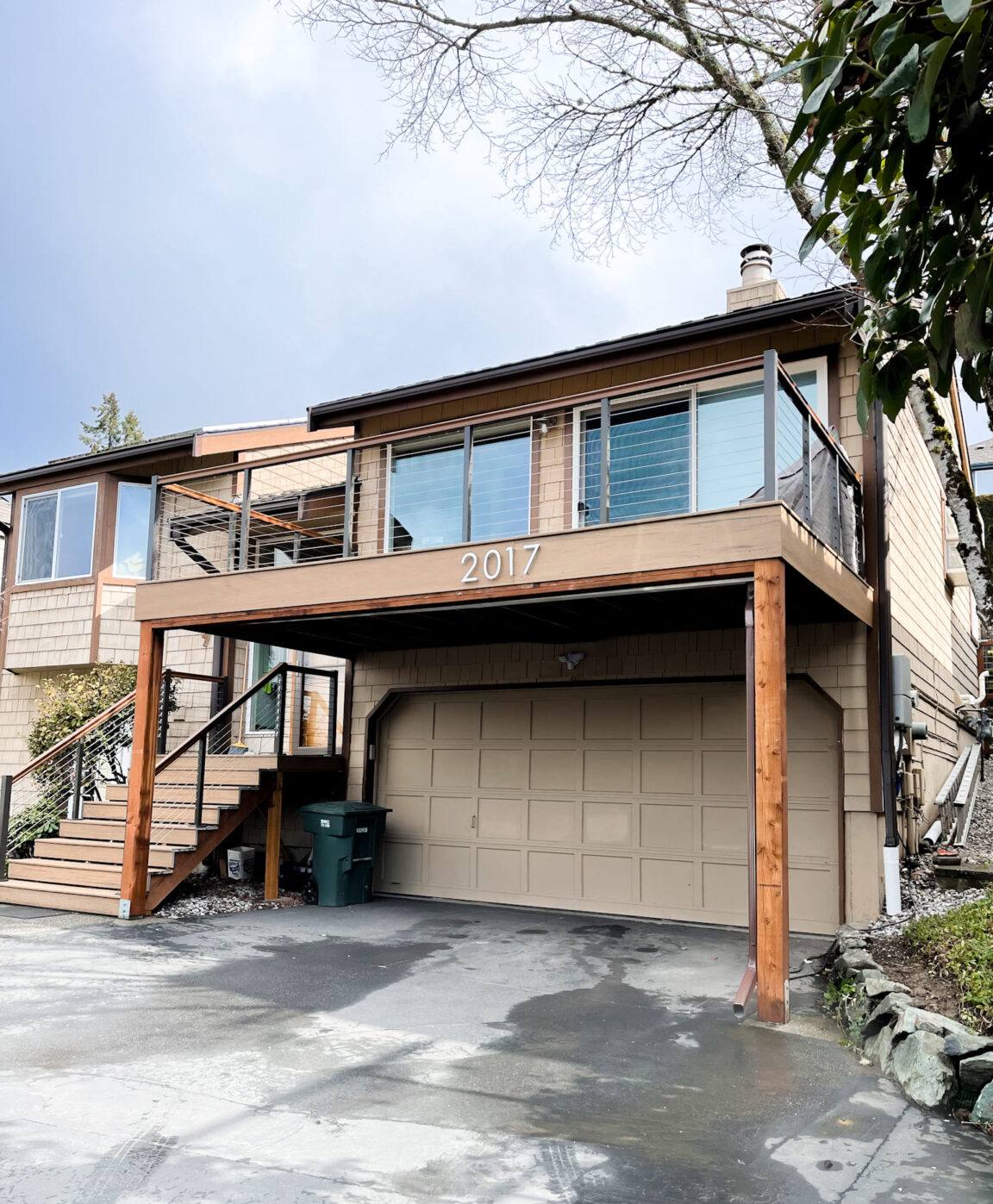
| Railing style | Cable, glass, and custom metal railings cost more than standard wood or composite balusters |
| Site access and grading | Sloped or hard-to-access lots near the water can add site prep and equipment costs |
We give a firm, itemized quote after the on-site assessment rather than a ballpark over the phone — deck pricing depends too much on the specifics of the site and material choice to be useful as a generic number.
Simple Maintenance That Extends the Life of Any Deck Here
- Sweep debris off the deck regularly, especially in fall, so leaves don't trap moisture against the surface
- Rinse or lightly scrub moss and algae off before it gets established rather than after
- Check railing hardware and fasteners once a year for early rust or corrosion, especially on decks closer to the water
- Keep gutters and downspouts near the deck clear so runoff isn't dumping directly onto or under it
- Reseal wood decking on the manufacturer's recommended schedule — skipping a year in this climate shows up fast
- Make sure under-deck vents or gaps stay clear of stored items so air can keep circulating
Why It Matters That We Already Work in Peace Arch
A crew that builds decks all over Western Washington without much specific experience near the border can still frame a deck that looks fine on day one. What's harder to get right without local experience is anticipating how a specific lot's exposure to wind, rain, and salt air will treat that deck over the next 15 years. We've built and repaired decks in this area long enough to know which details actually matter here versus which ones are just upsells — and we spec fasteners, flashing, and material accordingly instead of defaulting to whatever's standard in a drier part of the state.
We also already know the local permitting process and code requirements for Blaine and Whatcom County, which keeps the project moving instead of stalling on paperwork you didn't know you needed.
Get a Free Estimate
If you're planning a new deck or replacing one that hasn't held up to the weather out here, we're happy to take a look and give you a straight, no-pressure estimate. Use the form below to get started.