 Blaine Siding
 Building New in Grandview Means Building for the Coast
Grandview sits close enough to the water that every new-construction decision has to account for salt-laden air, wind-driven rain coming off Boundary Bay and the Strait of Georgia, and the long gray stretch of the year when moisture never really dries out of the building envelope. Windows are one of the few places in a new home where all three of those conditions meet at once: a penetration through the wall assembly, exposed hardware and cladding, and a joint that has to stay watertight through decades of Whatcom County weather. Getting a new-construction window installed correctly the first time matters more here than in drier inland climates, because a marginal install doesn't just leak eventually — it traps moisture behind siding that rarely gets a chance to fully dry between storms.
This page is specifically about installing windows during new construction in the Grandview area — not replacing existing windows in a finished wall. The two jobs share a product category but almost nothing else in terms of process, sequencing, or what "correct" looks like.
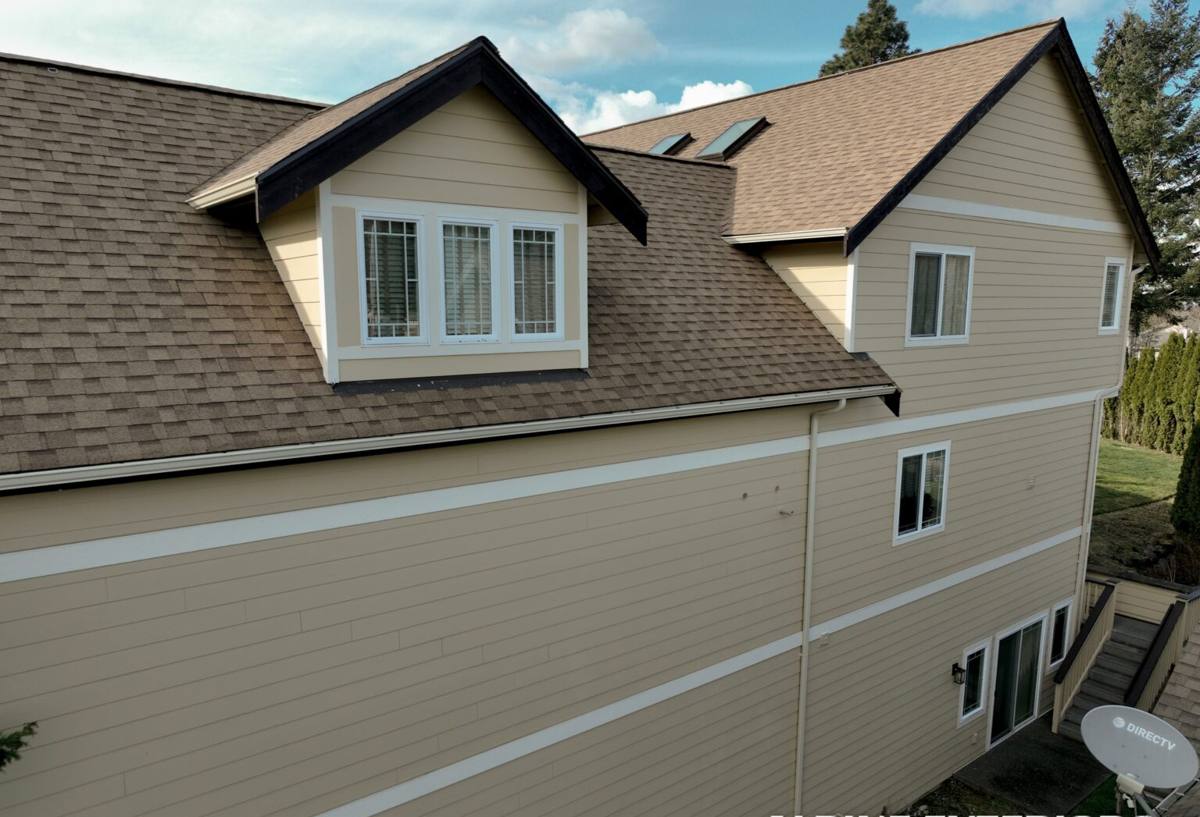
New-Construction Windows vs. Replacement Windows: Why the Distinction Matters
A new-construction window has a nailing fin around the perimeter of the frame that gets fastened directly to the sheathing before the weather-resistive barrier (WRB) and siding go on. That fin is what lets us integrate the window into the drainage plane of the whole house — flashing tape, house wrap, and siding all lap over it in a specific order so water is directed out and down, never in and behind.
A replacement or "pocket" window, by contrast, gets set into an existing opening after the original frame is stripped out, with no access to the sheathing or WRB behind it. It's a different scope of work with different tools and different failure points. If you're building new in Grandview, you want a crew that installs nailing-fin windows correctly during framing — not a replacement specialist adapting their process to a new-build site.
Why This Distinction Gets Overlooked
On a lot of new-construction jobs, windows get installed quickly to keep the schedule moving, with the assumption that flashing and sealant will "catch" any gaps. In a low-rain climate that assumption sometimes holds. In Blaine, with sustained wind-driven rain events and long damp seasons, it doesn't. The flashing sequence has to be right, not just present.
What a Correct New-Construction Window Install Actually Involves
There's a specific order of operations that keeps water out of the wall assembly, and skipping or reversing any step creates a path for moisture to get trapped rather than shed:
- Rough opening check: square, level, plumb, and sized to the window manufacturer's tolerance before the window ever touches the opening.
- Sill pan flashing with a back dam: a sloped, sealed pan at the bottom of the opening that catches any water that gets past the window and directs it back outside instead of into the framing.
- Jamb and head flashing integration: self-adhered flashing tape applied in a shingle-lap sequence — sill first, then jambs, then head — so each layer overlaps the one below it, matching how water actually runs down a wall.
- WRB integration: the house wrap or building paper has to lap over the head flashing and under the sill flashing, maintaining a continuous drainage plane from roof to foundation.
- Interior air sealing: a separate concern from exterior water management — low-expansion foam or sealant at the interior gap to control air leakage and condensation risk without blocking the window's ability to drain.
- Exterior trim and sealant: backer rod and a compatible sealant at the trim-to-window joint, sized and tooled correctly rather than just caulked over gaps.
Every one of those steps is inspectable before siding goes on, which is exactly when we do it — not after the fact.
Frame Material: What Holds Up in Salt Air and What Doesn't
Grandview's proximity to saltwater narrows the practical choices for window frame material and hardware. We won't tell you a specific brand is "bad" — we'll tell you honestly what each material category asks of you over its lifespan in this climate.
| Frame Material | Salt Air / Corrosion Behavior | Maintenance Burden | Typical Cost Position |
|---|---|---|---|
| Vinyl | Frame itself won't corrode; hardware quality varies by manufacturer | Low — occasional cleaning | Lower |
| Fiberglass | Very stable dimensionally, resists salt exposure well | Low | Mid to upper |
| Aluminum-clad wood | Exterior clad face resists weather; interior wood needs a sound seal to avoid moisture exposure | Moderate — depends on seal integrity over time | Upper |
| Bare aluminum | More prone to pitting and corrosion in direct salt exposure without a protective finish | Higher near the water | Lower to mid |
For most Grandview builds, we steer clients toward vinyl or fiberglass with marine-grade or corrosion-resistant hardware, particularly on elevations facing prevailing weather. Aluminum-clad wood can work well if the cladding and seals are installed and maintained correctly, but it asks more of the homeowner over time in a coastal setting.
Working With Your Builder: Timing Is Everything
New-construction window installation isn't a standalone trade call — it happens in a specific window between framing and siding, and it has to coordinate with the WRB installer, the siding crew, and sometimes the same general contractor's schedule across multiple trades. We work directly with GCs and framers on Grandview-area builds so the flashing sequence lines up with when the house wrap goes on, rather than windows sitting exposed to weather for weeks waiting on the next trade.
If you're the homeowner on an owner-built or custom project, ask your GC early who is handling window install and flashing integration, and make sure that scope is clearly assigned — it's a common gap between the framing contract and the siding contract.
Energy Code and Inspection Requirements
Washington's state energy code sets minimum U-factor and performance requirements for new-construction windows, and Whatcom County building inspectors will check that installed windows match what's specified on the approved plans. Beyond the code minimum, we typically recommend homeowners in Grandview aim slightly better than the bare minimum U-factor given the number of gray, damp days the windows have to perform through — better-performing glass also cuts down on interior condensation during the coldest, wettest stretches of winter.
Flashing and installation details aren't always something an inspector checks line by line, which is exactly why the crew doing the work needs to hold itself to the standard rather than relying on inspection to catch problems.
Our Process for New-Construction Window Installs
- Review the window schedule and rough openings against the plans before delivery.
- Confirm each rough opening is square, level, and correctly sized.
- Install sill pan flashing with a back dam at every opening.
- Set windows plumb and level, fastened per manufacturer spec.
- Apply jamb and head flashing in proper shingle-lap sequence, integrated with the WRB.
- Air-seal the interior perimeter separately from the exterior water management.
- Photo-document flashing at each opening before siding covers it, for the homeowner's records.
Pre-Siding Checklist for Grandview Builds
Whether we're doing the install or you're verifying another crew's work before siding goes on, this is what should be true at every window opening:
- Sill pan is sloped outward with a back dam — not flat.
- Flashing tape is lapped shingle-style: sill, then jambs, then head — never head-first.
- WRB laps over the head flashing and tucks behind the sill flashing.
- No exposed nailing fin or staple heads left uncovered by flashing tape.
- Sealant and backer rod are used at trim joints, not caulk alone bridging a gap.
- Weep holes or drainage paths (where the window design includes them) are clear and unobstructed.
- Hardware and fasteners are rated for coastal or corrosion-prone exposure.
Why a Crew That Already Works Grandview Matters
The flashing details above are the same on paper anywhere in the country. What changes in Grandview is how unforgiving the site is of getting them wrong — sustained wind-driven rain, salt air that accelerates corrosion on the wrong hardware choice, and a moss season that keeps everything shaded and damp longer than most inland builds ever experience. A crew that installs windows regularly in this specific stretch of Whatcom County has already seen which details actually get tested by this weather and which corners get exposed within a year or two. That's the difference between a window that performs for its full service life and one that needs attention well before it should.
If you're building new in Grandview or planning a build nearby, we're happy to walk your plans, talk through frame material trade-offs for your site's exposure, and coordinate directly with your builder on timing. Reach out for a free, no-pressure estimate using the form below.