 Blaine Siding
 Metal Roofing in California Creek: A Roof Built for This Specific Stretch of Coastline
California Creek sits close enough to the water that homes here deal with a different set of roofing problems than a house twenty miles inland. Salt-laden air off the water, wind-driven rain that comes in sideways during winter storms, and long stretches of shade from mature trees all combine to shorten the life of a roof that wasn't built with this environment in mind. Metal roofing, done correctly, holds up to that combination better than most other roofing materials — but "done correctly" is doing a lot of work in that sentence. This page covers what California Creek homes actually need from a metal roof, what a proper installation involves, and how our process is built around the realities of this neighborhood specifically.
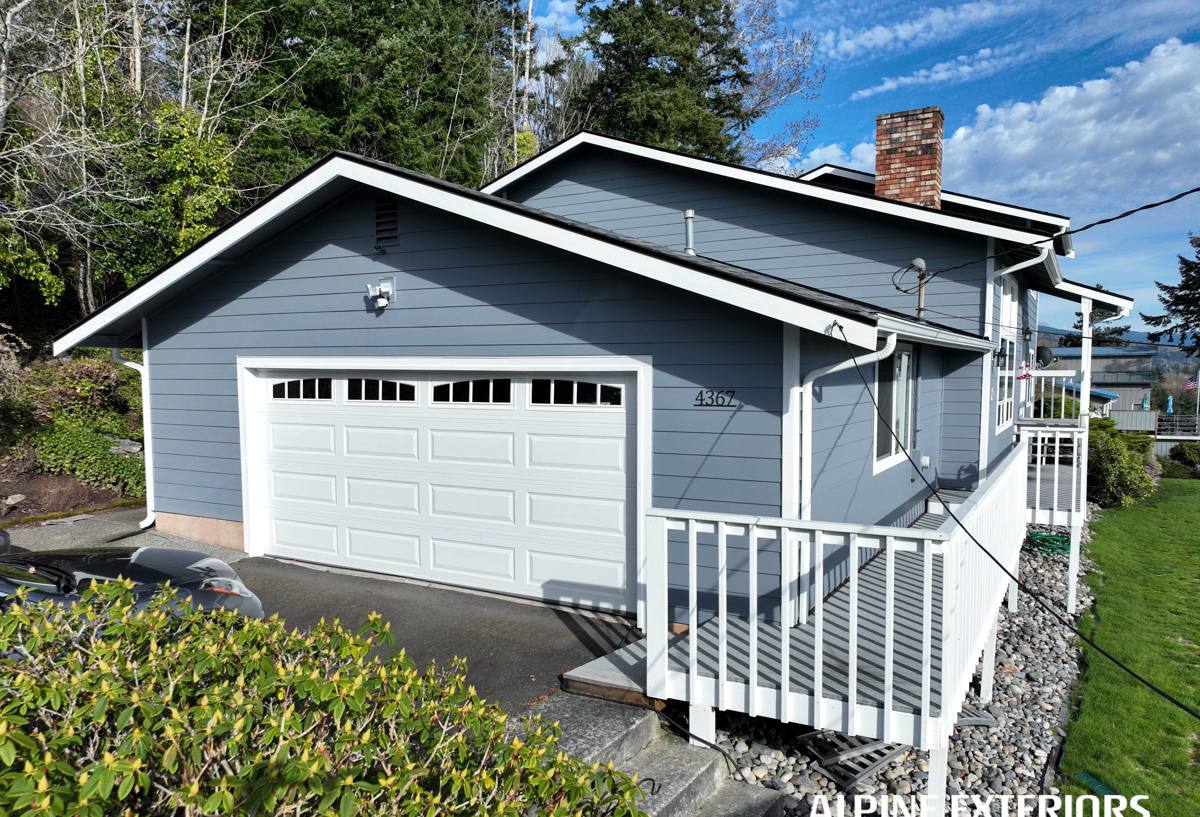
What This Climate Does to a Roof Over Time
Whatcom County's marine climate is generally mild, but "mild" doesn't mean gentle on a roof. Three things stand out in California Creek and the rest of the Blaine coastline:
Salt Air and Corrosion
Proximity to salt water accelerates corrosion on exposed metal — fasteners, flashing, gutters, and any hardware that isn't rated for a marine-influenced environment. A fastener or flashing detail that would last decades a few miles inland can start showing rust streaks or failure in a fraction of that time this close to the coast.
Driving, Wind-Driven Rain
Winter storms here don't just drop rain straight down — wind pushes it sideways and up under laps, seams, and flashing that weren't detailed with that in mind. A roof that sheds water fine in a calm rain can still leak in a wind-driven event if the underlayment and flashing details weren't built for it.
A Long Moss Season
Tree cover and persistent moisture mean moss and algae have a long window to establish themselves on north-facing slopes and shaded areas of a roof. Moss holds moisture against roofing material, works into seams, and on some materials accelerates granule loss or surface breakdown. On a metal roof, moss has a much harder time getting a foothold in the first place, but panel choice and installation quality still matter.
Why Metal Roofing Fits California Creek Homes
Metal isn't the right fit for every homeowner or every budget, and we'll say that plainly during an estimate rather than oversell it. But for a house exposed to salt air, wind-driven rain, and heavy shade, metal roofing has real advantages:
- A hard, smooth surface that gives moss and algae far less to grip onto compared to a textured shingle surface.
- Panel systems that shed wind-driven rain more effectively when the laps, seams, and flashing are detailed correctly.
- Long service life when the fastener and flashing hardware is specified for a coastal environment rather than a generic inland spec.
- Lower long-term maintenance burden — fewer granules to lose, no shingle mat to degrade under constant dampness.
The tradeoff is upfront cost and installation sensitivity — metal roofing rewards a crew that has done it many times and punishes shortcuts more visibly than asphalt does. A poorly installed metal roof can leak worse than a poorly installed shingle roof, because the failure points (seams, penetrations, transitions) are fewer but more consequential.
What a Correct Metal Roofing Job Actually Involves
Hardware Rated for Salt Air
This is the detail most often skipped by crews who don't regularly work this close to the water. Fasteners, screws, and exposed flashing should be specified in a coating or alloy suited to a marine-influenced environment, not whatever is standard stock for an inland job. Using the wrong hardware here is one of the most common causes of premature rust streaking and fastener failure we see on coastal homes.
Underlayment and Ice/Water Shield
A synthetic underlayment across the full deck, with self-adhered ice-and-water membrane at eaves, valleys, and around penetrations, gives the roof a backup layer when wind-driven rain gets past the panel seams — which it eventually will, in any roofing system, during the right storm.
Flashing at Every Transition
Chimneys, skylights, dormers, and wall-to-roof transitions are where most metal roof leaks actually originate — not the panel field itself. Correct step flashing, counter-flashing, and sealant selection at these points matters more than the panel brand chosen.
Ventilation
A metal roof over a poorly ventilated attic can trap moisture underneath the deck, which invites the same rot and mold problems as any other roof type — metal on top doesn't fix a ventilation problem underneath. We check intake and exhaust venting as part of any metal roofing estimate.
Panel Options: What We Typically Discuss With Homeowners Here
| Panel Type | Salt-Air Performance | Moss Resistance | Typical Maintenance |
|---|---|---|---|
| Standing seam (concealed fastener) | Strong — no exposed fasteners to corrode | Excellent, smooth vertical seams shed debris | Low — periodic gutter and debris checks |
| Exposed-fastener metal panel | Good, if fasteners are marine-rated and re-checked over time | Very good | Moderate — fastener washers should be inspected periodically |
| Stone-coated steel | Good, coating adds a layer of protection | Good, though textured surface holds slightly more debris than smooth panel | Low to moderate |
Cost follows roughly the same order — standing seam typically runs highest due to labor and material, exposed-fastener panel systems sit in the middle, and stone-coated steel varies depending on the profile. Installed metal roofing in this region generally costs several times what an asphalt shingle roof would, and depending on panel type and roof complexity that can land anywhere in a broad range — a firm number only comes from walking the actual roof, since pitch, penetrations, and tear-off condition all move the price.
Our Process for a California Creek Metal Roof
- On-site assessment. We walk the existing roof, check the deck condition, look at ventilation, and note every flashing and penetration point before quoting anything.
- Tear-off vs. overlay decision. Metal roofing can sometimes go over an existing roof, but we'll tell you plainly if your deck condition or local code calls for a full tear-off instead.
- Deck prep and underlayment. Any soft or damaged decking gets replaced before underlayment goes down — covering a bad deck with a good roof just hides the problem.
- Panel and flashing installation. Panels, seams, and every flashing transition are installed to the manufacturer's specification, using hardware rated for this environment.
- Final walkthrough. We go over the finished roof with you, point out anything homeowners should watch for, and explain the maintenance that actually matters for a metal roof here.
Maintenance That Matters in This Environment
Metal roofing needs less maintenance than shingles, but "less" isn't "none," especially this close to the water and under tree cover. A short seasonal checklist covers most of it:
- Clear gutters and valleys of needles and debris before the fall rains start building up.
- Check for moss or algae buildup on shaded, north-facing slopes at least once a year.
- Look at exposed fasteners (if your panel type has them) for early rust streaking.
- Inspect flashing around chimneys, skylights, and vents after major windstorms.
- Trim back overhanging branches that keep a section of roof shaded and damp longer than the rest.
Why It Matters That We Already Work in California Creek
A crew that mostly installs roofs thirty miles inland will spec the same hardware and details they always use — and on a home this close to the water, that shows up a few years later as rust streaking, fastener failure, or a leak at a flashing detail that was never built for wind-driven rain. Working this neighborhood regularly means we already know to spec marine-rated hardware by default, we know which slopes on a shaded lot need extra attention for moss, and we're familiar with Whatcom County and City of Blaine permitting requirements for roofing work, so there are no surprises mid-project. That local familiarity is part of what you're paying for — not just the labor, but the judgment calls that come from having done this exact kind of job, in this exact kind of weather, before.
Get a Straight Answer About Your Roof
If you're weighing metal roofing for a California Creek home, the most useful next step is a walk-through estimate rather than a phone-quote guess. We'll look at your existing roof, talk through panel options that make sense for your budget and exposure, and give you an honest read on what the job actually needs — no pressure, no upsell. Reach out below to get a free estimate scheduled.