 Blaine Siding
 Why Birch Bay Roofs Wear Differently Than Roofs Inland
Birch Bay sits right on the water, and that changes what a roof has to deal with year after year. Salt-laden air off the bay accelerates corrosion on anything metal that isn't properly coated or fastened with the right hardware. Driving rain off Georgia Strait and Semiahmoo Bay comes in sideways during winter storms, which means flashing and underlayment details matter more here than they do a few miles inland. And the shaded, damp lots common in this part of Whatcom County keep roof surfaces wet longer, which is exactly what moss needs to get established. None of this is exotic — it's just what a coastal roof in this corner of Washington actually experiences, and it's why a roofing system that works fine in a drier climate can underperform here.
Why Homeowners in Birch Bay Are Looking at Metal Roofing
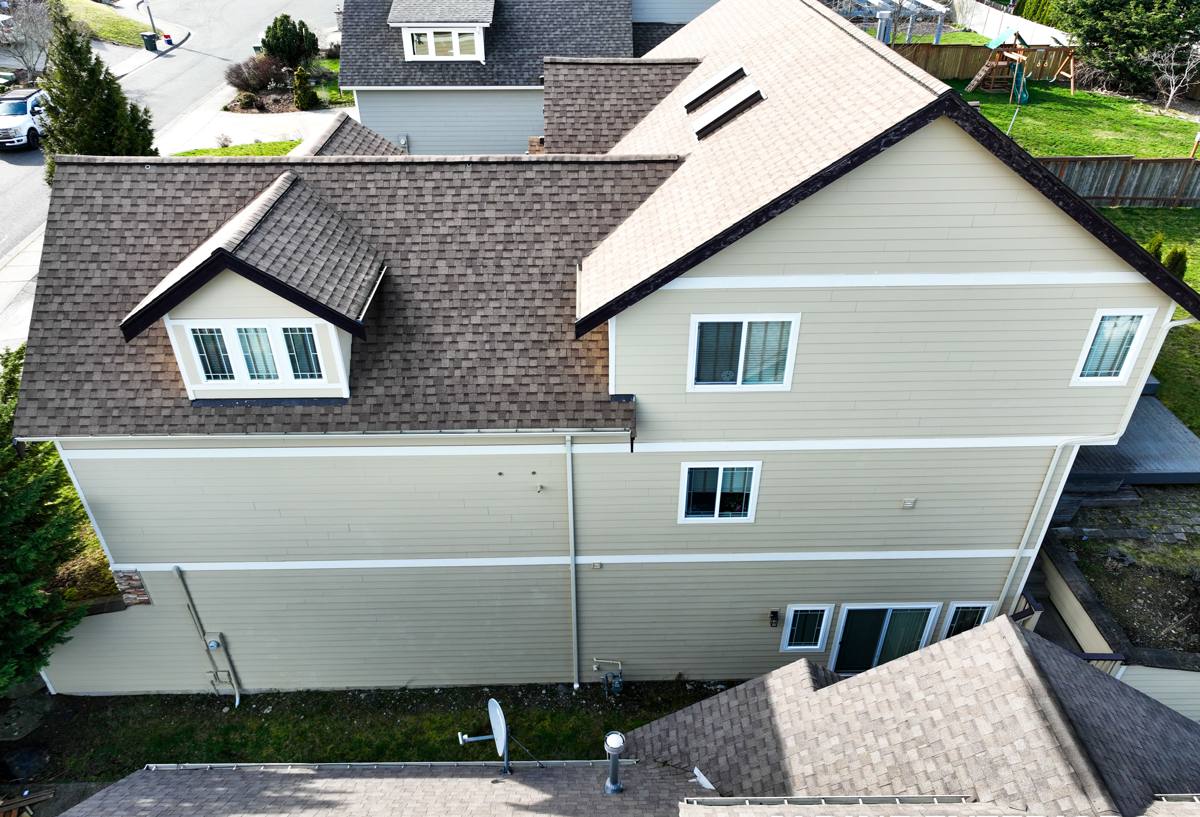
Asphalt shingles are still a reasonable option for plenty of homes, but they have a shorter service life in marine air, and granule loss accelerates when rain, wind, and moss all work on the surface at once. A properly installed metal roof handles that combination better: it sheds driving rain quickly, it doesn't hold moisture against organic debris the way a shingle mat does, and it isn't feeding moss the same way a granulated surface can. It's also a long-term play — most homeowners choosing metal roofing in this area are doing it because they don't want to redo the roof again in fifteen years, not because it's the cheapest option up front.
Metal roofing isn't automatically the right fit for every home, and it isn't automatically salt-air-proof either — the metal, coating, and fastener choices all matter. That's the part worth getting right before a single panel goes up.
Picking the Right Metal Roofing System for a Coastal Lot
Standing Seam Panels
Standing seam is the system we recommend most often for homes exposed to weather off the water. The panels interlock with raised seams and hidden fasteners, so there are no exposed screw heads for salt spray and rain to work on over time. That makes it the more resilient choice for a roof that sees direct exposure to wind-driven rain, and it's why you'll see it specified more often on waterfront and near-waterfront homes generally.
Exposed-Fastener Panels
Exposed-fastener (screw-down) panels cost less and install faster, and they can be a sound choice for outbuildings, shops, or homes set back from direct exposure. The trade-off is that the fasteners and their rubber washers are a maintenance item — they compress and can loosen over time, and in salt air that cycle happens faster than it would inland. If we install this system, we're upfront about that maintenance schedule rather than letting it become a surprise later.
Coatings and Corrosion Protection
The base metal and its coating matter as much as the panel profile. Galvalume steel with a quality painted finish (PVDF/Kynar-type coatings are the standard we look for) resists chalking and color fade far better than lower-grade finishes, which matters on a roof that's going to sit in salt air for decades. Fastener hardware should be corrosion-resistant to match — mismatched metals or bargain fasteners are one of the most common failure points we see on coastal metal roofs that were installed without much thought given to this environment.
| System | Typical Lifespan | Best Fit | Maintenance Consideration |
|---|---|---|---|
| Standing Seam | 40-60+ years | Full exposure to wind and driving rain | Low — hidden fasteners, minimal upkeep |
| Exposed-Fastener Panel | 25-40 years | Sheltered homes, shops, outbuildings | Moderate — fastener/washer checks every few years |
| Asphalt Shingle (for reference) | 15-25 years in marine climates | Budget-driven projects, shorter ownership horizon | Moderate to high — granule loss, moss growth |
What a Correct Metal Roofing Installation Actually Involves
Underlayment That Matches the Climate
Metal panels are only as good as what's underneath them. In a rain-heavy environment like Birch Bay, we use a synthetic or ice-and-water-type underlayment rather than the bare minimum felt some crews still rely on. This layer is what protects the deck if wind-driven rain ever gets past a seam or works its way in around a penetration.
Flashing at Every Penetration
Chimneys, vent pipes, skylights, and roof-to-wall transitions are where most roof leaks actually start, metal roof or not. Every one of these needs custom-fit flashing, not a generic boot stretched to fit — and on a home taking direct weather off the water, we pay extra attention to headwall and sidewall flashing since that's where driving rain gets pushed hardest.
Fastening, Panel Layout, and Thermal Movement
Metal expands and contracts with temperature swings more than shingles do, so panels need to be fastened in a way that allows for that movement without working fasteners loose or oil-canning the panel face. Panel layout also matters for how water sheds at valleys and eaves — getting the lap direction and overlap wrong is a quiet mistake that doesn't show up as a leak until the first real storm.
Ventilation
A well-ventilated attic keeps condensation from forming on the underside of the deck, which matters with any roofing material but especially with metal, where temperature differentials can be sharper. We check existing ventilation as part of every metal roofing job rather than assuming it's adequate.
Moss and Debris in a Long Coastal Moss Season
Whatcom County's moss season runs long — shaded, damp lots near the water rarely get enough sun and airflow to dry out between rain events, and moss will establish on almost any roof surface given enough time and moisture. Metal roofing doesn't eliminate moss risk entirely, but it removes the granulated texture that moss and organic debris cling to most easily, and a smooth, properly pitched metal surface sheds that debris far more readily during normal rain. Keeping gutters and valleys clear, and trimming back overhanging branches where practical, still matters regardless of roofing material — metal just gives you a head start.
Our Process for Birch Bay Metal Roofing Projects
- On-site inspection. We look at the existing roof, deck condition, ventilation, and any trouble spots specific to the home's exposure and lot.
- Honest system recommendation. We'll tell you whether standing seam is worth the added cost for your specific exposure, or whether a screw-down system is a reasonable fit — not a one-size-fits-all pitch.
- Written estimate. Clear scope, material specification, and timeline before any work starts.
- Tear-off or overlay. Deck condition and local code determine which is appropriate; we don't cover up a deck problem to save a step.
- Installation. Underlayment, flashing, and panels installed to the standard the exposure calls for, with attention to the details that matter most in wind-driven rain.
- Cleanup and walkthrough. Site cleared of debris and fasteners, and we walk the finished roof with you before calling the job done.
What Drives the Cost of a Metal Roof in This Area
| Factor | Why It Matters Here |
|---|---|
| Panel system (standing seam vs. exposed-fastener) | Hidden-fastener systems cost more but hold up better against direct salt air and wind-driven rain |
| Roof complexity | Valleys, dormers, and multiple penetrations mean more flashing labor |
| Tear-off vs. overlay | Deck condition and existing layers affect whether a full tear-off is needed |
| Underlayment grade | Marine-grade underlayment adds cost but reduces leak risk in driving rain |
| Access and pitch | Steeper or harder-to-access roofs take longer and require more safety setup |
Why Local Experience on This Coastline Matters
A crew that's worked Birch Bay and the broader Blaine area knows which exposures take the worst of the weather off the water, which lots hold moisture longest, and which flashing details tend to get shortchanged on a rushed job. That's not something you get from a spec sheet — it comes from having done roofs in this exact climate and having to answer for how they perform through a few winters. We also know the permitting expectations in Whatcom County for reroofing projects, which keeps the paperwork side of the job from becoming a delay.
Before You Commit to Metal Roofing, Confirm These
- The panel system and gauge of metal specified in writing, not just "metal roofing"
- The coating type and its warranty terms, especially for coastal exposure
- Whether the quote includes new underlayment or reuses what's there
- How flashing at chimneys, vents, and walls will be handled specifically
- Fastener material and hidden vs. exposed fastener design
- Whether the crew carries current licensing and insurance for Washington roofing work
- A clear timeline and cleanup expectations before work starts
Get a Straight Answer for Your Roof
If you're weighing metal roofing for a home in Birch Bay, the most useful next step is having someone look at the actual roof — its exposure, its pitch, its current condition — rather than guessing from a phone estimate. We offer a free, no-pressure estimate using the form below, and we'll give you a straight recommendation on whether metal roofing makes sense for your situation and what system fits your home's exposure.