 Blaine Siding
 Why Lynden Homes Need Siding Built for This Climate
Lynden sits inland from Blaine, but it doesn't escape what makes Whatcom County hard on exterior materials. The marine-influenced air that rolls in off the Salish Sea region carries moisture deep into the county, and Lynden gets its share of driving rain, low winter sun angles, and the long gray stretches that keep siding damp for days at a time. Add a moss season that can run from fall through spring on north-facing walls and shaded elevations, and you've got conditions that punish anything less than a correctly installed, moisture-tolerant siding system.
This isn't a coastal-only problem. Homes throughout Whatcom County, including inland communities like Lynden, deal with prolonged dampness, wind-driven rain against exposed walls, and organic growth that thrives wherever moisture sits. Siding replacement here isn't just a cosmetic upgrade — it's a chance to correct whatever let moisture in the first place and put something on the wall that's actually engineered for this weather.
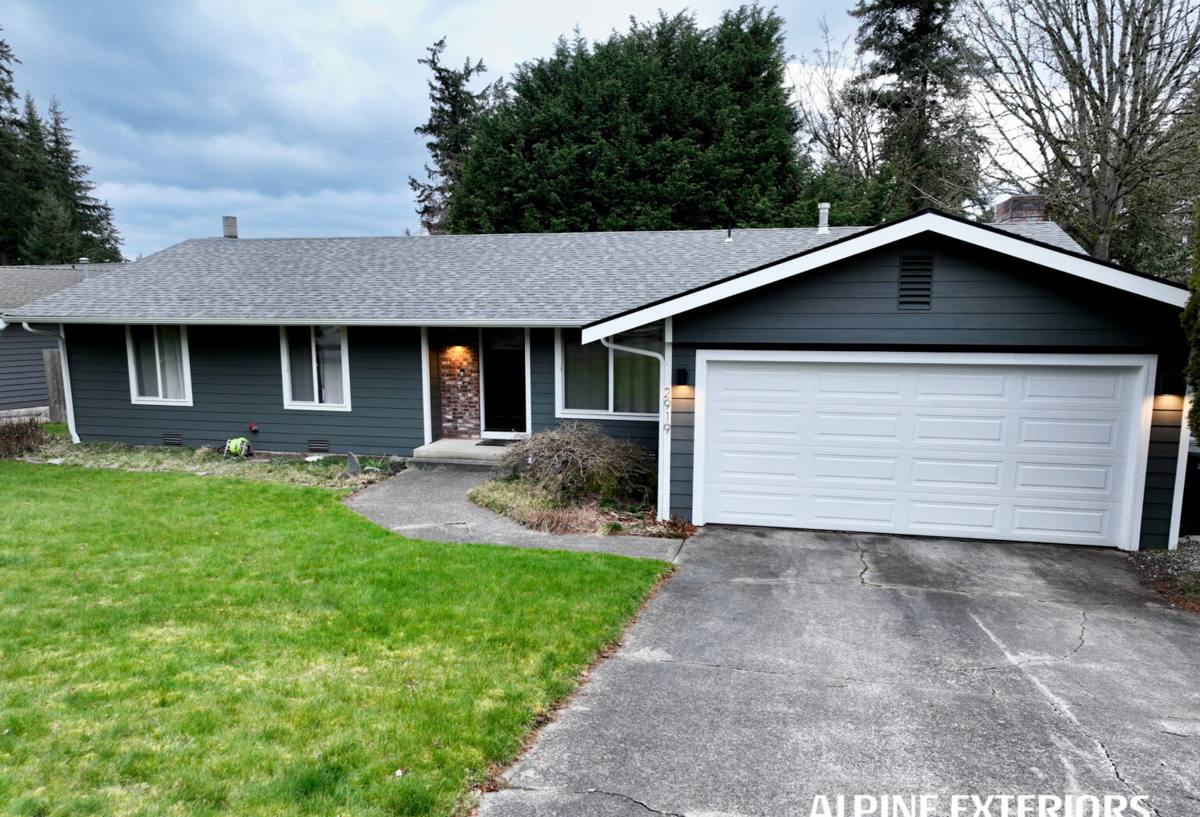
Signs a Lynden Home Needs Siding Replacement, Not Another Repair
What You Can See From the Ground
- Paint that's peeling, bubbling, or needing repainting every few years despite decent prep work
- Visible cupping, warping, or soft spots in wood or wood-composite siding
- Persistent moss or algae staining that comes back within a season of cleaning
- Cracked or delaminating panels, especially near ground level and roof lines
- Gaps opening up at seams, corners, or trim where caulking has failed
What's Often Hiding Behind It
By the time siding shows visible damage, moisture has often been working on the sheathing and framing behind it for a while. Soft or discolored sheathing, rot at window and door openings, and stained or musty-smelling wall cavities are common findings once old siding comes off a Lynden home that's been fighting moisture for a decade or more. A siding replacement is the one point in a home's life where that hidden damage is fully visible and fixable — which is exactly why the tear-off and inspection matter as much as the new siding itself.
Why We Install Only James Hardie Fiber Cement Siding
We standardized on James Hardie fiber cement and don't install vinyl, LP SmartSide, primed spruce, cedar, or other fiber cement brands. That's a deliberate call, not a sales preference. Fiber cement resists moisture, rot, and pest damage in a way that wood and wood-composite products structurally can't, and Hardie's HZ climate-engineered product lines are formulated specifically for the wet, moderate-temperature conditions we get in Western Washington. It's non-combustible, holds paint and factory finish far longer than most alternatives, and Hardie backs it with a strong transferable warranty — meaningful protection for a product that's supposed to last decades on a house that sees this much rain.
We won't pretend other products don't have their place. Vinyl is inexpensive and low-maintenance in the right setting; engineered wood has a warmer look some homeowners want. But for a Lynden home that has to survive moss season after moss season, we'd rather install one product correctly and stand behind it than offer a menu of options with different long-term risk profiles.
What a Correct Siding Replacement Actually Involves
Tear-Off and Inspection
Old siding comes off down to the sheathing, and that sheathing gets inspected — not glanced at. Soft spots, water staining, and any rot around windows, doors, and penetrations get identified and repaired before anything new goes up. Skipping this step is the single most common reason a siding job fails early, and it's invisible once the new siding is on, which is exactly why it has to be done right the first time.
Water-Resistive Barrier and Flashing
A weather-resistive barrier goes over the repaired sheathing, and flashing gets installed at every window, door, deck ledger, and roof-to-wall transition — the places water actually finds a way in. In a climate that sees sustained rain rather than short downpours, flashing details matter more than they would somewhere drier, because water has more time to find every gap.
Installation to Manufacturer Spec
James Hardie siding is engineered for specific fastening patterns, gaps, and clearances, and those specs exist for a reason — get them wrong and you invite the exact moisture problems fiber cement is supposed to prevent. That means correct nail placement and spacing, proper clearance from grade, roof lines, and decks, and joints and seams sealed the way Hardie specifies rather than however is fastest.
Trim, Caulking, and Paint
Trim work and caulking at every seam and penetration finish the weatherproofing, and ColorPlus factory-finished panels reduce how much field painting is needed at all — which matters in a climate where wet weather narrows the painting window and where a factory finish holds up better than field-applied paint over time.
Choosing the Right Hardie Line and Finish for a Lynden Home
James Hardie makes several siding profiles, and the right one depends on the home's style and how much of the wall is exposed to sun, shade, and moss-prone shade.
| Hardie Product | Best For | Climate Consideration |
|---|---|---|
| HardiePlank Lap Siding | Traditional and craftsman-style homes | Most common choice; performs well across sun and shade exposures |
| HardieShingle | Accent gables, dormers, cottage-style homes | More detail lines can trap moss-favoring shade — needs careful installation and gapping |
| HardiePanel | Modern and board-and-batten looks | Vertical seams need precise flashing in high-rain areas |
| ColorPlus Finish | Any of the above | Factory-baked finish resists fading and moisture better than field paint |
Hardie's HZ10 product line is engineered for the wetter, milder climate zone that includes Whatcom County, which is the version we install here rather than a formulation built for hotter or drier regions.
How Our Process Works, Start to Finish
1. On-Site Assessment
We walk the exterior with you, look at problem areas you've noticed, and check for the signs of hidden moisture damage described above.
2. Written Estimate
You get a clear scope of work and pricing before anything is scheduled — no vague allowances for "surprises" once the wall is open.
3. Tear-Off and Sheathing Repair
Old siding comes off, damaged sheathing gets replaced, and you're shown what we find rather than told about it after the fact.
4. Weatherproofing and Installation
Barrier, flashing, and Hardie siding go on to spec, with attention to the details — clearances, fastening, seams — that determine whether it lasts.
5. Final Walkthrough
We go over the finished work with you before calling the job done, not just before invoicing it.
What Affects the Cost of Siding Replacement in Lynden
| Factor | Why It Matters |
|---|---|
| Extent of hidden sheathing/framing damage | Rot repair found during tear-off adds material and labor beyond the base siding job |
| Home size and wall complexity | More corners, gables, and trim detail mean more labor and material waste |
| Siding profile chosen | Lap, shingle, and panel styles differ in material and installation time |
| Number of stories and access | Second-story and hard-to-access walls take longer and may need additional equipment |
| Trim and detail work | Window/door trim, fascia, and accent details add scope beyond flat wall coverage |
We give real numbers during the estimate rather than a broad range that doesn't reflect your specific home — the factors above are exactly what we walk through with you on-site.
Why Hiring a Crew That Already Works in Whatcom County Matters
Siding installation isn't identical everywhere. A crew used to installing in dry, hot climates makes different assumptions about moisture management than one that installs siding on homes that sit under gray skies for months. Knowing how far moss can travel up a north wall, how much clearance a home actually needs above grade and decking in a wet winter, and how to sequence a tear-off around Whatcom County's unpredictable rain windows all comes from doing this work here, repeatedly — not from a general contracting background applied to a local job.
Before You Hire: A Practical Checklist
- Ask what siding brand and product line they install, and why
- Confirm they inspect and repair sheathing as part of the job, not as a separate change order
- Ask how they handle flashing at windows, doors, and roof lines specifically
- Get the manufacturer's fastening and clearance specs confirmed in writing, not just verbally
- Check that the warranty covers both materials and workmanship, and understand what voids it
- Ask how long they've been installing siding in Whatcom County specifically
If your Lynden home's siding is showing its age or you're just planning ahead, we're happy to walk the exterior with you and give you a straight, no-pressure estimate — fill out the form below and we'll get in touch.