 Blaine Siding
 Siding Repair in Lynden: Small Damage Doesn't Stay Small Here
Lynden sits inland from Whatcom County's coastline, but it isn't sheltered from the weather that drives siding failure across this part of Washington. Marine air still moves through the Nooksack lowlands, storms off the Strait of Georgia still bring driving rain, and the region's mild, wet winters still create long stretches where siding surfaces barely get a chance to dry out between soakings. A cracked panel, a gapped joint, or a soft spot near grade doesn't stay a small problem here the way it might in a drier climate — moisture finds the opening and starts working on whatever is behind it. This page is specifically about siding repair for Lynden homes: what typically causes it, what a repair job needs to get right, and how we decide between fixing a section and recommending something more.
We work in Lynden regularly, alongside the rest of Whatcom County, and repair calls make up a real share of that work — homeowners with a damaged section who don't necessarily need or want a full re-side. We install and repair James Hardie fiber cement exclusively, which shapes both what we can offer on an existing installation and how we think about matching new material into an older wall. The rest of this page walks through that in practical detail.
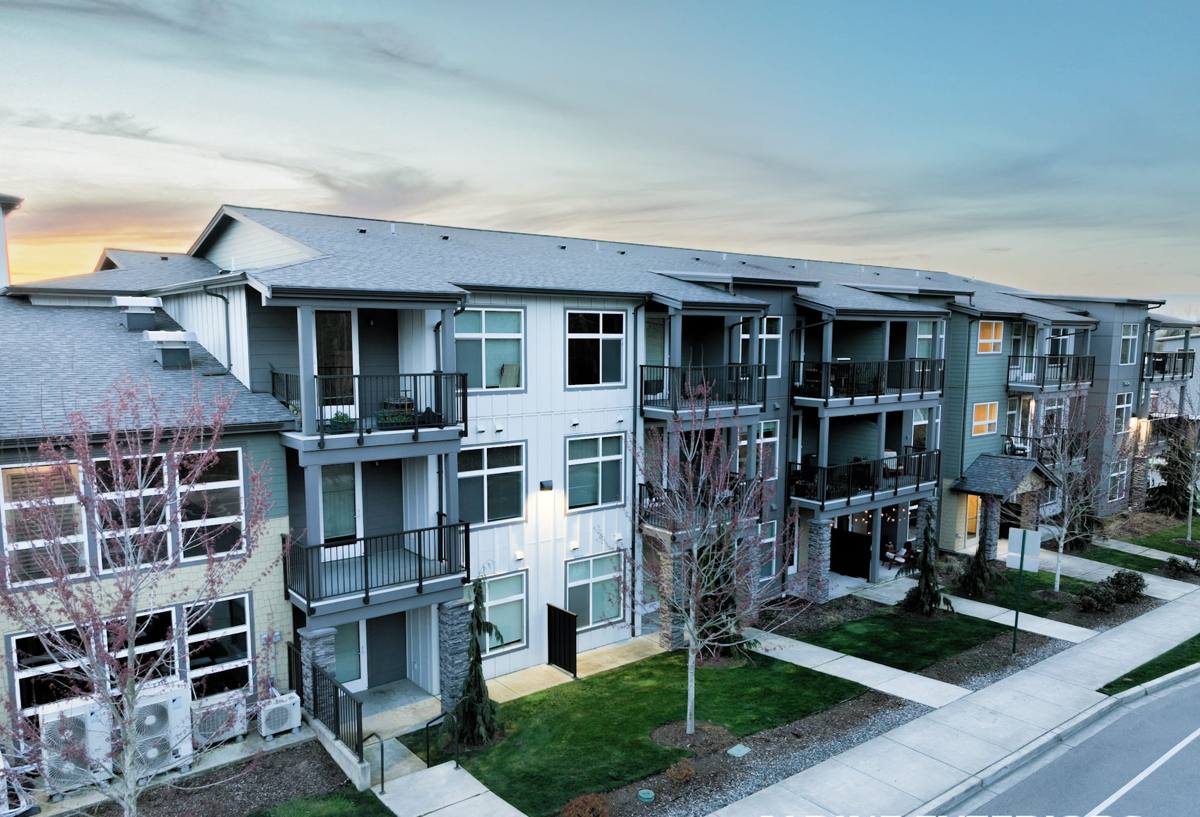
What Lynden's Climate Does to Siding Between Repairs
Salt-Tinged Marine Air, Even This Far Inland
Lynden is far enough from open water that people don't always think of it as a coastal climate, but the marine air mass that defines Whatcom County's weather still reaches this far into the lowlands. It's a milder dose than a waterfront town gets, but it's steady, and over years it still contributes to corrosion on fasteners and exposed metal trim and to gradual wear on lower-grade finishes. Repairs that ignore this — using standard-grade fasteners or an unmatched, uncoated trim piece — tend to be the first thing to fail again.
Driving Rain That Finds Existing Gaps First
Storm systems moving through this part of Washington regularly bring wind-driven rain, not just straight-down rainfall. Wind pushes water sideways into wall assemblies, and it goes looking for any existing weakness — a cracked panel edge, an open butt joint, a gap where old caulk has failed. That's exactly why damage that looks minor from the ground, like a hairline crack or a slightly separated joint, is worth addressing before the next stretch of wet weather rather than after.
A Long Moss and Mildew Season
Mild temperatures combined with near-constant moisture give moss and mildew a growing season that can run most of the year on shaded or north-facing walls in Lynden. Moss holds moisture directly against a surface far longer than exposed, sun-facing siding ever sits wet, which is part of why damaged or already-compromised siding on the shaded side of a house tends to deteriorate faster than the same damage would on a sunnier wall.
Signs a Lynden Home Actually Needs Siding Repair
Some siding damage is obvious. A lot of it isn't, especially once it starts working on the wall assembly behind the surface. These are the signs worth acting on rather than watching for another season:
- Cracked, chipped, or visibly separated siding panels, especially near corners or trim
- Soft or spongy siding when pressed, particularly low on the wall or around window and door trim
- Bubbling, peeling, or discolored paint in a localized area rather than across the whole wall
- Visible gaps at butt joints, corner boards, or trim transitions where caulk has cracked or pulled away
- Rust staining below fasteners or trim, a sign the hardware underneath is corroding
- Heavier moss or mildew growth concentrated on one section rather than spread evenly
- A musty smell or visible staining on an interior wall that lines up with an exterior problem area
Any one of these can be a contained, straightforward repair. Several of them together, or damage that keeps reappearing in the same spot after a prior patch, usually points to a moisture source that hasn't actually been fixed yet.
Repair or Replace: How We Actually Make That Call
Homeowners understandably want a straight answer on whether a section of damaged siding can be repaired or whether it's really a replacement job in disguise. It depends on how much of the wall is affected and what's found once the damaged section comes off.
| Factor | Usually points to repair | Usually points to replacement |
|---|---|---|
| Extent of visible damage | One wall or a small, contained section | Damage spread across multiple walls or the whole house |
| Sheathing condition once opened up | Dry, solid sheathing behind the damaged panels | Soft, rotted, or water-stained sheathing found underneath |
| Age and condition of surrounding siding | Siding is otherwise sound and holding its finish well | Surrounding siding is also aging out, chalking, or losing its seal |
| Cause of the damage | An isolated event — impact damage, a single failed joint | A systemic issue — missing flashing, a bad water-resistive barrier, chronic exposure |
| Color and finish match | Close enough match available for a section that isn't highly visible | Faded original finish makes any patch visually obvious on a prominent wall |
We'll always tell a homeowner honestly when a "repair" would really just be a patch over a bigger underlying problem. It doesn't do anyone favors to fix the visible symptom and leave the actual cause of the damage in place, only to be back at the same wall in a year or two.
What a Correct Siding Repair Actually Involves
Diagnosing the Cause, Not Just the Damage
Before any panel comes off, we look at where the water is actually coming from — a failed piece of flashing above a window, a gap at a roof-to-wall transition, a clogged gutter dumping water down a wall, or simple age and UV exposure on an older finish. Repairing the visible siding without addressing the actual water source is the most common reason a repair doesn't hold.
Opening Up the Damaged Section
The damaged siding comes off cleanly, and we check the water-resistive barrier and sheathing underneath before anything new goes back up. This is the point where a small visible crack sometimes turns out to be sitting over a larger area of soaked sheathing, and it's better to find that now than to seal it back up and have it resurface later.
Correcting What Let the Water In
Damaged or missing flashing gets replaced, house wrap gets patched and properly lapped, and any gap that let water behind the original siding gets closed before new material goes on. A repair that skips this step is really just a cosmetic fix.
Matching Material and Finish
New James Hardie panels get fastened to the same spec as the rest of the wall — correct spacing, corrosion-resistant fasteners, and sealed field cuts. Matching an existing ColorPlus finish exactly is easier on a newer installation and harder on siding that's had years of sun and weather exposure, since factory finishes fade gradually over time. We're upfront with homeowners about how close a match is realistic before the work starts, rather than after.
Sealing and Final Detail Work
Butt joints, corner transitions, and any trim interfaces get properly sealed as the last step, not rushed to close out the job. These are the small details that determine whether a repair holds through the next few wet seasons or needs revisiting.
Why We Repair Only With James Hardie Materials
We install James Hardie fiber cement exclusively, and that standard carries through to repair work. We don't patch an existing Hardie wall with a different fiber cement brand, vinyl, or an engineered wood product, even when it might be a cheaper or faster fix in the moment. A few reasons that holds up:
- Consistent material behavior: Mixing siding products on one wall means mixing expansion, moisture, and aging characteristics, which tends to show up as visible mismatch or uneven wear over time.
- Warranty considerations: Non-Hardie material introduced into a Hardie installation can complicate warranty coverage on the surrounding, undamaged siding.
- Finish consistency: Hardie's factory-applied ColorPlus finish is formulated to age in a specific, predictable way; a different product's finish won't fade or hold color the same way alongside it.
- One system we stand behind: We made the call years ago to work with one fiber cement system rather than juggle several, and that applies as much to repair work as it does to new installations.
If a home has existing siding that isn't James Hardie, we'll still assess and repair straightforward damage where it makes sense, but we're honest when a mismatched product or a chronic underlying issue means a full re-side with Hardie is the more durable long-term answer rather than another round of patching.
Our Repair Process, Step by Step
- Initial assessment: We look at the damaged area, the surrounding siding, and likely causes before quoting anything.
- Honest scope discussion: We explain what we expect to find, what a repair would involve, and flag upfront if we suspect the damage is bigger than what's visible.
- Opening the wall: Damaged panels come off and we inspect the water-resistive barrier and sheathing before proceeding.
- Scope confirmation: If what we find matches expectations, we proceed with the repair. If it's more extensive, we stop and talk through options before continuing.
- Correcting the water source: Flashing, house wrap, and any failed detailing get fixed, not just covered back up.
- Installing matched siding: New Hardie material goes on to spec, with as close a finish match as the existing siding's age and fade allow.
- Final walkthrough: We go over what was found, what was fixed, and what to watch for going forward.
Cost Factors for a Lynden Siding Repair
Repair pricing varies more than new installation pricing, mainly because so much depends on what's found once the wall is opened up. These are the factors that consistently move the number:
| Factor | Why it matters |
|---|---|
| Size of the damaged area | A single panel is a different job than damage spread across a wall |
| Condition of the sheathing underneath | Sound sheathing keeps the job contained; rotted sheathing adds real scope |
| Cause of the original damage | A one-time impact is simpler than a chronic flashing or drainage failure |
| Access and wall height | Upper-story or hard-to-access sections may need staging or lift equipment |
| Finish match difficulty | Older, faded siding is harder to match than a recent installation |
| Trim and detail complexity | Corners, window trim, and roofline transitions add cutting and flashing work |
Why a Local Whatcom County Crew Matters for Repair Work
Repair work rewards local experience more than new installation does, because so much of it comes down to correctly reading damage rather than following a standard sequence. A crew that regularly works on Lynden homes has seen how this specific combination of salt-tinged marine air, driving rain, and a long moss season shows up on real walls over time — which damage patterns point to a one-time issue and which ones signal a recurring source, and where an underlying flashing or drainage problem is likely to be hiding behind an otherwise ordinary-looking crack. That judgment is what keeps a repair from turning into a callback a year later, and it's built from doing this work in this specific place repeatedly, not from a generic repair checklist applied the same way everywhere.
If you've got a section of damaged, cracked, or soft siding on your Lynden home, we're glad to take an honest look and tell you plainly whether it's a straightforward repair or something that calls for a different conversation. Reach out using the form below for a free, no-pressure estimate.