 Blaine Siding
 Why Decks in the Lynden Area Wear Out Faster Than Homeowners Expect
Lynden sits close enough to the coast that salt-laden air reaches outdoor structures even when the ocean itself is miles away, and it sits deep enough into Whatcom County's rain belt that decks spend a large part of the year damp. That combination is hard on wood and hard on hardware. Add in a moss season that can stretch from fall through spring, and a deck that was built without the coastal climate in mind will usually show its age well before the homeowner expects it to.
We see the same failure pattern again and again on older decks in this area: fasteners that have started to corrode, ledger boards that have trapped moisture against the house, and surface boards that look fine from a distance but are soft, cupped, or growing moss underneath. None of that is a mystery once you understand what this climate does to a deck year after year — and it's exactly what a correct replacement needs to be built to resist.
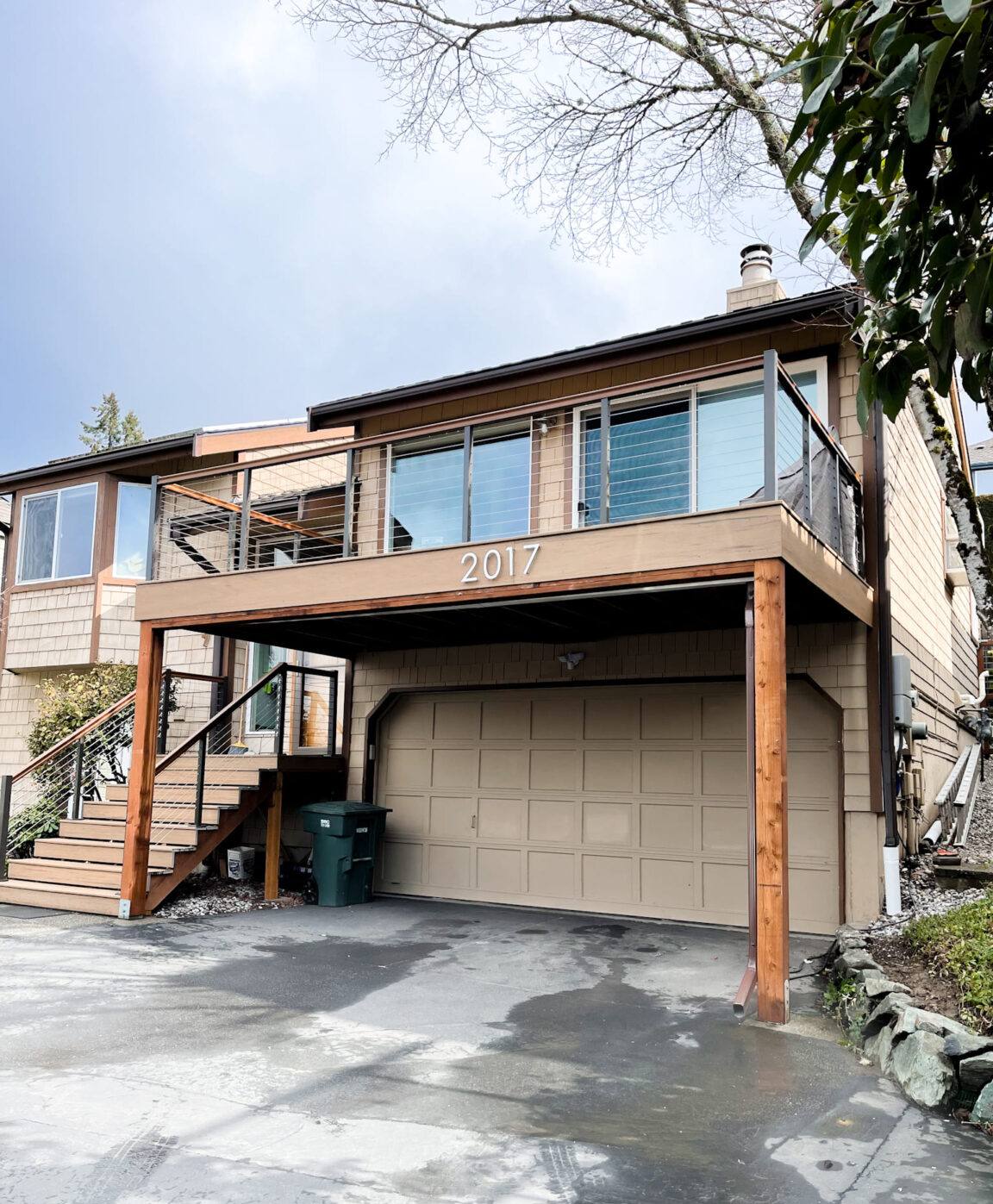
Repair or Replace? Signs a Deck Has Reached the End of Its Life
Not every deck problem means a full teardown. But there are signs that tell us repair would just be delaying the inevitable, and money spent patching would be better spent on a rebuild that actually solves the problem.
- Soft or spongy spots in the decking boards, especially near the house or in shaded corners where moisture lingers
- Rust streaks bleeding out from nail or screw heads, or fasteners that have backed out on their own
- A ledger board (where the deck attaches to the house) that's dark, swollen, or separating slightly from the siding
- Support posts or joists that feel spongy when probed, or show visible rot at ground contact points
- Persistent moss or black-green staining that comes back within weeks of cleaning, no matter how often it's power washed
- A deck that sways, bounces, or feels less solid underfoot than it used to
If it's one or two boards showing wear on an otherwise sound structure, repair is often the right call. If the framing itself is compromised, or if the deck is old enough that the ledger flashing and fastener types are outdated, replacement is usually the more honest recommendation — and the one that saves money over the next decade instead of costing more in repeated patch jobs.
What a Correct Deck Replacement Actually Involves
A deck replacement is more than swapping old boards for new ones. Done right, it addresses every layer that failed on the original structure, not just the visible surface.
Structural Framing
Joists, beams, and posts get inspected and replaced where they've lost integrity. In a climate with this much sustained moisture, we pay close attention to ground contact points and any area where water has historically pooled or been slow to drain.
Ledger Attachment and Flashing
The ledger board — the piece that ties the deck to your house — is one of the most common failure points on older decks in wet climates. If it wasn't properly flashed when it was originally installed, water works its way behind the board and into the house framing over time. A correct replacement re-flashes this connection properly, directing water away from the structure instead of letting it collect against it.
Footings and Post Bases
Footings need to sit below frost depth and be sized correctly for the load they're carrying. Post bases that hold the post above standing water, rather than embedding wood directly in or near soil, make a measurable difference in how long the structural wood lasts in a climate that rarely gets a long dry stretch.
Surface Decking and Drainage
Proper board spacing lets air circulate and water drain instead of pooling on the surface, which matters more here than in drier parts of the state because boards simply don't get as many consecutive dry days to shed moisture.
Decking Material Options for Lynden's Climate
There's no single "best" decking material — there's a best material for a given budget, maintenance appetite, and how much sun or shade the deck actually gets. Here's how the common options hold up under salt air, rain, and moss pressure:
| Material | Moisture & Salt Air Behavior | Moss Resistance | Maintenance |
|---|---|---|---|
| Pressure-treated wood | Good if properly sealed and maintained; the framing standard | Needs regular cleaning to stay ahead of growth | Annual cleaning and periodic sealing |
| Cedar | Naturally moisture-resistant, ages gracefully but is softer | Moderate — still needs cleaning | Periodic staining/sealing to hold color and protection |
| Composite decking | Very good — doesn't absorb water or rot | Can still grow surface moss/algae if shaded and damp | Low — occasional washing, no sealing |
| PVC decking | Excellent — fully moisture-resistant | Low, but still benefits from periodic washing | Lowest — wash only |
For structural framing, we generally recommend pressure-treated lumber regardless of what decking surface you choose, since it's rated for ground and moisture exposure and it's what the structure needs to hold up over time. For the walking surface, the right call depends on your budget and how much upkeep you actually want to do — we'll walk through the honest trade-offs for your specific deck rather than pushing one product line.
Our Deck Replacement Process
- On-site assessment. We look at the existing structure, note what's failing and why, and check the areas that don't show damage yet but are heading that way — ledger connection, footings, and any spots holding moisture.
- Plan and material selection. We talk through decking material options, framing needs, and any layout changes, so you understand the trade-offs before we commit to a plan.
- Permitting. Deck work in Whatcom County often requires a permit depending on size, height, and attachment to the house. We handle this as part of the process rather than leaving it to the homeowner to sort out.
- Demolition and disposal. The old deck comes down, including framing that's compromised, and debris is hauled off the property.
- Framing and flashing. New joists, beams, posts, footings, and — critically — properly flashed ledger attachment go in first, before any decking touches the frame.
- Decking installation. Boards are installed with correct spacing and fastening for the material chosen, whether that's wood, composite, or PVC.
- Final walkthrough. We go over the finished deck with you, including what maintenance it needs going forward and roughly how often.
Fasteners and Hardware: The Detail That Fails First
Salt air is genuinely tough on standard hardware, and it's one of the most common causes of premature deck failure we see in coastal Whatcom County. Fasteners rated for coastal or high-moisture exposure — typically stainless steel or coated for corrosion resistance — cost more up front than standard hardware, but they're the difference between hardware that holds for the life of the deck and hardware that starts rust-staining the boards within a few seasons. The same logic applies to joist hangers, post bases, and any other structural connector: these get salt exposure too, even if they're hidden under the decking.
Permits and Code Considerations for Lynden and Whatcom County
Most deck replacements that involve structural changes, attachment to the house, or a certain height above grade require a permit locally. Requirements vary based on the specifics of the project, and pulling the wrong permit — or skipping one that was actually required — can create problems later, particularly if you ever sell the home. We handle the permitting piece as part of the replacement process so it's done correctly the first time, rather than something you have to chase down separately.
After the Rebuild: Keeping a New Deck Ahead of the Climate
A properly built deck in this climate still needs regular attention — it just needs far less than a deck that was built without the local weather in mind. A simple annual routine goes a long way:
- Sweep debris and standing leaves off the surface regularly, especially in fall when they trap moisture against the boards
- Wash the deck at least once a year to remove moss spores and algae before they take hold, more often in shaded or heavily wooded yards
- Check fastener heads periodically for early rust staining, which is easier to address early than after it's spread
- Reseal or restain wood decking on the schedule appropriate to the product — usually every one to three years depending on sun exposure
- Keep gutters and downspouts near the deck clear so runoff isn't draining directly onto or under the structure
- Inspect the ledger flashing area annually for any sign of moisture intrusion at the house connection
Why It Matters to Hire a Crew That Already Works in Lynden
A deck built to a generic national standard isn't necessarily built for what this specific climate does to it year after year. A crew that regularly works in and around Lynden and Blaine has already seen how salt air, driving rain, and a long moss season affect ledger connections, fastener choices, and decking material over time — and builds accordingly, rather than learning that the hard way on your project. That local experience shows up in the details: where flashing goes, which hardware holds up, and how the deck is oriented and spaced to actually shed water instead of holding onto it.
If your deck is showing signs of age, or you're not sure whether it needs a repair or a full replacement, we're happy to take a look and give you a straight answer. Reach out for a free, no-pressure estimate using the form below, and we'll walk the deck with you and talk through what it actually needs.