 Blaine Siding
 Board & Batten Siding Built for Lynden's Weather
Lynden sits close enough to the water and to Whatcom County's marine weather patterns that siding decisions here can't be made the same way they would inland. Board and batten is one of the most popular looks a homeowner can put on a farmhouse-style or modern home in this area — the vertical lines, the shadow relief from the battens, the clean barn-style character — but the look only holds up if the material and the installation are matched to what this climate actually does to a wall over time.
Three things drive almost every siding failure we get called out to inspect in the greater Blaine and Lynden area: salt-laden air moving in off the water, long stretches of driving, wind-pushed rain rather than gentle vertical rainfall, and a moss season that can run most of the year in shaded, north-facing, or tree-covered lots. Board and batten siding has more seams and more vertical joints than lap siding, which means more places for water to find a way in if the assembly underneath isn't done right. That's the whole reason this page exists — not to sell you a look, but to explain what has to happen behind that look for it to actually last on a Lynden home.
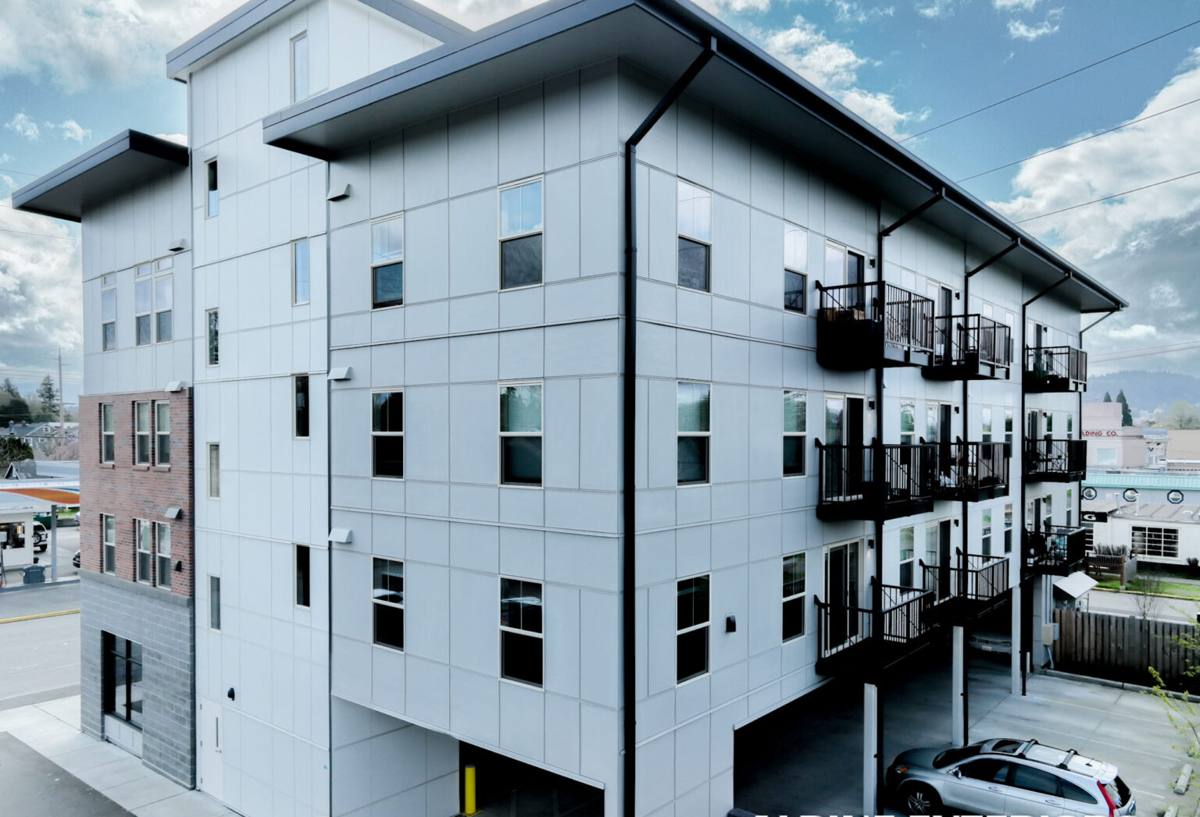
Why Board & Batten Is Especially Sensitive to Local Conditions
The appeal of board and batten is the reveal — wide flat panels with narrow battens covering the seams between them. That reveal is also the weak point. Every batten strip creates a vertical channel where wind-driven rain can get pushed upward and sideways, not just fall straight down. In a climate with regular driving rain off the strait, that matters more than it would in a drier inland town.
What driving rain does to a poorly built wall
When rain is pushed horizontally into a wall instead of running straight down it, any gap, any un-flashed penetration, or any batten fastened directly through both layers without room to move can become an entry point. Once moisture gets behind the cladding, it has nowhere to dry out quickly in our humidity — and that's when sheathing rot and mold start, often years before a homeowner sees a visible sign on the outside.
What salt air and moss add on top
Salt air accelerates corrosion on fasteners, flashing, and any metal trim that isn't rated for coastal exposure. Moss and algae growth thrive in Lynden's shaded, damp microclimates and, left unaddressed, hold moisture directly against the siding surface for extended periods — which is a much bigger problem for a wood-based product than for one engineered to resist moisture absorption.
What a Correct Board & Batten Installation Actually Involves
A good-looking board and batten job and a correctly built one can look identical from the curb. The difference is entirely in the layers you can't see. On every board and batten project we install, the assembly includes:
- A weather-resistive barrier installed with proper shingle-lap sequencing, not just stapled on flat
- A drainage gap or rainscreen furring behind the panels so any moisture that does get past the surface has a path to drain and dry
- Correct flashing at every window, door, and penetration — the exact points where board and batten seams are most likely to funnel water
- Fastening patterns and gap allowances that match manufacturer spec for expansion and contraction, so panels and battens aren't fighting each other as the temperature and moisture swing through the seasons
- Corrosion-resistant fasteners and trim hardware appropriate for a coastal-influenced environment
Skip any one of these steps and the siding may look fine for a few years while the real damage happens underneath, unseen, until a repair bill shows up that's far larger than it should have been.
Why We Install Board & Batten Only in James Hardie Fiber Cement
Board and batten is available in several materials — cedar, primed spruce, LP SmartSide, vinyl panel systems, and fiber cement. We've made a deliberate decision to install it only in James Hardie fiber cement, and it's worth being straightforward about why, rather than just asserting it.
Wood and engineered wood board and batten
Real cedar and primed spruce board and batten can look beautiful, and there's nothing wrong with the material on its own terms. But wood-based siding is more sensitive to sustained moisture exposure than fiber cement, and it asks for a maintenance commitment — periodic recoating, caulking, and inspection — that's tougher to keep up with in a climate where moss and dampness are a near-constant presence rather than a seasonal event. LP SmartSide improves on some of those weaknesses with an engineered strand substrate, but it's still a wood-fiber product at its core and carries similar moisture-management requirements over the long run.
Vinyl board and batten panels
Vinyl board and batten systems are lower cost and low-maintenance in the sense that they don't need repainting, but the material itself is thinner, flexes with temperature swings, and simply doesn't hold up as well under sustained wind-driven rain and salt exposure as a dense fiber cement panel does. It's also a harder material to detail correctly around the tight seams that give board and batten its look.
James Hardie fiber cement — what makes it the standard we build to
James Hardie's fiber cement is dense, non-combustible, and engineered specifically for wet, marine-influenced climates through its HZ5 product line — which is the specification we use in this region. The factory-applied ColorPlus finish resists fading and doesn't require the same recoat cycle as painted wood, and the product carries a strong transferable warranty when installed to Hardie's documented specifications. That last part matters as much as the material itself: a warranty is only as good as the installation behind it, which is why we follow Hardie's fastening, clearance, and flashing requirements to the letter on every job.
Comparing Board & Batten Materials for a Lynden Home
| Material | Moisture resistance | Maintenance | Coastal/salt durability | Typical lifespan with correct install |
|---|---|---|---|---|
| James Hardie fiber cement | High — engineered for wet climates (HZ5) | Low — factory finish, no recoating cycle | Strong | 30+ years |
| Cedar / primed spruce | Moderate — needs sealed end cuts and joints | High — periodic recoating and caulk inspection | Moderate, sensitive to sustained damp | 15-25 years with upkeep |
| LP SmartSide (engineered wood) | Moderate — improved over solid wood | Moderate — coating maintenance still required | Moderate | 20-30 years with upkeep |
| Vinyl board and batten panel | Moderate — surface sheds water, seams can be a weak point | Low | Lower — can become brittle, fades over time | 15-25 years |
Our Process for a Lynden Board & Batten Project
Every project follows the same sequence, because skipping steps is exactly how the hidden failures described above get built into a wall:
- On-site inspection of the existing wall assembly, siding condition, and any moisture or moss issues already present
- Removal of old siding and inspection of the sheathing underneath for hidden rot, especially around windows and lower wall sections most exposed to splash-back and driving rain
- Repair of any compromised sheathing before a single new panel goes up
- Installation of the weather-resistive barrier and drainage gap, sequenced and lapped correctly
- Flashing of all windows, doors, and penetrations to Hardie's coastal-climate specifications
- Installation of HardiePanel and battens with manufacturer-specified fastening, gapping, and corrosion-resistant hardware
- Final inspection walkthrough with the homeowner before we consider the job complete
Maintenance to Expect in This Climate
Even the best siding benefits from a little seasonal attention in a place like Whatcom County. We recommend homeowners rinse siding periodically to clear salt residue and organic buildup, keep gutters and downspouts clear so water isn't dumping directly onto lower wall sections, and trim back vegetation that keeps a wall shaded and damp longer than it needs to be — moss takes hold fastest where sunlight and airflow are limited.
What to Ask Before Hiring for Board & Batten Siding
- Do you install a drainage gap or rainscreen behind the panels, or fasten directly to the barrier?
- What fastener and flashing hardware do you use, and is it rated for coastal exposure?
- Will you inspect and repair sheathing before installing new siding, not just over it?
- What warranty applies, and does it require specific installation steps to stay valid?
- Have you installed board and batten specifically in this area before, and can you speak to how it holds up here?
Why It Matters That We Already Work in This Area
A crew that's only ever installed siding in a dry inland climate will make different — and sometimes wrong — assumptions about flashing detail, drainage, and material choice than a crew that works Blaine, Lynden, and the rest of Whatcom County regularly. We've built our process around what this specific coastline actually does to a wall over a Pacific Northwest winter and summer, not around a generic national spec sheet. That local familiarity is a big part of why we standardized on one product installed one correct way, rather than offering every option on the market and hoping it works out.
If you're considering board and batten siding for a home in Lynden, we're happy to walk the property, look at what's there now, and talk through what a correctly built assembly would look like for your specific wall exposure. There's no pressure and no cost to get an estimate — just a straight answer on what your home needs.