 Blaine Siding
 California Creek's Climate Is Hard on Siding
Homes near California Creek sit close to the water, and that proximity shapes everything about how siding ages here. Marine air moving in off Semiahmoo Bay and the Strait of Georgia carries salt that settles on exterior surfaces year-round, not just during storms. Combine that with Whatcom County's long, wet winters — driving rain that comes in sideways off the water more often than it falls straight down — and you have an environment that punishes any siding material with weak points at the seams, fasteners, or finish.
Add to that a moss and algae season that, in this part of Washington, can run eight months or longer. North-facing walls, shaded elevations near tree lines, and anywhere moisture sits without good airflow are prone to green and black staining well before a homeowner would expect to see it. Siding here doesn't just need to look good on install day — it needs a finish and a substrate that can shed water, resist salt corrosion, and stand up to biological growth for decades without curling, swelling, or rotting.
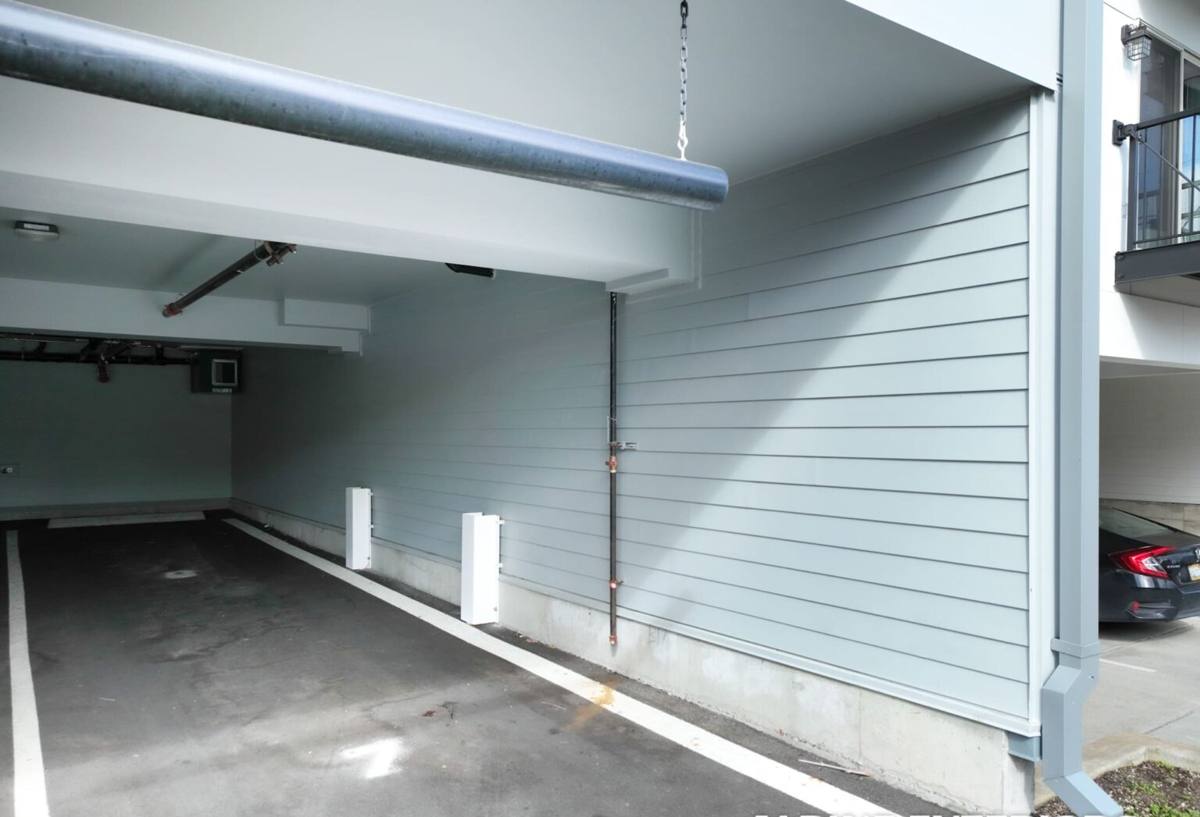
Why We Only Install James Hardie Fiber Cement
We install James Hardie exclusively, and California Creek is a good example of why. Fiber cement is dimensionally stable — it doesn't expand and contract with moisture the way wood-based products do, which matters when a wall is absorbing salt-laden humidity most of the year. It's also non-combustible, which matters given how many properties in this area back up to trees and brush.
We don't install vinyl, LP SmartSide, Cemplank, Allura, primed spruce, or cedar, and it's worth being honest about why. Vinyl can warp and fade under UV and temperature swings, and its seams and J-channels give wind-driven rain more places to work its way behind the cladding. Engineered wood products like LP SmartSide use wood strands bonded with resin — solid performers when the seal at every cut edge stays intact, but a single missed caulk joint or split panel lets moisture in, and once it's in, wood-based substrates swell and don't fully recover. Cedar and primed spruce are honest, attractive materials, but they demand a maintenance schedule — re-staining, re-caulking, moisture monitoring — that most homeowners underestimate until the first section starts cupping. James Hardie's fiber cement formulation, engineered to Hardie's HZ5 climate specifications used across the Pacific Northwest, is built specifically to resist moisture absorption, freeze-thaw stress, and UV breakdown in a climate like this one.
The Factory Finish Matters as Much as the Material
ColorPlus, Hardie's factory-applied finish, is baked on in a controlled environment rather than sprayed on-site. That gives it better adhesion and UV resistance than field-applied paint, and it's backed by its own finish warranty separate from the substrate warranty. In a salt-air environment, where field-painted surfaces tend to chalk and fade faster, that factory bond is a real advantage — not a marketing point.
What a Correct Installation Actually Involves
James Hardie siding performs the way it's rated to perform only when it's installed to spec. In a coastal, high-moisture area like California Creek, the details underneath the boards matter more than the boards themselves.
Weather-Resistive Barrier and Drainage Plane
Every installation starts with a properly lapped weather-resistive barrier and a drainage gap that lets any moisture that gets behind the siding find its way back out instead of sitting against the sheathing. On a site this close to the water, we don't treat this as optional — it's the difference between siding that sheds an unexpected leak and a wall assembly that traps it.
Flashing, Gaps, and Fastening
Hardie's own installation guidelines call for specific clearances at grade, roofline, and around every window and door, plus flashing at all horizontal joints and penetrations. We hold to those clearances and use corrosion-resistant fasteners set to the manufacturer's depth and spacing — over-driven or under-driven nails are one of the most common causes of premature siding failure, and it's an easy mistake to make if a crew is moving fast. In a wind-driven-rain environment, gaps that are too tight or caulk used in place of proper flashing are where water finds its way in.
Caulking and Sealant Choice
Not all sealants hold up to constant salt exposure and freeze-thaw cycling. We use sealants rated for the exposure the wall will actually see, applied only where Hardie's details call for sealant rather than as a substitute for correct flashing.
Choosing the Right Hardie Product Line
James Hardie makes several distinct product lines, and the right choice for a California Creek home depends on the style of the house and its exposure to wind and moisture.
| Product | Best Use | Why It Fits This Area |
|---|---|---|
| HardiePlank lap siding | Most home styles, horizontal lines | The most common choice; sheds water efficiently when properly lapped |
| HardiePanel vertical siding | Modern or accent elevations, gables | Fewer horizontal seams where wind-driven rain can intrude |
| HardieShingle | Craftsman and cottage-style homes | Textured look without the maintenance burden of real cedar shingle |
| HardieTrim | Corners, fascia, window and door surrounds | Matches the fiber cement's moisture and salt resistance at vulnerable edges |
Most projects near California Creek use HardiePlank as the primary field material, with HardieTrim at corners and openings and HardiePanel on gable ends or accent walls where a homeowner wants a different texture. We'll walk through which combination makes sense for a given home's exposure and roofline during the estimate.
Our Process on a California Creek Project
We start with a walk-around of the home to assess exposure — which elevations take the most wind-driven rain, where moss and algae are already established, and whether there's any existing moisture damage behind the current siding that needs to be addressed before new material goes up. Any rot, compromised sheathing, or failed flashing gets repaired first; covering a problem with new siding just hides it.
From there we install the weather-resistive barrier and furring or drainage system called for by the wall assembly, then the Hardie product itself, followed by trim, flashing, and caulking in that order. We follow Hardie's published fastening schedule and clearance requirements throughout, not as a checklist item but because those details are what determine whether the siding performs for its full service life in this climate. Cleanup includes removal of all debris and old material — we don't leave a job site with cutoffs and packaging for the homeowner to deal with.
Maintenance in a Salt-Air, Moss-Prone Environment
James Hardie siding is low-maintenance compared to wood or vinyl, but "low-maintenance" isn't "no-maintenance," especially this close to the water. A simple annual routine keeps it performing and looking right for decades.
- Rinse down exterior walls once or twice a year, especially shaded and north-facing elevations, to remove salt residue and slow moss and algae growth
- Keep gutters and downspouts clear so water isn't overflowing onto siding below the roofline
- Trim back vegetation and tree limbs that keep walls shaded and damp
- Inspect caulk joints around windows, doors, and trim yearly and re-caulk any that have cracked or pulled away
- Address any impact damage or chipped ColorPlus finish promptly with Hardie-compatible touch-up product to keep the factory finish's protection intact
What It Costs — And What Actually Drives the Price
Every home is different, but the same factors tend to move the price up or down on most California Creek projects.
| Cost Factor | Why It Matters |
|---|---|
| Home size and wall complexity | More corners, dormers, and roof intersections mean more cutting, flashing, and trim labor |
| Condition of existing sheathing | Rot or moisture damage found during tear-off adds repair work before new siding goes up |
| Product line and profile | HardieShingle and custom trim details cost more in labor than a straightforward lap profile |
| ColorPlus vs. field-painted finish | Factory finish carries a material premium but removes on-site painting labor and its own warranty gap |
| Site access and staging | Waterfront and sloped lots near the creek can add setup and material-handling time |
We provide a written, itemized estimate before any work starts, so a homeowner knows exactly what's driving the number rather than getting a single lump figure.
Why It Matters to Hire a Crew That Works This Area
Installation quality is what separates a Hardie job that lasts thirty-plus years from one that starts failing at the seams in five. A crew that regularly works properties around California Creek and the greater Blaine area already knows which elevations catch the worst of the wind-driven rain off the water, how far moss pressure extends inland from the shoreline, and how local permitting and setback rules apply to exterior work in Whatcom County. That's the kind of judgment that doesn't come from a manufacturer's install manual alone — it comes from having stood on ladders on this specific stretch of coastline and seen what actually goes wrong when a detail gets skipped.
It also means accountability that doesn't disappear after the invoice is paid. A local crew is reachable if a question comes up two years down the road, and stands behind both the manufacturer's warranty and its own workmanship.
Ready to Talk About Your Home
If your California Creek home's siding is showing salt staining, moss buildup, or signs of moisture damage, we're happy to take a look and walk you through what James Hardie siding would involve for your specific house — no pressure, no obligation. Fill out the form below to schedule a free estimate.