 Blaine Siding
 Windows Built for the Grandview Stretch of Blaine
Homes in the Grandview area of Blaine sit close enough to the water that the weather here plays by different rules than it does even a few miles inland. Salt-laden air moves through year-round, driving rain comes in sideways off Drayton Harbor and the Strait during winter storms, and the shaded, damp stretches of many lots keep moss and algae active for most of the year. Windows that would hold up fine in a drier part of Whatcom County can start failing early here — fogged panes, soft sills, sticking sashes — because they were never sized, sealed, or flashed for this kind of exposure.
Custom windows aren't about upgrading for the sake of it. They're about getting a window built to the actual opening in your wall, sealed and flashed correctly for a coastal climate, and finished with materials that can take salt air and standing moisture without breaking down in five years instead of twenty-five.
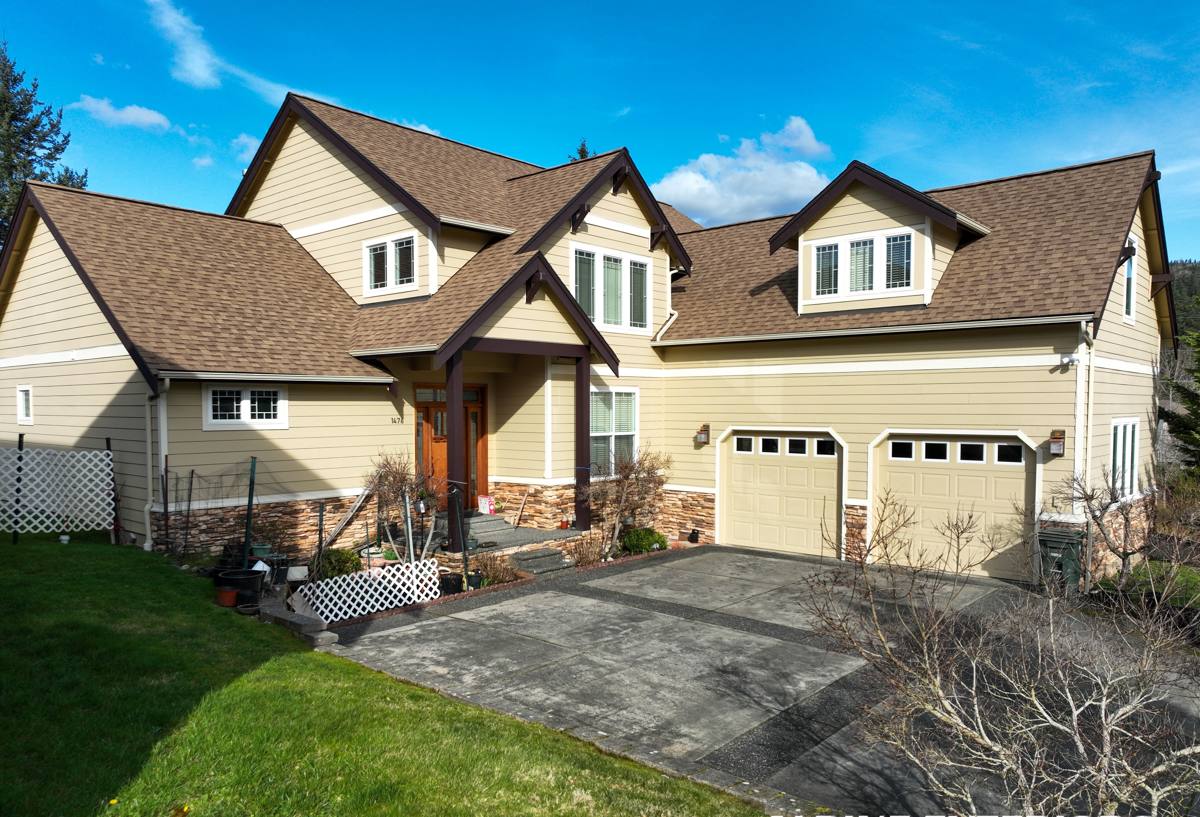
What "Custom" Actually Means for a Grandview Home
Sized to the Opening, Not the Catalog
Most homes built more than a couple of decades ago don't have openings that match today's standard window sizes exactly. A true custom window is manufactured to the measured rough opening, which means less shimming, fewer gaps to seal, and a tighter fit against wind-driven rain. Off-the-shelf sizing forces an installer to build up the opening or trim it down, and every one of those extra seams is a place water can eventually find a way in.
Matched to the Exposure
Not every wall of a house faces the weather the same way. A window on the side of the house that takes the brunt of winter storms off the water needs a different glass package, frame material, and sealant approach than one tucked on a sheltered wall. Custom work means we look at each opening individually rather than installing the same spec around the whole house.
Signs Your Current Windows Are Losing the Battle
Salt air and constant moisture don't fail a window all at once — they wear it down gradually. These are the warning signs worth acting on before they turn into rot repair:
- Fogging or a milky haze between double-pane glass (a broken seal letting moisture in)
- Soft, spongy, or discolored wood at the sill or bottom corners of the frame
- Windows that are hard to open, close, or lock, especially after rain
- Paint or caulk that keeps cracking and peeling around the frame no matter how often it's touched up
- Visible moss, algae, or dark streaking building up on the frame or sill
- Cold drafts or a noticeable temperature difference near the window in winter
- Condensation forming on the inside of the glass regularly, even in mild weather
Any one of these on its own might just need a repair. Several at once, especially on a wall that takes the weather head-on, usually means the window itself has reached the end of its useful life.
Frame Material: What Actually Holds Up in Salt Air
The frame material matters more here than in a lot of other climates, because it's fighting salt, damp, and moss pressure at the same time. There's no single "best" material for every home — it depends on budget, the home's style, and how exposed the specific wall is.
| Frame Material | Upfront Cost | Salt Air / Moisture Behavior | Maintenance Load | Best Fit |
|---|---|---|---|---|
| Vinyl | Lowest | Won't rot or corrode; can discolor over many years of coastal UV and salt exposure | Low — occasional rinse | Budget-conscious replacements, rental or secondary homes |
| Fiberglass | Mid-to-high | Very stable in moisture and temperature swings; holds paint well if a custom color is wanted | Low | Homes on the most exposed walls facing the water |
| Wood, factory clad exterior | Highest | Good performance if the cladding and flashing are done correctly; the wood interior still needs the exterior seal to stay intact | Moderate — interior finish upkeep, and any cladding breach needs prompt attention | Homes prioritizing a traditional wood interior look, on sheltered walls |
We don't push one material on every job. What we won't do is install a bare, unclad wood exterior frame on a wall that takes direct wind-driven rain — the maintenance burden and moisture risk in this climate just don't make sense there, and we'll say so upfront rather than sell a product that's going to cause problems in a few winters.
Glass Packages Worth Considering Near the Water
Double-pane, low-E glass is the baseline we'd recommend for any Grandview-area home at this point — the energy savings alone tend to pay for the upgrade over enough winters. Beyond that, a few options are worth discussing depending on the wall's exposure:
- Argon or krypton gas fill — improves insulation value without changing the glass thickness
- Laminated glass — adds impact resistance and sound dampening, useful on walls exposed to storm debris
- Warm-edge spacers — reduce condensation risk at the glass edge, which matters in a climate with this much ambient humidity
We'll walk through which of these make sense for your specific openings rather than upselling every option on every window — a sheltered north-facing bedroom window doesn't need the same spec as a picture window facing open water.
How We Handle Flashing and Water Management
This is the part of a window install that doesn't show up in a sales brochure but matters more than the window itself in a climate like this. A high-end window installed with poor flashing will leak. A mid-range window installed with correct flashing and sequencing will keep water out for decades.
Our Sequence
- On-site assessment and measurement — we check the existing opening, sheathing, and framing condition before quoting, not after removal
- Removal and inspection — old units come out carefully so we can check the framing and sheathing underneath for hidden rot before anything new goes in
- Flashing and moisture barrier — sill pan flashing, water-resistive barrier integration, and head flashing installed in the correct shingle-lap order so water is always directed outward, never trapped behind the new window
- Setting and shimming — the window is leveled, plumbed, and shimmed to the manufacturer's spec, not just wedged into place
- Insulation and air-sealing — the gap between the frame and rough opening is properly insulated and sealed, which also cuts down on condensation risk
- Exterior trim and sealant — trim is reset and sealed with a product rated for marine/coastal exposure, not a generic caulk that will crack out in a season or two
- Final walkthrough — we test operation, check seals, and walk the exterior with you before calling the job done
If any hidden rot or framing damage turns up during removal, we stop and talk to you about it before proceeding — that's not an upsell, it's a problem that has to be fixed for the new window to actually last.
Why a Crew That Already Works Grandview Matters
A window installer who mostly works drier inland areas of Whatcom County is going to make different assumptions than one who works this stretch of Blaine regularly. Knowing how hard a particular wall orientation gets hit in a winter southwesterly, how fast moss builds back up on a north-facing sill, and which sealant products actually hold up to sustained salt exposure isn't something you learn from a manufacturer's install manual — it's something you learn from doing the work in this specific environment, season after season.
That local pattern recognition shows up in small decisions during the job: which walls get the more resilient flashing detail, where extra attention to the sill pan is worth the time, and which frame material we'd steer a homeowner away from on a particular exposure. It's also why we're straightforward about what won't hold up here, even when it costs us a sale.
Living With Custom Windows in a Coastal Climate
A correctly installed custom window in this climate is close to maintenance-free, but a little seasonal attention keeps it that way:
- Rinse frames and sills periodically to clear salt residue, especially after storms
- Keep gutters and nearby vegetation trimmed back so moss and algae don't get a foothold on the frame
- Check exterior sealant lines once a year, typically in fall before the wet season sets in, and flag any cracking early
- Operate locks and hardware a few times through the winter so mechanisms don't seize up from disuse
None of this is heavy maintenance — it's the kind of five-minute check that prevents a small issue from becoming a rot repair down the road.
Get a Straightforward Look at Your Windows
If you're dealing with drafts, fogged glass, or windows that just don't seem to keep up with the weather on your side of Blaine, we're happy to take a look and give you an honest read on what's actually going on — no pressure, no upsell. Fill out the form below for a free estimate and we'll walk the property with you.