 Blaine Siding
 Birch Point's Exposure Is Different From the Rest of Blaine
Birch Point sits right where Whatcom County's shoreline meets open water, and that location changes what a house needs from its siding. Homes a few miles inland in Blaine deal with plenty of rain, but they don't get the same steady salt-air drift, the same wind-driven spray during winter storms, or the same shaded, damp microclimates that let moss and algae take hold on north-facing walls. Any siding product installed here has to handle three things at once: constant moisture, airborne salt, and long stretches of low sun and high humidity that never really let a wall dry out between storms.
That combination is hard on a lot of common siding materials. It's the reason we only install James Hardie fiber cement on Birch Point homes, and it's why we think through moisture management differently on a waterfront-adjacent property than we would on a standard in-town Blaine lot.
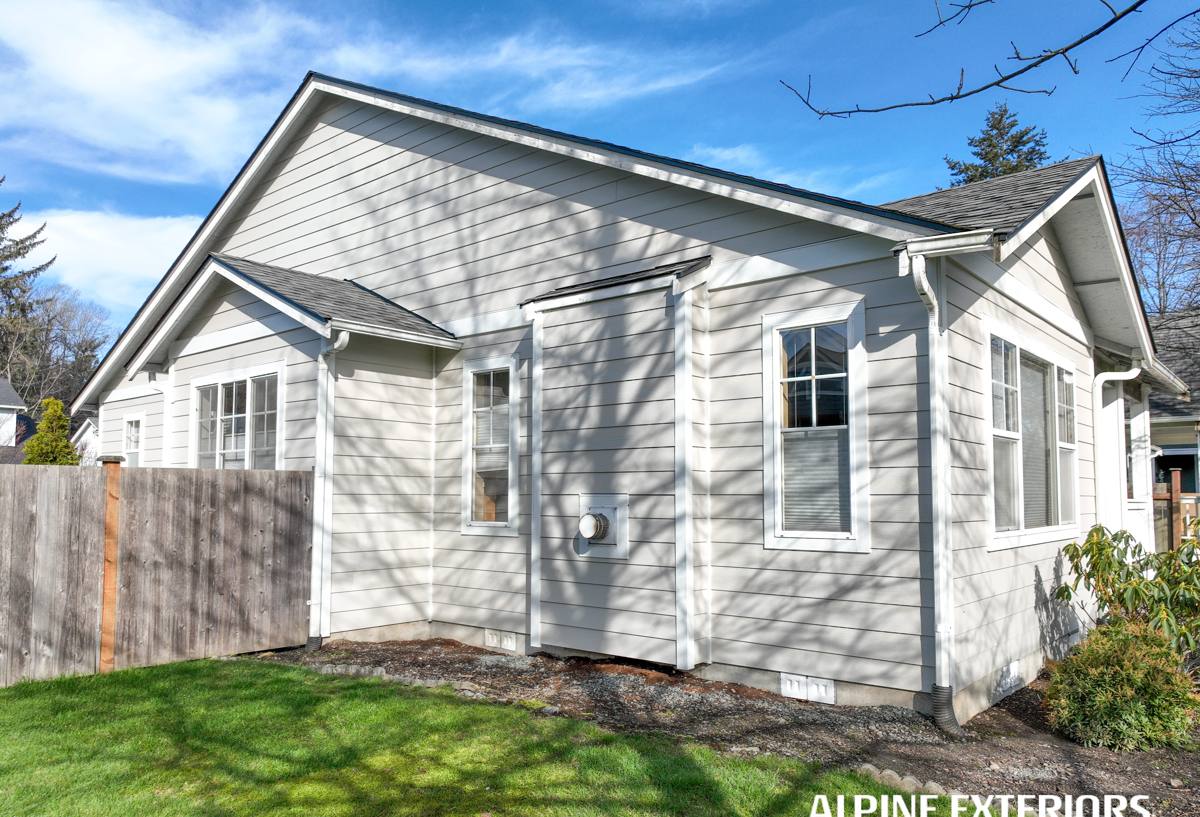
What Salt Air, Driving Rain, and Moss Actually Do to a Wall
Salt Air
Salt carried in coastal wind settles on exterior surfaces and, over years, accelerates corrosion of exposed metal fasteners, flashing, and trim hardware. Siding materials that rely on unprotected steel fasteners or thin factory coatings tend to show staining and premature wear near shorelines faster than the same product would fifteen or twenty miles inland.
Driving Rain
Wind-driven rain doesn't just fall on a wall, it gets pushed into it — through hairline gaps at trim, unsealed butt joints, and any spot where flashing was skipped or shortcut. Once water gets behind the siding, what matters most is whether the wall assembly can dry out again before the next storm arrives, which on Birch Point can be a matter of days, not weeks.
Moss and Algae
Shaded, north- and west-facing walls near mature trees or water stay damp longer, and that's exactly where moss and green/black algae staining take hold. On porous or absorptive siding surfaces, that growth can work into the material itself, not just sit on top of it, making it harder to clean without damaging the finish.
Why We Install James Hardie Fiber Cement Here — and Nothing Else
James Hardie fiber cement is a cement-based composite, not a wood product and not vinyl, which changes how it responds to all three of the stresses above. It doesn't feed moss and algae growth the way wood-based or wood-fiber products can, it holds paint and factory finish far longer under damp, low-sun conditions, and it's dimensionally stable enough that it doesn't cup, swell, or warp the way wood-based siding can after repeated wet-dry cycles.
We standardized on Hardie's HZ5 climate-engineered product line for this part of Washington specifically because it's formulated for cold, wet, high-moisture regions — as opposed to the HZ10 line built for hot, dry climates. That distinction matters more here than in most of the country, and it's one reason we don't treat "fiber cement" as a one-size-fits-all category.
What We Don't Install, and Why
We don't install vinyl siding, LP SmartSide, primed spruce, or cedar on Birch Point homes. Vinyl can warp and become brittle under wide temperature swings and doesn't stand up to direct salt spray as well as fiber cement's factory finish. Wood-based products, including engineered wood siding, are more vulnerable to moisture intrusion and moss/algae staining in a shaded, damp coastal environment, and even with careful maintenance they generally need more frequent attention here than a cement-based product does. That's a maintenance burden we don't think is worth asking a homeowner to take on this close to the water.
What a Correct Installation Involves on a Site Like This
Fiber cement siding is only as good as the wall assembly behind it. On an exposure like Birch Point's, a handful of details matter more than they might on a sheltered inland lot:
- Weather-resistive barrier and rain screen gap — a drainage plane behind the siding lets any water that does get past the surface find its way back out instead of sitting against the wall.
- Corrosion-resistant fasteners — stainless steel or hot-dip galvanized fasteners rated for coastal exposure, not standard interior-grade hardware.
- Flashing at every penetration — windows, doors, vents, and butt joints all get proper step and head flashing, not just caulk.
- Correct fastener placement and spacing — per Hardie's published installation instructions, which is also what keeps the manufacturer warranty valid.
- Factory-applied ColorPlus finish — a baked-on finish that resists fading and holds up to salt air better than field-applied paint, with touch-up product available for any cut edges or minor repairs.
- Proper clearance at grade and hardscape — siding kept off the ground and off decks/patios per code, which limits standing moisture at the bottom course.
Skipping any one of these doesn't show up as a problem on day one. It shows up two, five, or ten years later as trapped moisture, staining, or a fastener that's begun to bleed rust down the face of the wall — all things that are far more expensive to fix after the fact than to install correctly the first time.
Our Process for a Birch Point Job
1. On-Site Assessment
We walk the exterior and look specifically at exposure direction, existing moisture damage, trim and flashing condition, and how close mature trees or shade sit to the walls that see the least sun. That tells us where moss risk is highest and where drainage details need the most attention.
2. Tear-Off and Sheathing Check
Old siding comes off and we inspect the sheathing underneath before anything new goes up. Hidden moisture damage from years of wind-driven rain is common enough on older coastal homes that we treat this step as non-negotiable, not optional.
3. Weather Barrier and Rain Screen Installation
We install a proper weather-resistive barrier and drainage gap before any Hardie product goes on, so the wall has a way to dry out even after a hard winter storm.
4. Hardie Installation to Spec
HZ5 lap siding, panels, or trim go up per manufacturer fastening and flashing requirements, using corrosion-resistant hardware throughout.
5. Final Inspection and Cleanup
We walk the finished job checking caulking lines, flashing laps, and fastener finish before we consider it done, and we clean up the site fully.
Cost Factors on a Coastal Lot
Every Birch Point property is a little different, but these are the variables that most often move a fiber cement siding quote up or down:
| Factor | Why It Matters Here |
|---|---|
| Existing moisture/rot damage | Coastal exposure means more sheathing repair is sometimes needed once old siding comes off |
| Wall exposure and shading | Heavily shaded, damp walls may need extra flashing detail to manage moss/algae risk long-term |
| Trim and accent complexity | Board-and-batten accents, panel sections, or extensive trim add labor beyond plain lap siding |
| Access and site conditions | Waterfront-adjacent lots can have tighter access or slope that affects staging and scaffolding |
| Color and finish selection | Standard ColorPlus colors vs. custom or premium finish options |
We give a straightforward, itemized estimate after the on-site walk rather than a phone-quote guess, because on a lot like this the sheathing condition and exposure details really do change the scope of the job.
Maintenance Once It's Installed
Fiber cement siding cuts down on maintenance compared to wood-based products, but "low maintenance" doesn't mean "no maintenance" this close to the water. A yearly rinse-down to clear salt residue and any early moss growth, prompt attention to any caulking that starts to crack at joints, and keeping nearby vegetation trimmed back from shaded walls all go a long way toward getting the full lifespan out of the installation. None of that requires special products — it's the same basic upkeep any coastal Whatcom County home should be doing regardless of siding material.
Why Hiring a Crew That Already Works Birch Point Matters
Coastal exposure isn't uniform even within a small area — a wall facing open water behaves differently than one tucked behind a windbreak of trees a hundred feet away. A crew that's already worked on this stretch of Whatcom County shoreline has seen how local wind patterns, shade, and moisture actually play out on real walls, not just in a manufacturer's general climate guidance. That translates into better judgment calls on flashing details, fastener choice, and where extra drainage attention is worth the time — the kind of decisions that don't show up on an estimate sheet but do show up in how the siding holds up ten years out.
We also know the permitting and inspection expectations for exterior work in this part of Blaine, which keeps a project moving instead of stalling on paperwork.
What to Ask Any Contractor Before You Hire Them for This Job
- Are they installing manufacturer-specified fasteners and flashing, or cutting corners on hardware?
- Do they install a proper rain screen/drainage gap, or just nail siding straight to the barrier?
- Can they show you the specific Hardie product line (HZ5 vs. HZ10) they're proposing and explain why?
- Will the installation qualify for Hardie's full manufacturer warranty, including labor coverage if offered?
- Have they worked on homes in this specific area before, and do they understand the exposure here?
If you're weighing options for a Birch Point home, we're glad to walk the exterior with you, point out anything the current siding is already telling you about moisture or exposure, and put together a clear, no-pressure estimate for a correctly installed James Hardie system. Use the form below to get started.