 Blaine Siding
 Why Ferndale Roofs Wear Differently Than Roofs Inland
Ferndale sits close enough to the water that homes here take on a mix of problems you don't see as much once you get further inland in Whatcom County. Salt-laden marine air moves through on a regular basis, driving rain comes in sideways during fall and winter storms, and the mild, damp stretches between storms give moss and algae exactly the conditions they need to spread. None of these factors is dramatic on its own. Together, over several years, they wear down roofing systems faster than a generic warranty chart or a one-size-fits-all repair approach accounts for.
A roof repair done right in Ferndale has to account for all three of these stressors at once — not just patch the spot that's leaking today. That's the difference between a repair that holds for another decade and one you're paying to redo in eighteen months.
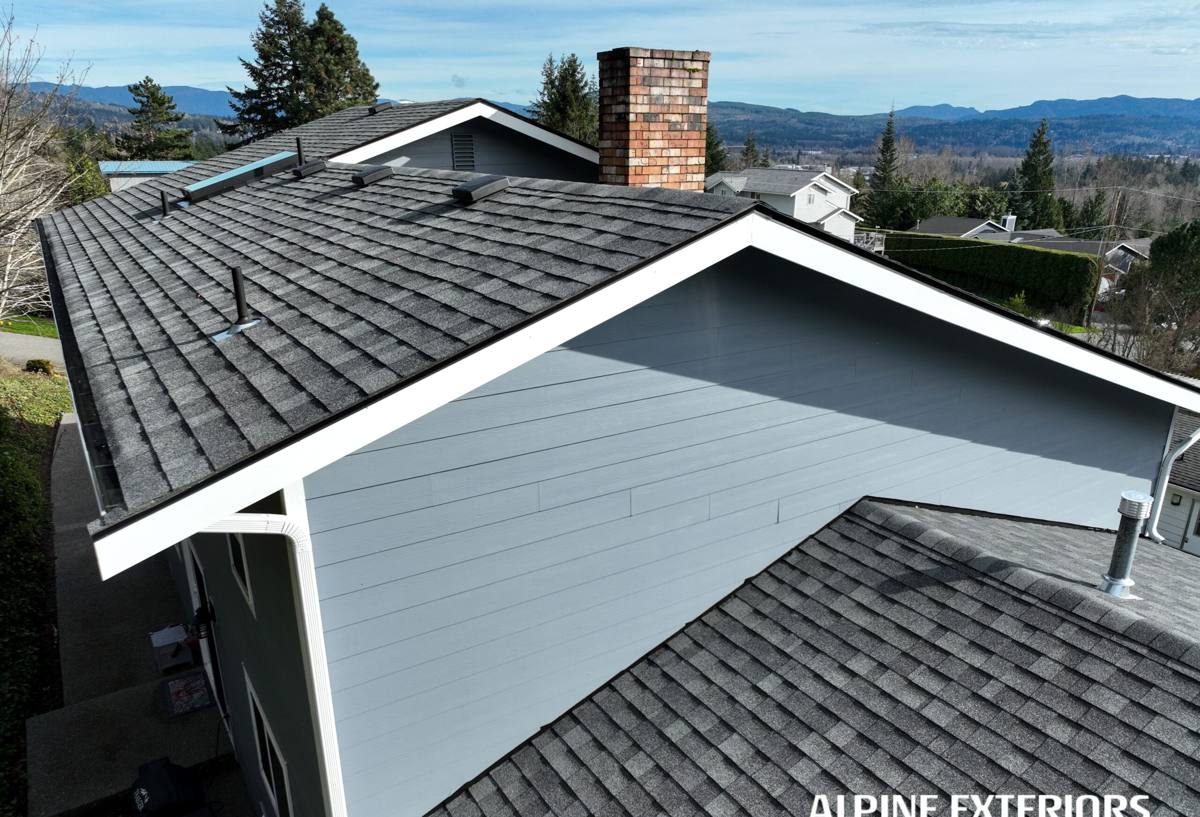
Common Roof Repair Issues We Find in Ferndale Homes
Moss and Organic Growth
Moss doesn't just look bad — it holds moisture against the roofing material long after the rest of the roof has dried out. On shingle roofs, that constant dampness accelerates granule loss and can work its way under shingle edges. On any roof type, moss growing in valleys or along butt joints slows water drainage and creates the conditions for a leak that wouldn't otherwise happen. Whatcom County's long, mild moss season means this isn't a once-a-year problem — it's ongoing maintenance.
Flashing and Penetration Failures
Most leaks we're called out for don't come from failed shingles or panels themselves — they come from flashing around chimneys, vent pipes, skylights, and roof-to-wall transitions. Driving rain, the kind that comes in at an angle rather than straight down, finds gaps in flashing that would never leak in calmer weather. Sealant alone is never a permanent fix here; it degrades faster in this climate than manufacturers' generic literature suggests.
Fastener and Metal Corrosion
Salt air accelerates corrosion on exposed metal — nail heads, flashing, gutter hardware, and any metal roofing components. A fastener that would last decades in a dry inland climate can start to weep rust stains or lose grip years sooner near the coast. Repair work in Ferndale needs to use fasteners and metal components rated for coastal exposure, not whatever is standard-stock for a drier region.
What a Correct Roof Repair Actually Involves
Diagnosing the Real Problem, Not Just the Symptom
A stain on your ceiling doesn't always show up directly below the leak — water travels along rafters, underlayment, and framing before it finds a path inside. A correct repair starts with tracing that path back to the actual entry point, not just sealing the spot that seems obvious from inside the attic. Patching the wrong spot is one of the most common reasons homeowners end up calling a second contractor a year later for "the same leak."
Matching Materials and Technique to What's Already There
Repairs need to integrate with the existing roofing system — matching shingle profile and weight, tying new flashing into old correctly, and respecting the original roof's drainage paths. A mismatched patch can create a new weak point even when the original leak is fixed, especially where new material meets old at a different thickness or expansion rate.
Addressing the Cause, Not Just the Leak
If moss buildup, poor attic ventilation, or clogged gutters caused or worsened the failure, an honest repair addresses that root cause too. Fixing the hole without addressing why water got there in the first place just delays the next repair call.
Our Roof Repair Process
We keep the process straightforward because homeowners dealing with a leak don't need extra complexity added on top of an already stressful situation.
- Inspection. We look at the roof itself, the attic side where accessible, and the areas most exposed to wind-driven rain and salt air.
- Honest diagnosis. We explain what's actually failing and why — including if it's a contained repair versus a sign of broader wear.
- Written estimate. Scope and cost factors laid out before any work starts, no surprise add-ons partway through.
- Repair work. Matched materials, coastal-rated fasteners where appropriate, and attention to the surrounding areas that fed the original problem.
- Cleanup and walkthrough. We clear debris and old material and walk you through what was done and why.
Repair or Replacement? How We Help You Decide
Not every roof problem calls for a full replacement, and not every leak is fixable with a simple patch. The honest answer depends on the roof's age, how widespread the damage is, and whether the underlying decking and underlayment are still sound. Here's how we generally think through it:
| Situation | Repair Is Usually Enough | Replacement Is Usually Better |
|---|---|---|
| Leak source | Isolated to one flashing point, vent, or damaged section | Multiple leak points across different areas of the roof |
| Roof age | Well within expected material lifespan | At or past the end of its expected service life |
| Decking condition | Solid, no soft spots or rot | Soft, spongy, or visibly rotted decking found during inspection |
| Moss/algae extent | Localized, treatable, granule loss minimal | Widespread coverage with significant granule or material loss underneath |
| Cost pattern | One-time targeted fix | Repeated repair calls to the same general area over recent years |
As a broad guide, a targeted flashing or vent repair often runs a few hundred dollars, while more involved work addressing a larger damaged section — including new underlayment or decking — can run into the low thousands. We'll tell you plainly if what you're describing sounds like a repair job or if you should be budgeting for something bigger, before we ever step on the roof.
Why a Crew That Already Works Ferndale Matters
A contractor who works this part of Whatcom County regularly already knows what driving rain and moss season do to roofs here — they're not learning it on your roof. That familiarity shows up in small but important ways: knowing which flashing details tend to fail first in this climate, using fasteners and materials suited to salt exposure without being asked, and recognizing early moss patterns before they turn into a granule-loss problem. It also means a shorter wait when weather-driven damage needs attention quickly, since we're not routing a crew in from somewhere unfamiliar with local permitting and typical roof construction in the area.
Roofing Materials in Ferndale and What They Mean for Repairs
Most homes in and around Ferndale are roofed in asphalt shingles, with a smaller number of metal roofs and older cedar shake roofs still in service. Each has different repair considerations:
- Asphalt shingles are the most straightforward to repair and patch discreetly when matched by age, color, and profile — though older roofs with faded or discontinued shingle lines can be harder to match invisibly.
- Metal roofing handles driving rain well but needs fastener and seam inspections more regularly in salt air environments, since that's typically where corrosion shows up first.
- Cedar shake requires more frequent moss and moisture management in this climate; individual shake replacement is possible but needs to be done carefully to avoid disturbing surrounding courses.
We'll always tell you honestly what a given material needs going forward, including the maintenance burden, rather than just handing you a fix and moving on.
A Homeowner's Checklist: Signs You Likely Need a Roof Repair
- Visible moss or dark streaking concentrated in valleys, along ridges, or on north-facing slopes
- Granules collecting in gutters or at downspout outlets
- Water stains on ceilings or upper interior walls, especially after a windy rainstorm
- Curling, cracked, or missing shingles, or visibly lifted metal panel edges
- Rust staining around flashing, vents, or exposed fasteners
- Daylight visible through the roof deck from inside the attic
- Sagging or soft-feeling sections when walked or pressed lightly
Protecting Your Roof Between Repairs
A repair lasts longer when it's not fighting the same conditions that caused the original damage. Keeping gutters clear so water actually drains instead of backing up under the roof edge, treating moss before it spreads rather than after, and making sure attic ventilation is adequate all reduce the chance of a repeat call. In a climate with as much sustained moisture as Whatcom County sees, these small maintenance habits do more for a roof's lifespan than most homeowners expect.
If you're dealing with a leak, visible moss damage, or just want an honest read on what your Ferndale roof needs, we're happy to take a look. Reach out for a free, no-pressure estimate using the form below.