 Blaine Siding
 Ferndale's Climate Puts Real Demands on Exterior Siding
Ferndale sits in a part of Whatcom County where the exterior of a house works harder than it does in most of the country. Moist marine air moves inland for much of the year, rain falls sideways as often as it falls straight down, and shaded, tree-lined lots hold onto damp air long after a storm has passed. Add in a moss season that can stretch from fall through spring, and you have an environment where the wrong siding choice — or the right siding installed the wrong way — shows problems fast.
This page is about one thing specifically: fiber cement siding, installed correctly, on homes in the Ferndale area. Not a general overview of siding options, and not marketing language. Just what local homes actually need, what a correct installation involves, and what to look for in a contractor before you sign anything.
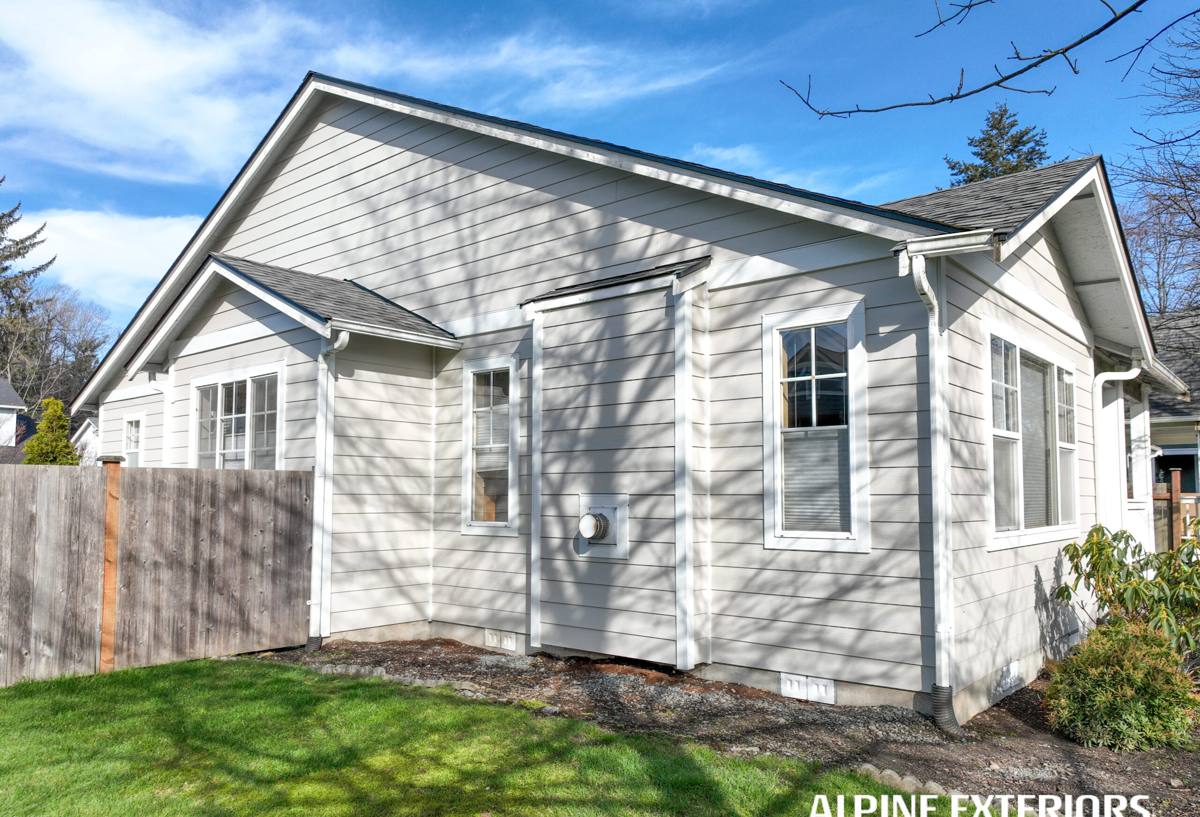
What Ferndale Homes Actually Need From Their Siding
Every siding material handles water, wind, and UV differently. In this part of Whatcom County, three conditions matter more than almost anywhere else in the state:
Salt-Laden, Moist Air
Homes closer to the water pick up airborne salt and moisture that accelerates corrosion of fasteners, trim, and any material prone to swelling or delaminating when it stays damp. Siding needs to be dimensionally stable and resistant to moisture intrusion at the surface, not just water-resistant on paper.
Driving, Wind-Driven Rain
Rain that hits siding at an angle finds every gap, every poorly lapped seam, and every place where caulk was used to cover a mistake instead of proper flashing. A siding system is only as good as the water management behind it — house wrap, flashing, and drainage gaps matter as much as the siding itself.
A Long Moss and Mildew Season
Shaded north sides, tree cover, and consistent moisture create ideal conditions for moss, algae, and mildew to take hold on exterior surfaces. Siding that absorbs moisture into its substrate gives these organisms something to grow into, not just onto — which is a much harder problem to solve than a surface cleaning.
Why We Install Only James Hardie Fiber Cement
We don't install vinyl, LP SmartSide, or other fiber cement brands, and that's a deliberate standard, not an oversight. James Hardie fiber cement is a cement-based composite, not wood-based, which means it doesn't swell, rot, or feed moss and mildew growth the way wood or wood-composite products can when moisture gets in. It's also non-combustible, which matters to insurers and to homeowners thinking about long-term risk.
James Hardie backs its siding with a factory-applied ColorPlus finish and a strong, transferable limited warranty — and the company engineers specific product lines (the HZ5 line, for this climate zone) for regions with exactly the kind of wind-driven rain and moisture exposure Ferndale sees. That combination — the right material, engineered for this climate, backed by a real warranty — is why it's the only siding we put on homes.
What a Correct Installation Involves in This Climate
Fiber cement siding is only as good as the installation behind it. In a high-moisture, high-wind-driven-rain environment like Ferndale's, a handful of details separate a siding job that lasts decades from one that causes problems in year three.
- Weather-resistive barrier installed correctly — a continuous, properly lapped house wrap behind the siding, not a torn or improvised patch job.
- Rainscreen or drainage gap — a small air gap behind the siding lets any water that gets past the cladding drain and dry out instead of sitting against the wall assembly.
- Flashing at every penetration — windows, doors, hose bibs, light fixtures, and roof-to-wall intersections all need proper metal or self-adhered flashing, not caulk as a substitute.
- Correct fastening — fasteners driven to Hardie's specifications, into framing, at the right depth — not overdriven, which cracks the board's edge and creates a moisture entry point.
- Manufacturer-specified clearances — gaps at the bottom of the siding, at grade, at roof lines, and at trim, so water sheds away from the wall instead of wicking into cut edges.
- Field-cut edges primed and sealed — any cut made on site exposes raw fiber cement that needs to be treated before it's closed up, or it becomes a weak point.
Skip any one of these and the siding itself can be flawless while the wall behind it fails. This is where most siding problems in this climate actually start — not with the product, but with shortcuts in the details above.
James Hardie Product Lines Suited to This Region
James Hardie makes several lines of lap siding, panel siding, and trim, and for this climate we generally steer homeowners toward products built for the HZ5 climate zone — engineered specifically for regions that see freeze-thaw cycling, sustained moisture, and wind-driven rain. Beyond the core product line, ColorPlus factory-finished colors give a more durable, consistent finish than field-applied paint, since the color and protective coating are baked on under controlled conditions rather than sprayed on-site in variable weather.
| Product Type | Best Use | Why It Fits Ferndale |
|---|---|---|
| HardiePlank lap siding | Most home exteriors | Engineered for moisture and wind-driven rain exposure |
| HardiePanel vertical siding | Accent walls, gables, modern facades | Clean lines with the same moisture performance |
| HardieTrim boards | Corners, window and door trim, fascia | Resists the swelling and rot common with wood trim in damp climates |
| ColorPlus finish | Any exposed surface | Factory-cured finish holds up better than field-applied paint against sun and moisture |
How Our Process Works on a Ferndale Home
The steps below are the same core process we follow on every Ferndale project, adjusted for the specific home:
- On-site assessment. We look at the existing siding, sheathing condition, moisture exposure by elevation (north walls and shaded sides typically need extra attention here), and any signs of past water intrusion.
- Tear-off and sheathing check. Old siding comes off and we inspect the sheathing underneath. Any rot or damage gets addressed before anything new goes up — covering a compromised wall with new siding just hides the problem.
- Weather barrier and drainage plane. House wrap and, where called for, a rainscreen gap go on next, tied in correctly at every window, door, and penetration.
- Flashing and trim. All flashing details are installed before siding panels go up, not patched in afterward.
- Siding installation to manufacturer spec. Fastener pattern, clearances, and lap alignment follow James Hardie's published installation guidelines, not shortcuts.
- Final inspection and cleanup. We walk the finished job checking caulking, trim details, and clearances before calling it done.
What Fiber Cement Siding Typically Costs
Every home is different, but the factors below are the ones that actually move the price on a Ferndale project — worth understanding before you compare quotes.
| Factor | Why It Matters |
|---|---|
| Sheathing condition | Rot or water damage found during tear-off adds repair scope before new siding can go on |
| Home size and stories | More square footage and second-story access affect labor and equipment needs |
| Trim and architectural detail | Corners, gables, and dormers add cutting, fitting, and flashing work |
| Product line and finish | HZ5-rated lines and ColorPlus finishes cost more upfront but reduce long-term maintenance |
| Rainscreen/drainage gap | Adding a drainage plane is extra labor but meaningfully improves moisture performance here |
| Access and site conditions | Tight lots, landscaping, or limited equipment access can add time |
We won't quote a number without seeing the home, but we're happy to walk through these factors with you during an estimate so there are no surprises later.
Maintaining Fiber Cement Siding in a Salt Air and Moss Climate
Correctly installed James Hardie siding needs far less upkeep than wood or wood-composite alternatives, but "low maintenance" doesn't mean "no maintenance" in this climate. A short annual routine keeps it performing the way it's designed to:
- Rinse siding annually, and more often on shaded or north-facing walls where moss and algae tend to establish first.
- Check and refresh exterior caulking at trim joints and penetrations every few years — caulk is the first thing to fail, not the siding.
- Keep gutters clear so overflow doesn't run down the wall face and stay wet longer than it should.
- Trim back vegetation and landscaping that shades siding or blocks airflow along a wall.
- Watch for moss growth at the base of walls near grade, which usually signals a clearance or drainage issue worth checking rather than just cleaning.
Why Hiring a Crew That Already Works in Ferndale Matters
Siding installation details that work fine in a drier climate can fail here within a few years if a crew treats Whatcom County like anywhere else. A contractor who regularly works Ferndale and the surrounding Blaine area already knows which elevations catch the most wind-driven rain, where moss takes hold fastest, and how much drainage detailing a given lot actually needs based on its sun exposure and tree cover. That local pattern recognition is the difference between a siding job that just looks right on installation day and one that's still performing exactly as it should ten and twenty years later.
If you're considering new siding for a Ferndale home, we're glad to walk the property with you, look at what's there now, and talk through what correctly installed James Hardie siding would involve for your specific house — no pressure, no sales script. Use the form below to request a free estimate.