 Blaine Siding
 Building a Deck That Holds Up in Everson
Everson sits inland along the Nooksack River, but it doesn't escape the weather patterns that define this corner of Whatcom County. The same systems that push salt-tinged air off Semiahmoo Bay and the Strait of Georgia move through the whole region, and Everson gets its own version of the trade-off: heavy seasonal rain, high humidity off the river bottomland, and a moss season that can run from October through April. A deck built here has to deal with constant moisture cycling, not just an occasional wet week.
We've built and repaired decks throughout Whatcom County long enough to see which shortcuts fail first. Most deck problems we get called out for aren't dramatic structural failures — they're slow moisture damage that started at a fastener, a ledger connection, or a spot where water had nowhere to go. Building for this climate means designing for water management from the footings up, not just picking a nice-looking decking board.
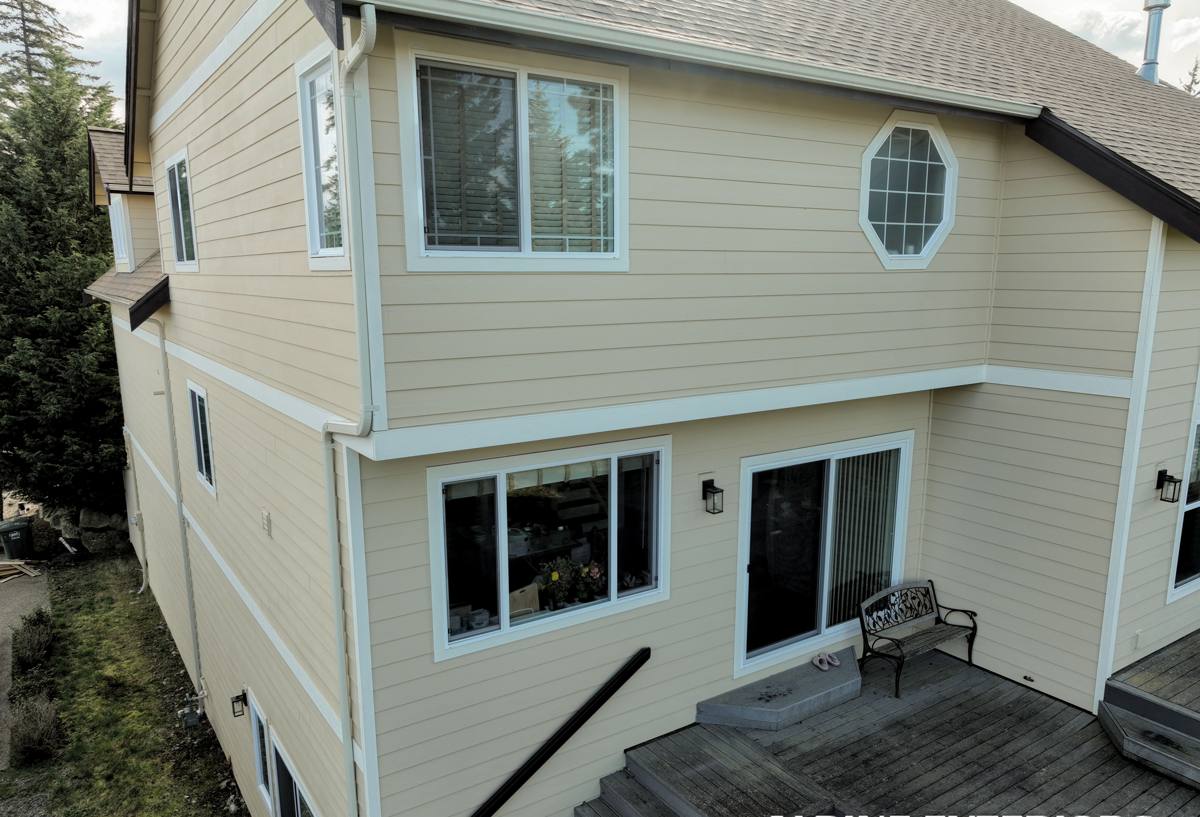
What Local Homes Actually Need From a Deck
Everson properties range from older farmhouses to newer builds along the river valley, and most share a few things in common: exposure to standing moisture in low spots, shaded yard areas where moss and algae take hold fast, and long stretches of the year where a deck surface simply doesn't fully dry out between rains. That changes what "correct" construction looks like here compared to a deck built in a drier climate.
- Ledger flashing that actually sheds water away from the house wall, not just a bead of caulk
- Joist spacing tight enough to support the specific decking material chosen — composite and wood have different span requirements
- Footings set below frost depth and sized for our soil conditions, not a generic minimum
- Fasteners and hardware rated for coastal-influenced, high-moisture environments
- A surface finish or material that resists moss and algae growth in shaded areas
- Airflow underneath the deck so the structure can actually dry out between storms
Where We See the Most Problems
The most common failure point we find on older Everson decks is the ledger board connection — where the deck attaches to the house. If that flashing detail was done wrong or skipped, water works its way behind the siding and rots the rim joist from the inside out, often long before anything looks wrong on the surface. The second most common issue is undersized or poorly placed footings that shift slightly with our wet-dry soil cycles, leading to a deck that feels solid when new but develops a noticeable bounce or lean within a few years.
Framing and Footings: Getting the Foundation Right
Everything above the framing is cosmetic compared to what's underneath it. We size footings based on the actual load the deck will carry — furniture, hot tubs, snow load in a hard winter — and set them below frost depth so they don't heave. For ledger-attached decks, proper flashing is non-negotiable: a continuous flashing membrane that directs water out and away from the house, installed before the ledger board goes up, not caulked in afterward as an afterthought.
Joist layout matters more in a wet climate than people expect. Tighter joist spacing reduces deck deflection over time and gives composite or PVC decking the support it's rated for — installing those materials on joist spacing meant for solid wood is one of the most common warranty-voiding mistakes we see from past installs in this area.
Choosing Decking Material for a Wet, Mossy Climate
There's no single "best" decking material — every option is a trade-off between upfront cost, maintenance, and how it behaves under constant moisture. Here's how the common choices actually compare for a deck that will spend half the year damp:
| Material | Moisture Behavior | Moss/Algae Resistance | Maintenance |
|---|---|---|---|
| Pressure-treated wood | Absorbs and releases moisture; needs sealing to control swelling and checking | Low — moss takes hold in shaded, damp spots without upkeep | Annual cleaning and re-sealing recommended |
| Cedar | Naturally moisture-resistant but still moves seasonally | Moderate — better than treated pine but still needs cleaning | Periodic sealing to maintain color and resistance |
| Composite | Doesn't absorb water into the core; surface texture matters for grip | Better, but shaded areas can still develop surface algae | Occasional washing; no sealing or staining needed |
| PVC/capped polymer | Fully moisture-sealed surface, most stable in wet-dry cycling | Best resistance of the common options | Lowest — soap and water cleaning only |
For a shaded Everson lot near trees or the river bottom, we usually steer homeowners toward composite or capped polymer if budget allows, simply because the maintenance burden of keeping wood clean and sealed in a shaded, damp yard is real and ongoing. That said, plenty of homeowners are happy with cedar or treated wood as long as they go in knowing the upkeep schedule and budget for it.
Railings, Fasteners, and Hardware
Hardware is where cheap decks fail early. Standard zinc-coated fasteners corrode faster in our humidity and can react badly with certain treated lumber chemicals, leaving rust streaks and weakened connections within a few seasons. We use fasteners and structural hardware rated for the wood treatment and moisture exposure involved, not whatever is cheapest at the hardware store that week.
Railings deserve the same attention. A railing post that's undersized or poorly anchored is both a maintenance headache and a real safety issue once wood movement or footing settlement starts working against it. We anchor posts through the framing, not just surface-mounted to decking boards, so the railing stays solid as the structure ages.
Moss, Mildew, and Long-Term Maintenance
Moss season in Whatcom County isn't a minor inconvenience — a neglected deck surface can go slick and dangerous within a single wet winter, especially in shaded corners or under overhangs. Design choices made during construction make a real difference here: proper board spacing for drainage, orientation that allows some sun exposure where possible, and a decking material chosen with the shade pattern of the yard in mind.
Once the deck is built, a simple seasonal routine keeps most problems from starting:
- Clear leaves and debris from between boards before fall rains set in
- Rinse or scrub shaded areas where moss tends to establish first
- Check ledger flashing and fastener heads once a year for early signs of moisture intrusion
- Reseal wood decking on the manufacturer's recommended schedule, not "when it looks bad"
- Keep gutters and downspouts clear so runoff isn't draining directly onto the deck
How Our Process Works
We start with an on-site look at the specific conditions of the property — sun exposure, drainage, soil, and how the deck will actually be used. From there we walk through material options honestly, including the maintenance trade-offs, before anything is quoted. Framing and footing plans are sized to the site, not pulled from a generic template, and ledger flashing is done as a full water-management detail rather than a quick caulk seal.
During construction we handle permitting and inspections where required, and we build in the airflow and drainage details that matter for longevity here — not just what's visible from the yard. When the deck is finished, we walk the homeowner through the maintenance schedule for whatever material was chosen, so there are no surprises in year two or three.
Why Hiring Local Experience Matters
A deck built to a generic national standard can still fail early in this climate if the crew hasn't dealt with our specific combination of rain volume, humidity, and moss growth. Crews who already work in Everson and the surrounding Whatcom County area know which flashing details actually hold up here, which fastener grades corrode too fast, and which shaded yard layouts need a different material recommendation than a sunny lot across town would.
That local pattern recognition is the difference between a deck that needs attention in year three and one that's still solid well past a decade — and it's the reason we build every deck around the actual conditions of the property, not a one-size-fits-all spec.
Questions to Ask Any Deck Contractor Before You Hire
- How do you flash the ledger board connection, and can you explain why?
- What footing depth and sizing will you use for this specific lot?
- What fastener and hardware grade is rated for this wood treatment and our moisture levels?
- What's the realistic maintenance schedule for the decking material you're recommending?
- Are you pulling permits and scheduling inspections as required?
If you're planning a new deck or replacing one that's showing its age in Everson, we're happy to take a look and walk through what makes sense for your property. Reach out for a free, no-pressure estimate using the form below.