 Blaine Siding
 Roofing in Everson's Wet, Mossy Climate
Everson sits in the same Whatcom County weather pattern that shapes every roof from Blaine to the Nooksack Valley: long stretches of low-intensity rain from fall through spring, damp air that never fully dries out between storms, and enough marine influence off the Strait of Georgia and Puget Sound to keep humidity high even on the clear days. That combination is hard on asphalt shingles in ways that don't show up on a warranty sheet. It's not one big storm that wears a roof out here — it's months of saturated air, shaded north slopes that never get a chance to dry, and moss that quietly works its way under shingle tabs a little more each winter.
An asphalt shingle roof built for this area needs to handle sustained moisture, not just heavy rainfall totals. That changes decisions about underlayment, ventilation, flashing, and even which shingle line makes sense — and it's why a roof spec'd for a drier region often underperforms once it's installed on a Whatcom County home.
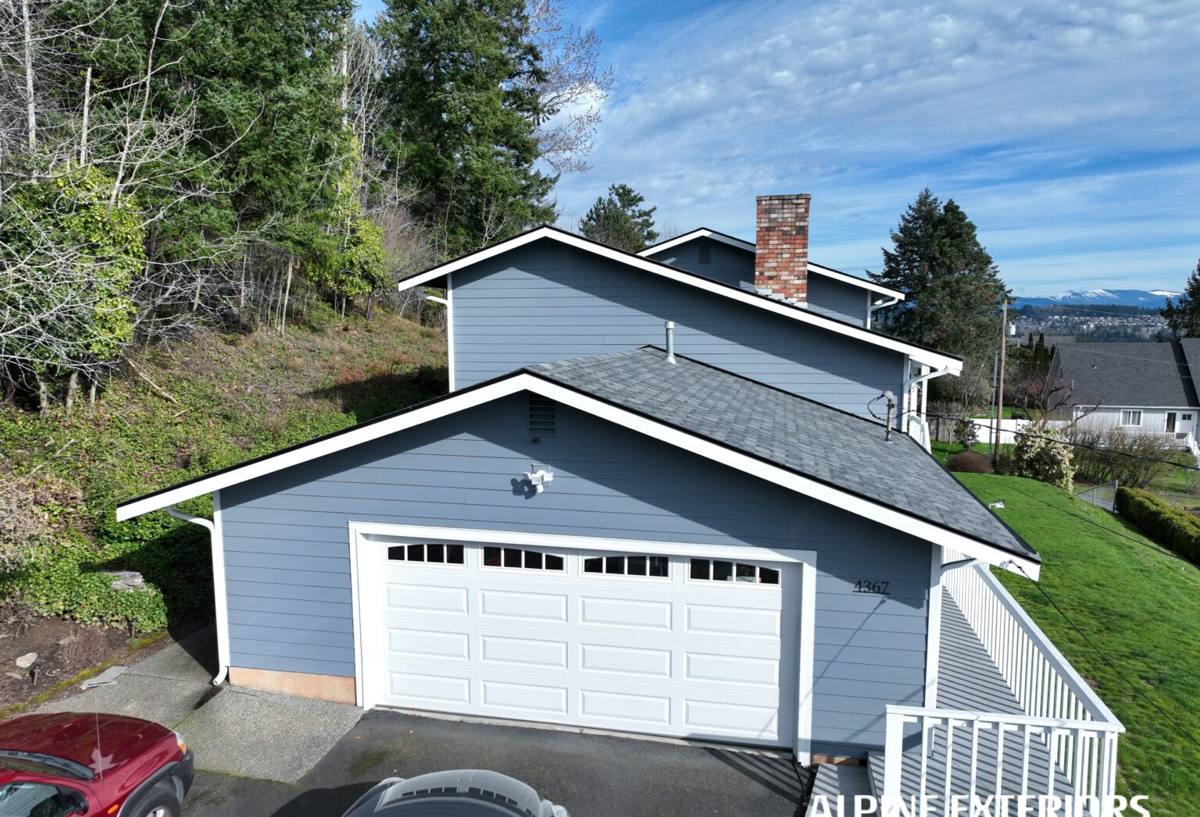
What Local Roofs Are Actually Up Against
Driving Rain and Wind-Driven Moisture
Rain here doesn't always fall straight down. Wind off the water pushes it sideways into eaves, valleys, and wall-roof transitions, which is exactly where a lot of roof leaks start. Flashing details and underlayment coverage matter more in this kind of weather than shingle brand does.
Moss and Organic Growth
Shade from mature trees, combined with roofs that stay damp for days at a time, gives moss and algae everything they need to take hold. Once moss gets a foothold at the shingle edges, it holds moisture against the roof deck, lifts tabs, and accelerates granule loss — turning a cosmetic problem into a structural one if it's ignored long enough.
Salt-Influenced Marine Air
Homes closer to the water around Blaine and the Semiahmoo area deal with a more direct dose of salt air, which can be harder on exposed metal flashing, fasteners, and vents over time. Everson is further inland, but the same regional marine weather system still keeps humidity elevated and drying times slow, which is the bigger factor for shingle longevity here.
Temperature Swings and Freeze-Thaw
Whatcom County winters aren't brutally cold, but they do dip below freezing often enough that trapped moisture in a poorly ventilated attic or a saturated shingle can freeze, expand, and cause granule loss or cracking. It's a slower, quieter form of damage than a hard freeze climate sees, but it adds up over a roof's life.
Signs an Everson Roof Needs a Closer Look
- Dark streaking or green-black patches, especially on north- and shade-facing slopes
- Moss visible along shingle edges, in valleys, or near the ridge
- Granules collecting in gutters or at downspout outlets
- Shingle tabs that look curled, cupped, or lifted at the corners
- Soft or spongy spots when walked (a sign of deck moisture underneath)
- Daylight or water stains visible in the attic, especially near valleys and chimneys
- A roof past 18-20 years old that hasn't had a professional inspection recently
None of these on their own mean a full replacement is due. But in this climate, moss and granule loss especially tend to accelerate once they start, so catching them early is what keeps a repair a repair instead of a replacement.
What a Correct Asphalt Shingle Installation Involves
Asphalt shingle roofing looks simple from the ground, but the parts nobody sees are what determine whether a roof handles this climate for its full expected life or starts leaking in year eight.
Deck Inspection and Prep
Before anything goes down, the roof deck gets checked for soft spots, delamination, or damage from prior leaks. Installing new shingles over a compromised deck just hides the problem — it doesn't fix it.
Ice and Water Shield at Vulnerable Areas
Valleys, eaves, and roof-to-wall transitions get self-adhering waterproof membrane, not just felt. These are the spots where wind-driven rain and ice damming (on the occasional cold snap) cause the most damage, so this is not a place to cut corners.
Synthetic Underlayment Across the Field
A full synthetic underlayment layer gives the roof a second line of defense if wind or ice ever gets under a shingle tab — which, in a region with sustained wet weather, is a matter of when, not if, over a roof's lifespan.
Proper Flashing at Every Penetration
Chimneys, plumbing vents, skylights, and sidewalls all need step flashing or counter-flashing installed correctly, not just caulked over. Caulk fails; properly lapped flashing sheds water the way it's supposed to for decades.
Balanced Attic Ventilation
Intake at the eaves and exhaust at the ridge keep air moving through the attic, which controls moisture and temperature swings under the deck. Poor ventilation is one of the most common reasons shingles fail early in this climate, and it's also one of the most common things missed on a rushed install.
Correct Nailing Pattern and Exposure
Every shingle line has a manufacturer-specified nail pattern and exposure. Getting this wrong doesn't just risk blow-offs in a windstorm — it can void the manufacturer's warranty outright, which matters a lot more than it sounds like until you actually need it.
Choosing a Shingle for This Climate
Not every asphalt shingle product performs the same way under sustained damp conditions. For Everson homes, we generally steer toward architectural (laminate) shingles with algae-resistant granules, and we're upfront about why.
| Factor | 3-Tab Shingles | Architectural Shingles |
|---|---|---|
| Typical lifespan | 15-20 years | 25-30+ years |
| Moss/algae resistance | Standard granules only, unless upgraded | Usually available with copper- or zinc-infused algae-resistant granules |
| Wind rating | Lower, single-tab design | Higher, laminated construction |
| Upfront cost | Lower | Moderate |
| Best fit for this climate | Budget projects, shorter hold periods | Long-term ownership, shaded or moss-prone lots |
Algae-resistant granules matter more here than in drier parts of the state — they slow the staining and organic growth that Whatcom County's damp, shaded conditions encourage. It's a modest cost difference for a meaningful reduction in moss and streaking over the roof's life.
Our Process, Start to Finish
- Inspection and estimate — we walk the roof (or use a drone where pitch or access makes that safer), check the deck, ventilation, and flashing, and give you a clear written scope.
- Material selection — we walk through shingle options and color choices suited to the home and budget, with honest trade-offs, not upselling.
- Tear-off and deck check — old roofing comes off down to the deck so we can actually see what's underneath before covering it back up.
- Underlayment, flashing, and ventilation install — the parts that determine how the roof performs over the next two decades, done to manufacturer spec.
- Shingle installation — correct exposure and nailing pattern, checked as we go, not just at the end.
- Cleanup and magnetic sweep — job site and yard cleared of debris and stray fasteners.
- Final walkthrough — we review the finished roof with you before calling the job done.
Moss Prevention and Roof Maintenance
A well-installed roof still benefits from basic upkeep in this climate. A little attention once or twice a year goes a long way toward hitting a shingle roof's full expected lifespan.
- Keep overhanging branches trimmed back so roof surfaces get more light and air movement
- Clear gutters and valleys of needles and leaf debris before the fall rains set in
- Have moss physically removed (not just chemically treated) if it establishes on shingle edges
- Check attic ventilation isn't blocked by insulation at the eaves
- Schedule a professional inspection after any major windstorm
- Address small leaks or lifted shingles promptly — sustained moisture is what turns small damage into deck rot
Why a Crew That Already Works This Area Matters
Roofing crews that work Whatcom County regularly aren't guessing at what this climate does to a roof — they've seen it firsthand, across dozens of homes with the same rain patterns, the same shaded lots, and the same moss pressure. That experience shows up in decisions a homeowner never sees directly: where extra ice-and-water membrane gets added, how ventilation is balanced for a specific roofline, which flashing detail gets extra attention at a wall transition. It's the difference between a roof that's technically up to code and one that's actually built for where it sits.
If you're weighing a repair against a full replacement, or just want an honest read on how much life is left in your current roof, we're glad to take a look. Fill out the form below for a free, no-pressure estimate — we'll tell you what we actually see, not just what sells a job.