 Blaine Siding
 Why Blaine Harbor Decks Wear Out Faster Than Inland Decks
If you own a home near Blaine Harbor, you already know your deck doesn't age like a deck twenty miles inland. The combination of salt-laden air off the water, near-constant driving rain through fall and winter, and a moss season that can stretch from October into May puts a different kind of stress on outdoor structures. Fasteners corrode faster. Wood fibers stay damp longer between dry spells. And anything with a north or west exposure toward the water tends to grow moss and algae on ledger boards, stair treads, and railing caps within a season or two of neglect.
A deck built without that environment in mind — standard hardware, minimal ventilation underneath, butt joints that trap water — will show problems years before it should. Soft spots near the house, rust bleeding through fastener heads, and slick green film on the walking surface are the most common calls we get from Blaine Harbor homeowners.
What "Correct" Looks Like for a Harbor-Area Deck
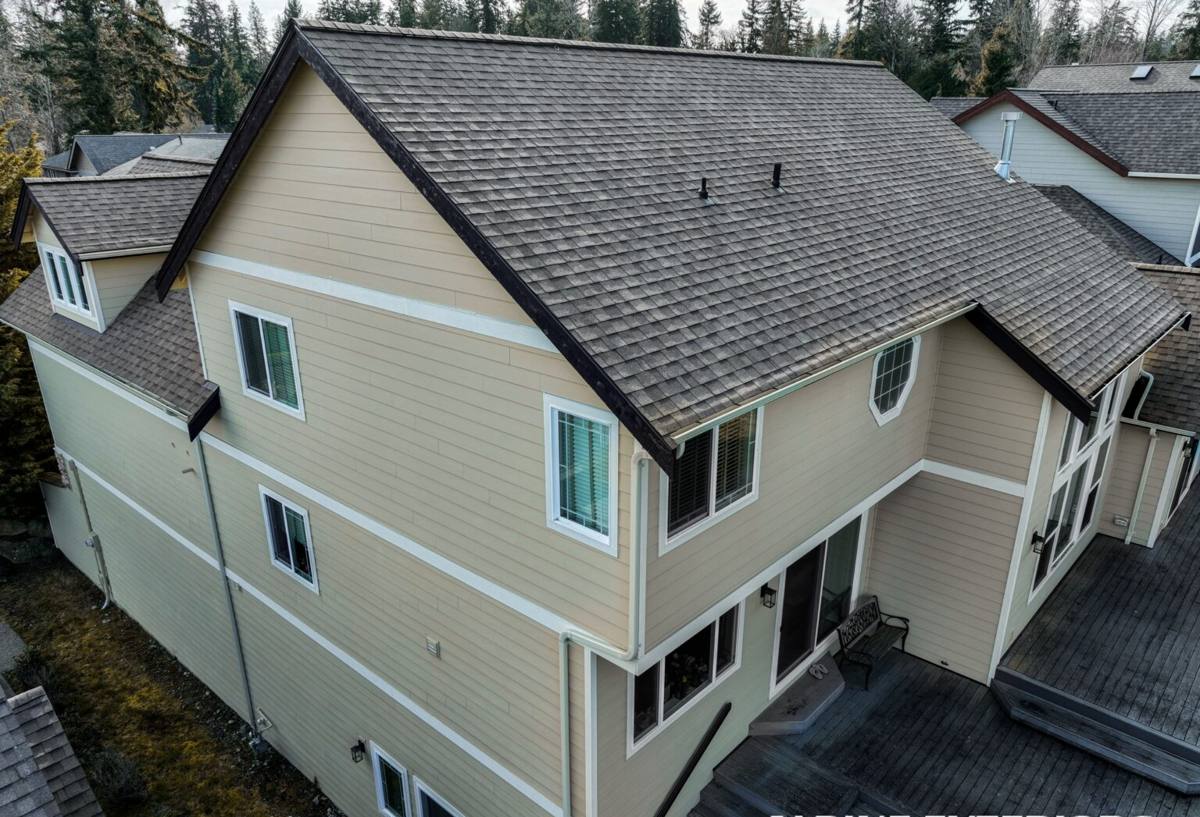
Deck replacement done right for this location isn't about upgrading to a fancier material — it's about getting the structural and drainage details right so whatever surface you choose actually lasts. That starts below the decking, not on top of it.
Framing and Fasteners
Salt air accelerates corrosion on standard galvanized hardware, especially within a mile or two of open water. We frame with stainless steel or heavy-duty coated fasteners rated for coastal exposure, and we use structural connectors (joist hangers, post bases, ledger flashing) rated for the same conditions. This costs more upfront than hardware-store hardware, but it's the single biggest factor in whether a deck's frame is sound at year 15 or rusted and loose at year 7.
Ledger Flashing and Water Management
Where a deck attaches to the house, the ledger board and its flashing are the most failure-prone connection on the entire structure — and the hardest to inspect once decking is installed over it. In a climate with this much driving rain, we flash that connection so water is directed away from the house framing, not channeled behind the ledger where it can rot sheathing unseen for years.
Ventilation and Drainage Underneath
Low-clearance decks and decks with skirting that blocks airflow are common in this area, and they're also the ones that stay damp longest after a storm. Moss and mildew thrive on constant moisture, not just rain itself. We build in gaps and clearance so air moves under the deck, and we grade the ground below to shed water instead of pooling it against posts and footings.
Choosing a Decking Material for This Climate
There's no single "best" decking material — there's a best material for your budget, your maintenance tolerance, and how close you are to the water. Here's how the common options actually perform in a Blaine Harbor environment:
| Material | Moisture/Salt Behavior | Maintenance | Typical Lifespan Here |
|---|---|---|---|
| Pressure-treated lumber | Prone to cupping and checking with repeated wet/dry cycles; needs sealed cuts and fasteners rated for treated wood chemicals | Annual cleaning, re-staining every 2-3 years | 10-15 years with upkeep |
| Cedar | Naturally rot-resistant but still absorbs moisture; graying and moss growth if not maintained | Cleaning and oil/stain every 1-2 years | 15-20 years with consistent care |
| Composite decking | Doesn't rot or absorb water like wood; some early-generation boards trapped moisture at the core in constant-damp spots | Periodic washing to prevent surface algae; no staining | 25+ years, varies by brand and installation |
| PVC/capped polymer | Fully sealed surface, best resistance to salt air and standing moisture | Occasional washing only | 25-30+ years |
We don't push one material on every job. A cedar deck with a water view can be the right call if you're willing to maintain it — the tradeoff is real upkeep, not a flaw we're hiding. Composite and capped polymer boards make sense when you want to stop refinishing a deck every couple of years, especially on shaded, north-facing decks where moss is a constant fight. We'll walk through the honest tradeoffs for your specific deck's exposure rather than defaulting to whatever's easiest to install.
A Note on Railings and Fasteners
Railing posts and their connections take direct wind-driven rain and are often the first thing to show rust or rot on a harbor-facing deck. We pay particular attention to post-to-frame connections and cap flashing on top rails, since a loose railing post is both a maintenance headache and a safety issue.
Signs Your Blaine Harbor Deck Needs Replacement, Not Repair
- Soft, spongy decking near the house-side ledger connection
- Rust streaks running down from fastener heads or hardware
- Posts that wobble or have visibly separated from footings
- Persistent moss or algae that returns within weeks of cleaning
- Gaps between boards that have widened significantly from warping
- Visible daylight or gaps at the ledger-to-house connection
- A deck more than 15-20 years old that's never had hardware inspected or replaced
Any one of these alone might be a repair. Several together, especially involving the ledger connection or main support posts, usually means the frame has been compromised long enough that patching individual boards won't fix the underlying problem.
Our Replacement Process
1. On-Site Assessment
We start by pulling a few boards and checking the frame, ledger flashing, and post footings directly rather than guessing from the surface. This tells us whether you're looking at a full tear-down or whether the substructure is salvageable and only the decking and railings need replacing.
2. Material and Design Conversation
Based on your deck's exposure — how much direct rain and salt spray it takes, how much shade it sits in, how much maintenance you actually want to do — we'll recommend a decking material and go over the cost and lifespan tradeoffs in plain terms.
3. Demolition and Disposal
Full removal of the old structure down to framing (or down to grade, if the frame is also being replaced), with debris hauled off — no leaving materials in the yard.
4. Framing, Flashing, and Structural Work
New or reinforced framing with corrosion-resistant hardware, correct ledger flashing, and proper post footing depth for our soil and frost conditions. This is the part of the job that determines how long everything above it lasts.
5. Decking, Railings, and Finish Work
Installed to the manufacturer's spacing and fastening specs — under-spacing boards is a common shortcut that causes buckling once the material takes on and releases moisture through the seasons.
6. Final Walkthrough
We walk the finished deck with you, point out any care requirements specific to your chosen material, and answer questions before we consider the job done.
Why a Crew That Already Works Blaine Harbor Matters
Deck construction isn't identical everywhere in Whatcom County. A crew that mostly builds inland doesn't necessarily think about salt-air hardware corrosion, or design ledger flashing assuming this much sustained driving rain, or plan for moss growth on shaded, water-facing surfaces as a given rather than an afterthought. Those are details that show up as callbacks two or three years later, not on installation day — which is exactly when they're most expensive and disruptive to fix.
Working regularly in this specific area also means we're familiar with the county's permitting process for deck replacement and rebuilds, and we know which structural and hardware choices actually hold up here versus which ones look fine on a spec sheet but fail early in this climate.
What This Typically Involves Cost-Wise
Deck replacement costs vary widely based on size, whether the frame needs full replacement, decking material choice, and railing style. Rather than quote a number that won't reflect your actual deck, here's what tends to move the price most:
| Cost Factor | Why It Matters |
|---|---|
| Frame condition | A sound frame that only needs new decking costs far less than a full tear-down and rebuild |
| Decking material | Pressure-treated is the least expensive upfront; capped polymer and premium composites cost more but need less long-term upkeep |
| Deck size and height | Elevated decks and larger footprints require more framing, more footings, and more labor |
| Railing style | Cable, glass, or custom railing systems cost more than standard wood or composite balusters |
| Access for equipment | Tight side yards or waterfront lots with limited access can add labor time |
We give firm, itemized quotes after seeing the actual deck and site — not ballpark guesses over the phone.
Maintaining Your New Deck in This Climate
- Clean debris out of gaps between boards each fall before the wet season sets in
- Rinse off salt residue and organic buildup a few times a year, more often if you're close to the water
- Check railing post connections annually for looseness
- Keep gutters and downspouts near the deck clear so runoff isn't dumping extra water onto or under it
- Address any moss regrowth promptly rather than letting it establish — it's far easier to prevent than remove
If you're weighing a deck replacement for your Blaine Harbor property, we're happy to take a look and give you a straight assessment of what your deck actually needs versus what it doesn't. Reach out for a free, no-pressure estimate using the form below.