 Blaine Siding
 Deck Building for the Nooksack Area, Built Around Blaine's Weather
A deck in the Nooksack area near Blaine has a harder job than a deck built somewhere dry and inland. Whatcom County's combination of salt-tinged coastal air, long stretches of driving rain, and a moss season that can run half the year means the structure, the surface, and even the fasteners holding it together all have to be chosen and installed with that reality in mind. A deck that would be perfectly fine in a drier climate can start showing rot, soft spots, or slick moss growth within a couple of seasons out here if it was built with generic assumptions instead of local ones.
We work this area regularly, which matters more than it sounds. Building a deck that holds up near Blaine isn't about using fancier materials across the board — it's about knowing which details are worth spending on and which are just marketing. This page walks through what a correctly built deck for this specific area actually involves, from the ground up.
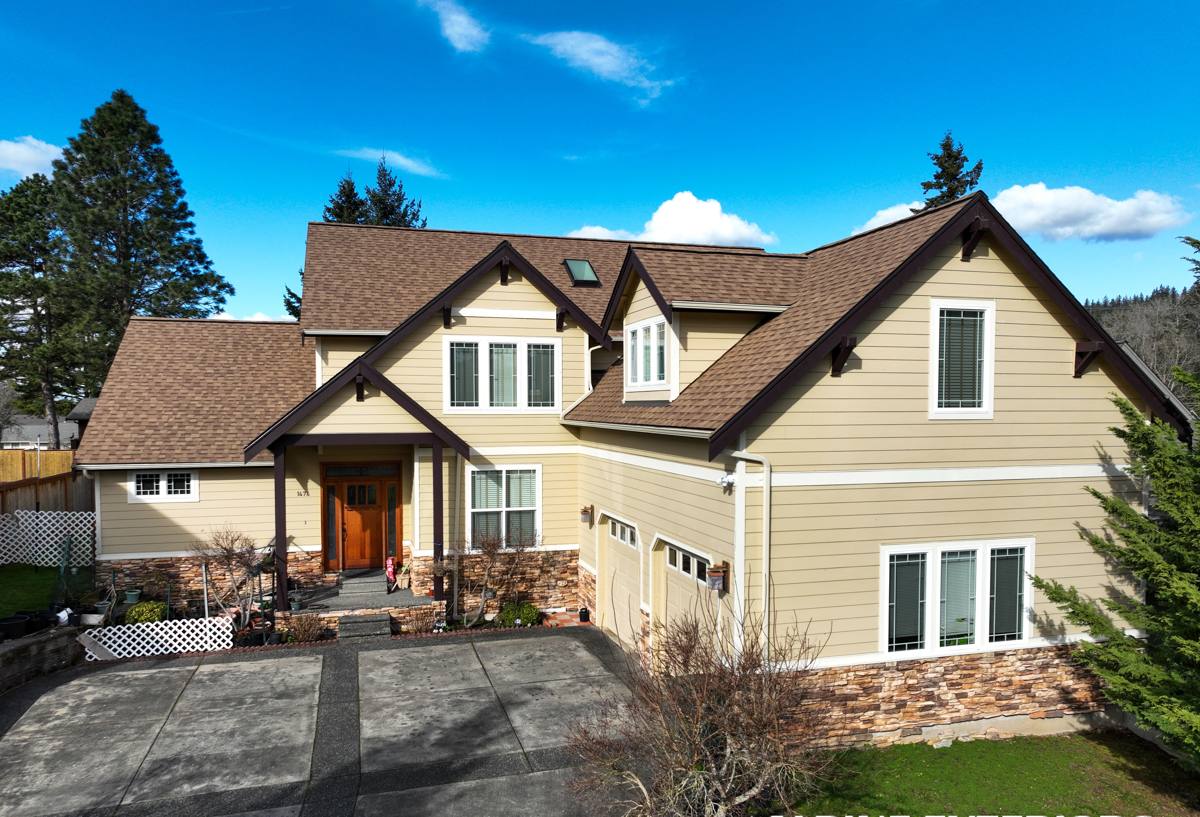
What the Local Climate Actually Does to a Deck
Three climate factors do most of the damage to decks in this part of Whatcom County, and they don't act alone — they compound each other.
Salt Air
Proximity to the water means airborne salt settles on exposed metal and works into wood grain over time. Salt speeds up corrosion on fasteners and hardware, and it can accelerate the breakdown of some finishes faster than inland weathering alone would. This is why fastener choice on a coastal-influenced build matters more here than in a lot of the country.
Driving Rain
Rain that comes in at an angle, pushed by wind off the water, gets into places vertical-only rain never reaches — the undersides of rail caps, the backs of fascia boards, joist hangers, and any spot where two pieces of wood meet without a gap or flashing. Standing or trapped moisture is the actual enemy, not rain exposure itself.
Moss Season
Cool, damp, low-light stretches that run long in this region are exactly what moss and algae need to take hold. On a deck surface, moss isn't just cosmetic — it holds moisture against the decking material and makes the surface slick and genuinely dangerous underfoot, especially on stairs.
None of these three factors is unique to Nooksack specifically, but together they're a bigger factor here than in most of the country, and a deck built without them in mind will show it early.
Choosing the Right Decking Material
There's no single "correct" decking material — there's a correct material for a given budget, maintenance appetite, and how much moss and moisture exposure the site gets. Here's how the common options actually compare for this climate.
| Material | Upfront Cost | Maintenance Needed | Moisture/Moss Behavior |
|---|---|---|---|
| Pressure-treated wood | Lowest | Annual cleaning, periodic sealing | Prone to moss without upkeep; needs re-sealing to shed water well |
| Cedar | Moderate | Regular sealing/staining to hold color and resist moisture | Naturally more rot-resistant than PT pine, but still needs finish maintenance in this climate |
| Composite/PVC decking | Highest | Occasional washing, no sealing or staining | Doesn't absorb moisture like wood, but can still grow surface moss/algae if not cleaned — texture matters for slip resistance when wet |
We won't tell a homeowner composite is the only "real" option — plenty of well-maintained wood decks in this area last for decades. What we will say honestly: if low maintenance is the priority and the budget allows it, composite removes the sealing/staining cycle entirely. If wood is the choice, the sealing schedule isn't optional here the way it might be in a drier climate — skipping a year matters more.
What a Correctly Built Substructure Involves
The decking surface is what people see, but the substructure is what determines whether the deck is still safe in fifteen years. In this climate, the framing details are where most long-term failures actually start.
- Ledger board attachment with proper flashing to keep water from getting behind the house band board — this is one of the most common failure points on older decks in wet climates
- Joist hangers and structural hardware rated for the fastener/hardware combination being used, to avoid galvanic corrosion between dissimilar metals
- Joist tape or flashing on top of joists so deck screws don't create an open entry point for water into the joist itself
- Proper spacing beneath ground-level decks for airflow, since trapped ground moisture under a low deck accelerates rot from below
- Footings set to local frost depth and soil conditions, not just "deep enough to look right"
None of these are visible once the deck is finished, which is exactly why they're the details some builders skip. They're also the details that determine whether a deck needs major repair in year eight or is still solid in year twenty-five.
Fasteners, Flashing, and the Small Details That Prevent Rot
Given the salt air discussed earlier, fastener selection isn't a minor spec choice here — it affects how long the hardware holding the deck together actually lasts. Stainless steel or high-grade coated fasteners rated for coastal-influenced exposure cost more than standard hardware, but replacing corroded fasteners on a finished deck is a much bigger job than paying the difference up front.
Flashing is the other detail worth understanding. Any spot where wood meets wood, or wood meets the house, is a potential water trap unless it's flashed or gapped correctly. This includes the ledger-to-house connection, rail post bases, and stair stringer connections. A deck can look identical to one built without proper flashing for the first two or three years — the difference shows up later, which is exactly why it's tempting for a builder in a hurry to skip it.
Our Deck Building Process
Every deck we build follows the same general sequence, adjusted for the specific site and material choice:
- On-site assessment — we look at drainage, sun/shade exposure, existing structure (for replacements), and how the deck will actually be used before recommending materials
- Design and material selection — sized and specified for the site, with an honest conversation about wood versus composite trade-offs for the budget
- Permitting — pulled and handled through the appropriate local jurisdiction before work starts, not after
- Demolition and disposal — for replacement projects, full removal of the old structure including hardware
- Footings and framing — built to code with the moisture-management details above, not shortcuts
- Decking, railing, and stairs — installed with attention to fastener pattern, expansion gaps (critical for composite), and slip-resistant surface finishing where needed
- Final walkthrough — we go over the finished deck and what maintenance it needs going forward, in plain terms
We don't skip the permitting step even when it slows things down — an unpermitted deck can become a real problem at resale, and it's not worth the shortcut.
Railings, Stairs, and Code Considerations
Railing height, baluster spacing, and stair geometry aren't just style choices — they're governed by code, and it's worth knowing the basics before deciding on a design.
Guardrails are generally required above a certain deck height and have minimum height and maximum gap requirements between balusters, specifically to prevent falls. Stair stringers need consistent rise and run — uneven steps are one of the more common causes of falls on outdoor stairs, and it's an easy thing to get wrong without careful layout. In a climate where stairs and rail surfaces can get slick from rain or moss, stair tread material and surface texture deserve real consideration, not an afterthought after the rest of the deck is designed.
A Quick Checklist Before You Hire
- Ask whether the builder pulls permits themselves or expects the homeowner to handle it
- Ask what fastener grade they use and why, given the coastal exposure in this area
- Ask how they flash the ledger board connection to the house
- Ask for a clear maintenance expectation for whatever material you choose, before you commit to it
- Ask how they handle drainage and airflow for low or ground-level decks
Maintenance: What to Expect Living With a Deck Here
Whatever material is chosen, a deck in this climate isn't a build-it-and-forget-it feature. Wood decking generally needs a cleaning and inspection at least once a year, with re-sealing or staining on a multi-year cycle depending on sun exposure and the product used. Composite decking needs far less — periodic washing to keep surface grime and algae from building up is usually enough — but "low maintenance" doesn't mean "no maintenance," especially in a climate with a long moss season.
Gutters and nearby drainage matter more than people expect. A deck positioned under a roofline without proper gutter management will take on more water than one that isn't, regardless of what the deck itself is built from. Keeping debris out of gaps between boards also matters — trapped leaves and needles hold moisture against the decking surface and give moss something to grab onto.
Why It Matters That We Already Work This Area
A deck builder who mostly works inland, drier regions can still build a technically sound deck on paper — but the material recommendations, fastener grade, and moisture-management details that matter most in a coastal, high-rain, moss-prone climate like this one aren't always top of mind for someone who doesn't build here regularly. Working the Nooksack area and greater Blaine region consistently means we're not guessing about how a given material or detail actually holds up locally over a few winters — we see the results on decks we've already built.
That local track record shapes real decisions on every project: which fastener grade we default to, how we flash a ledger board, and how honest we are about the maintenance a given material actually requires once the driving rain and moss season set in.
Get a Free, No-Pressure Estimate
If you're planning a new deck or replacing one that's showing its age, we're happy to take a look and give you a straightforward assessment — what your site needs, what material makes sense for your budget and maintenance preference, and a clear estimate with no pressure attached. Use the form below to get started.