 Blaine Siding
 Windows Built for the Dakota Creek Microclimate
Homes along Dakota Creek and the surrounding Blaine waterfront sit in one of the harder spots in Whatcom County to keep a window system healthy for the long haul. You've got salt air rolling in off the water, driving rain that comes sideways more often than straight down, and a moss season that stretches for months in the shaded, damp corners of a lot. None of that is unusual for this part of Washington, but it does mean a window installation here has to account for things a contractor working inland might never think about twice.
Salt Air and Hardware Fatigue
Salt in the air accelerates corrosion on anything metal — hinges, cranks, locks, screws, and the fasteners holding a window frame to the wall. Over years, that corrosion is what causes windows to bind, locks to stick, or hardware to fail well before the glass or frame itself gives out. A window rated and finished for coastal exposure holds up here. One that isn't will show hardware problems years earlier than it would fifteen miles inland.
Driving Rain and Wind-Driven Moisture
Wind off the water pushes rain into places gravity alone wouldn't reach — up under trim, sideways into gaps around a frame, into any seam that isn't properly lapped or sealed. This is the main reason window failures on Dakota Creek properties tend to show up as water stains on interior sills or soft spots in the wall below a window, rather than as a cracked pane. The glass is rarely the problem. The flashing and sealing around it usually is.
A Long Moss Season
Shaded walls and north-facing exposures in this part of Blaine stay damp for a good part of the year, and that's exactly the environment moss and mildew need. Around windows specifically, that moisture holds against trim and caulk lines longer than it would on a wall that dries out in the sun, which speeds up wear on sealants and wood trim if the original install didn't plan for drainage.
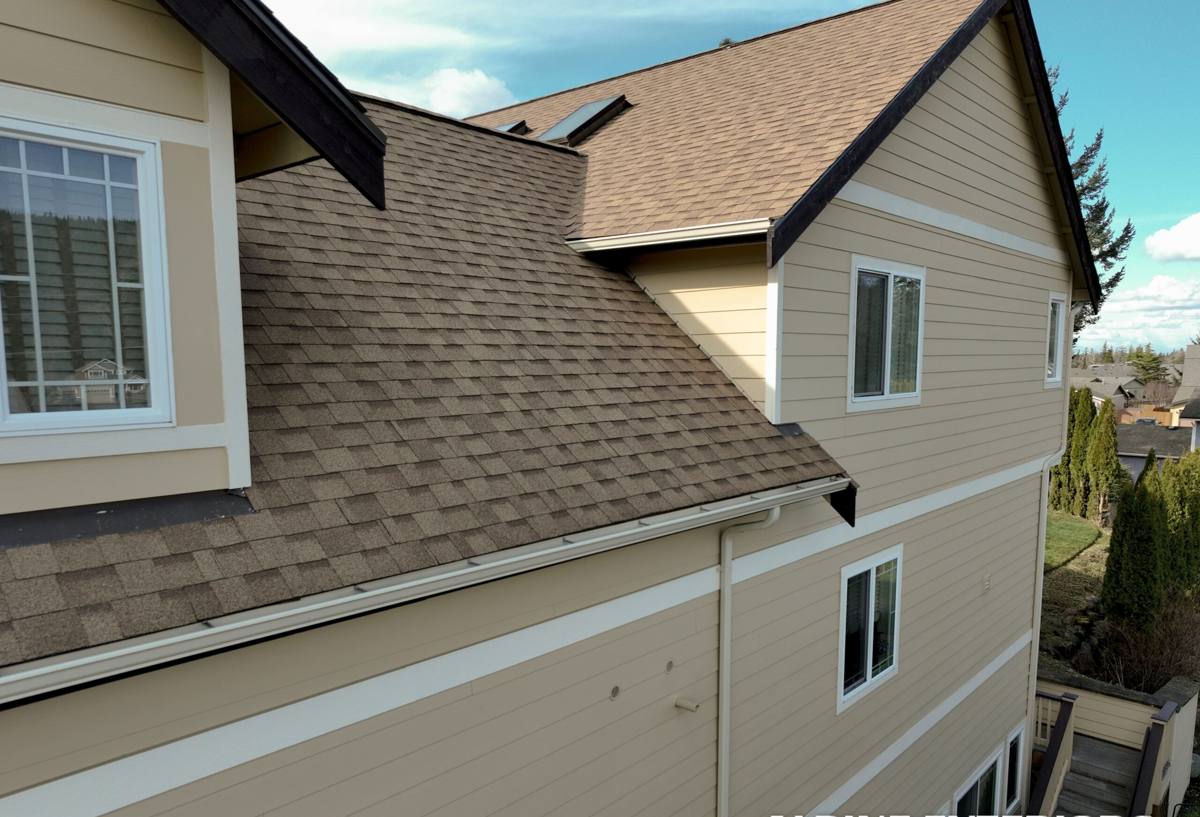
What a Correct Window Installation Actually Involves
A window installation is judged by what you can't see once the trim goes back on. Anyone can set a window in an opening and caulk around the edges — that's not the same as an installation that will hold up through a few decades of Whatcom County winters.
Flashing Comes First
Before a new window ever goes in, the rough opening needs a proper flashing sequence — sill pan, side flashing, and head flashing installed in the right order so that any water that does get past the window sheds back outward instead of running down into the wall framing. This step is the single biggest factor in whether a window installation lasts on a property exposed to wind-driven rain.
Sealants and Fasteners Rated for This Exposure
Not every sealant or fastener is built to hold up in salt air. We use sealants rated for exterior, coastal-adjacent exposure and fasteners that resist corrosion, rather than whatever is cheapest at the local supply house. It costs a little more up front and saves a callback five years down the road.
Sill Pans and a Clear Weep Path
Every window needs a way for the small amount of moisture that inevitably gets past the outer seal to drain back out rather than pool at the sill. A sloped sill pan and clear weep path are non-negotiable details on a job done right — and they're the details that get skipped on a rushed install.
Insulation and Shimming
Gaps between the window frame and the rough opening need to be shimmed square and insulated properly — usually with a low-expansion foam rather than packed too tight — so the frame doesn't bow and the window operates smoothly for the life of the install.
Choosing a Window Frame Material for a Dakota Creek Home
Frame material matters more here than it would on a home set back from the water. Below is how the common options actually perform under salt air, driving rain, and a long damp season.
| Frame Material | Salt Air / Corrosion | Moisture Behavior | Maintenance | Typical Lifespan |
|---|---|---|---|---|
| Vinyl | Does not corrode; hardware quality still matters | Handles moisture well; no rot risk | Low — occasional cleaning | 20-30+ years |
| Fiberglass | Excellent resistance, dimensionally stable | Very good; expands/contracts with the wall assembly | Low | 30-40+ years |
| Wood-clad | Cladding protects wood, but seams need monitoring | Good if sealed and maintained; vulnerable if seals fail | Moderate — check cladding seams and interior wood yearly | 20-30 years with upkeep |
| Aluminum | Prone to corrosion and pitting in salt air over time | Conducts moisture and cold; condensation risk | Moderate to high | 15-25 years in coastal exposure |
We don't push one brand or material on every job. What we do insist on is matching the material to the exposure the specific window will actually face — a south wall catching direct sun behaves differently than a shaded north wall a few hundred feet from the water, even on the same house.
Our Installation Process
- On-site assessment — we look at the existing openings, wall assembly, and exposure before recommending anything.
- Measurement and product selection — accurate measurements and a frame/glass package suited to that specific opening's exposure.
- Removal — old windows come out carefully so we can inspect the rough opening and framing underneath for hidden rot or water damage before anything new goes in.
- Repair as needed — any soft framing, rotted sill, or compromised sheathing gets addressed before the new window goes in, not covered over.
- Flashing and sealing — sill pan, flashing, and coastal-rated sealant installed in the correct sequence.
- Setting and shimming — window set square, shimmed, and insulated.
- Trim and finish — interior and exterior trim reinstalled or replaced, final seal check.
- Walkthrough — we go over operation, locks, and care with the homeowner before we leave.
Problems We Commonly Find on Older Dakota Creek Homes
A lot of the housing stock in this area predates modern flashing standards, and it shows up consistently when we open up an old window opening:
- Original construction with little or no flashing behind the trim, relying on caulk alone
- Single-pane or early double-pane units with failed seals, showing fog or moisture between the panes
- Aluminum-framed windows from decades past showing pitting and corrosion around the hardware
- Wall sheathing or framing softened by long-term slow leaks that were never visible from inside
- Wood sills and trim with moss or mildew staining from sitting damp too long in shaded exposures
None of this is a reflection on the original builders — flashing standards and materials have simply improved a great deal. But it does mean a straightforward window swap on an older Dakota Creek home sometimes turns up more than expected, and we'd rather tell you that upfront than after the fact.
Signs Your Windows Need Attention
- Fogging or a hazy film between the panes of a double-pane window
- Drafts you can feel near the frame even with the window closed and locked
- Wood trim that's soft, discolored, or growing moss around the window's exterior edges
- Difficulty opening, closing, or locking that's gotten worse over the past year or two
- Water staining on the interior sill or wall below a window after a hard rain
- Visible corrosion or chalky buildup on metal hardware or aluminum frames
- A noticeable rise in heating costs without another clear explanation
Cost Factors for Dakota Creek Window Installation
Every job is different once we're actually on site, but the same handful of factors drive most of the cost difference between one window installation and another in this area.
| Factor | How It Affects Cost |
|---|---|
| Frame material | Vinyl is the most budget-friendly; fiberglass and wood-clad cost more upfront but carry different maintenance and lifespan trade-offs |
| Hidden framing repair | Rot or water damage found behind an old opening adds labor and material before the new window can go in |
| Number and size of openings | Larger or multiple windows done in one visit typically cost less per window than a single one-off |
| Exposure of the specific wall | Openings facing direct weather or salt spray may call for higher-rated sealants and hardware |
| Glass package | Double vs. triple pane, and coatings for energy performance, change material cost |
| Access and site conditions | Second-story openings or tight access can add labor time |
Why Hiring a Crew That Already Works This Area Matters
A window installer who works Blaine and the Dakota Creek area regularly already knows which walls take the worst of the wind-driven rain, which older homes tend to have flashing shortcuts behind the trim, and which materials actually hold up against the salt air instead of just looking good on a spec sheet at time of install. That's not something you can fully substitute with a generic checklist — it comes from having pulled the trim off enough houses in this specific stretch of Whatcom County to know what's usually underneath.
It also matters for the boring but important stuff: knowing local permitting requirements, showing up when we say we will, and standing behind the work with a crew that's still around the following year if something needs a second look.
If you're dealing with drafty, foggy, or hard-to-operate windows on a Dakota Creek property, we're glad to come take a look and give you a straightforward, no-pressure estimate — no obligation, just an honest read on what your windows actually need. Use the form below to get started.