 Blaine Siding
 Windows Take a Different Kind of Beating in Dakota Creek
Homes in the Dakota Creek area sit close to the water and catch the same weather pattern that defines most of coastal Whatcom County: damp, mild winters, salt-laced air blowing in off the water, and driving rain that comes in sideways more often than straight down. None of that is dramatic on any given day, but it's relentless. Over years, it's what separates a window that still performs from one that's just still installed.
Wind-driven rain finds gaps that a calmer climate would never expose. Salt air accelerates corrosion on hardware, screens, and any exposed metal fasteners. And the long stretch of overcast, damp months each year gives moss and mildew plenty of time to take hold on north-facing sills, tracks, and trim where sunlight rarely reaches. A window that was installed correctly for a drier inland climate often isn't built or sealed for this one.
This page is about one thing specifically: energy-efficient window replacement and upgrades for homes in and around Dakota Creek, and what actually matters when you're choosing and installing windows in this particular stretch of Blaine.
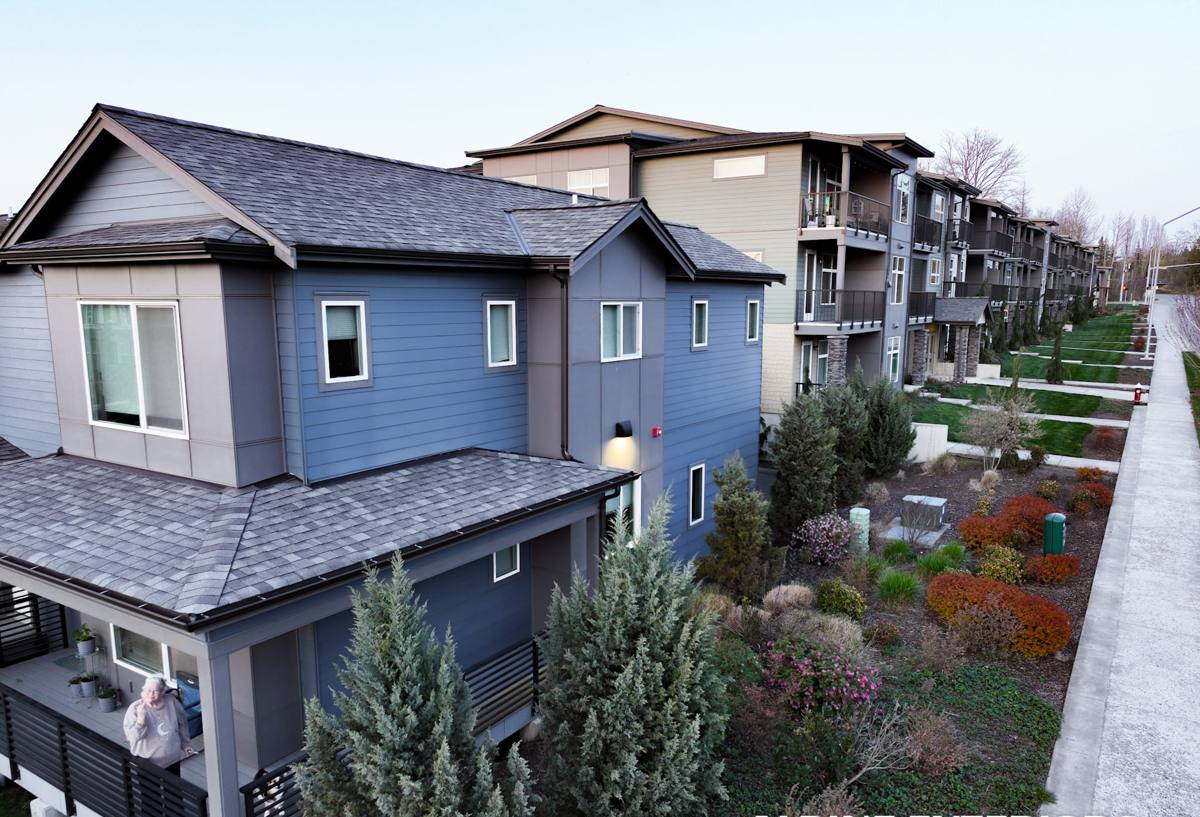
What "Energy-Efficient" Actually Means Here
Energy-efficient windows aren't just about keeping heat in during winter — in a marine climate, they're just as much about keeping moisture and drafts out. A few numbers actually matter more than marketing language:
- U-factor — measures how well a window resists heat loss. Lower is better. This is the number that matters most for a heating-dominated climate like ours, where homes run furnaces or heat pumps far more days than they run air conditioning.
- Solar Heat Gain Coefficient (SHGC) — how much solar heat passes through the glass. In Blaine's cloudy climate this matters less than in sunnier regions, but south- and west-facing windows still benefit from a moderate SHGC to capture free heat on clear days.
- Air leakage rating — how much outside air infiltrates around the sash and frame. This is where a lot of older or poorly installed windows fail, especially once wind-driven rain has worked its way into the assembly over a few seasons.
- Condensation resistance — how well the window resists interior fogging and moisture buildup, which matters in a climate where indoor-outdoor temperature and humidity differences are present most of the year, not just in deep winter.
Look for the NFRC label on any window you're considering — it gives you these numbers directly instead of asking you to trust a sales sheet.
Signs Your Current Windows Are Underperforming
Most homeowners don't notice window failure until it's obvious — but there are earlier signs worth checking for, especially on a home that's had a few Whatcom County winters:
- Cold air noticeably moving near the frame or sash, even with the window fully latched
- Condensation or fogging between the glass panes (a sign the seal has failed and the gas fill is gone)
- Visible moss, black mildew streaks, or soft/discolored wood on the sill or lower frame
- Difficulty opening, closing, or latching — often a sign the frame has swelled, warped, or shifted
- Rising heating bills without a clear explanation elsewhere in the home
- Rust or heavy corrosion on hinges, locks, or screen hardware
- Paint or finish peeling specifically around the window opening rather than the rest of the wall
Any one of these on its own might not mean replacement is urgent. Several together, especially on the same window, usually means the assembly is no longer doing its job.
Choosing the Right Window for a Marine Climate
Material choice matters more here than in a dry inland climate, because the frame has to deal with sustained moisture exposure, not just occasional rain. Here's how the common options actually compare for a home like yours:
| Material | Moisture & Salt Air Behavior | Maintenance | Typical Lifespan |
|---|---|---|---|
| Vinyl | Doesn't rot or corrode; performs well in salt air; frame can expand/contract with temperature swings | Low — occasional cleaning | 20–30+ years |
| Fiberglass | Excellent moisture and salt resistance; very stable dimensionally in temperature and humidity swings | Low | 30+ years |
| Wood | Attractive but vulnerable to rot and moss growth without diligent upkeep; needs a well-maintained exterior clad or paint layer | High — regular painting/sealing required | Varies widely with maintenance |
| Aluminum | Prone to condensation and thermal transfer unless thermally broken; can corrode over time near salt air | Moderate | 20–30 years, shorter without a thermal break |
| Wood-clad (wood interior, vinyl/fiberglass/aluminum exterior) | Good balance — exterior shell resists the weather while interior keeps a traditional look | Low to moderate | 25–30+ years |
For most homes in this area, we steer people toward vinyl or fiberglass frames for anything on the weather side of the house — not because wood windows are a bad product, but because an all-wood exterior frame in a salt-air, high-moisture location puts a maintenance burden on the homeowner that most people don't want to keep up with year after year. If the look of wood matters to you, a wood-clad option gives you that appearance with a more weather-resistant shell facing the elements.
Glass Package Matters As Much As Frame Material
Double-pane glass with a low-E coating and an argon or krypton gas fill is the practical baseline for this climate. Triple-pane glass offers a further step up in insulation and noise reduction, which some homeowners value given how much of the year windows stay closed against wind and rain — but it adds weight and cost, so it's worth weighing against your specific goals rather than assuming it's always the right call.
What a Correct Installation Actually Involves
A high-efficiency window is only as good as the installation around it. This is especially true here, where wind-driven rain will find any shortcut in the flashing or sealing within a season or two. A correct install includes:
- Removing the old window and inspecting the rough opening for hidden rot, moisture damage, or pest activity before anything new goes in
- Repairing or rebuilding any compromised framing — installing a new window into a damaged opening just hides the problem
- Installing proper flashing and a weather-resistant barrier so water is directed out and away from the wall assembly, not trapped behind it
- Sealing and insulating the gap between the window frame and rough opening correctly — too little insulation leaves drafts, too much rigid foam can bow the frame and affect operation
- Setting the window level, plumb, and square so the sash operates smoothly and seals evenly for the life of the window
- Finishing exterior trim and caulking with materials suited to sustained damp exposure, not just a bead of standard caulk
Skipping any one of these steps is how a good window ends up with a bad reputation — the failure almost always traces back to the installation, not the product itself.
Our Process for Dakota Creek Homes
- Walkthrough and assessment — we look at every window being considered, check for hidden moisture or framing issues, and talk through what's actually driving the decision (comfort, energy bills, appearance, or a mix).
- Honest recommendation — we'll tell you which windows genuinely need replacement, which could be repaired or re-sealed, and which are fine as-is. Not every window on a home needs the same treatment.
- Material and glass selection — we walk through frame material and glass package tradeoffs based on your home's exposure, budget, and how long you plan to stay in the house.
- Installation — removal, rough opening inspection and repair as needed, proper flashing and sealing, and careful setting of each window.
- Final check — every window is tested for smooth operation and a tight seal before we consider the job done.
Why Local Experience in This Area Matters
A window installer who mostly works drier, inland climates will often use the same flashing and sealing approach everywhere. In a location like Dakota Creek, that approach doesn't hold up — the wind direction, rain intensity, and moss growth pattern here are specific enough that generic techniques leave gaps. Crews who've worked windows throughout Blaine and the surrounding Whatcom County coastline know which corners of a house take the worst weather, which sills need extra attention, and which materials actually hold up rather than just looking good on install day.
That local pattern recognition is the difference between a window that's still performing in year fifteen and one that's showing rot and drafts by year five.
A Straightforward Way to Think About Cost
Window project costs vary widely based on number of windows, material, glass package, and how much framing repair is needed once the old window comes out — so we won't put a number here that isn't specific to your home. What we can tell you honestly: the biggest cost swings usually come from framing damage discovered during removal, not from the window unit itself. That's exactly why the initial inspection matters, and why we'd rather flag a rot issue upfront than surprise you with it mid-project.
If your windows are original to the house, showing any of the signs above, or you're simply tired of cold drafts and rising heating bills through the wet months, it's worth having them looked at. We offer free, no-pressure estimates for Dakota Creek homeowners — walk us through your concerns, and we'll give you a straight answer on what your windows actually need.