 Blaine Siding
 Windows Built for Blaine Harbor's Marine Climate
Blaine Harbor sits right where the land meets Drayton Harbor and Semiahmoo Bay, and that location shapes everything about how windows perform here. Homes in this part of Whatcom County take on salt-laden air off the water, long stretches of driving rain, and a moss and algae season that can run most of the year. Windows that would hold up fine twenty miles inland can start failing early in Blaine Harbor if they weren't chosen and installed with this specific exposure in mind.
This page covers what we actually look at when we replace or install custom windows on a Blaine Harbor home: the materials that hold up near saltwater, the glass and installation details that keep water out, and the process we follow from first look to final walkthrough.
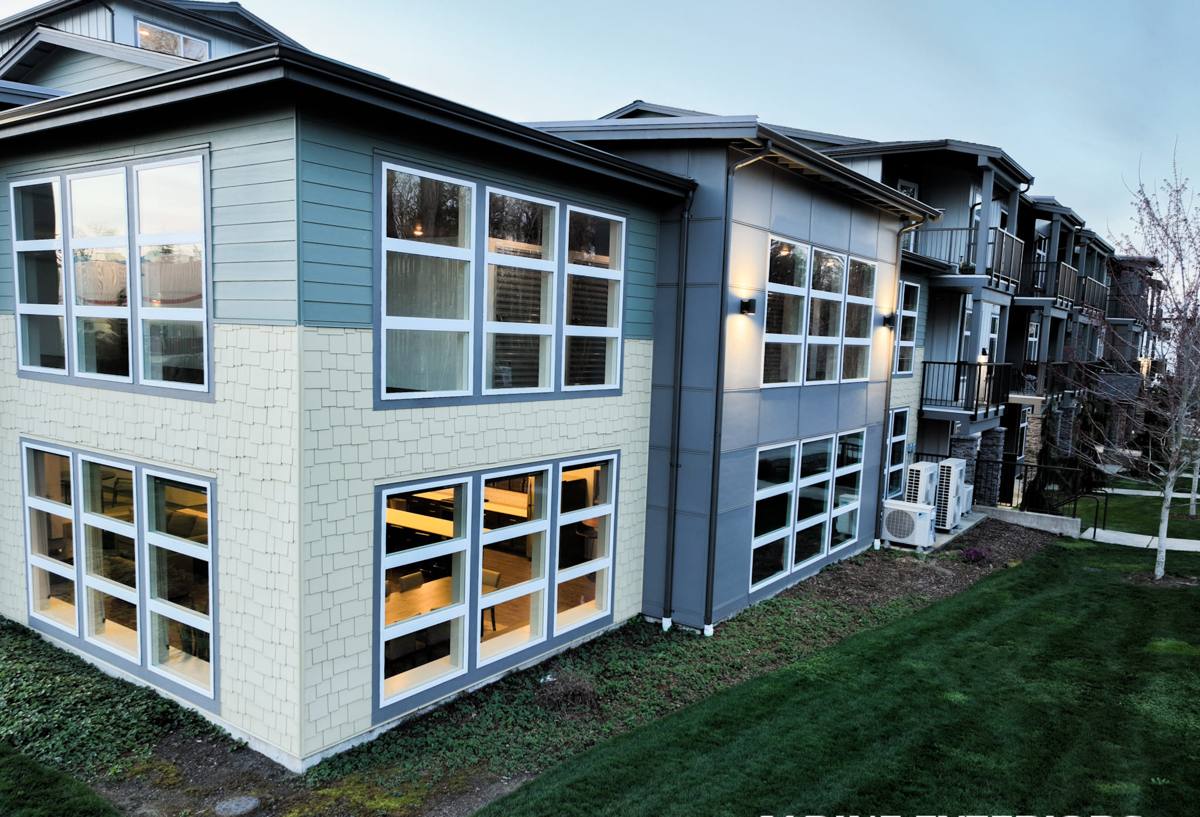
What Salt Air, Rain, and Moss Actually Do to a Window
Salt Air and Metal Fatigue
Airborne salt from Semiahmoo Bay settles on hardware, fasteners, and metal frame components. Over years, it accelerates corrosion on anything that isn't properly rated for coastal exposure — hinges bind, locks stiffen, and unprotected aluminum can pit and discolor faster than it would even a short distance inland.
Driving Rain and Water Intrusion
Blaine gets weather that comes in sideways off the water, not just straight down. That kind of wind-driven rain finds every gap in flashing, every shortcut in sealant, and every place where a window wasn't properly integrated with the wall assembly behind it. A window can be excellent quality and still leak if it wasn't installed to handle rain hitting it at an angle for hours at a time.
Moss, Algae, and Trapped Moisture
The long damp season in this part of Whatcom County keeps north-facing and shaded elevations wet for extended stretches. Moss and algae growth on sills, trim, and nearby siding hold moisture against the window opening, which is exactly the kind of prolonged dampness that rots wood components and breaks down poor-quality sealants.
Choosing a Frame Material That Holds Up Near the Water
There's no single "best" window material for every home — it depends on your budget, your home's exposure, and how much upkeep you want to do. Here's how the common options actually perform in a Blaine Harbor setting.
| Frame Material | Salt Air / Corrosion Resistance | Maintenance | Best Use in Blaine Harbor |
|---|---|---|---|
| Vinyl | Good — won't corrode, though hardware quality still matters | Low | Most homes, especially value-focused replacements |
| Fiberglass | Very good — stable in temperature swings and salt exposure | Low | Homes with direct water views or heavier wind exposure |
| Wood-clad | Fair — interior wood needs protection from any moisture that gets past the cladding | Higher | Homes prioritizing a traditional interior look, with realistic upkeep expectations |
| Aluminum | Poor to fair unless specifically coastal-rated | Moderate | Limited use; we're selective about where we recommend it this close to the water |
We don't push wood-frame windows on every waterfront home, and that's a maintenance call, not a knock on wood as a material. A wood-clad window with a compromised seal in a wet, shaded corner of a Blaine Harbor lot is a slower, more expensive problem to catch than the same issue on a vinyl or fiberglass unit. If you want the wood look, we'll talk through what upkeep that actually requires before you commit.
Glass Packages Worth Paying For in This Climate
The frame gets most of the attention, but the glass package does a lot of the work in a marine climate like Blaine's.
- Double-pane with low-E coating: A solid baseline for most rooms, cutting heat loss and reducing interior condensation on cold, damp mornings.
- Triple-pane: Worth considering on north or west-facing rooms that take the brunt of driving rain and wind — better insulation value and often better sound dampening from harbor traffic and weather.
- Argon or krypton gas fill: Improves insulating performance between panes without changing the window's appearance.
- Warm-edge spacers: Reduce the cold spot at the glass edge, which matters here because that's exactly where condensation and eventual seal failure tend to start in a consistently humid climate.
The right combination depends on which direction the window faces and how exposed that side of the house is to weather off the bay — not every window on the same home needs the same spec.
Installation Details That Matter More Here Than Elsewhere
A quality window installed poorly will underperform a mid-grade window installed correctly, especially in a climate that throws sideways rain at a house for days at a time. On every Blaine Harbor project we pay close attention to:
- Sill pans: A sloped, sealed pan under the window opening gives any water that does get past the exterior a way out instead of a place to sit.
- Flashing integration: Flashing has to be layered correctly with the house wrap and siding so water sheds down and out, not behind the window frame.
- Sealant selection and placement: Not every caulk or sealant is rated for constant damp exposure — we use products suited to sustained coastal moisture, applied at the joints that actually need it rather than everywhere as a substitute for good flashing.
- Weep holes clear and functional: These let incidental moisture drain instead of pooling in the frame.
Our Custom Windows Process
- On-site assessment: We look at each window opening's exposure — direction, overhang protection, existing moisture or moss signs — not just the window itself.
- Precise measurement: Custom windows are built to your actual openings, which also gives us a chance to catch rot or framing issues before they're hidden behind a new window.
- Material and glass selection: We walk through frame material and glass package options based on that specific opening's exposure, not a one-size answer for the whole house.
- Careful removal: Old windows come out with attention to the surrounding wall assembly, since that's where hidden water damage usually shows up.
- Installation with proper flashing and sealing: Sill pans, flashing, and sealant go in to shed water outward, matched to what a Blaine Harbor exposure actually needs.
- Interior and exterior finish work: Trim and finish detailing so the new window looks integrated, not bolted on.
- Final walkthrough: We check operation, look, and seal quality with you before calling the job done.
Common Window Problems We Find in Blaine Harbor Homes
Before recommending full replacement, we check for these signs — sometimes a window can be repaired or resealed rather than replaced outright.
- Soft or discolored trim and sill areas, especially on shaded or north-facing walls
- Foggy or hazy glass between panes, which usually means a failed seal letting in moisture
- Hardware that's stiff, corroded, or difficult to lock — a common sign of salt air exposure
- Visible moss or algae buildup directly around the window opening
- Drafts or cold spots near the frame edge during windy, wet weather
- Peeling paint or bubbling finish on wood trim near the window
What Custom Windows Typically Cost
Costs vary based on the home and the choices made, but these are the main factors that move the number up or down on a Blaine Harbor project.
| Factor | How It Affects Cost |
|---|---|
| Frame material | Vinyl is generally the most affordable; fiberglass and wood-clad run higher |
| Window size and count | Larger openings and whole-house replacements scale cost accordingly |
| Glass package | Triple-pane and upgraded low-E coatings add cost over standard double-pane |
| Installation complexity | Openings with existing rot, unusual shapes, or difficult access take more labor |
| Trim and finish work | Matching existing interior or exterior trim detail adds finishing time |
We give a specific number after seeing the actual openings — anyone quoting a firm price sight unseen on a coastal home is guessing.
Why Local Experience in Blaine Harbor Matters
A crew that regularly works this specific stretch of Whatcom County already knows which elevations of a Blaine Harbor home take the worst of the wind and rain off Semiahmoo Bay, which sealants actually hold up under near-constant dampness, and where moss buildup tends to hide early water damage. That's not something you can fully substitute with a general contractor working here for the first time. It shows up in fewer callbacks, fewer surprises during removal, and windows that are matched to the actual conditions of your specific lot rather than a generic spec sheet.
Keeping Your New Windows Performing Season After Season
- Rinse salt residue off frames and glass a few times a year, especially after storms off the bay
- Clear moss and debris from sills and nearby trim before it holds moisture against the frame
- Check and re-lubricate hardware periodically so locks and hinges don't seize from corrosion
- Inspect exterior caulk lines annually and have any cracked or shrinking sealant addressed early
- Keep gutters and downspouts clear so overflow isn't running down onto window heads
If you're noticing drafts, fogging glass, stiff hardware, or moss creeping up around your window trim, we're glad to take a look. We offer free, no-pressure estimates for Blaine Harbor homeowners — just fill out the form below and we'll walk the property with you.