 Blaine Siding
 Custom Decks for Grandview Homes
Grandview is one of the established residential pockets of Blaine, and homes here tend to have something a lot of newer subdivisions don't: mature trees, settled yards, and decks that have already been through a few decades of Whatcom County weather. That combination changes what a custom deck project actually looks like in this part of town. It's less often a brand-new build on a bare lot and more often a homeowner looking at a tired, graying deck attached to a house they've lived in for years, trying to decide whether to repair it, replace it, or finally build the deck they actually wanted in the first place.
Blaine's climate doesn't make that decision easier. Salt-laden air moves through the whole town, not just the blocks closest to the water, and it works on exposed fasteners and hardware everywhere it reaches. Rain here often comes in sideways rather than straight down, and a long moss season keeps horizontal wood and composite surfaces damp for a good part of the year. A custom deck built for Grandview needs to account for all of that, plus the practical realities of an established neighborhood — mature landscaping, existing structures it has to tie into, and yards that were laid out before composite decking or hidden fastener systems existed.
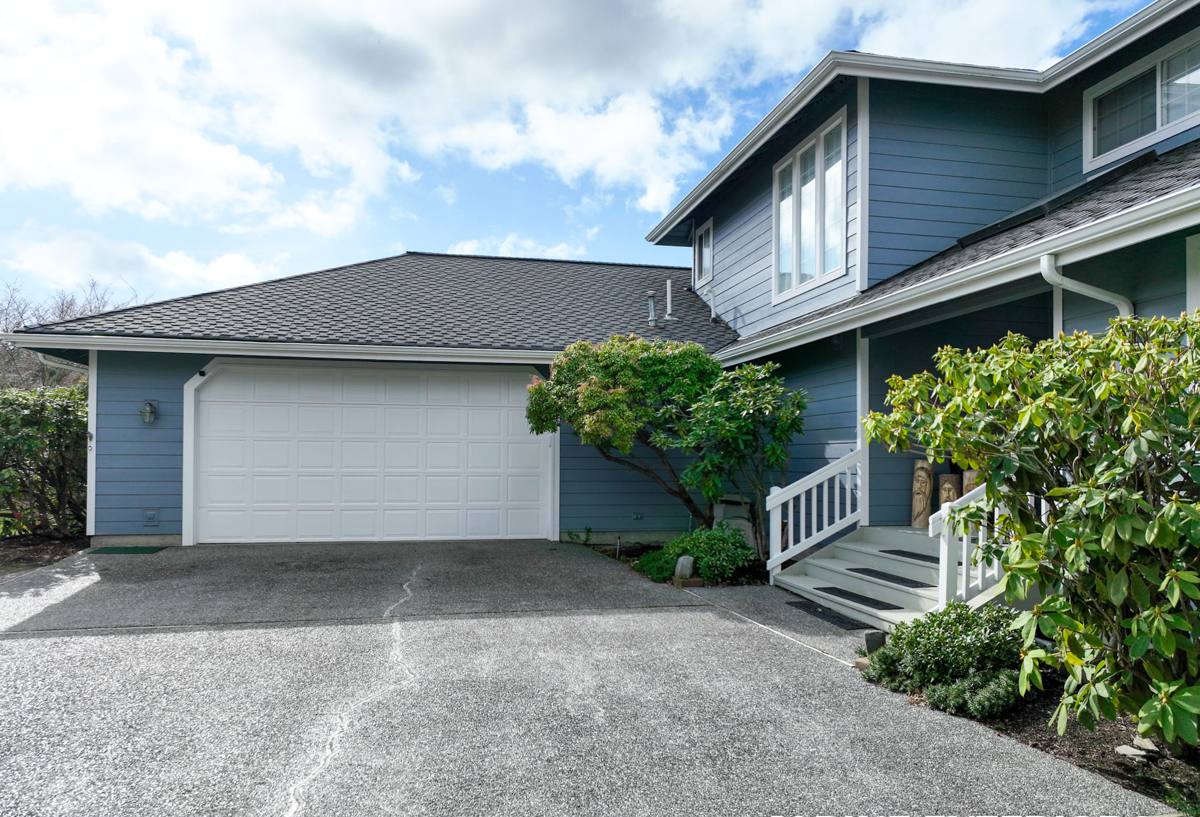
What Grandview's Setting Does to a Deck
Marine Air Reaches Every Block
You don't have to be able to see the water for salt-laden air to affect a deck. Blaine sits close enough to Semiahmoo Bay and the Strait of Georgia that marine air moves through the whole town on prevailing winds, and Grandview is no exception just because it isn't waterfront. The practical effect is the same one you'd see closer to the shoreline: standard fasteners, brackets, and hardware corrode faster here than they would in a drier inland climate, and that corrosion starts working before it's visible on the surface.
Mature Trees and Shade
Established neighborhoods like Grandview usually have decades of tree growth around them, and that canopy is a mixed blessing for a deck. Shade keeps a deck cooler in summer and takes some edge off UV fading, but it also means a deck surface stays damp longer after rain and dries out slower between storms. Falling leaves and needles collect in the gaps between boards and against the house, holding moisture right where you don't want it. A deck tucked under mature trees needs more attention to drainage and material choice than one sitting in open sun.
A Moss Season That Runs Most of the Year
Between the shade and the region's near-constant moisture, moss and mildew get a long growing season on any deck surface that holds even a little dampness. It shows up first on north-facing decks, shaded corners, and anywhere debris collects and doesn't get cleared. Any decking material with surface porosity gives moss something to grip, which is one of the bigger reasons material choice matters as much as it does on a Grandview build.
New Build or Replacement: Two Different Starting Points
Custom deck work in Grandview generally falls into one of two categories, and they start from different places. A new build usually means an addition to a home that never had a deck, or a homeowner adding a second one for a different part of the yard — patio-level, upper-floor, or a smaller landing off a side door. A replacement means an existing deck that's aged out, whether that's soft boards, corroding fasteners, a wobbly railing, or a structure that was simply never built to hold up in this climate to begin with.
Replacement work has its own wrinkle: the substructure underneath an old deck often looks fine from the top and turns out to have hidden problems once the decking comes off — undersized framing, missing or failed ledger flashing, joists that were never rated for the load they're carrying. We don't assume the framing is reusable just because the deck above it looked stable. That gets evaluated as part of the job, not discovered as a surprise mid-build.
Choosing the Right Decking Material for This Setting
The shade and moisture pattern common in Grandview yards makes material choice matter more than it might in a more open, sun-exposed setting. The three categories most homeowners weigh are pressure-treated or cedar wood, capped composite, and cellular PVC.
| Material | Performance in Shade & Moisture | Moss Resistance | Upkeep |
|---|---|---|---|
| Cellular PVC | Excellent — no wood fiber to absorb moisture | Strong, smooth non-porous surface | Occasional washing |
| Capped composite | Strong — cap layer resists moisture and staining | Good on most product lines | Occasional washing |
| Uncapped composite | Moderate — some absorption at exposed fiber edges | Fair; more prone to buildup in shaded spots | Periodic cleaning |
| Cedar | Moderate — natural resistance, but needs regular sealing | Fair when sealed and maintained | Regular oiling or sealing |
| Pressure-treated wood | Weakest under sustained shade and moisture | Poor without regular treatment | Regular sealing or staining |
None of these are wrong choices outright — a well-maintained cedar deck can look great for years. But in a shaded Grandview yard where a deck stays damp longer between storms, the maintenance gap between a capped or PVC product and an untreated wood surface shows up faster than it would somewhere drier and sunnier.
What a Correctly Built Deck Involves Here
The decking surface gets the attention, but in this climate, the framing and fastening underneath are what actually decide how long the deck lasts. A build done right for a Grandview property includes:
- Framing sized and rated for the actual span and load, not just whatever lumber was on hand
- Stainless steel or coastal-grade corrosion-resistant fasteners throughout — standard hardware starts corroding in this air within a few seasons
- Hidden fastener systems on the walking surface where the product supports them, reducing exposed metal and giving a cleaner finish
- Correct board gapping so wind-driven rain and shaded moisture can actually drain and dry between boards
- Proper ledger flashing where the deck ties into the house — one of the most common failure points on an older deck
- Joist spacing matched to the specific decking product's span rating, not a generic layout carried over from a different job
- Grading and airflow underneath the deck so moisture doesn't sit against the framing between rain events, especially under a shaded canopy
Skip any of that and the deck still looks fine on day one. The problems — a soft joist, a loosening post, fastener corrosion staining the boards around it — usually show up a few wet seasons later, once it's a harder fix.
Designing a Deck Around How Grandview Homeowners Actually Use It
Most of the custom deck requests we hear in an established neighborhood like Grandview aren't about maximizing square footage — they're about how the space will actually get used. A deck built for weeknight grilling and morning coffee has different priorities than one built for hosting family gatherings, and a household with young kids or dogs has different railing and surface needs than one that doesn't. Working through that upfront, before layout decisions get made, is part of what separates a custom deck from a stock rectangle attached to the back of the house.
Site-specific factors matter too. Where the mature trees on a lot actually throw shade affects both comfort and moss exposure. Sightlines to and from neighboring yards affect whether a partial privacy screen or railing style makes sense. Grade changes around an older Grandview home can affect whether stairs, a lower patio level, or a multi-level deck design fits the lot better than a single flat platform. These are lot-by-lot decisions, which is part of why a deck designed for a specific Grandview property performs and functions differently than a generic design dropped onto any site.
How Our Process Works
- Site visit — we look at the existing structure if it's a replacement, current drainage and grade, tree cover and shade pattern through the day, and how the space will actually be used
- Material and design conversation — options that fit the budget, the shade conditions, and how the household plans to use the deck
- Permitting — Blaine and Whatcom County permitting generally follows standard setback, structural, and elevation requirements, and we handle that as part of the job
- Substructure and framing — built and fastened for the site's actual moisture and shade exposure, not a generic spec
- Decking, railing, and stairs — installed to the design, with attention to gapping and drainage at every board and connection
- Walkthrough — we cover exactly what your specific material needs going forward, which is usually minimal but not nothing
What Your Deck Still Needs From You
Even a well-built deck in the right material needs some routine attention in this climate to reach its full lifespan. Worth keeping on a seasonal checklist:
- Clear leaves and debris out of board gaps regularly, especially under mature tree canopy where buildup happens fast
- Rinse the deck surface periodically to clear pollen, salt residue, and organic film before it works into the surface or cap layer
- Check railing posts and fastener hardware once a year for early corrosion or loosening, particularly heading into the wet season
- Trim back branches or shrubs that shade the deck excessively or block airflow across the surface
- Address any soft framing or standing water underneath right away — that's a structural issue, not a cosmetic one
Why It Matters That We Already Work This Neighborhood
A crew that mostly builds in open, sun-exposed lots can still frame a competent deck, but a shaded, established neighborhood like Grandview has its own set of recurring issues — moss pressure that outlasts a typical maintenance schedule, hidden framing problems under decades-old decks, and corrosion-grade fastener needs that don't announce themselves until they've already cost you a railing post or a soft board. Working this area regularly means we're not guessing at any of that on your project. We've seen which decking products actually hold up under mature tree cover in this climate, and which framing and flashing shortcuts on an older deck tend to cause the most trouble down the line.
That familiarity also shows up in smaller judgment calls — how to lay out a deck around an existing tree's root zone, or being straightforward about whether an old deck's substructure is worth keeping versus starting clean. Those are the calls that determine whether a new deck is still solid in fifteen years or showing problems in five.
Get a Straight Answer About Your Grandview Deck
Whether you're replacing a deck that's finally worn out, adding one to a home that's never had it, or want an honest read on what a custom deck would take on your Grandview property, we're glad to walk the site with you and lay out the options plainly. Reach out below for a free, no-pressure estimate.