 Blaine Siding
 Building Decks for Dakota Creek's Specific Conditions
Dakota Creek sits close enough to the water and to Blaine's marine weather patterns that a deck built the same way you'd build one inland won't hold up the same way here. Salt-laden air, long stretches of driving rain off the Strait, and a moss season that can run from fall through spring all work on a deck year-round, not just in a stormy week or two. A deck that looks fine in month one can start showing problems by year three if it wasn't built with this specific environment in mind.
We work on decks in and around Dakota Creek regularly, which means we're not guessing at how this area behaves — we've seen which details hold up and which ones fail early, and we build accordingly.
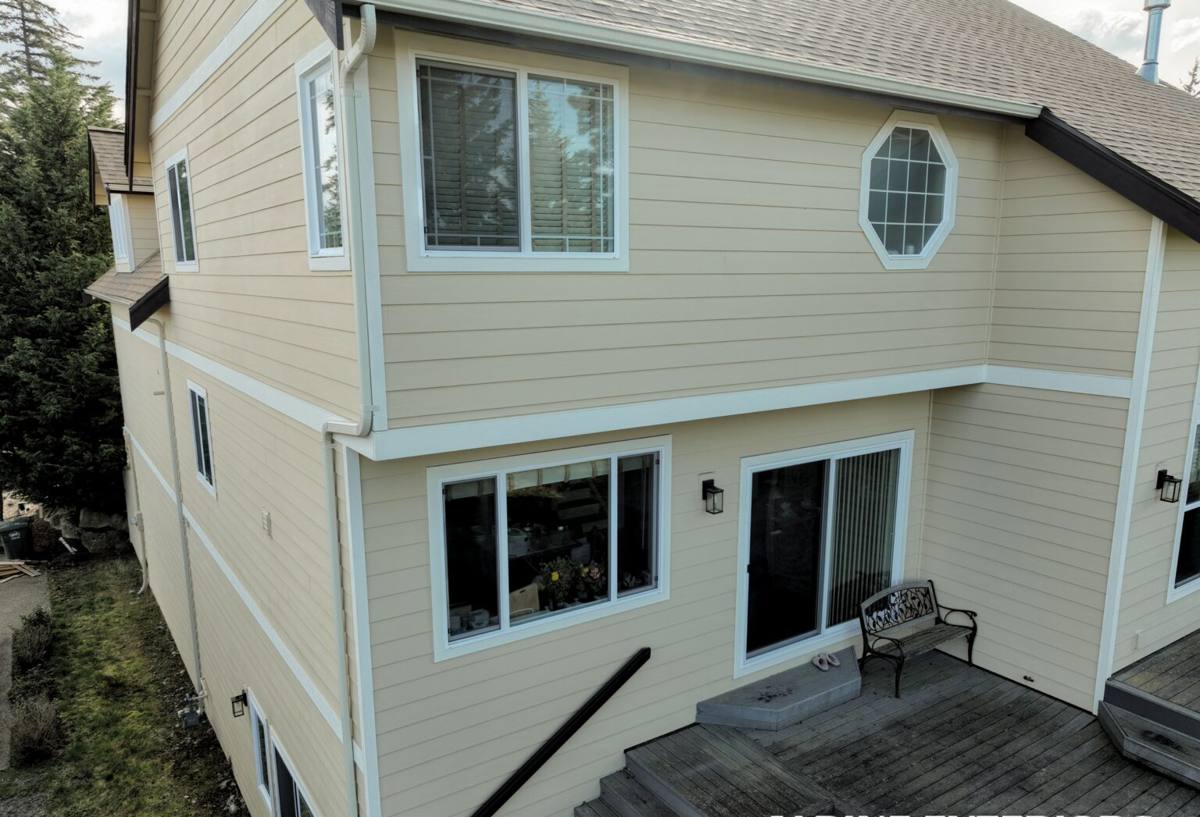
What Blaine's Climate Actually Does to a Deck
Salt Air and Metal Fasteners
Proximity to Semiahmoo Bay and the Strait of Georgia means the air here carries more salt than a typical inland Whatcom County property. Salt air accelerates corrosion in fasteners, brackets, and hardware — especially anything galvanized rather than stainless or coated for coastal exposure. A deck can look structurally sound on the surface while the hidden hardware holding it together is quietly corroding underneath the decking boards.
Driving Rain and Water Intrusion
Blaine gets long stretches of steady, wind-driven rain rather than short, heavy downpours. That matters for a deck because driving rain finds its way into places vertical rain wouldn't — behind ledger boards, under poorly flashed connections, and into end grain that isn't sealed. Over time, this is what causes rot at the point where a deck attaches to the house, which is the single most common structural failure point we see on older decks in this area.
Moss, Shade, and Slow Drying
Between tree cover and the region's overcast stretches, decks here often don't get the sun exposure needed to dry out quickly after rain. That combination of moisture and shade is exactly what moss and algae need to take hold. Beyond the slip hazard, moss holds moisture against the decking surface long after the rain has stopped, which shortens the life of the boards underneath it.
Choosing the Right Decking Material for This Area
There's no single "best" decking material — the right choice depends on how much maintenance you're willing to do, your budget, and how much shade and moisture exposure the deck will actually see. Here's how the common options compare for a property in this climate:
| Material | Moss/Moisture Resistance | Salt Air Durability | Maintenance Needed | Typical Lifespan |
|---|---|---|---|---|
| Pressure-treated wood | Moderate — needs sealing | Good with coated fasteners | Annual cleaning/sealing | 10-15 years |
| Cedar | Good naturally, fades without care | Good with proper fasteners | Periodic oil/stain | 15-20 years |
| Composite decking | Very good | Very good | Occasional washing | 25-30 years |
| PVC/cellular decking | Excellent | Excellent | Low | 30+ years |
Composite and PVC products cost more up front, but in a shaded, damp, salt-air environment like this, the reduced maintenance and better moisture resistance often make them the more practical choice over the life of the deck. Wood is still a good option for homeowners who like the natural look and are willing to keep up with sealing on a regular schedule — it just requires more discipline in this climate than it would somewhere drier.
Framing and Fasteners: The Part No One Sees
The decking surface is what you notice, but the framing underneath is what determines whether the deck is safe and how long it actually lasts. For this area, that means:
- Stainless steel or coated coastal-rated fasteners throughout, not standard galvanized hardware
- Proper ledger board flashing where the deck attaches to the house, sealed against driving rain
- Joist tape or a similar barrier on top of framing lumber to keep standing water off exposed wood
- Adequate spacing between boards to let air move underneath and speed up drying after rain
- Post bases that keep wood off the ground and away from standing moisture
None of this is visible once the deck is finished, which is exactly why it's the part most likely to get cut corners on a lower-bid job. It's also the part that determines whether you're dealing with a rot repair in year five or not.
Footings, Drainage, and Grading on Dakota Creek Lots
Ground conditions and drainage around a property affect a deck's foundation as much as the weather does. Footings need to be set below frost depth and sized for the soil they're going into, and the grading around the footings needs to move water away rather than let it pool against posts. On lots with heavier tree cover or lower spots that stay damp longer after rain, we pay extra attention to drainage during the design phase rather than treating it as an afterthought once the deck is built. Getting this wrong doesn't usually show up as a problem in year one — it shows up as heaving, settling, or a soft spot years later.
Our Process From First Call to Finished Deck
Site Visit and Assessment
We start by walking the property, looking at sun and shade patterns, drainage, and how the deck will connect to the house. This is also when we talk through what you actually want to use the space for, since that shapes size, layout, and material choice.
Design and Material Selection
We put together a plan that accounts for the site conditions we found — framing approach, fastener grade, decking material, and railing — and walk through the honest trade-offs of each option with you rather than steering you toward whatever's easiest for us to install.
Permitting
Most new decks and many substantial rebuilds require a permit through the applicable jurisdiction. We handle pulling the permit and coordinating any required inspections as part of the job, so you're not left figuring out the paperwork.
Construction
We build the framing and hardware to the coastal-durability standard described above regardless of which decking material you choose, since that's the part of the deck you won't be able to inspect or fix easily later.
Final Walkthrough
Before we consider the job done, we walk the finished deck with you, check for level and secure railings, and go over basic care for whatever material you chose.
Maintenance That Actually Matters Here
A deck in this climate needs a different maintenance rhythm than one built somewhere drier and sunnier. A simple seasonal checklist goes a long way:
- Sweep debris and standing leaves off the deck before fall rains set in
- Check for early moss or algae growth in shaded corners and wash it off before it spreads
- Inspect the ledger board area where the deck meets the house for any signs of water staining
- Reseal or restain wood decking on the schedule appropriate to that product, not just when it looks faded
- Confirm gutters and downspouts near the deck are directing water away, not onto the structure
- Check fastener heads and railing connections annually for early corrosion
Composite and PVC decking cut down on several of these tasks, but drainage, gutter direction, and moss checks matter regardless of what the surface is made of.
Permits and Code Considerations in Whatcom County
Deck projects near Blaine typically fall under Whatcom County or City of Blaine building requirements depending on exactly where the property sits, and requirements can touch on setbacks, railing height, footing depth, and attachment to the house. If the lot is near a creek, wetland, or shoreline buffer, there may be additional environmental review involved before a permit is issued. We handle this as part of the process rather than leaving it for the homeowner to sort out, but it's worth knowing up front that a deck near water features in this area can involve more than a standard building permit.
Why Hiring a Crew That Already Works This Area Matters
A contractor who mostly builds decks in drier, sunnier parts of the state may not default to coastal-grade fasteners, may not think through drainage the same way, or may not budget for the flashing detail that keeps a ledger board from rotting out early. None of that shows up as a problem on the day the deck is finished — it shows up two, three, or five years later, usually as a repair that costs more than doing it right the first time would have. Working with a crew that's already familiar with Dakota Creek and the surrounding Blaine area means those decisions get made correctly from the start, not corrected after the fact.
If you're planning a new deck or thinking about replacing one that isn't holding up the way it should, we're happy to come take a look and give you a straightforward, no-pressure estimate. There's a form below — reach out and we'll set up a time to walk the property with you.