 Blaine Siding
 Custer Sits in a Tougher Climate Zone Than Most Siding Ever Gets Built For
Custer sits close enough to the water and to Blaine's marine air patterns that homes here take a different kind of beating than siding a few miles inland. Salt-laden air off the Strait works into seams and fastener heads year-round. Driving rain off Whatcom County's winter storms doesn't just wet the surface — it drives sideways into laps, trim joints, and anywhere a caulk line has started to fail. And the long, damp moss season here means anything shaded or north-facing stays wet for weeks at a stretch instead of drying out between rain events. Siding that would hold up fine in a drier climate starts showing problems years earlier out here.
That combination — salt, wind-driven rain, and prolonged moisture — is why siding repair in this area is rarely a cosmetic job. By the time a homeowner notices a soft spot, discoloration, or a section of moss that won't scrub off, there's usually something happening behind the surface that needs to be addressed correctly, not just patched.
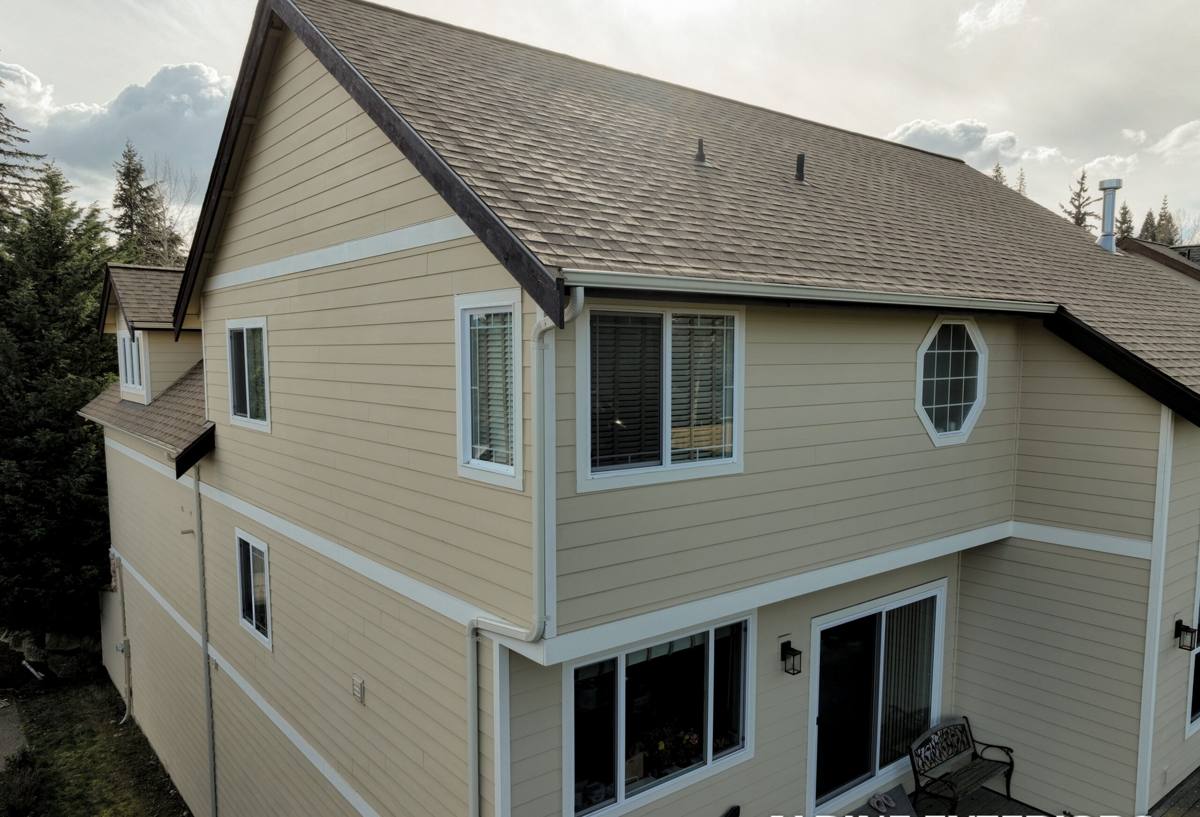
What Siding Repair Actually Means on a Custer Home
"Repair" covers a wide range of work, and the right fix depends entirely on what's causing the damage. On homes in this area we most commonly find:
Moisture Intrusion at Seams and Penetrations
Butt joints, window and door trim, and anywhere siding meets a deck ledger or hose bib are the weak points. Once caulking shrinks or cracks — which happens faster under constant damp-dry cycling — water gets behind the cladding and starts working on whatever is underneath it.
Rot and Substrate Damage
On older wood or composite siding, and on any home where moisture has been getting in for a while, the siding itself may look intact while the sheathing or framing behind it is already soft. A repair that doesn't check the substrate isn't a real repair — it's a patch over a problem that keeps growing.
Moss, Algae, and Surface Staining
Shaded elevations and anything under overhangs or tree cover collect moss fast in this climate. On its own, surface growth is mostly cosmetic, but moss holds moisture against the siding longer than bare material would, which accelerates whatever deterioration is already underway underneath it.
Impact and Fastener Damage
Cracked panels from storm debris, ladder contact, or simple age, plus popped or corroding fasteners, are common and usually straightforward to correct — but only if the replacement material and fastening method match what's actually on the wall.
Signs a Custer Home Needs Siding Repair Now
Some damage is obvious. A lot of it isn't, especially with siding that's still holding paint or color reasonably well on the surface. Homeowners in this area should watch for:
- Soft or spongy spots when you press on the siding, especially near the bottom courses or below windows
- Visible cracking, buckling, or separation at panel seams and corners
- Peeling paint or bubbling in one localized area while the rest of the wall looks fine — a classic sign of trapped moisture
- Persistent moss or dark streaking that returns quickly after cleaning
- Caulk that has shrunk, cracked, or pulled away from trim and window edges
- Any musty smell or interior wall staining on the room behind a suspect section of exterior wall
- Fasteners that are rusting, backing out, or leaving streaks down the siding face
Catching any of these early keeps the job a repair instead of turning it into a much larger replacement.
What a Correct Repair Actually Involves
A repair that's done right starts before anyone touches the siding itself.
1. Find the Actual Cause
Visible damage is a symptom. A proper repair traces it back — a failed flashing detail, a caulk joint that gave out, grading or gutter issues pushing water where it shouldn't be — because replacing the siding without fixing the cause just buys a repeat visit in a year or two.
2. Check What's Behind the Siding
Once damaged material is removed, the sheathing, house wrap or building paper, and framing underneath need to be inspected. If there's rot or persistent moisture staining, that gets addressed before anything new goes back on the wall.
3. Match the Repair to the Existing System
Repairs should tie into the existing siding's exposure, fastening pattern, and flashing details correctly — a patch that doesn't match the surrounding installation just creates a new weak point.
4. Re-Flash and Re-Seal Properly
Every penetration, joint, and trim intersection gets flashed and sealed the way it should have been the first time, with materials rated for the ongoing damp exposure this area gets for a good chunk of the year.
5. Finish to Blend, Not Just Cover
Paint and caulk lines should match existing coursing and coloring as closely as possible, so the repair reads as maintenance, not as a visible scar on the house.
Repair or Full Replacement? What Actually Decides It
Not every problem calls for tearing off a wall of siding, and not every problem is fixable with a patch. The honest answer depends on scope and cause.
| Factor | Repair Usually Makes Sense | Replacement Usually Makes Sense |
|---|---|---|
| Extent of damage | Isolated to one or two areas | Spread across multiple elevations |
| Substrate condition | Sheathing and framing are sound | Rot has spread into structural framing |
| Age of siding | Mid-life, otherwise performing well | Near or past its expected service life |
| Material availability | A close match can be sourced | Discontinued or badly weathered — new won't match old |
| Underlying cause | A specific, correctable defect | A systemic issue affecting the whole envelope |
We'll always tell a homeowner honestly which side of that table their house falls on. There's no benefit to us in replacing something that only needs a targeted repair, and no benefit to anyone in patching something that's going to fail again within a season.
Why We Repair — and Rebuild — With James Hardie Fiber Cement
We only install James Hardie fiber cement siding, and that includes repair work. There are a few practical reasons that matters specifically for a climate like this one:
- Fiber cement doesn't absorb water the way wood-based products do, which matters directly in a climate with this much sustained dampness and moss growth
- It's non-combustible, which some homeowners in this area weigh alongside everything else on their exterior
- Hardie's ColorPlus factory finish holds color and resists the fading and chalking that salt air and UV exposure cause faster here than in drier inland climates
- Hardie's HZ5 product line is specifically engineered for cold, wet climate zones, which this stretch of Whatcom County qualifies as
- Because it's a widely stocked, consistent product line, a repair section can be matched to existing Hardie siding far more reliably than trying to match discontinued or weathered vinyl, LP SmartSide, or cedar
When a repair calls for new material and the home isn't already Hardie, we'll say so plainly and explain the trade-offs rather than quietly patching in something we wouldn't otherwise install. If a homeowner wants to stay with their existing product for a like-for-like repair, that's their call — but our own standard, and what we stand behind, is Hardie.
How Our Repair Process Works
- On-site inspection. We look at the visible damage, probe the surrounding area, and check for signs the problem extends further than what's obvious from the ground.
- Honest diagnosis. We tell you what's actually happening, what caused it, and whether it's a repair or something bigger — before any work starts.
- Clear scope and estimate. You get a straightforward explanation of what the repair involves and what it will cost, with no pressure to upsell into a full re-side you don't need.
- Correct execution. Damaged material comes out, the substrate gets checked and corrected if needed, and new material goes in flashed and sealed properly.
- Finish and cleanup. Paint and caulk are matched as closely as possible, and the site is left clean.
Why a Crew That Already Works in Custer Matters
Siding repair isn't generic work. A crew that regularly works this part of Whatcom County already knows how the local combination of salt exposure, wind-driven rain direction, and shaded, moss-prone elevations tends to show up on a house — which means less time spent diagnosing and more time spent fixing the right thing the first time. We're familiar with the permitting expectations in this part of the county, we know what correct flashing and fastening looks like for this exposure, and we're close enough to Blaine to respond quickly if a repair needs a second look after a storm.
That local familiarity is also why we're comfortable giving a straight answer on repair versus replace instead of defaulting to whichever is more profitable. A home in Custer that gets an honest, correctly executed repair now is a home that doesn't need the same section fixed again in two years.
If you're dealing with a soft spot, a stubborn moss patch, cracked panels, or just want a second opinion on siding damage before it gets worse, we're glad to take a look. Reach out for a free, no-pressure estimate — we'll tell you exactly what we see and what we'd recommend.