 Blaine Siding
 Roof Repair Built for Custer's Weather, Not Just the Average Northwest Roof
Custer sits in the flat, open country between Blaine and Ferndale, close enough to the water that salt-laden air off the Strait of Georgia and the bay reaches roofs here almost year-round. Add the long, wet Whatcom County winters and the wind that moves unobstructed across open farmland, and you get a roofing environment that's harder on materials than what a roof twenty miles inland deals with. We repair roofs in Custer regularly, and the failures we see here follow a pattern that's specific to this stretch of the county — not generic "Pacific Northwest" wear and tear.
This page is about roof repair specifically — patching, resealing, replacing damaged sections, and stopping active leaks — not full roof replacement. Most roofs that are otherwise sound don't need a full tear-off; they need the right repair done correctly, with materials and methods matched to what this climate actually does to a roof over time.
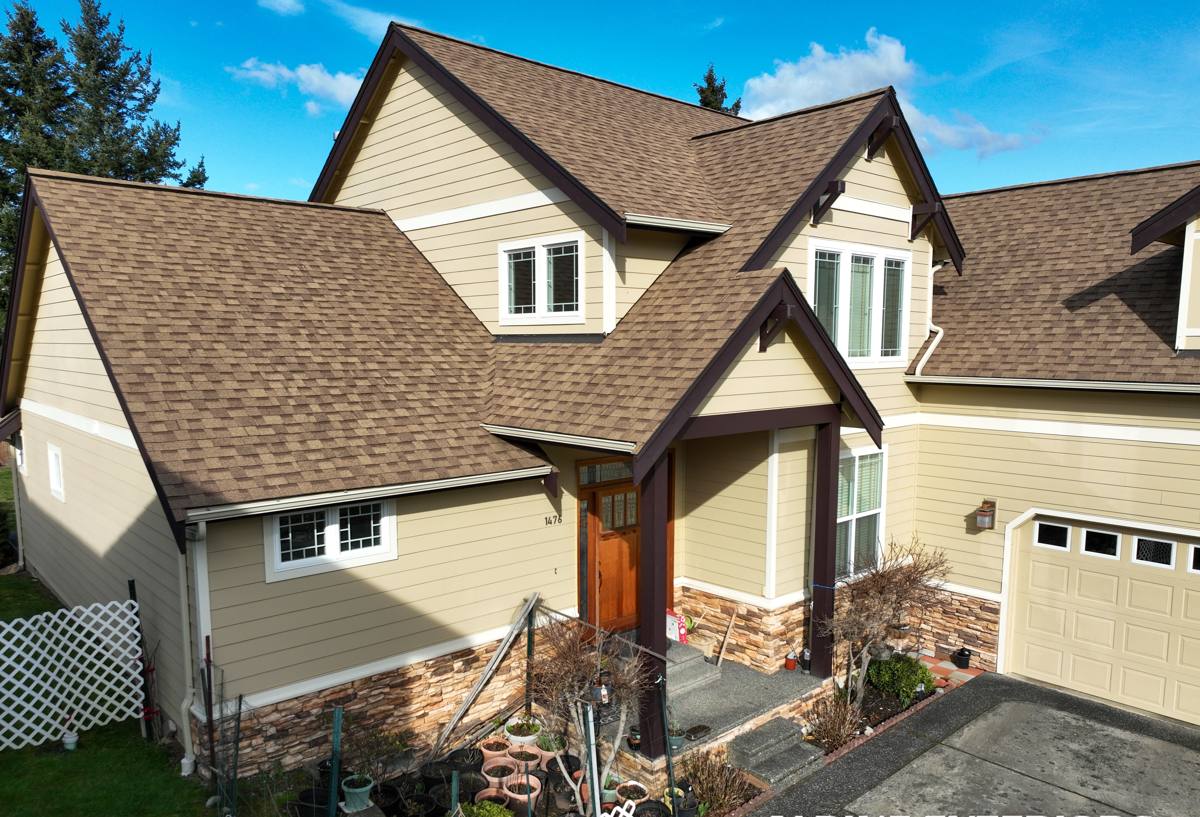
What Salt Air, Driving Rain, and Moss Actually Do to a Roof
Salt Air
Airborne salt doesn't just affect siding and window frames — it accelerates corrosion on every exposed metal component of a roof: flashing, nail heads, gutter fasteners, vent caps, and drip edge. Once corrosion starts on flashing, water finds a way underneath it, and that's how a small metal problem turns into a sheathing problem. Homes closer to open water see this faster, but Custer's proximity to the bay means it's not just a waterfront issue here.
Driving Rain
Wind-driven rain doesn't behave like straight-down rain. It gets pushed sideways and upward under shingle edges, around vents, and into any gap in flashing that would never leak in a calm rain. Roofs in open, wind-exposed areas like Custer take this kind of rain far more often than sheltered, tree-covered lots do, which is why valleys, ridge caps, and penetration points fail here before the rest of the roof shows any wear.
Moss
Whatcom County's wet season runs long — often eight months or more of the year with regular moisture and moderate temperatures, which is exactly what moss needs to establish and spread. Moss holds water against the roof surface, lifts shingle edges as it grows, and keeps sections of the roof damp long after the rest has dried. Left alone, it doesn't just look bad — it shortens the life of whatever it's growing on.
Signs a Custer Roof Needs Repair, Not Just a Wash
Homeowners often catch roof problems late because the early signs show up inside the house, not on the roof itself. Here's what we tell Custer homeowners to watch for:
- Water stains on ceilings or upper walls, especially after a windy rainstorm rather than a calm one
- Granules collecting in gutters or at downspout outlets — a sign of shingle wear, not just normal shedding
- Visible moss or dark streaking concentrated on north-facing or shaded slopes
- Curling, cupping, or lifted shingle edges, particularly near ridges and valleys
- Rusty streaks below metal flashing or vent stacks
- Soft or spongy spots when walking the roof (we check this — homeowners shouldn't)
- Daylight visible through the attic roof deck, or damp insulation near the eaves
- Gutters pulling away from the fascia, which often points to rot underneath
Any one of these on its own might be minor. Two or three together usually means water has already gotten past the surface layer and into the roof deck, and that changes the scope of the repair.
The Repairs We See Most Often on Custer Roofs
Flashing Failure
This is the single most common repair call in this area. Flashing around chimneys, skylights, and roof-wall intersections takes the brunt of both salt corrosion and wind-driven rain. Once it fails, the leak often shows up several feet away from the actual failure point, which is why a proper repair starts with tracing the water, not just patching where the stain appears.
Valley and Ridge Cap Damage
Valleys concentrate a huge volume of water during heavy rain, and ridge caps take the most direct wind exposure on the roof. Both are common failure points on open, wind-exposed lots like much of Custer, and both require the shingles or metal to be replaced correctly — not just resealed with roofing cement, which is a short-term fix at best.
Moss-Related Shingle Damage
Where moss has been established for a season or more, it's common to find the shingle mat underneath softened or the granule layer worn thin. In these spots, cleaning the moss off isn't enough — the affected shingles usually need to be replaced, or the moss will simply return to compromised material faster than to sound material.
Fastener and Metal Corrosion
Corroded nail heads and rusted flashing fasteners lose their seal over time. This is a slower failure than storm damage, but it's just as common here given the salt exposure, and it's often found during a repair inspection for an unrelated issue.
Repair vs. Replacement: How We Make That Call
Not every roof problem in Custer means a new roof. We look at the age, condition, and extent of damage before recommending anything, and we'd rather do an honest repair than sell a replacement the roof doesn't need yet.
| Factor | Usually Points to Repair | Usually Points to Replacement |
|---|---|---|
| Roof age | Under roughly 15 years, or a newer roof with isolated damage | Nearing or past the material's expected service life |
| Extent of damage | Localized — one or two sections, valleys, or flashing points | Widespread wear, sagging, or multiple failure points across the roof |
| Moss coverage | Isolated patches on shaded slopes | Heavy, roof-wide coverage with visible mat deterioration underneath |
| Decking condition | Solid, dry sheathing under the damaged area | Soft, rotted, or repeatedly wet decking |
| Underlying cause | A single identifiable failure (flashing, a storm event) | Systemic material failure or improper original installation |
When we're on the fence, we lean toward repair first and give you an honest read on how much longer that buys you. If a roof genuinely needs replacement, we'll say so directly rather than let a homeowner keep patching a roof that's past the point of a good repair paying off.
How Our Roof Repair Process Works
1. Inspection First
Every repair starts with getting on the roof, not just looking at it from the ground. We check the obvious damage area and the surrounding sections, since the visible problem is often not the only one — especially on a roof that's had moss or standing water for a while.
2. A Clear Explanation, Not a Sales Pitch
We explain what we found, why it happened, and what it will take to fix it correctly — including if that means the repair is smaller (and cheaper) than the homeowner expected, or if it's bigger because the damage extends further than the visible leak.
3. The Actual Repair
Depending on the issue, this can mean replacing damaged shingles and underlayment, reworking flashing at a chimney or wall intersection, resetting or replacing ridge caps, or addressing damaged decking before anything goes back on top of it. We don't cover over a soft deck — that just hides the problem for the next person to find.
4. Moss and Debris Cleanup
Where moss contributed to the problem, we remove it properly rather than pressure-washing it off, which can drive water and debris under shingles and cause more damage than it prevents. We'll also talk through what keeps it from coming back as fast.
5. Final Check
Before we consider the job done, we walk the repaired area and the roof generally to confirm there's nothing else that needs attention while we're already up there.
Why It Matters to Hire a Crew That Already Works This Area
Roof repair isn't identical everywhere in Whatcom County, and a crew that mostly works inland neighborhoods can miss things that are routine for us in Custer. Wind exposure changes how ridge caps and valleys are detailed. Salt air changes what flashing and fastener materials hold up long-term. A long moss season changes how aggressively you need to manage growth and how often shaded slopes should be checked. None of that is guesswork if you're regularly repairing roofs in this specific stretch of the county — it's just what you already know to look for.
There's also a practical side to hiring local: a contractor working nearby can typically get to an active leak faster, and stands behind the repair without the drive time and scheduling friction of a company based well outside the area.
Getting the Most Life Out of a Roof Repair
A repair is only as good as what happens after it. A few habits make a real difference for roofs in a climate like this one:
- Have moss growth addressed at the first signs, not after it's established across a whole slope
- Keep gutters and downspouts clear so water isn't backing up against the roof edge
- Trim back overhanging branches that keep shaded areas of the roof damp longer
- After major windstorms, do a visual check (or have one done) for lifted shingles or displaced flashing
- Don't ignore small interior water stains — they rarely stay small on their own
What a Repair Estimate Looks Like
Costs for roof repair vary widely depending on what's actually wrong — a section of flashing is a very different job from replacing storm-damaged shingles across a full slope or addressing rotted decking. Rather than quote a number that doesn't mean much without seeing the roof, we provide a written estimate after inspection that breaks down exactly what needs to be done and why, so you're not guessing at what you're paying for.
If you're dealing with a leak, visible moss damage, or a roof that just needs a second opinion in Custer or the surrounding Blaine area, we're happy to take a look. The estimate is free, there's no pressure to move forward, and you'll get a straight answer about whether you're looking at a repair or something bigger — use the form below to get started.