 Blaine Siding
 Metal Roofing in Custer: Built for What This Climate Actually Does to a Roof
Custer sits close enough to the water and far enough into Whatcom County's weather pattern that roofs here take a specific kind of beating. Salt-laden air drifts in off the Salish Sea, driving rain comes through sideways during winter storms, and the moss season stretches on for months longer than it does in drier parts of the state. None of that is unique to Custer alone, but it's the combination — salt, rain, and shade-driven moss growth all working on the same roof, year after year — that separates a roof that holds up for decades from one that starts failing at the flashing and fasteners within ten years.
Metal roofing handles this combination better than most materials, but only when it's specified and installed correctly for coastal conditions. A metal roof designed for a dry inland climate and one built for Custer's air and rainfall are not the same job, even if the panels look identical from the ground.
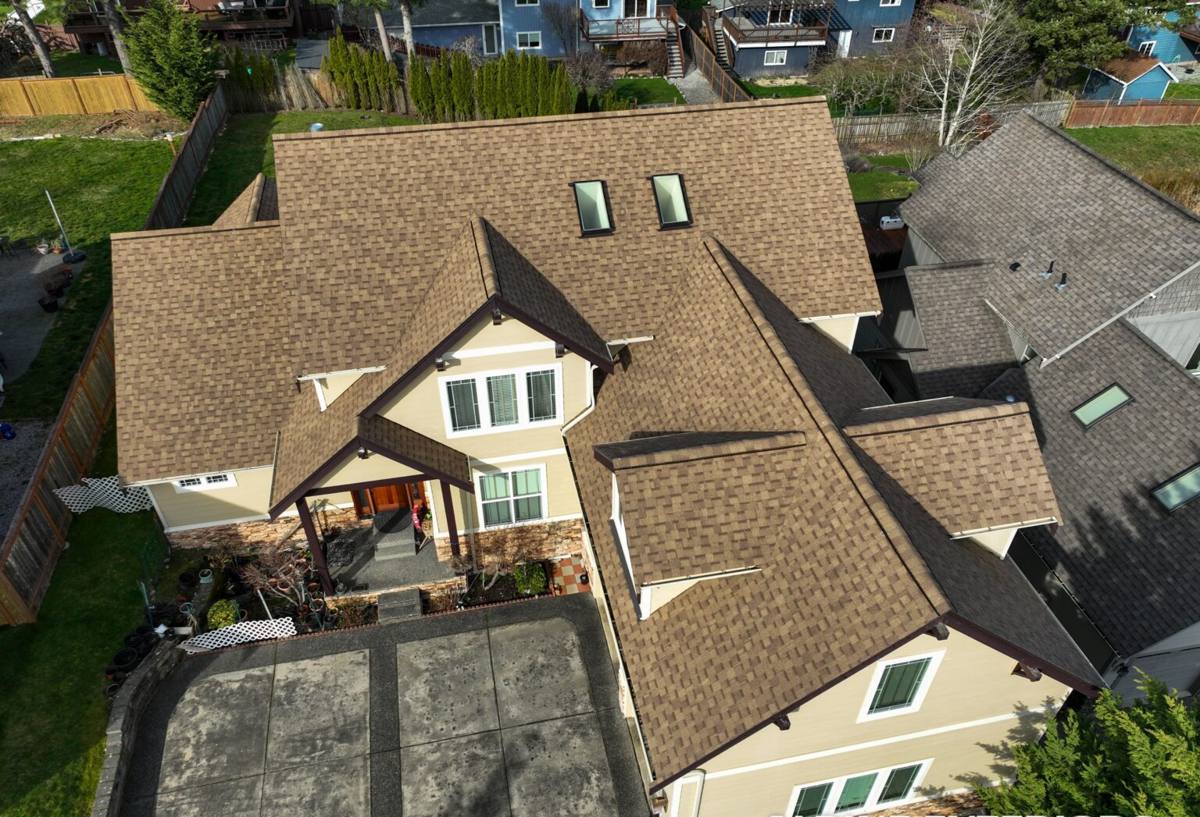
What Salt Air, Rain, and Moss Actually Do to a Roof Over Time
It helps to understand the failure points before talking about the fix.
Salt Air and Corrosion
Airborne salt accelerates oxidation on any exposed metal — fasteners, flashing edges, cut panel ends, and unprotected steel. On a roof close to Blaine and Drayton Harbor, unprotected or mismatched metal can show rust streaking well before a comparable roof further inland would. This is less about the panel itself and more about what's fastening it down and finishing its edges.
Driving Rain and Wind-Driven Water
Whatcom County storms often push rain horizontally, not straight down. That means water gets forced up under laps, around chimneys, and into valleys that a light-rain climate would never test. Flashing details that would be fine in a calmer climate get exposed for what they are here.
Moss and Organic Buildup
Metal sheds moss far better than composition shingles, but it isn't immune. Moss and debris still collect in valleys, at panel laps, around penetrations, and in gutters shaded by trees — anywhere water slows down and organic material has somewhere to sit. Left alone, that buildup holds moisture against the panel finish and fasteners, which is exactly the condition that speeds up corrosion.
Choosing the Right Metal System for a Custer Property
Not all metal roofing is built the same way, and the right choice depends on the home, the budget, and how much of that salt-and-rain exposure a particular roof sees.
Standing Seam vs. Exposed Fastener
Standing seam panels connect with concealed clips and no exposed screws through the panel face. That matters a great deal in a coastal climate, because exposed fasteners are the single most common failure point on a metal roof near salt air — the gaskets under those screw heads degrade over time, and once they do, water finds a way in. Exposed-fastener (corrugated or ribbed) panels cost less up front and work fine on outbuildings, shops, and budget-driven projects, but they need more attention to fastener condition over the life of the roof.
Steel vs. Aluminum
Galvanized and galvalume steel are the standard for most residential metal roofs and, with a quality factory finish, hold up well. Aluminum costs more but never rusts, since it doesn't contain iron — a real advantage on properties with heavier direct salt exposure. For most Custer homes, a well-coated steel panel with correctly matched fasteners is the practical choice; aluminum earns its premium on properties sitting closer to open water or with a documented corrosion history.
| Panel Type | Best Fit | Coastal Durability Notes |
|---|---|---|
| Standing seam steel | Primary residences, longer hold times | Concealed fasteners avoid the most common coastal failure point |
| Exposed-fastener steel | Shops, outbuildings, budget projects | Lower cost, but fastener gaskets need periodic inspection |
| Aluminum standing seam | High salt-exposure sites | No rust risk; higher material cost |
| Uncoated or mismatched fasteners | Not recommended near Custer's air | Galvanic corrosion between dissimilar metals accelerates failure |
The Details That Actually Determine How Long the Roof Lasts
Metal roofing is unforgiving of shortcuts. A correct installation and a corner-cut one can use the exact same panels and look identical the day the crew leaves — the difference shows up five, ten, or fifteen years later.
- Fastener matching: screws and clips must be metallurgically compatible with the panel to avoid galvanic corrosion between dissimilar metals
- Underlayment: a synthetic, high-temperature underlayment with self-adhered membrane at eaves, valleys, and penetrations, not felt paper alone
- Flashing at every transition: chimneys, walls, valleys, and roof-to-wall junctions are where wind-driven rain gets tested first
- Panel gauge: heavier-gauge panels resist oil canning (visible waviness) and hold up better to foot traffic and wind load
- Ventilation: proper intake and exhaust venting keeps moisture from condensing under the panels from the inside
- Thermal movement allowance: metal expands and contracts with temperature swings; fastening systems need to accommodate that instead of fighting it
How We Approach a Metal Roofing Project in Custer
The process is straightforward, but each step exists for a reason specific to this climate.
- On-site assessment: we look at the existing roof deck, current flashing condition, ventilation, and how exposed the property is to prevailing wind and salt air.
- Measurement and material selection: panel profile, gauge, finish, and fastener type are matched to the home's exposure, not a one-size-fits-all default.
- Deck prep and tear-off (when needed): damaged or soft decking gets addressed before anything goes down — a new roof over a bad deck fails early no matter how good the panels are.
- Underlayment and flashing installation: this is the layer that actually keeps water out; it gets done to spec before a single panel goes on.
- Panel installation: correct fastener spacing, clip placement, and seam alignment, with attention to how panels meet valleys, ridges, and penetrations.
- Final walkthrough: we check flashing, fastener seating, and cleanup before calling the job done — no loose screws, no debris left in gutters or valleys.
What Ongoing Maintenance Looks Like
Metal roofing is genuinely low-maintenance compared to shingles, but "low" doesn't mean "none," especially with the moss and debris load a Custer property can see under tree cover or near open fields.
- Clear gutters and valleys of leaves, needles, and moss buildup at least once a year, more often under heavy tree cover
- Check for moss forming in valleys or shaded panel laps, since that's where organic debris collects on a metal roof
- Look at exposed fasteners (on exposed-fastener systems) for gasket wear or backing-out over time
- Inspect flashing around chimneys, vents, and walls for sealant that's dried out or pulled away
- Trim back overhanging branches that keep panels shaded and damp longer than they need to be
What Affects the Cost of a Metal Roof in This Area
Every metal roofing quote is different, but the same handful of factors drive most of the variation on Custer properties.
| Factor | Why It Matters |
|---|---|
| Roof complexity | More valleys, dormers, and penetrations mean more flashing work and labor time |
| Tear-off vs. overlay | Removing an old roof and inspecting the deck adds cost but avoids covering existing problems |
| Panel material and profile | Standing seam and aluminum cost more than exposed-fastener steel |
| Site access | Steep pitches, tall structures, or difficult staging areas add time and equipment needs |
| Deck condition | Soft or damaged decking found during tear-off needs repair before installation continues |
Homeowners should expect a written estimate that breaks out material, labor, and any deck repair separately, rather than one lump number — that's the only way to know what you're actually paying for.
Why It Matters That We Already Work in Custer
A crew that's worked on roofs throughout Blaine and the surrounding Whatcom County area already knows how the wind sits on this land, how far salt air actually travels inland, and which flashing details tend to get tested hardest in a given storm season. That's not something a crew based hours away picks up on their first job here — it's built from doing this work in this specific climate, repeatedly. It also means faster response if something needs a look after a bad storm, and a crew that isn't guessing at what "normal wear" looks like on a Custer roof versus what's an actual problem.
If you're weighing options for a metal roof in Custer, we're happy to take a look and walk you through what your specific property needs — no pressure, no obligation. Use the form below to request a free estimate.